
Video Feature Below
Welcome to the Resource Jungle
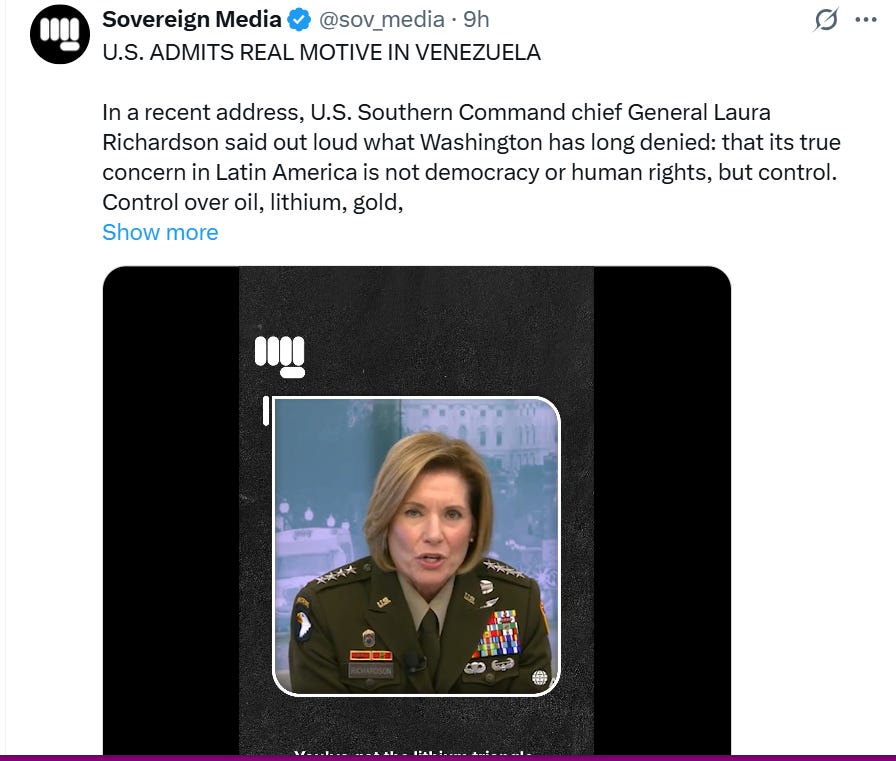
Let’s get one thing straight—I didn’t expect U.S. Southern Command chief General Laura Richardson to drop truth bombs on live air. But here we are, sitting in the middle of the American century’s latest fever dream, and the general just went off-script. No platitudes. No half-baked Cold War nonsense. Just straight-up resource lust, spelled out loud: oil, gold, lithium, rare earth minerals. All the shiny toys a restless empire can covet. Control isn’t the subtext—it’s the headline.
Democracy? Just a Costume Party
You can almost hear the Beltway PR consultants scrambling: “Clean it up, Laura! Smile more, mention liberty!” Too late. The game’s up. For years, everyone from self-righteous pundits to cardigan-clad Senators sold intervention as a freedom crusade. But look in the mirror—freedom never paid so well. In reality, the U.S. picks its targets with a single, greasy finger jammed onto the world’s resource map. That’s always been the play, from sweaty jungles to oil-splattered deserts. Control is non-negotiable.
Venezuela: The Empire’s Pinata
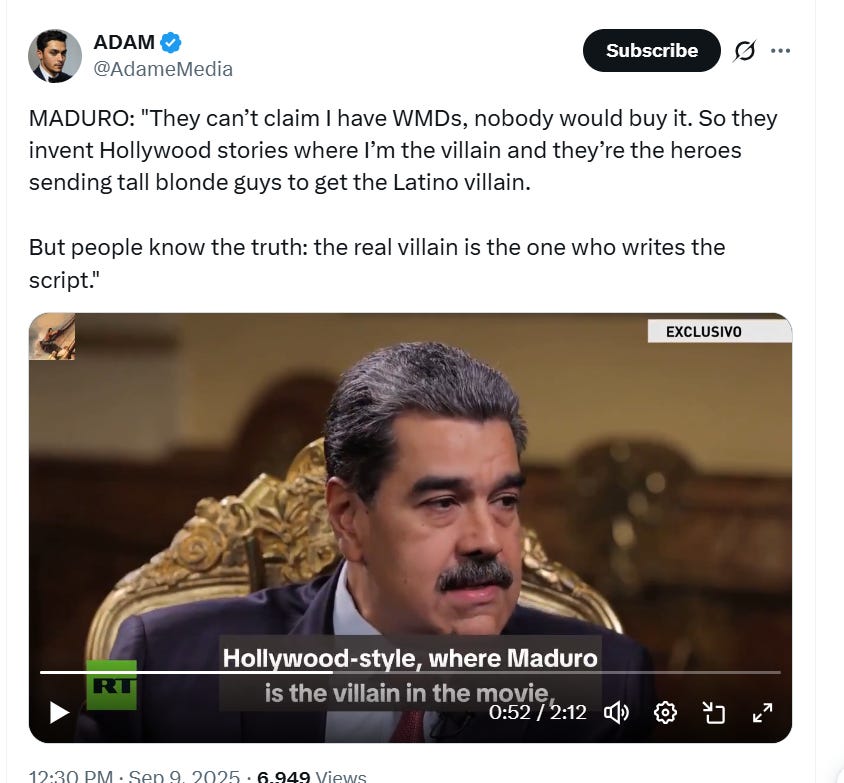
The first bullseye in Richardson’s speech? Venezuela. Caracas sits atop what might as well be called the planetary jackpot: oil so deep you could get lost in it, gold sparkling like a Vegas casino, and enough lithium to power every Silicon Valley fever dream for the next millennium. For decades—count them—the U.S. has thrown a parade of sanctions and black ops at Venezuela, draping every bomb and bank freeze in a stars-and-stripes cloth. “Democracy”? Give me a break. The only regime change Washington cares about is swapping out resistance for compliance.
Groundhog Day in the Resource Wars
This isn’t new. Washington’s been running this con since Eisenhower was sneaking whiskey in the Oval Office. Iran ’53. Iraq ’03. Libya ’11. Always the same script: find the oil, find the gold, send in the suits and the spooks. Hang “liberation” signs. And when the dust clears, watch the Western firms roll up with contracts longer than a Tolstoy novel. The shiny new prize? Lithium and rare earths. The tech economy’s new fix. From tablets to tanks, it all runs on stuff sitting in someone else’s soil.
Lithium Triangle: The New Wild West
Bolivia. Argentina. Chile. Congratulations, you just got handed the global monopoly on lithium. Don’t expect a parade; expect a gunfight at the supply-chain corral. China snuck in early, grabbing deals and laying low. Now the U.S. wants its piece—pumping out official statements about “security” and “keeping adversaries at bay.” Translation? They lost control and want it back. When corporate America wants minerals, the Pentagon starts journaling about “national interests.” The coup manuals are bookmarked for reference.
Asset Strippers Anonymous
Here’s the new colonial toolkit: no need for boots on the ground when you can nuke a country’s credit score with the tap of a mouse. Ditch the tanks, hire the spreadsheet mercenaries, launch a media swarm. The U.S. doesn’t seize— it disables. Fast, quiet, surgical. If you’re standing on top of something valuable, sooner or later someone in D.C. starts making “democratic partnership” noises. Translation: “Hand it over and try not to make a scene.” Good luck.
The Slip That Shook the Spin Room
When Richardson called Latin American resources “ours,” it wasn’t a slip. It was old colonial muscle memory. Empires own, period. The difference now? The shakedown is polite, hidden under layers of technocratic jargon and PR gloss. On the ground, ask the people—this doesn’t feel like partnership. It’s strip-mining with a smile. One day you’re sovereign; the next day, your copper is filling hybrid batteries in Phoenix and Shanghai.
The Empire’s New Costume
Richardson didn’t spill state secrets. She just forgot to keep the mask on. The empire isn’t dying—it’s doing a wardrobe change. The slogans are greener, the interventions slicker, but it’s the same old beast chewing through borders for the next big fix. Lithium, gold, oil, whatever keeps Wall Street humming and the arsenal locked and loaded. All dressed up as diplomacy. All going down under the same tired flag—one more shade of hypocrisy for the hall of fame.
This is what it looks like when the empire speaks without a filter: all hunger, no soul, and zero apologies. Buckle up—history’s repeating, and this time the suits aren’t even pretending.
Brief Snapshot of How we got here
US and CIA’s long history of toppling other nations leaders to install so called US friendly regimes
Edward Bernays, The Father of Propaganda
In the early 1950s, Edward Bernays became the hidden architect behind the fate of Guatemala. Tasked by United Fruit and seeing an opportunity to wield his PR wizardry, he spun a story in which Guatemala’s leader, Jacobo Árbenz, wasn’t a reformer but a puppet of communists. Bernays invited American journalists to carefully staged tours, ensuring they witnessed a “Red Menace” rather than agricultural reform. Headlines in major newspapers echoed Bernays’ narrative.
Behind the scenes, he convened councils and flooded newsrooms with press releases, priming U.S. officials and citizens for intervention. By 1954, the U.S. launched a covert operation that toppled Árbenz. Bernays then worked to shape the image of the new, U.S.-backed government. Through propaganda and psychological warfare, Bernays showed how a story, if told properly, could remake a nation’s destiny.
Regime Change
In 2019, the U.S. attempted to topple Venezuelan President Nicolás Maduro, driven by motives to restore access to oil, install a U.S.-friendly leadership, and respond to disputed elections and alleged corruption. The U.S. recognized opposition leader Juan Guaidó and offered diplomatic and economic backing, hoping the military would defect. However, Maduro retained strong support from the security forces and allies including Russia and Cuba, while U.S. covert operations, cyberattacks, and sanctions failed to spark a decisive coup or mass uprising. Ultimately, the campaign faltered, leaving Maduro entrenched and U.S. influence diminished
More Regime Change
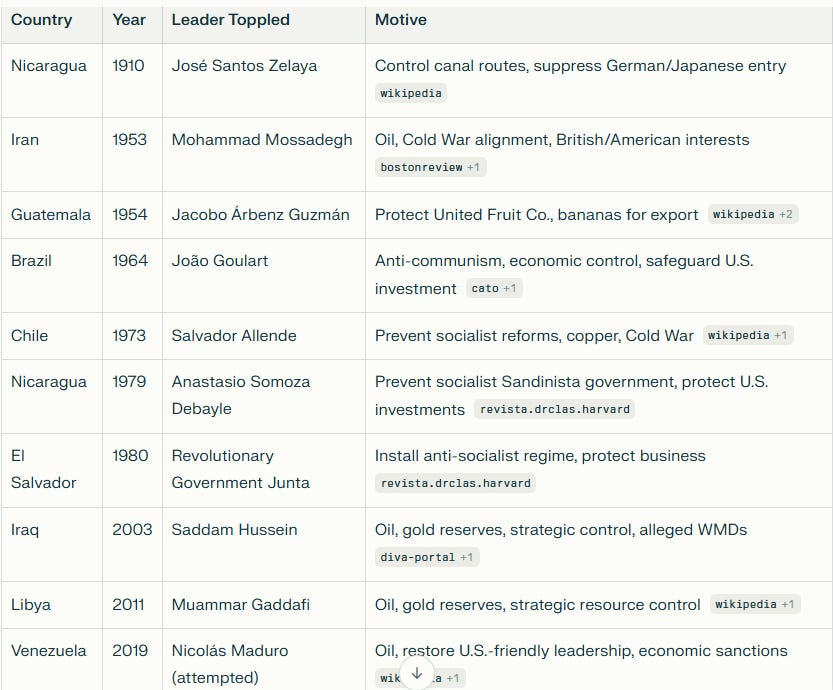
Each regime change was driven by U.S. motives of economic interest, Cold War strategy, or the protection of strategic assets and corporate interests in the region.
our opinions are not our sponsors opinions
editorial department is separate from promotions department
not financial advice