
The Great Squeeze
For half a century, Americans have been told to work harder, earn more, and trust the system. But the system has done the opposite: wages have lagged, costs have climbed, and the rewards of growth have been pulled upward.
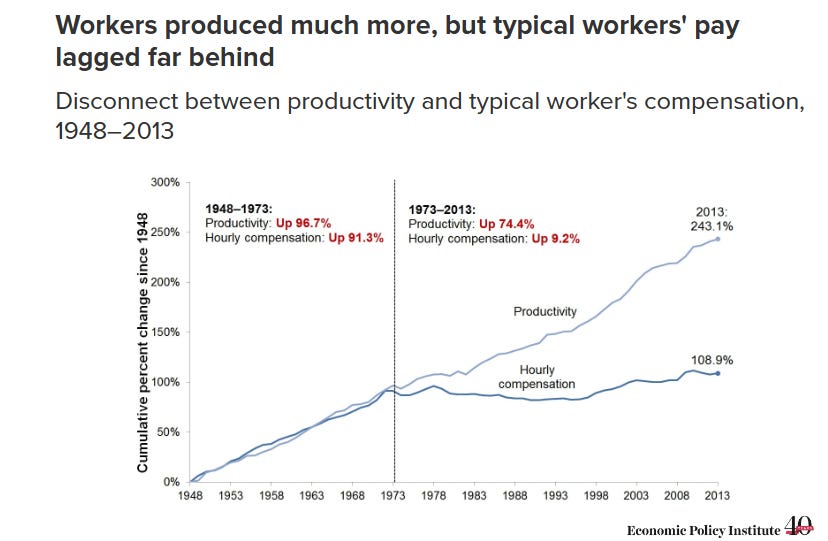
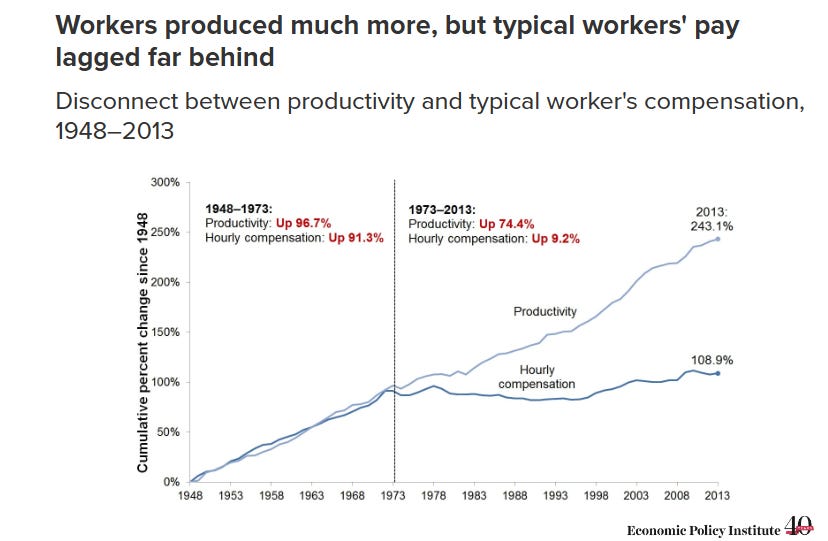
Since 1979, productivity has risen far faster than typical worker pay, proving that economic growth has not translated into broadly shared gains.
What that means in plain English is brutal. One income used to support a household; now many families need two, three, or more paychecks just to stay in place. The issue is not laziness or poor budgeting. It is a distribution problem built into the way the modern economy works.
The Middle Was Hollowed Out
The American middle class has not disappeared, but it has been steadily squeezed from both ends. The share of adults living in middle-class households has fallen over time, while a larger share has moved into lower-income households.
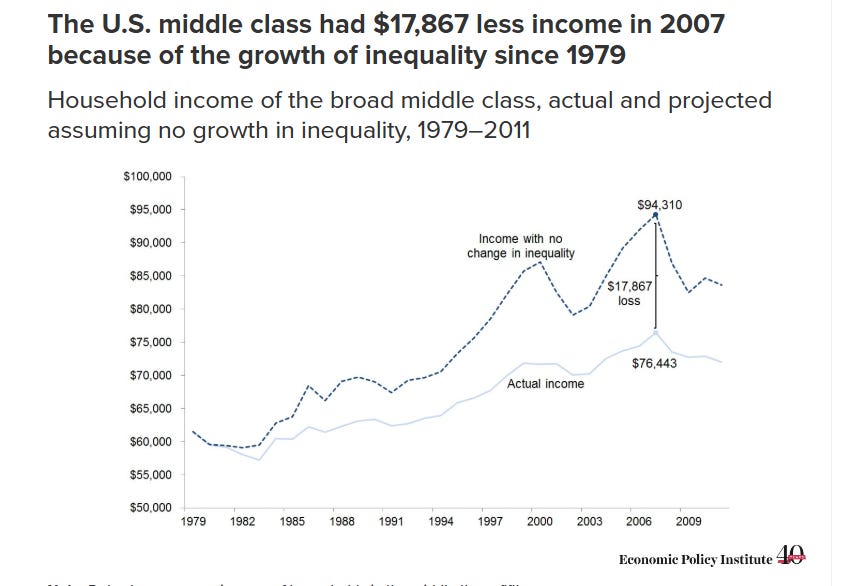
The middle class has shrunk over time, while the share of income held by upper-income households has expanded, showing a long erosion of broad-based prosperity.
That is the real story behind the headlines. Rising GDP does not matter much if it is captured by the top while the center slowly loses purchasing power, security, and social confidence. The result is a country that looks rich on paper and feels fragile in daily life.
The Wage Squeeze
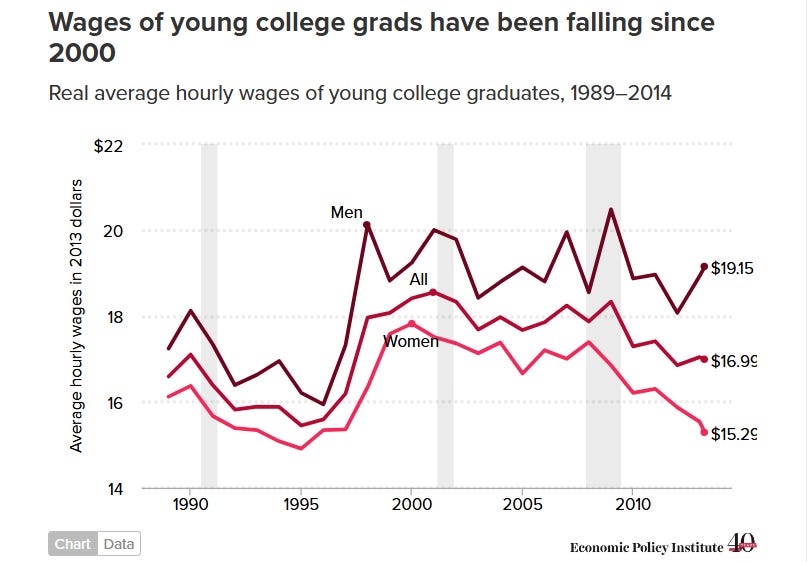
The pain is not limited to the margins. The EPI data show that middle-wage workers saw only modest gains over decades, while low-wage workers fell behind even further, creating a labor market that steadily compresses the bottom and hollows out the middle.
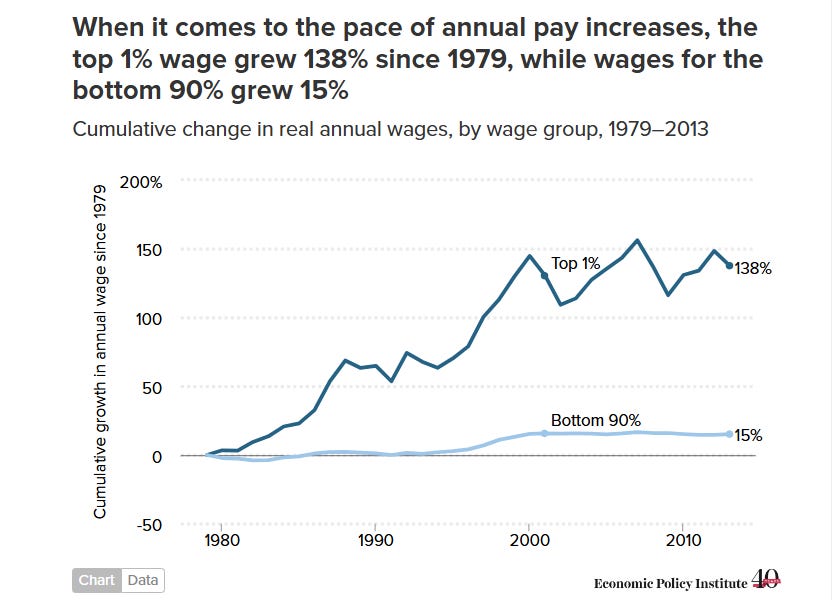
Middle-wage workers saw only modest wage growth over the long run, while low-wage workers lost ground, proving the squeeze hit the center and bottom alike.
This is why wage complaints never really go away. Workers are told there is no money for raises, while the cost of living keeps grinding higher. The message people hear is simple: discipline for labor, relief for everyone else.
War Budget, Welfare Budget
That same logic shows up in the national security state. The public is asked to accept huge defense budgets, costly missile systems, and endless military escalation while being told there is not enough left for ordinary households. Modern air defense often forces extremely expensive weapons to chase low-cost threats, which drains stockpiles and budgets fast.
Modern warfare often forces expensive interceptors and aircraft to chase low-cost threats, creating a brutal cost-asymmetry that bleeds budgets and stockpiles.
That is why so many people feel the country is upside down. The state can find money for war, surveillance, and permanent emergency, but the average worker is left to absorb inflation, debt, and declining purchasing power.
The Revolt Temptation

This is the environment in which Marjorie Taylor Greene’s tax-revolt rhetoric lands. She has backed the idea of Americans refusing to pay into a system she says screws over ordinary people and funnels power upward. That message is reckless in practice, but it resonates because the underlying anger is real.
When people stop believing the system rewards work, obeys its own rules, or spends responsibly, they begin to flirt with rebellion. That is the danger for the establishment: not just dissatisfaction, but legitimacy collapse.
Final Warning
The pattern is no accident. Wages stagnate. The middle class shrinks. Workers get squeezed. War gets more expensive. And the public is told to keep paying, keep working, and keep quiet.
The system does not look broken from the top. It looks highly functional. It is just functioning for the wrong people.
Silver Solves the Problem
A truly constrained monetary system would strip away the hidden tax of debasement. No silent inflation of the money supply. No endless war financed by deficits. No economy built on ever-expanding debt to enrich a connected elite. In the current order, the Cantillon effect tells the story clearly: those closest to the money printers gain first, while workers receive the leftovers after prices have already moved. That is why the system feels rigged. It is not just inflation. It is a transfer mechanism, a hierarchy of proximity to power, and a machine that rewards insiders while everyone else falls behind.