
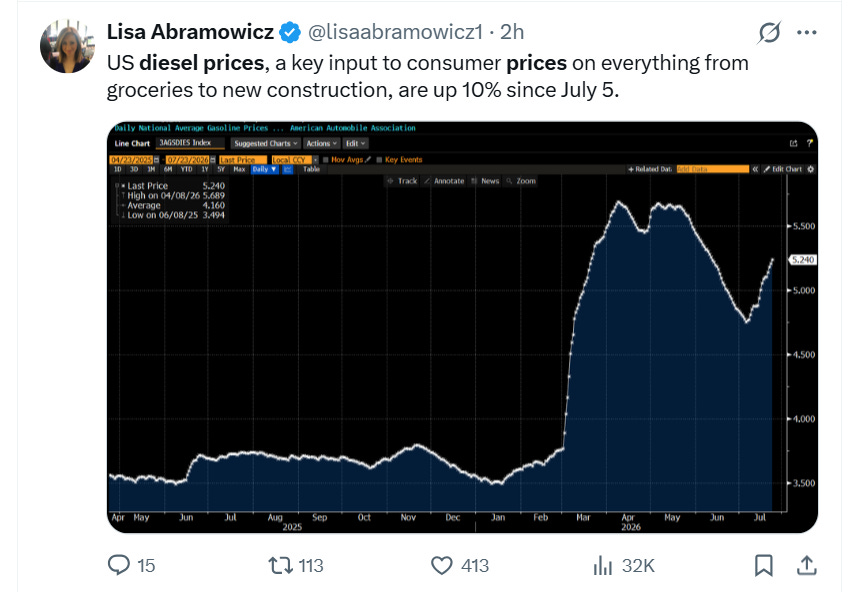
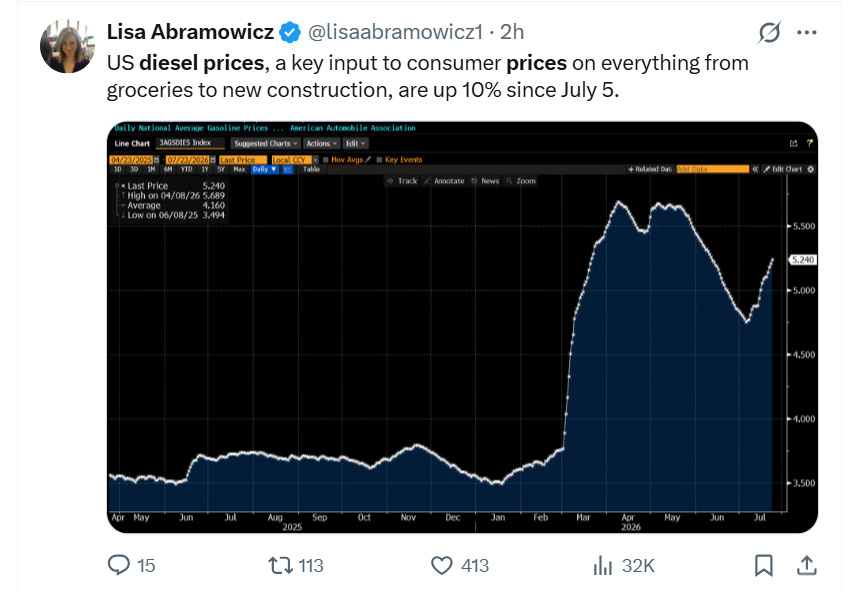
The timing could not be worse. On the eve of conflict with Iran, energy markets were already tightening. Gas sat at $2.98, diesel at $3.81, with WTI at $67 and Brent at $72. Today, those same benchmarks have surged: gasoline at $4.11, diesel at $5.24, WTI at $90, and Brent pushing $98. This is not a marginal shift—it is a full repricing of energy across the global economy, and it feeds directly into every supply chain.
And now, in the middle of this surge, Washington is preparing to pour gasoline on the fire.
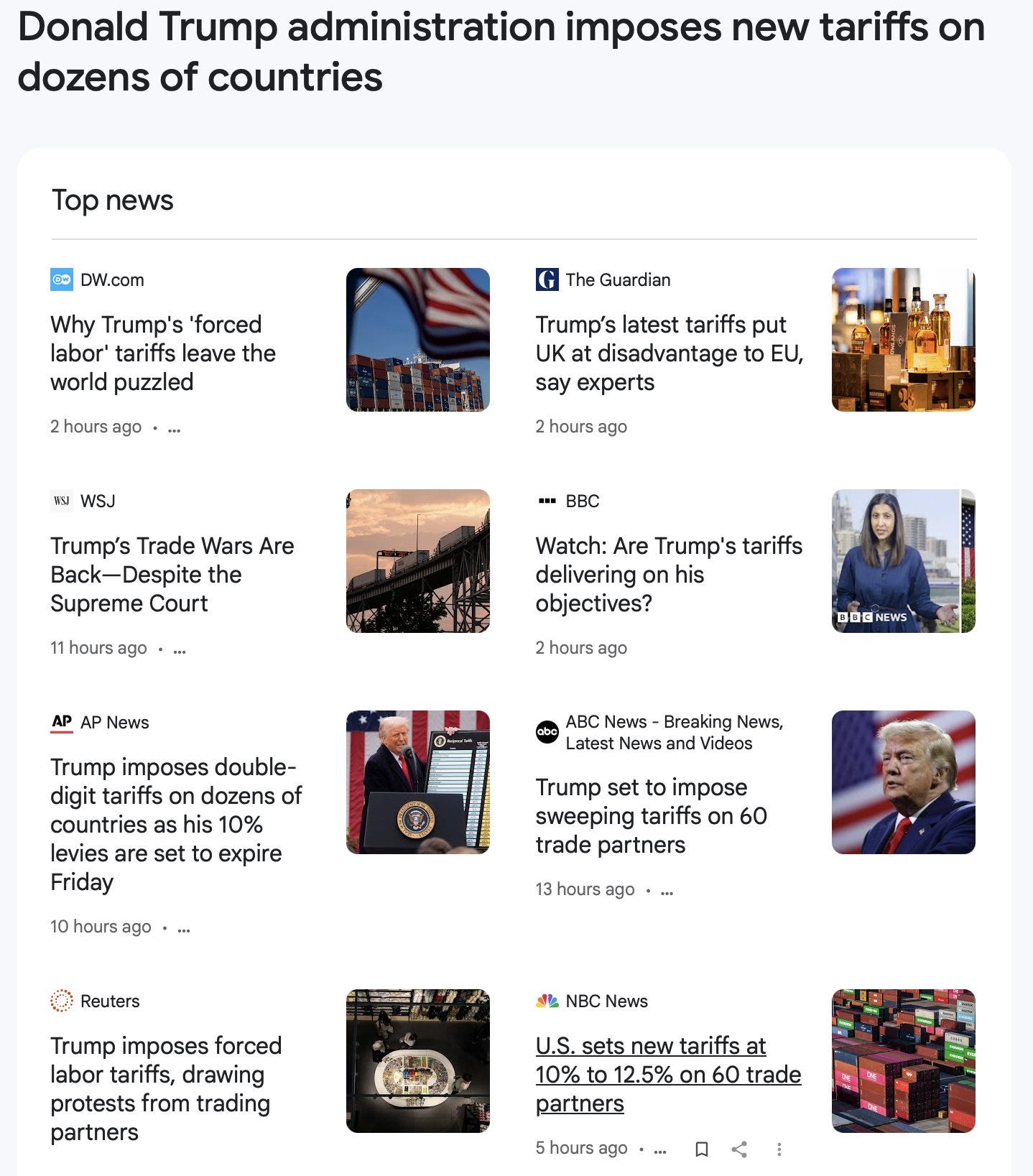
Double-digit tariffs on 60 trade partners are being marketed as strength. In reality, they are a direct tax on the American economy. Tariffs are not paid by foreign governments—they are paid by U.S. importers at the border, then passed straight through to businesses and consumers. Every container, every component, every finished good gets more expensive overnight.
This is how you manufacture inflation.
Energy is already exploding higher, and energy is the base layer of everything. When diesel jumps from $3.81 to $5.24, it hits food distribution, construction, manufacturing, and retail all at once. There is no escape valve. Now stack tariffs on top of that, and you are simultaneously increasing the cost of moving goods and the cost of sourcing them. That is a systemic squeeze.
What makes this even more dangerous is the backdrop: the dollar has already been weakened. Years of monetary expansion, deficit spending, and artificial liquidity have eroded purchasing power long before this moment. The system was already fragile. This is not a fresh inflation cycle—it is an acceleration into the next phase.
Higher energy. Higher import costs. Weaker currency.
That is not policy coordination—it is policy collision.
The result is predictable. Prices rise faster, margins compress, and consumers absorb the difference. This is not strategic leverage or economic nationalism—it is a compounding cost burden being imposed at the worst possible moment.
And once this kind of inflation cycle takes hold, it does not unwind easily. It feeds on itself.
Fight Off Inflation with Silver
Silver Miners
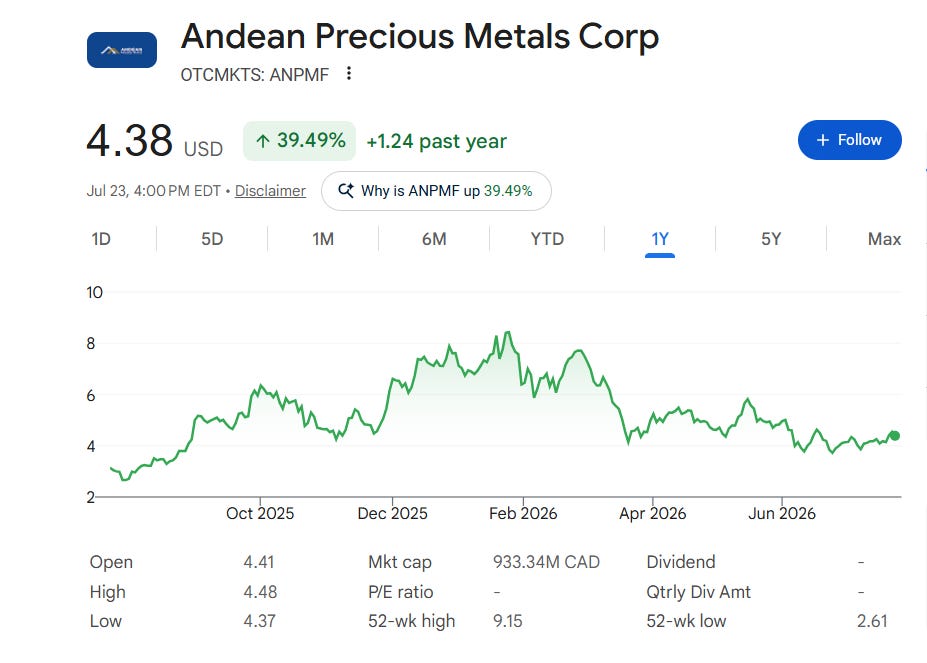
Andean Precious Metals can reclaim that $8 level because the silver market is still structurally broken: demand keeps outrunning supply, and roughly 70% to 75% of silver comes as a byproduct of other metals, so new supply cannot respond fast enough. Andean matters because it gives investors direct silver-linked exposure at a time when the market needs primary production, not more wishful thinking
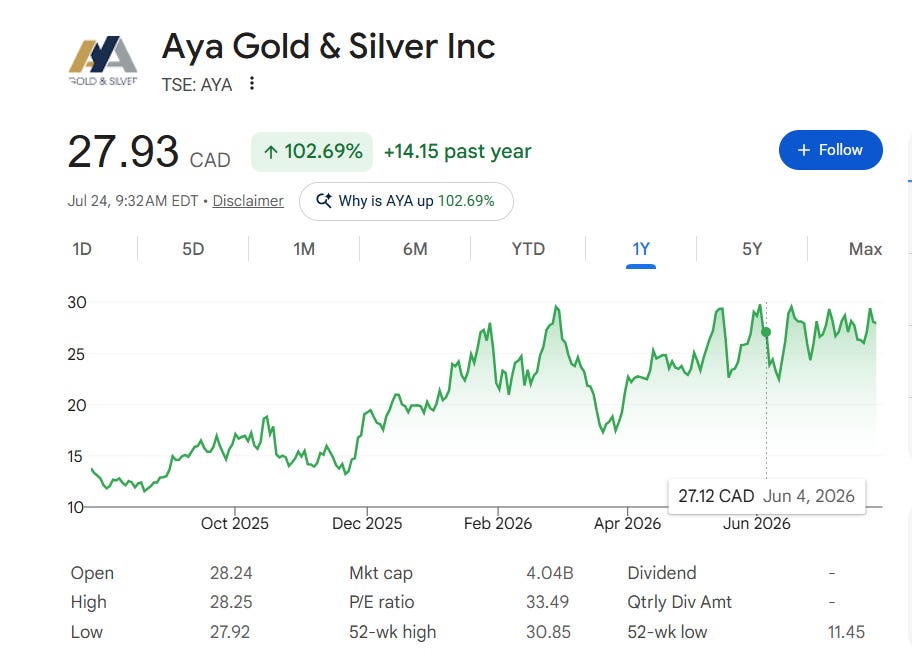
While inflation rages from M2 growth, energy shocks, and tariff chaos, Aya is one of the cleanest ways to protect wealth. It is a pure silver play, and its addition to GDX creates a steady forced-buyer pipeline as index capital must own it. Silver is monetary insurance; Aya is direct leverage to it.
end of segment
-
our opinions are not our sponsors opinions
-
the editorial department is separate from the promotions department
-
not financial advice