
The Great Silver Disconnect: Miners Are Signaling the Next Mania
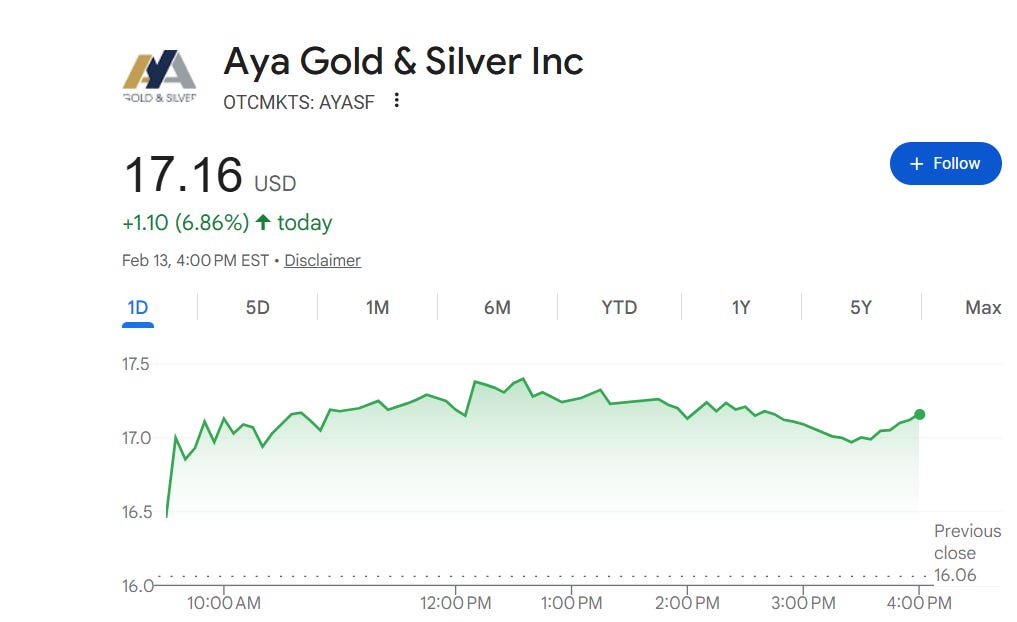
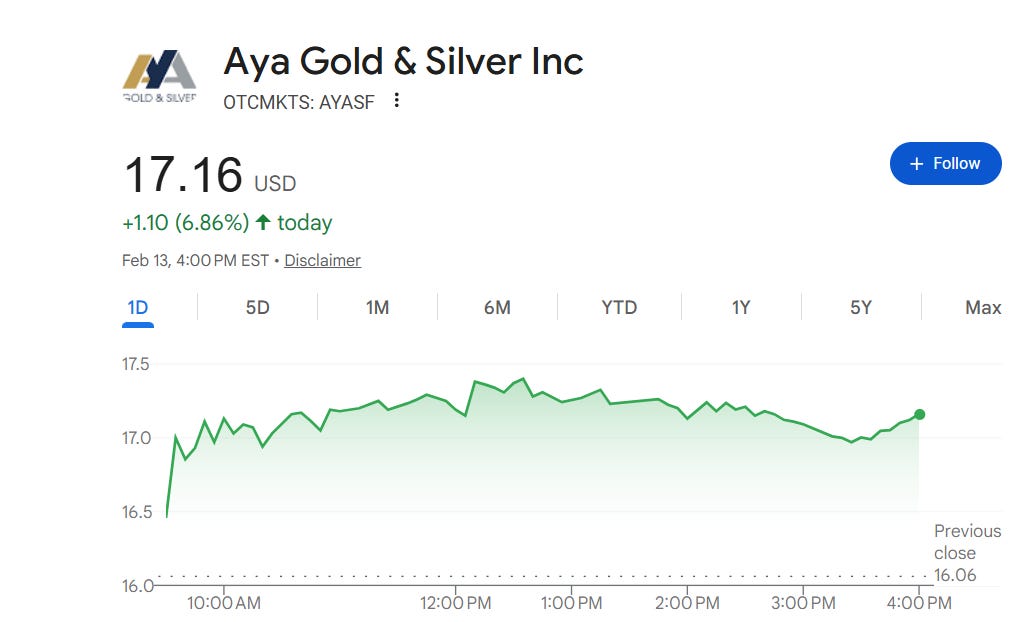
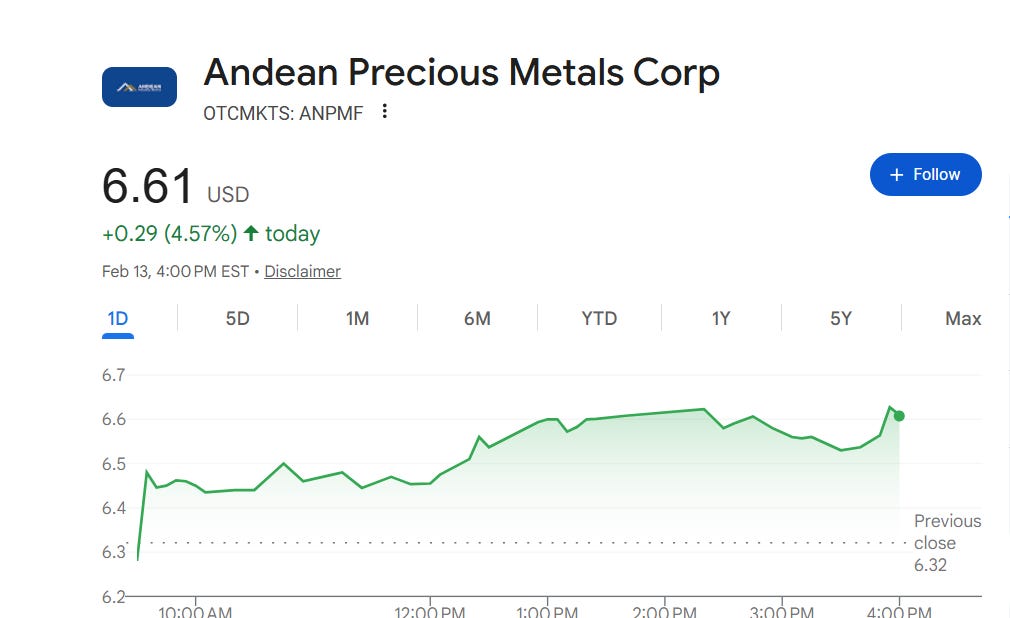
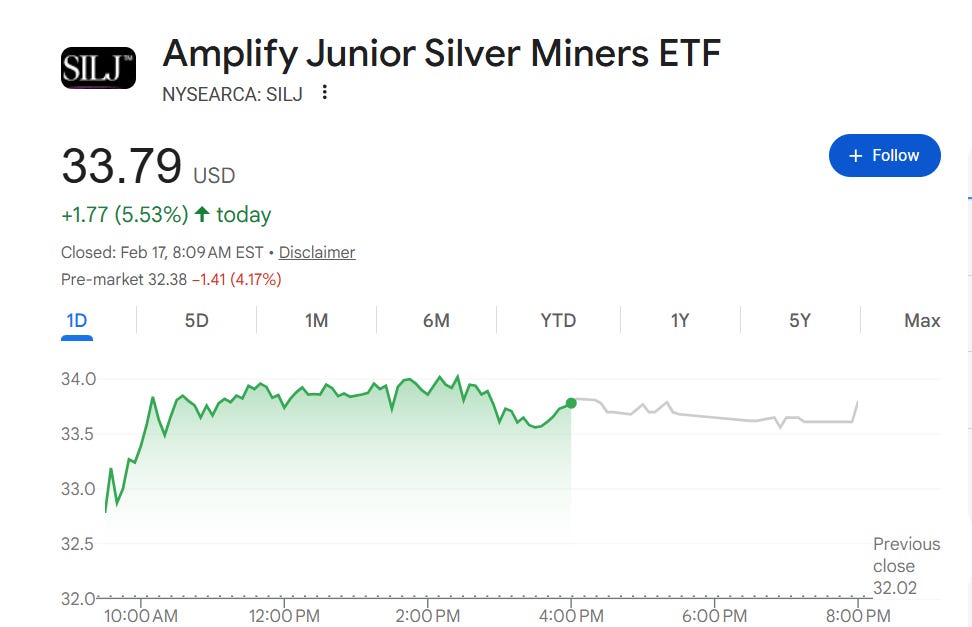
Yesterday silver fell 3% on COMEX. The usual “smash” arrived right on schedule — thin holiday volumes, China still closed, Western paper markets taking their pound of flesh. Yet the script broke halfway through the act. While silver was slammed, the miners soared. Aya Gold & Silver climbed 7%. Andean Precious Metals jumped 5%. The SILJ ETF — the barometer for silver equities — finished up nearly 5% on a day when the metal itself was cratering.
That’s a 10‑point delta in one session. For those watching closely, this is not noise. It’s a signal — perhaps the signal — that the market’s long sleep on the silver story is ending.
When Paper Falls, the Real Assets Rise
The pattern is familiar to anyone following the East–West gold trade for two decades. The paper market in the West sells down; the physical market in the East buys it up. China’s closure this week means no counterflow. Once Shanghai opens, metal moves eastward and scarcity in the West deepens.
But this time, the reaction from miners is new. Mining equities usually follow the metal down. Instead, they rose sharply — suggesting investors are pricing in not just higher silver, but an approaching repricing of their entire earnings outlook. The Q4 reports are still filtering in, and Q1 will be far stronger still.
The Math No Analyst Dares Touch
Hard numbers illustrate the leverage. Average silver all‑in sustaining cost (AISC) last year hovered near $20/oz. At $25 silver, miners earn a margin of $5/oz. A 10‑million‑ounce producer brings in roughly $50 million in operating profit.
Now skip forward to $85 silver — a price not at all fanciful considering global industrial demand and currency pressure. The same producer would clear $65 per ounce. That’s $650 million in profit — a twelve‑fold jump in cash flow on a 240% move in the metal.
This is operating leverage in its purest form. In every prior silver bull, equity gains have been multiples of the metal’s rise. Between 2002 and 2011, silver exploded from $4.60 to nearly $48. Pan American Silver went from about $3 to $45 — roughly a thousand percent move, mirroring silver’s return and confirming that leveraged dynamic.
So far, this cycle hasn’t reflected that. Silver’s up roughly 300% off its post‑COVID lows. SILJ, the mining ETF, is up only 200%. That gap won’t last once Wall Street recalibrates its earnings models from $35 to $85 silver scenarios.
The Energy Revolution Nobody’s Modelling
Mainstream analysts are still using backward‑looking models, ignoring the structural shift happening under their feet. Global energy systems are changing — not theoretically, but physically, right now.
Look at Cuba: while the United States tightens oil embargoes, the island is quietly installing vast solar fields across its interior. Solar panels are silver panels in disguise.
Solar fields use between 20 and 25 kilograms of silver per megawatt which converts roughly between 640,000–800,000 oz per GW. Multiply that by the current pace of global installation, and the math shouts scarcity.
Then comes the AI boom. Only three years ago, data centers were a sliver of the energy pie. Today they consume about 7% to 10% of America’s total electricity load — and climbing fast. AI is the new electricity, and the electronics behind it depend on high‑conductivity materials. Silver outperforms copper by nearly 8% in conductivity, with lower resistance and higher durability at nanometer scale. The semiconductor and photonics surge from AI hardware is turning into steady industrial silver demand that nobody is quantifying properly.
The Monetary Awakening
Industrial use explains one side of the equation. The monetary revival explains the other. As global debt races past $350 trillion, silver has re‑emerged as the “people’s hedge” — the accessible alternative to gold.
India’s new banking rules recognize silver as collateral, unlocking liquidity for roughly 250 million Indian silver holders. For the first time, family stacks in vaults and temples are becoming part of formal capital flow. That’s a once‑in‑a‑century structural shift. India is not quietly stacking anymore; it’s monetizing silver within its financial system.
The Clock Is Running
Physical premiums already betray the truth — no one can source investment‑grade ounces anywhere near the COMEX price. The paper market trades an illusion of abundance. The physical market trades reality, and reality commands multiples.
Once Q4 results hit, the miners’ cash flow will explode. The gap between “paper silver” and “productive silver” will close fast — violently. Meanwhile, global demand engines keep revving: solar, AI, monetization, and the East’s relentless accumulation.
Silver’s correction yesterday was a blip on the tape. The miners’ breakout was the headline. It marks the turning point when smart money stops fixating on daily price suppression and starts front‑running the next phase of the bull.
This isn’t a trade anymore. It’s a revaluation of industrial metal, monetary asset, and fiscal sanity all at once. Silver miners are the tell — and they’re telling us that the next silver mania is already underway.
For investors ready to position ahead of this unfolding repricing, we continue to endorse our featured primary silver producers. Aya Gold & Silver (TSX: AYA | OTCQX: AYASF) operates the high‑grade Zgounder Mine in Morocco and is developing the massive Boumadine project, both poised to anchor Africa’s silver renaissance.
Andean Precious Metals (TSX: APM | OTCQX: ANPMF) runs Bolivia’s largest silver oxide processing operation, commanding efficiency and scale in a country sitting atop untapped silver mountains.
Kuya Silver (TSX-V: KUYA | OTCQB: KUYAF) targets production growth between 15× and 20× 2025 output as its Peruvian and Canadian expansions accelerate.
Each one is primed to capture the leverage of this resurgent silver cycle before the crowd catches on.
end of segment
Disclosure: The author may hold positions in Aya Gold & Silver (TSX: AYA | OTCQX: AYASF), Andean Precious Metals (TSX-V: APM | OTCQX: ANPMF), and Kuya Silver (CSE: KUYA | OTCQB: KUYAF).
This commentary is for informational purposes only and does not constitute investment advice.