
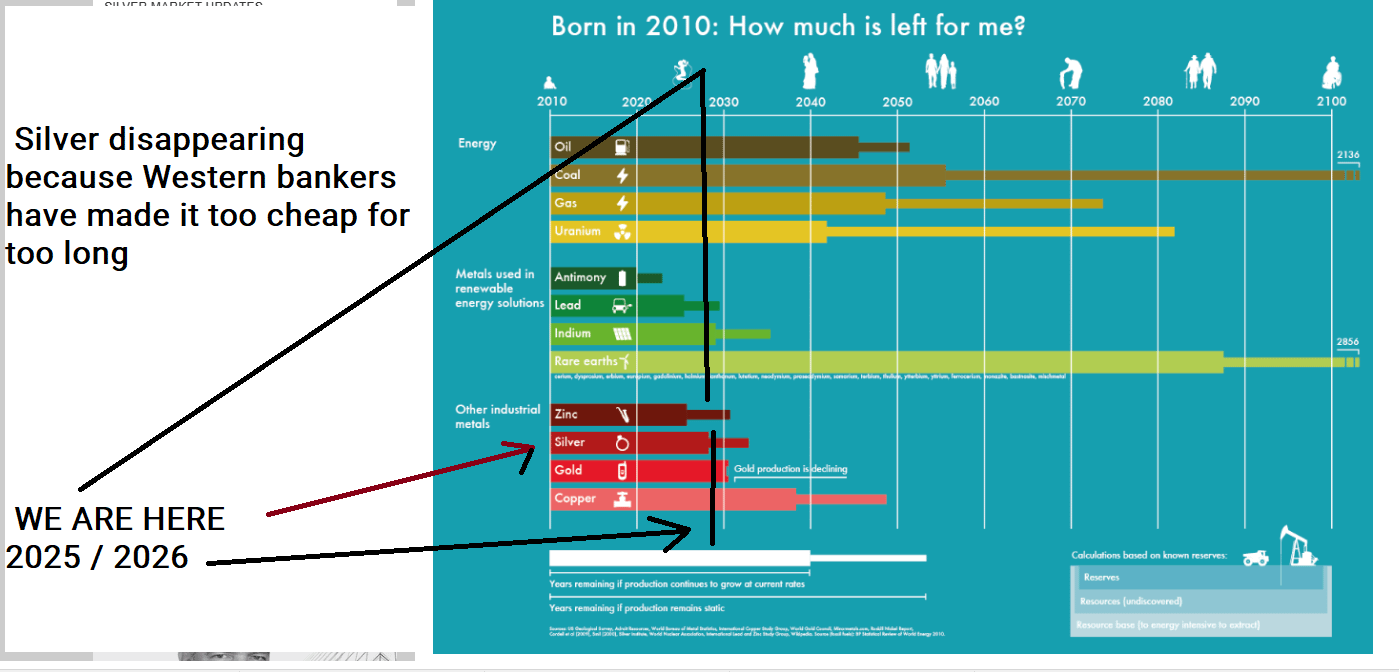
For over a decade, investors, bankers, and governments have treated silver as an afterthought — a volatile cousin to gold, a mere byproduct of mining. But as the world barrels into its sixth consecutive year of structural deficit in the silver market, the evidence now points to a more alarming truth: humanity is sleepwalking into an industrial supply crisis that could upend global manufacturing, military strategy, and monetary systems.
The silver shortage is no longer a debate among commodity traders. It is structural, systemic, and accelerating. Global silver production is declining, ore grades are dropping, and not one significant new discovery has been made in years. The invisible irony is that demand for the metal has never been higher.
Industrial Consumption at an All-Time High
Silver today is far more than a precious adornment or a hedge in times of inflation. It is the critical lubricant of the modern economy: running through solar panels, enabling the conductivity of solid-state batteries in electric vehicles, functioning as the backbone of AI semiconductors, and securing military and aerospace technologies.
China, whose clean energy rollout dwarfs the rest of the world, is devouring silver at record pace for solar panel manufacturing alone. The result is a paradox — while prices have remained artificially capped through financial engineering and short positions, the physical commodity is disappearing from vaults, refineries, and mints.
Central Banks Quietly Join the Hunt
Perhaps the most chilling development is the stealth accumulation of silver by governments. For decades, central banks admitted to stockpiling gold as a reserve asset but ignored silver. That wall of silence has cracked. Russia stunned markets when it announced that it would hold silver bullion as part of its official reserves. Soon after, Saudi Arabia disclosed its quiet purchase of 93,000 shares of SLV, the world’s largest silver exchange-traded fund.

If sovereign demand expands, even marginally, the consequences for an already bleeding physical market could be explosive. The quiet move by governments reflects a growing recognition: silver’s monetary utility is being rediscovered in an era of de-dollarization and rising geopolitical conflict.
Mexico Pulls the Plug
The global shortfall would be alarming under any conditions. But it has been made catastrophic by the policies of Mexico, the world’s #1 silver producer.
Since Andrés Manuel López Obrador’s Morena party rose to power, Mexico has ceased granting mining concessions altogether. Officials have elevated environmental protections and national ownership of resources above foreign investment. Supreme Court reforms loom, increasing legal uncertainty for miners. Taxes have risen, compliance burdens have intensified, and companies are bleeding capital in disputes with local communities.
Canadian miner Equinox Gold openly admitted to facing “community problems” in Mexico and their Los Filos mine is SHUT DOWN indefinitely perhaps permanently, while Endeavour Silver, once a champion of Mexico’s mining belt, has quietly turned its ambitions to Peru instead.
“With jurisdictional risk rising, Mexico’s decision echoes a warning: the world’s richest silver-mining territory is closing its doors, leaving global supply without its vital artery.” – Jon Forrest Little
For an industry reliant on long lead times and massive capital investments, the sudden freeze has the impact of a tourniquet. No new discoveries. No new concessions. Existing mines are seeing their ore grades decline, producing less silver every year, even as global demand accelerates to historic heights.
Technical Breakouts Signal the Tipping Point
Even financial markets, long insulated from the physical realities of supply chains, are beginning to crack. Silver miners, seen as laggards for over a decade, are approaching a decisive breakout. After twelve years trapped under stubborn resistance, indices like SIL are showing signs of a monumental move — some analysts suggest miners still have nearly 50% upside just to reclaim their prior all-time highs.
The technicals do not lie: capital is rotating back into silver as the shortage narrative becomes undeniable.
The Telltale Sign: Borrowing Costs Explode
Perhaps the starkest piece of evidence comes not from mines or factories, but from London. The cost to borrow silver in short-term leases — once negligible at nearly 0% — has surged above 5% multiple times this year. Such spikes rarely occur in well-supplied markets. They are the flare of a shortage, a signal that available physical silver is drying up. The spread between London and New York is widening, pointing to supply bottlenecks and delivery strain across continents.
Traders can argue over charts and sentiment, but the lease rates don’t lie. When it costs more to borrow silver than it does dollars, the fiction of “ample supply” collapses under its own weight.
A Crisis Hidden in Plain Sight
For now, policymakers and the mainstream financial press remain silent — lulled into complacency by the playbook of denial that preceded other commodity shocks. But the facts are staggering: six years of deficit. No new discoveries. Falling grades. Record industrial usage. Governments and banks buying quietly in the background.
-
The fuse has been lit. Silver, once forgotten, is now the single most indispensable element of the 21st century economy — and it is slipping through humanity’s fingers faster than it can be replaced.
-
The crisis no one is talking about today may soon be the economic earthquake everyone will feel tomorrow.
-
Two legends confirm Silver Academy reporting
-
Listen around the 10 minute mark as Ross Beaty discusses the community problem in Mexico
-
followed by Ray Dalio discussing “collision points” and how the Silver market will never be the same
Dalio conveys RE Jurisdiction Risk and Resource Nationalization
Jurisdictional risk is a central theme, with particular attention given to “resource nationalism” and regulatory shifts in countries that produce silver. Dalio notes a global shift toward “economic self-protection that adds another layer of tension to a market that is already tight” as countries “re-evaluate export policies, prioritize domestic industries, and in some cases restrict foreign access” to critical minerals like silver. These policy changes reflect a growing trend for resource nationalization, which threatens the stability and predictability of international supply chains and can trigger rapid repricing in the market.
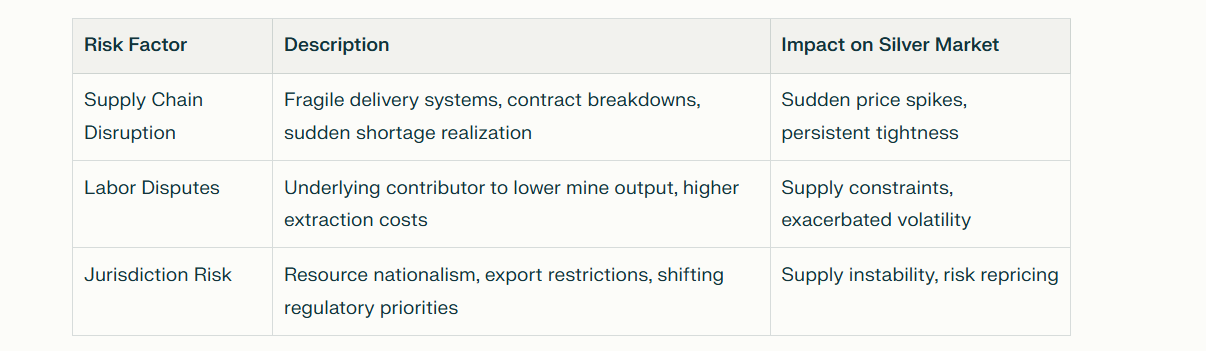
Silver Shortage and the World’s #1 Silver Producer says NO SILVER FOR YOU
While Morena touts environmental justice, the mining sector is rocked by escalations and shutdowns—each signaling Mexico’s status as a high-volatility jurisdiction. The evidence:
-
2020: Los Filos (Equinox Gold) in Carrizalillo, Guerrero: Three-month shutdown after fierce community blockades.
-
2020: Peñasquito (Newmont) in Mazapil, Zacatecas: COVID-driven suspension, followed by crippling labor strikes.
-
2021–2023: Buenavista del Cobre (Grupo México), Cananea, Sonora: Unrelenting union strikes and protesting communities grind the world’s top copper mine to a halt.
-
2023: Peñasquito (Newmont) again shuttered for four months, exposing the rising force of organized labor and local resistance.
-
2024: Vulcan Quarry (“La Calica”) in Playa del Carmen, Quintana Roo: Police expropriation and port seizure highlight state intervention risks.
-
2025: Los Filos faces indefinite closure; unresolved land disputes and anti-mining sentiment bring production to a standstill.
-
2025: Panuco Silver-Gold Project (Vizsla Silver), Concordia, Sinaloa: Temporary shutdown as local security issues escalate.