
The Silver Fuse: Why a Supply Crunch Could Send Shockwaves Through Global Markets
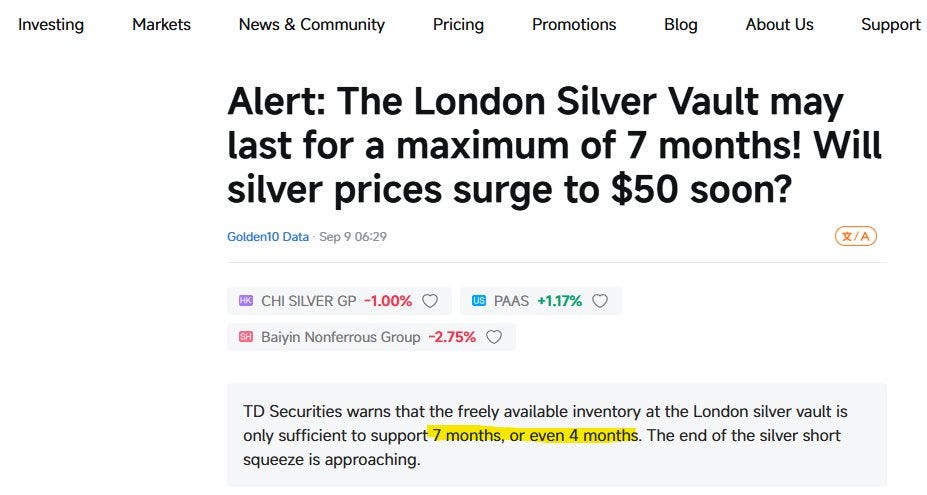
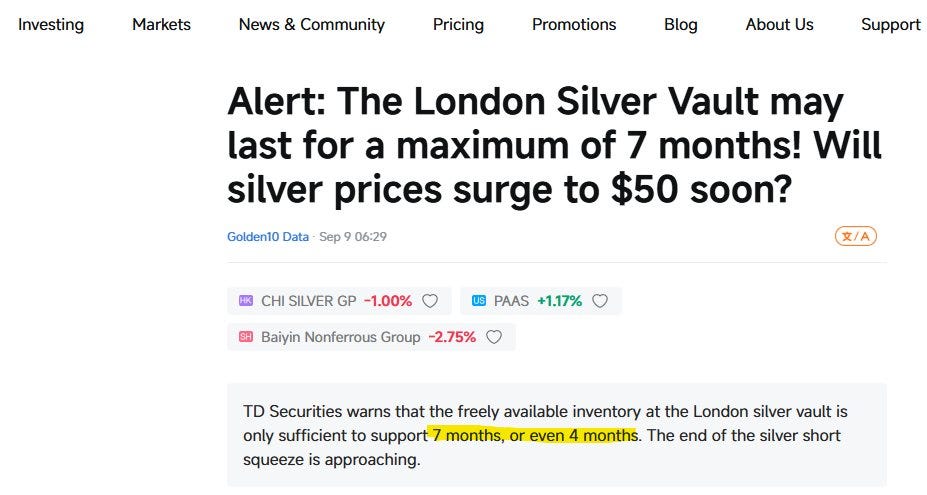
For months, whispers have swirled in commodity circles about thinning silver inventories in London. Today, those whispers echo with urgency: the freely available “deliverable” bars that underpin the London Bullion Market Association (LBMA) may only last seven months at the current pace of outflows, according to TD Securities strategist Daniel Ghali. Accelerate investor demand? The clock could run down in as little as four months.
This is not a story about all the silver in the world, tucked away in vaults, jewelry boxes, or ancient goblets. It is about the free-float—the lifeblood of daily settlement in the world’s most important silver hub. These are the bars that can be pulled, delivered, and shipped, the tangible counterpart to the mountains of paper contracts and derivatives that trade on exchanges every day. And therein lies the spark of potential upheaval: futures can roll forward forever, but bars cannot be conjured out of thin air.
If the LBMA’s free-float truly dwindles to near exhaustion, the market faces an existential stress test. Paper promises of silver may remain plentiful, but the actual bars for delivery—those rectangular insurance policies against monetary alchemy—will become dearer, rarer, and dramatically more expensive. History has shown what happens when inventories thin. Market spreads between London and New York widen. Dealer premiums climb. “Out of stock” signs multiply across mints and bullion shops. Suddenly, the clean divide between financial traders and physical stackers collapses; both scramble for actual ounces. The result? A brutal disconnect in pricing—where paper benchmarks no longer reflect the cost of securing metal with one’s own hands.
Silver’s story in 2025 is not only about anxious investors. It’s also about unyielding industrial demand. Far from a dusty relic of the monetary past, silver sits at the heart of the green revolution: solar panels, electric vehicles, 5G electronics, and high-tech batteries. Unlike gold, most silver is consumed and destroyed in these essential applications, tucked into circuit boards or scattered across photovoltaic surfaces—often unrecoverable. This structural demand collides with the limits of mining. Unlike copper or iron ore, you cannot simply conjure up new silver mines overnight. Significant new production requires years of exploration, permitting, and capital outlay. In the face of that lag, the current deficit looks like a tightening vise.
TD Securities’ warning of “seven months” is unsettling enough. But the math becomes electrifying when imagining a surge of capital into physical. Exchange-traded funds can shuffle paper titles back and forth, but they cannot mint new LBMA bars. Should cautious investors turn urgent buyers, the stampede into physical delivery could precipitate a classic premium blowout. Premium explosions are no stranger to precious metals. In past squeezes, silver eagles and kilo bars have commanded premiums 30–50% above spot. Dealers ration supply. Wait lists stretch weeks. What could ignite such behavior in 2025? The perception of scarcity—backed by very real vanishing stockpiles.
For lifelong stackers, this moment is less surprise than validation. The mantra remains the same: “Buy metal, not stories.” The wisdom echoes through bullion circles—accumulate in dips, diversify your holdings across 1-ounce, 10-ounce, and kilo bars for flexibility, and avoid the temptation to sell at the first lull. Silver, after all, is notorious for long periods of frustration followed by brief, euphoric sprints. The market rarely offers steady appreciation—it punishes impatience before rewarding conviction. And with free-float inventories dwindling, seasoned holders will argue that time itself is tilting in favor of those holding actual ounces rather than contracts.
Another key dynamic looms in the background: the relationship with gold. Historically, silver does not merely shadow gold; it amplifies its moves. As real interest rates ease into a recessionary phase, investors often seek gold first. But once confidence in the trend builds, the gold-to-silver ratio compresses, and silver delivers convex, accelerated gains. It is in these windows that the white metal delivers the type of parabolic moves that etch themselves into commodity lore. With gold gleaming near historic highs, that stage may be quietly setting, even as most attention rests on the yellow metal’s crown.
At the end of the day, this drama distills into a single dilemma: paper can promise, but only bars and coins can deliver. Traders may continue to arbitrage spreads, algorithms may churn futures, and analysts may quibble over deficits, but when the LBMA’s free-float dwindles, none of those abstractions replace a 1-kilo bar in hand. Perhaps this is the timeless lesson silver never tires of offering. Empires have minted it, industrial revolutions have devoured it, and crises have rediscovered it. In 2025, its message is both ancient and modern: scarcity matters. Seven months may feel long in a news cycle, but in the life of a monetary metal, it is the blink of an eye. The fuse is lit. Whether investors strike the match or industrial demand burns it down, the clock is ticking.
end of segment