
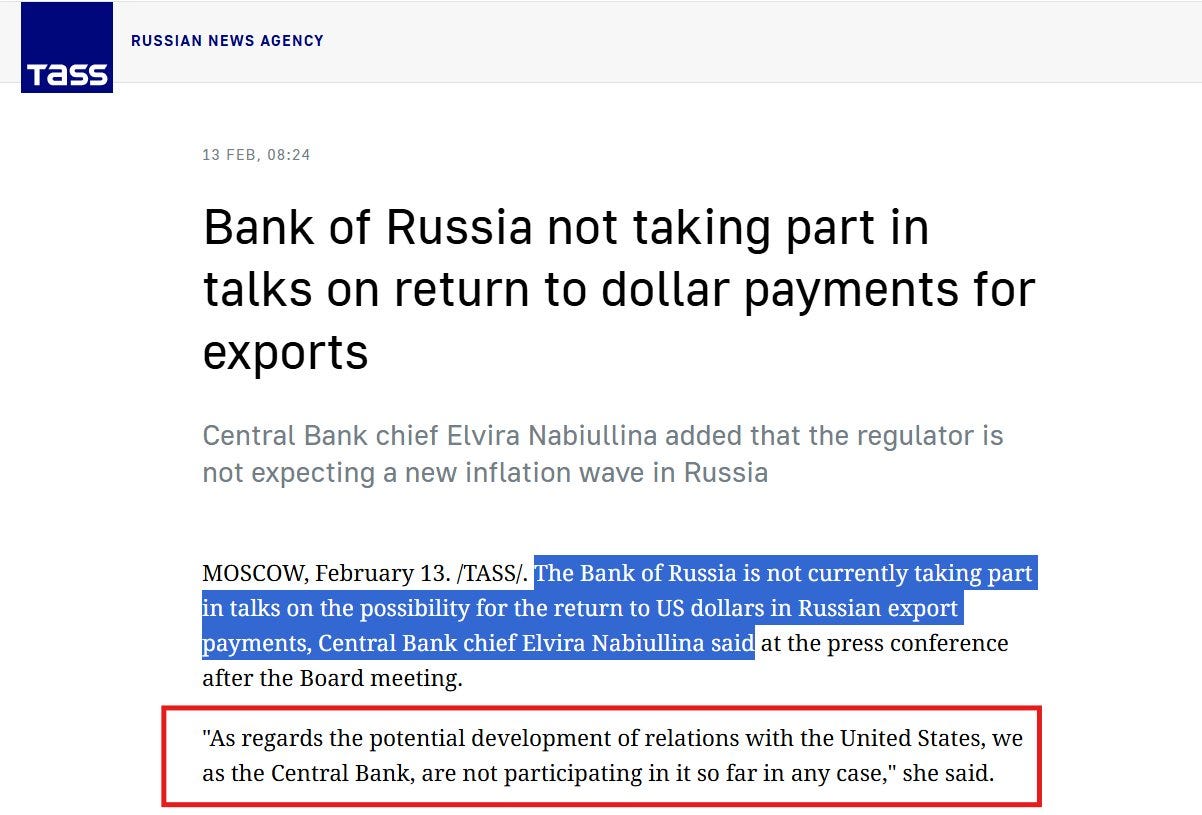
Silver got kneecapped over 9.8% yesterday on the weaponized fairy tale that Russia is slinking back into the U.S. dollar’s toxic orbit—a propaganda blast so absurd it borders on financial slapstick, proving once again that Western narrative management, not supply and demand, is still driving the tape.
Russia is not crawling back to the dollar; Western media is trying to stuff that hallucination down your throat like it’s 1996 and nothing happened in 2022. The same axis that froze roughly 300–350 billion dollars of Russian sovereign assets now wants you to believe Putin is begging to re-enter the system that just demonstrated it can and will vaporize your reserves with a press release.
The Seizure They Want You to Forget
When the U.S. and its allies sanctioned Russia in 2022, they didn’t just wag fingers; they immobilized around 300 billion dollars of Russian central bank and sovereign assets across Europe, the U.S., and other G7 jurisdictions. Euroclear alone is sitting on roughly 180 billion euros of Russian funds; overall, about 300 billion dollars are trapped in Western custody, with Brussels and Washington debating how much they can siphon to fund Ukraine. This is not some conspiracy theory; it is the live demonstration that the “rules-based order” runs on asset confiscation masquerading as virtue.
And after all this, Bloomberg and its amplification crew now float the idea that Russia is “considering” returning to dollar settlement in exchange for a Trump-era energy deal, a few LNG ventures, and “windfalls for U.S. companies.” The same system that turned Russia’s reserves into political hostages is suddenly pitched as a safe harbor again, like an abusive landlord dangling the keys to an apartment he already robbed.
Russia’s Actual Trajectory: Out of the Dollar
Reality check: since 2014, and especially after 2022, Russia has been systematically ripping dollars out of its financial plumbing. By the end of 2024, roughly 90% of its trade with BRICS partners was conducted in national currencies—ruble, yuan, rupee, real, and others—according to Russian officials. Trade with China and India is now overwhelmingly settled in rubles and yuan or rubles and rupees; dollar use is reduced to a sliver.
In Moscow’s own markets, the yuan overtook the dollar as the most traded currency, reflecting a deliberate shift in how Russia manages its reserves and external trade. Russian strategists have been explicit: de-dollarisation isn’t a slogan, it is survival—insulating the country from Western financial warfare by building alternative rails and diversifying into gold, other currencies, and bilateral deals.
You don’t torch your bridges, rewire your whole payments system, re-orient trade toward Asia, and then casually wander back into the same dollar settlement architecture that just froze 300 billion of your wealth because Bloomberg found a “Kremlin memo.”
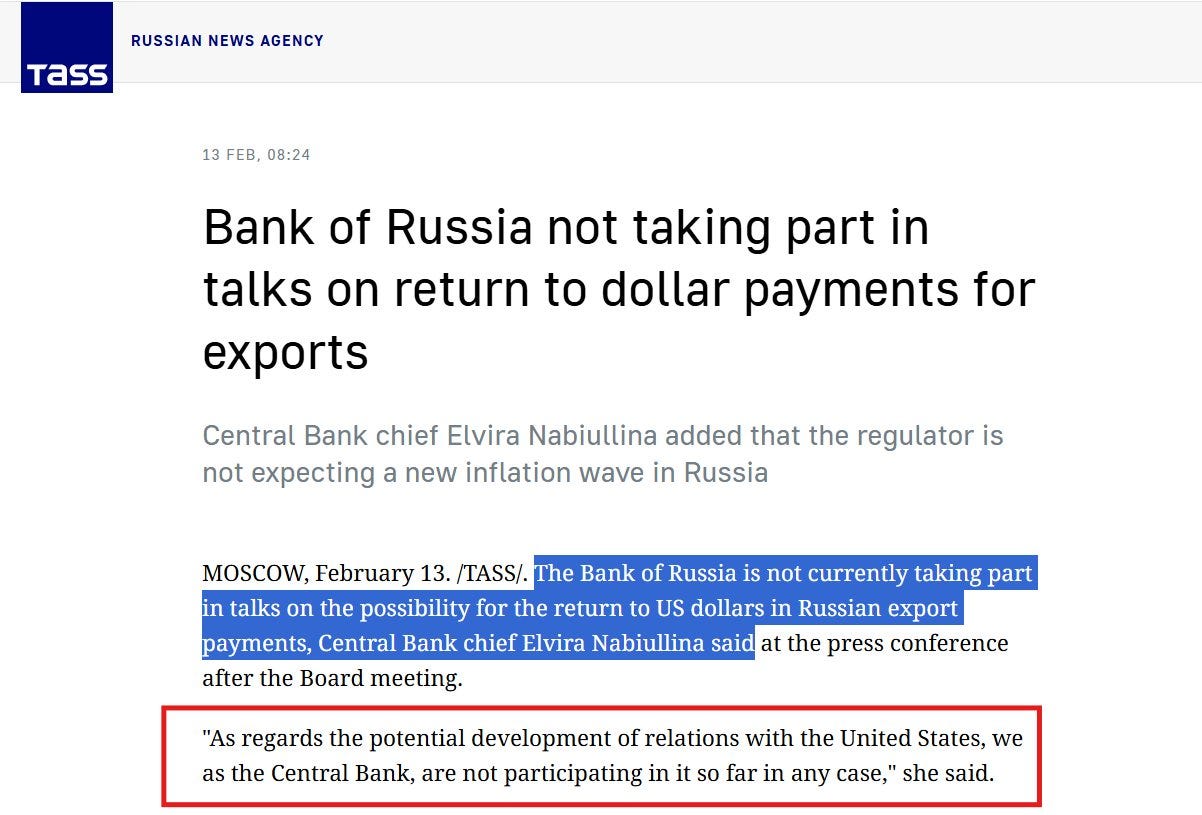
Bloomberg’s Dollar Restoration Fantasy
Enter the meme-level absurdity: “Russia is considering moving back to the US Dollar as part of a wide-ranging economic partnership with President Trump, per Bloomberg.” The bullet points read like something written by Dr. Evil’s interns:
-
US and Russia working together on fossil fuels
-
Joint investments in natural gas
-
Offshore oil and critical raw material partnerships
-
Windfalls for US companies
-
Russia’s return to the USD settlement system
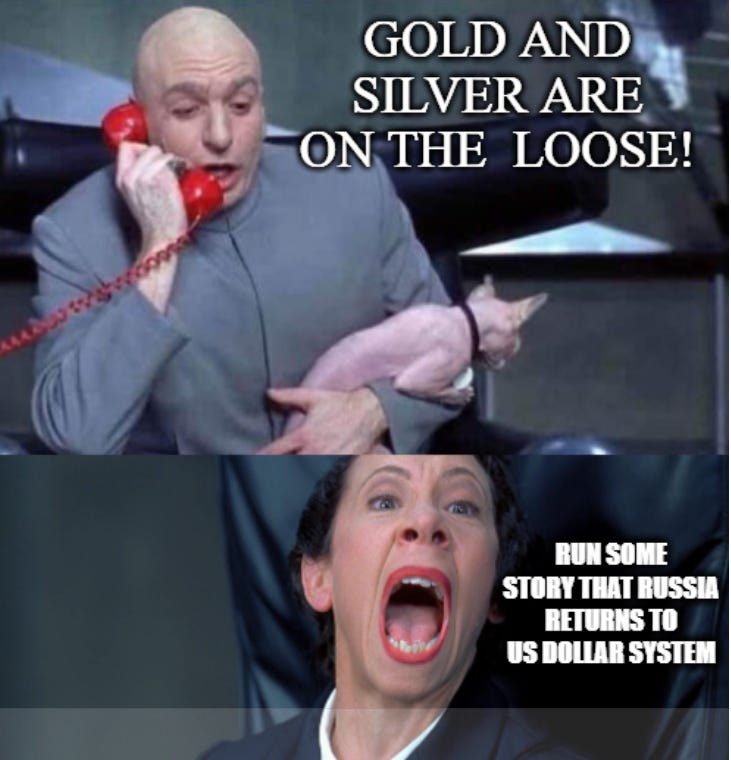
Somewhere in the background you can practically hear Dr. Evil sneer, “Gold and silver are on the loose,” while Frau Farbissina shrieks, “Run some story that Russia returns to the US dollar system!” It’s not foreign policy analysis; it’s narrative containment. A frightened system is screaming: “Relax, the de-dollarisation threat was just a phase. Daddy Dollar is still in charge.”
Bloomberg’s framing hinges on an internal Kremlin document “reviewed” by the outlet, in which a hypothetical peace deal and energy partnership with Trump supposedly includes a clause about returning to dollar-based settlements. The memo language—offshore oil, critical raw materials, preferential access for U.S. companies—reads like someone wrote the State Department’s mood board into a PowerPoint and then called it geopolitics.
What’s missing? Any acknowledgment that Russia has just been shown the most powerful argument against holding or settling in dollars: your assets are not assets; they are permissions revocable at the whim of Western politicians.
Why Re-Dollarisation Makes Zero Strategic Sense for Russia
From Putin’s perspective, the calculus is brutally simple:
-
The dollar system froze hundreds of billions of Russia’s reserves.
-
De-dollarisation has worked: trade with China, India, and BRICS runs increasingly on rubles, yuan, and other currencies, not on dollars.
-
The global South is watching and learning; Russia’s shift has emboldened others to explore non-dollar arrangements and digital alternatives.
Reversing that trajectory now—voluntarily walking back into the same cage—would hand Washington leverage it has already proven willing to weaponize. It would slow the de-dollarisation momentum that Moscow, Beijing, and their partners have spent a decade nurturing. It would also signal to every non-Western capital that resistance is futile and that, in the end, everyone crawls back to the greenback once the right carrot is dangled.
That is precisely why this narrative is being pumped: it’s not about what Russia is likely to do; it’s about reassuring Western audiences, markets, and nervous allies that the dollar-centric order will ultimately pull every rebel back into orbit. The psychology is the point.
Over-the-Top Propaganda, Zero Credibility
So we’re asked to believe that:
-
A country whose sovereign reserves were frozen to the tune of about 300–350 billion dollars is eager to re-enter the same settlement system.
-
A state that has already shifted the bulk of its flagship trade flows into non-dollar currencies will reverse course for the sake of “windfalls for US companies.”
-
A leadership that openly frames de-dollarisation as strategic self-defense will volunteer to put its neck back under the same financial guillotine.
Doesn’t make any sense—because it isn’t meant to. This is not analysis; it’s narrative management. Strip away the glossy headlines and it boils down to Bloomberg and its echo chamber doing damage control on behalf of a system that can feel the ground shifting under its feet.
There is no realistic chance of a clean “normalisation” of US–Russia relations in the near term, let alone a starry-eyed return to dollar dependence from a state that has just been taught, in the harshest possible way, what dollar dependence really means. If anything, every such story only underlines the desperation: you don’t publish fan fiction about your adversary returning to your currency empire unless you’re worried they won’t
Final thoughts
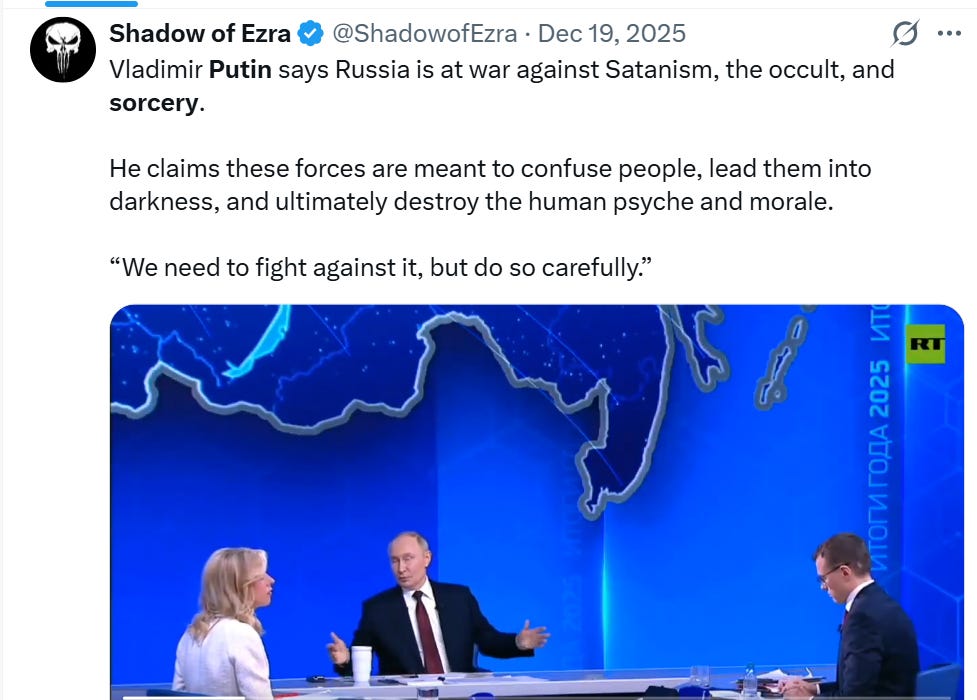
Putin has said, in multiple public appearances, that Russia is at war with the U.S. dollar, which he associates with Satanism, sorcery, pedophilia, and psychic mutilation; by that logic, the toxic orbit of the dollar is Ground Zero for the very demonology he’s ranting about.
The greenback isn’t a currency; it’s a cursed talisman powered by derivatives, deficit heroin, and weaponized sanctions—an occult ritual of debt slavery dressed up as “global finance.” For Moscow to crawl back into that would be like performing an exorcism and then inviting the demon to move into the guest room. Zero chance. You don’t denounce Hell on Sunday and then peg your lifeline to Lucifer’s balance sheet on Monday.
end of segment
Let’s see how our miners rebounded today after yesterday’s fake news
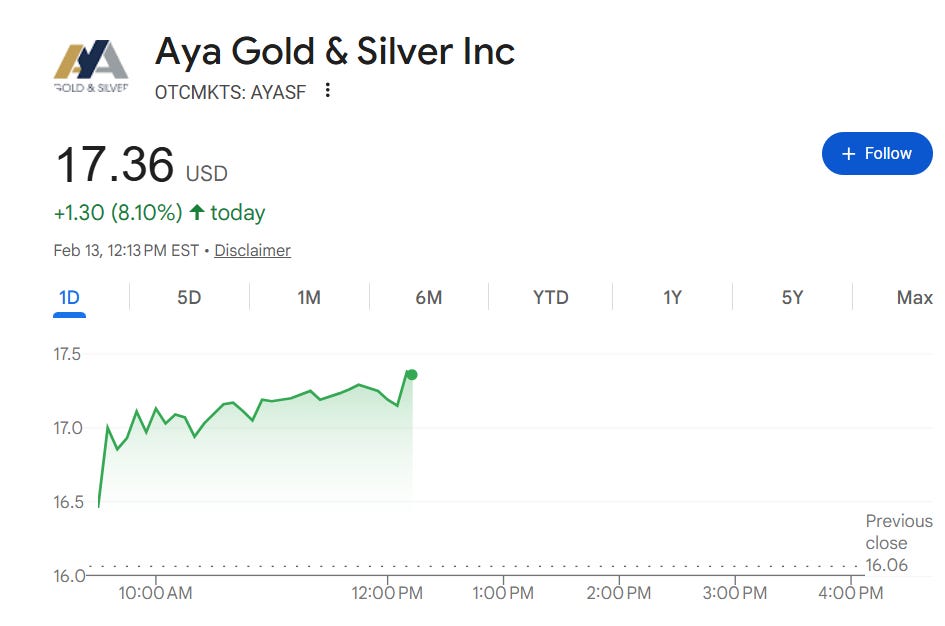
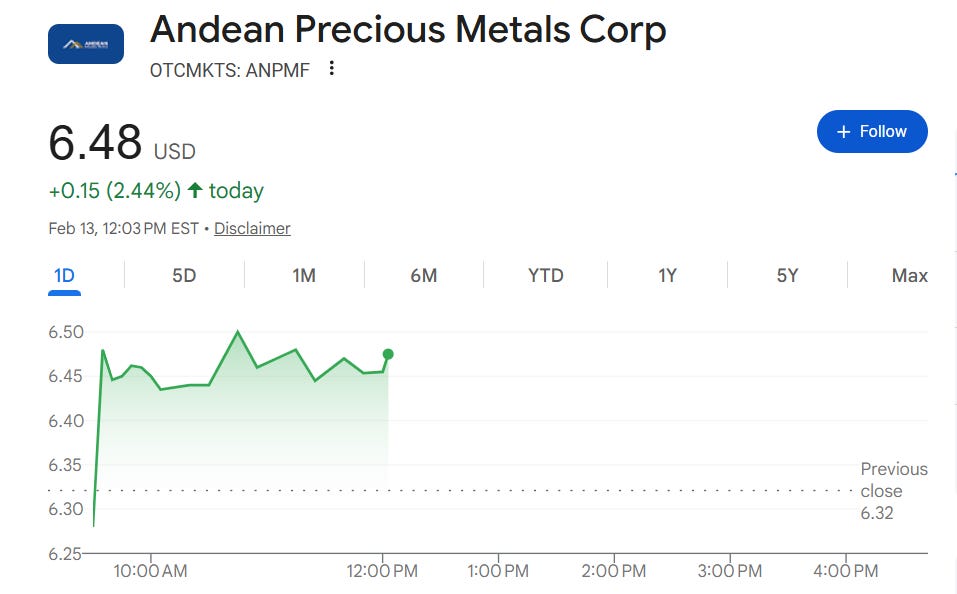
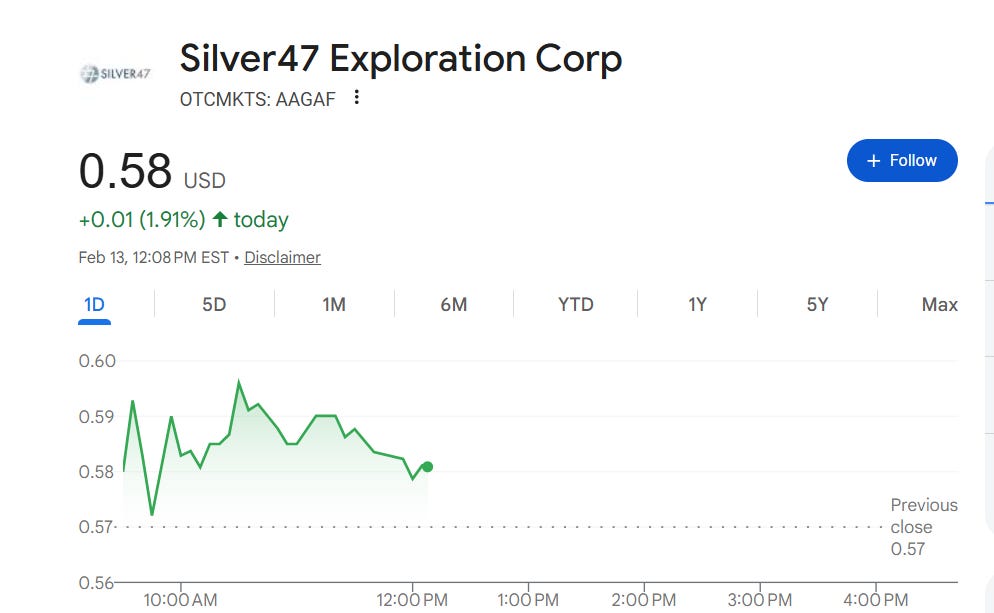
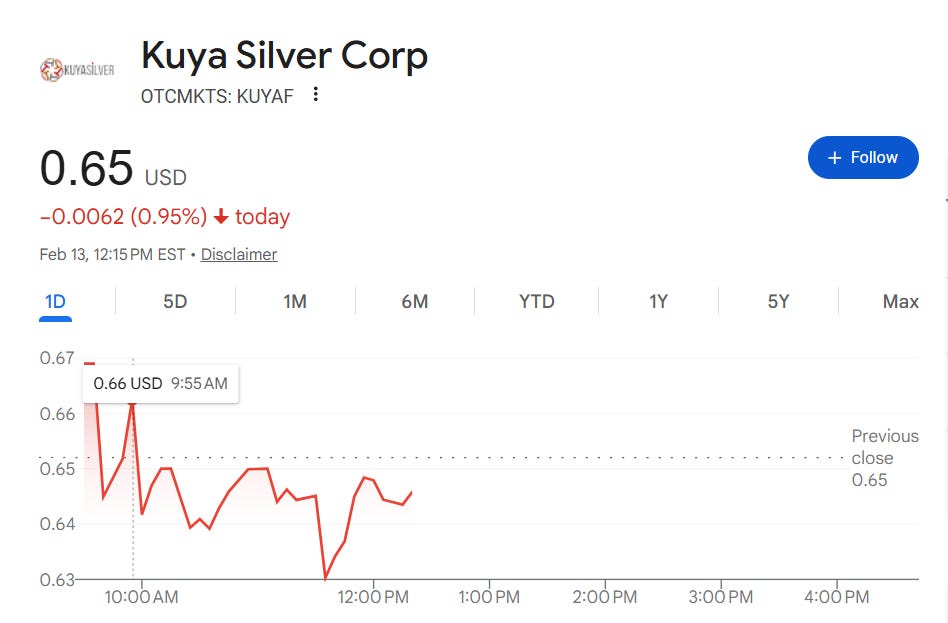
Silver’s paper price got taken out behind the shed, but our miners didn’t flinch—they answered with a counterpunch.
Aya ripped 8% higher, Andean Precious Metals climbed 2.5%, Silver47 added 2%, and only Kuya finished a measly 1% lower, for an aggregate move of roughly 4% to the upside on the day.
That’s the market screaming that miners are still grotesquely lagging the underlying metal—translation: this is the entry point, the kind you only recognize in hindsight.
With silver north of $75 dollars and the real earnings shock from Q4 and Q1 still not in the numbers, these miners are trading like Silver is still $30
end of segment
-
our opinions are not our sponsors
-
the editorial department is separate from the promotions department
-
not financial advice