
Global Silver Shock: Four Mints CRASHING, Market Seizes
In recent weeks, the silver market has entered a phase of extreme distress, marked by extraordinary shortages and dysfunction at every level. For the first time in modern financial history, the world’s four most influential national mints are reporting breakdowns that few believed possible in a functioning market.
Mint Meltdown: Supply Chain Collapse
U.S. Mint production of one-ounce Silver Eagles has collapsed to just 20% of last year’s output, leaving buyers facing record premiums and long delays for the most recognizable form of American bullion. What was once the backbone of retail silver demand is now barely a trickle—demand overwhelming supply in a spectacular fashion.
Travel north and the story grows darker. The Royal Canadian Mint, once a pillar of institutional supply, has completely shut down distribution of 10-ounce and 100-ounce silver bars. These are not minor collectibles—they are the very lifeblood of institutional silver demand. Never before has the Canadian Mint failed to deliver these bars to market. Today, buyers get a simple answer: “none in stock, and no timeline for resupply.”
“Sold Out” Warning Flashes at Canada’s Largest Bullion Bank
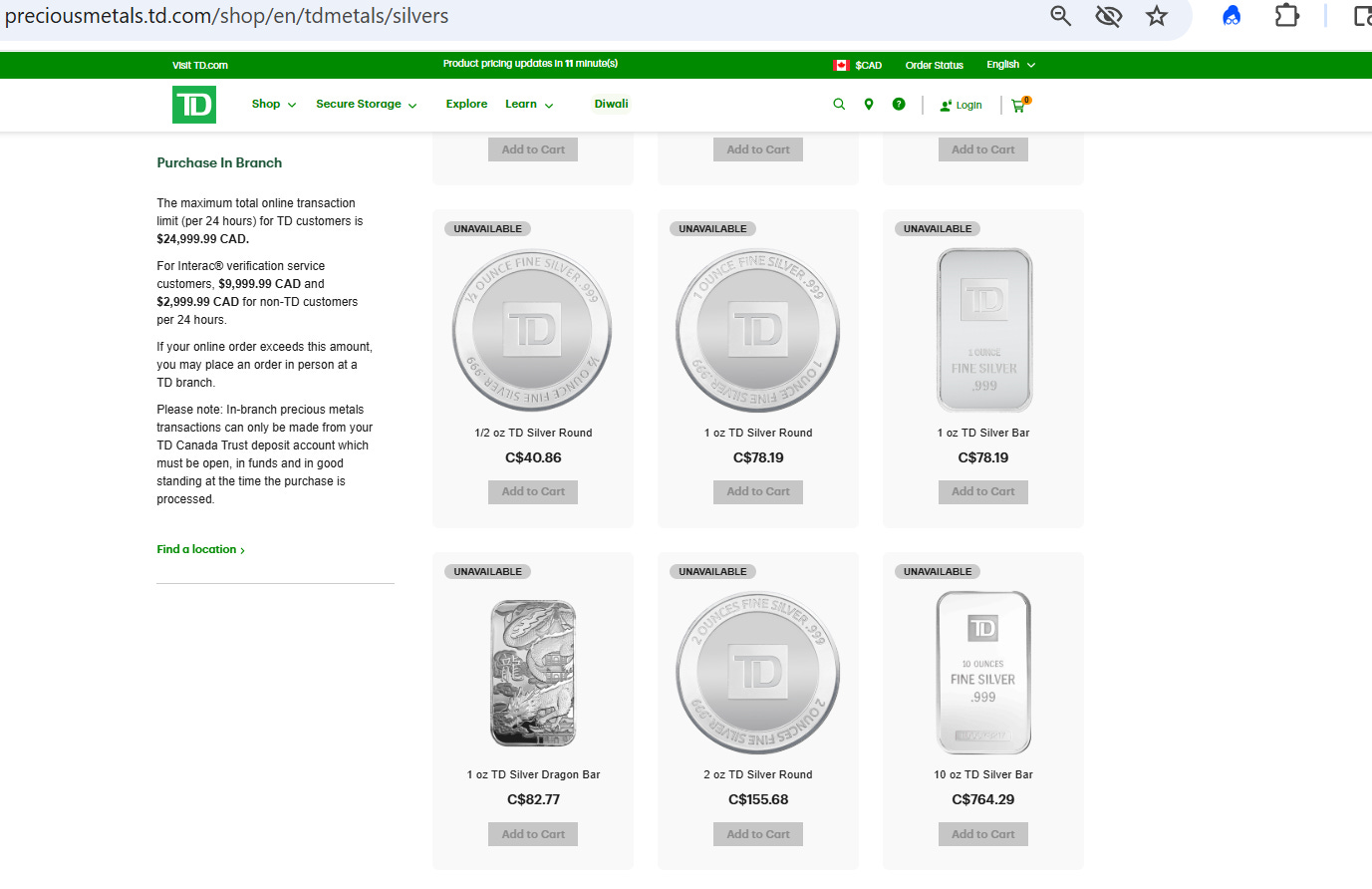
see for yourself
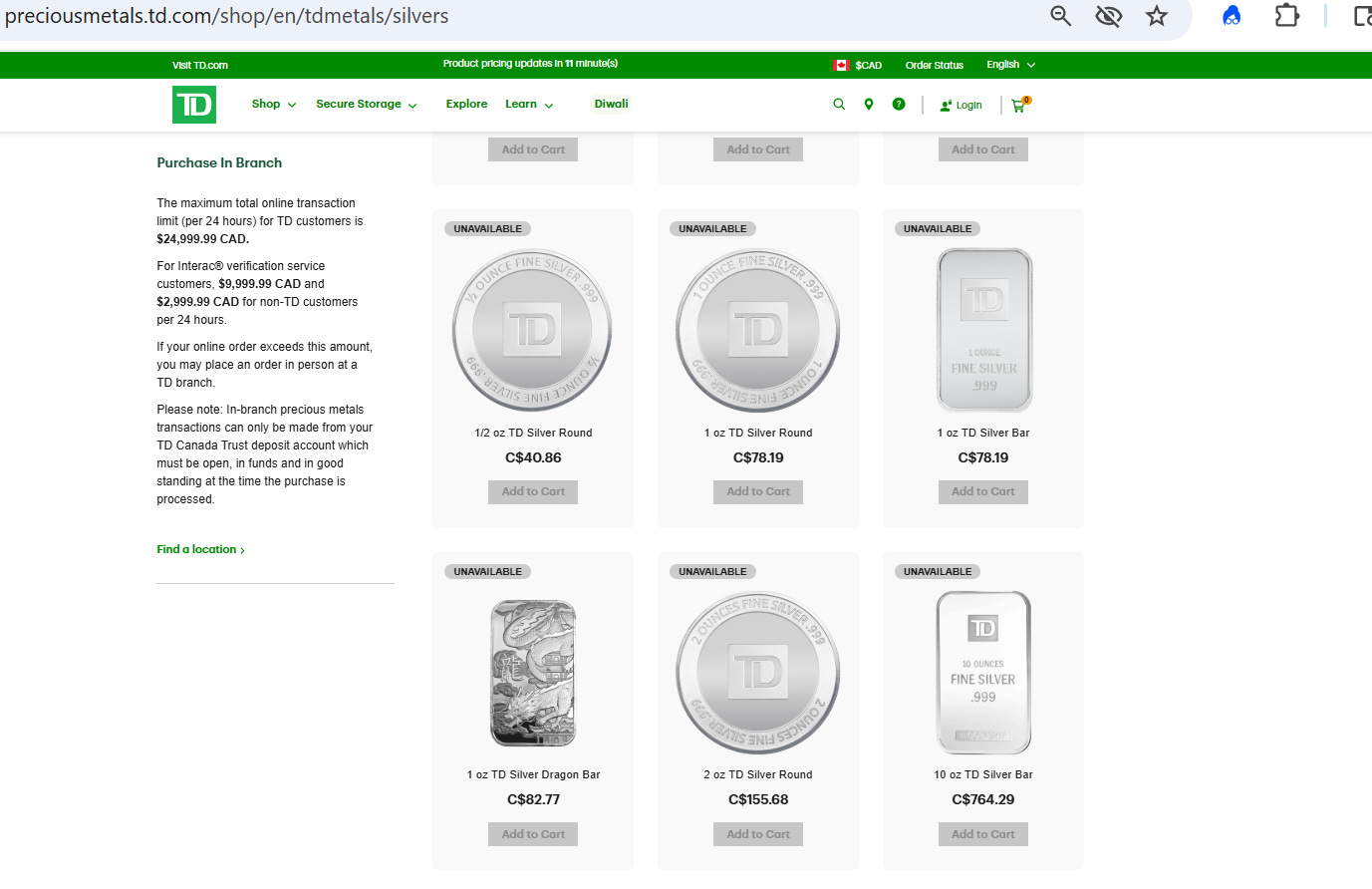
visit this page https://preciousmetals.td.com/shop/en/tdmetals/silvers
all I see is UNAVAILABLE
Perhaps the most chilling confirmation comes from TD.com, Canada’s leading banking bullion dealer. Checking their online shop, buyers are greeted by a shocking new reality: every single silver product—coins, bars, rounds—is marked as “Sold Out” or shown as “Unavailable.” No matter the denomination, TD customers simply cannot buy silver. It is the retail arm of a major bank declaring, in effect, silver has vanished from market shelves.
Down under, things are no better. Australia’s Perth Mint, trusted worldwide, has fully suspended all sales of silver products. Not a single coin or bar leaves the facility—effectively erasing one of the world’s key sources of new physical supply.
Back in Britain, the UK’s Royal Mint has limited sales to one-ounce coins only. Formerly reliable for larger bars and coins, the Britannia series is now drastically constrained, with every larger denomination barred from sale. Europe’s last channel for institutional-size silver is closed. Add to this the complete halt of silver Krugerrand production at South Africa’s Rand Refinery, and a stunning picture emerges: a full-blown crash in supply at every global mint.
“LBMA Silver Paralyzed—No Liquidity Left!”
But local shortages are only part of the story. The London Bullion Market Association (LBMA)—the hub of global silver trading—has seized up. Bloomberg, known for its sluggishness on precious metals crises, is finally reporting what industry insiders have warned for years: investment managers say there is “no liquidity of silver available” for spot delivery. Physical silver is simply gone at the prevailing market price, and anything remaining is being snatched up for private vaulting at escalating premiums.
Enormous outflows from London’s vaults—hundreds of millions of ounces lost in months—are now confirmed as metal leaving the system entirely, not just changing hands. The “just-in-time” delivery model underpinning the paper-based silver market is finished. Lease rates have exploded—reaching 100% to 200%—a clear sign of panic and desperation among banks and industrial users scrambling for crumbs.
Since 1987, the LBMA has run on speed and confidence—trading claims for immediate delivery of metal that often did not exist. Now, with billions of ounces sold as paper claims and only a fraction actually held in segregated vaults, the entire system reveals itself as precariously fragile. The endgame has arrived, and holders are demanding actual metal, not promises.
Bonds, Bank Runs, and Uncharted Waters
This rolling market seizure is having drastic ripple effects. Bond markets—already stuffed full of hot air from decades of monetary expansion—are under immediate threat. History warns that when gold and silver take flight, bonds collapse and yields spike as investors run for tangible assets. With over $300 trillion in global debt, and the Fed again cutting interest rates as inflation surges, there is nowhere left to hide except physical metal.
Even more dangerous is the reckoning facing major bullion banks, net short hundreds of millions of ounces on paper. If prices spike and forced deliveries follow, these institutions risk catastrophic losses and outright insolvency—a repeat of history ready to play out in real time.
“If You Don’t Hold It, You Don’t Own It”
The cure for this crisis is blunt. Prices must explode higher to coax reluctant holders to unload silver stocks. Of the estimated 25 billion ounces globally, most is locked in electronics, jewelry, or industry—not in LBMA-ready pure bars. No price, no delivery, no market. The short positions run deep; the margin for error has vanished.
ETF and bullion bank claims about “just hedging client positions” are unraveling. The SLV scandal—client silver being re-hypothecated and over-claimed—has shredded what little confidence remained. Now, central banks who leased out gold and silver to suppress prices in the past may discover those metals cannot be returned, setting the stage for currency crises reminiscent of the darkest historical episodes.
“Silver Apocalypse: Mints Dry, Markets Seize, Bonds Buckle”
With every technical indicator flashing caution, it is clear that monetary demand is the sole remaining force in these markets. No chart pattern or Wall Street cheerleading can stem the stampede into hard assets when faith in fiat is lost. Dealers are out, banks are posting “Unavailable” labels, and mints have thrown up their hands. Anyone watching these markets for years knows: this is the moment manipulation finally gives way to reality.
If you don’t hold it, you don’t own it. The warning is no longer hypothetical—every pillar of silver supply and price discovery is crumbling. This global shortage is not just news; it is a reckoning, and it demands action now.