
1. India Unlocks Silver’s Collateral Buying Power
2. Owners do not have to sell to monetize anymore
— hat tip to Vince Lanci for these top two subheadlines —
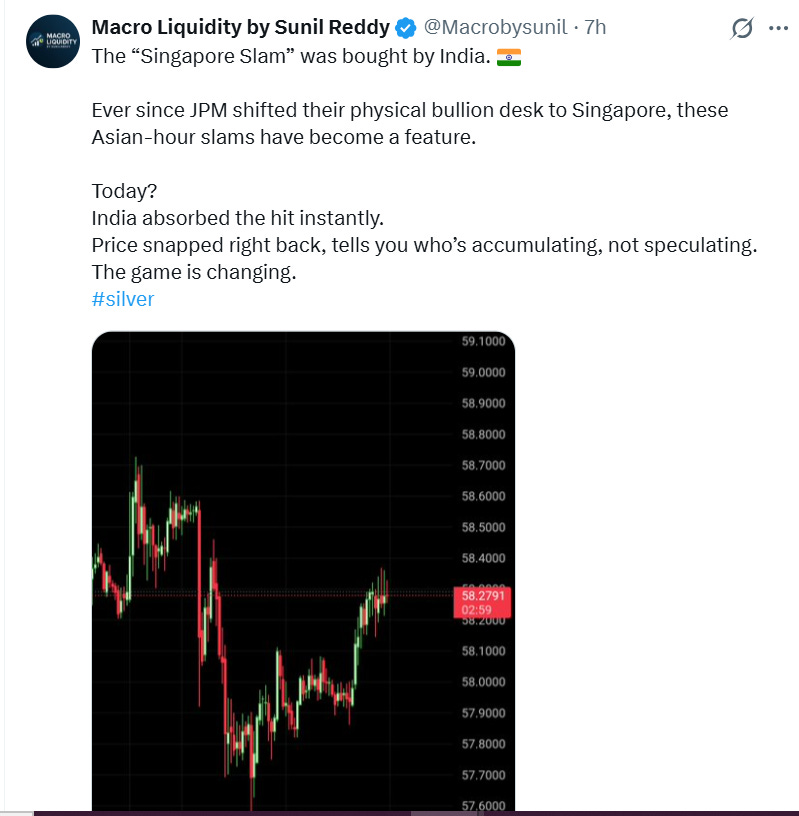
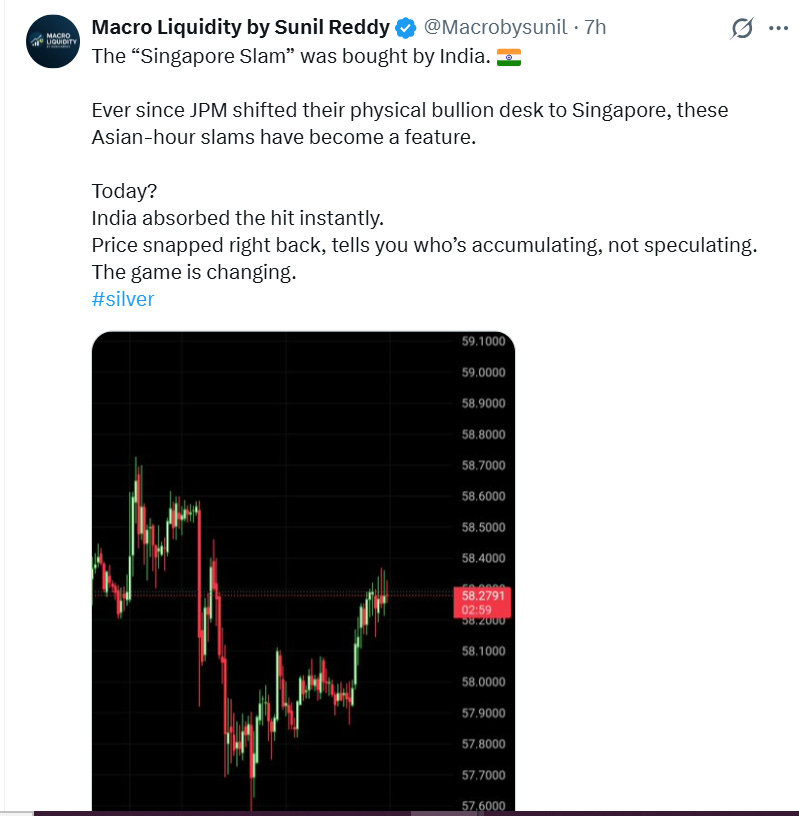
India Just Bought the “Singapore Slam”
While JP Morgan hoards silver, the RBI quietly turns it back into money.
Asia’s Midnight Slam, India’s Instant Rebound
The now-familiar 2 a.m. “Singapore Slam” hit silver again: a sharp sell program in thin Asian hours designed to knock price down and reset the narrative before London opens. This time, the script failed. Indian buying swallowed the hit almost instantly and price snapped back, exposing something the mainstream never talks about: physical accumulators are now stronger than paper shorts.
So who is really in control—the Western algos playing with price, or the Eastern buyers quietly taking delivery?
JP Morgan: Long, Short… or Cornering the Market?
For those keeping score, JP Morgan sits on what may be the largest private silver hoard in modern history—around 750 million physical ounces, including more than 21 million ounces accumulated in just a six‑week span. Over that same period in earlier years, the bank unwound a 200‑million‑ounce paper short, leaving itself with no reported short contracts, a radical departure from its usual “short paper, long metal” game.
This is the first time JP Morgan has effectively lined up on the same side in both physical and paper silver—net long on the metal while having shed its legacy shorts. That is not hedging; that is positioning for a major upside move, the kind of asymmetric setup that once lured the Hunt brothers into their failed 1980 corner, except this time the focus is on bullion, not leverage.
RBI’s New Play: Silver Becomes Collateral
Now layer in what just happened in Mumbai. Starting April 1, 2026, the Reserve Bank of India will allow banks, NBFCs, cooperative banks, and housing finance companies to extend loans against silver jewellery and coins under a new standardized framework. This is the first time India’s household credit system formally moves beyond gold and elevates silver into the collateral pool under the RBI’s 2025 “Lending Against Gold and Silver Collateral” directions.
The rules are clear: only silver in the form of jewellery or coins qualifies—no bullion bars, no ETFs, no structured products. Silver that used to sit idle in family lockers just got reclassified as usable money, without touching the bar market that big players like JP Morgan quietly control.
The Fine Print That Changes Everything
Look at the constraints. Collateral limits run up to roughly 10 kg for silver jewellery and 500 grams for silver coins per borrower, with loan‑to‑value ratios mirroring gold loans: up to 85% LTV for loans to ₹2.5 lakh, 80% for ₹2.5–5 lakh, and 75% above ₹5 lakh. Valuation must use the lower of the 30‑day average or previous day’s IBJA or exchange closing price, and stones or non‑precious components are explicitly excluded from collateral value.
The RBI also forces lenders to return pledged jewellery within seven working days of full repayment, with penalties of ₹5,000 per day if they delay, hard‑coding consumer protection into the architecture. In other words, silver is being monetized at the household level, but without opening the door to speculative leverage on bullion bars.
Connecting the Dots: Who Wins This Game?
Put it together. JP Morgan has spent years using short futures to press silver lower while accumulating physical metal, ending up with hundreds of millions of ounces under its control. India, meanwhile, is not only buying dips like the latest “Singapore Slam,” it is about to let every household unlock credit against silver as collateral—turning cultural savings into a shadow monetary base.
If silver, properly inflation‑adjusted from its 1980 high, implies potential valuations north of hundreds of dollars per ounce, then this quiet re‑monetization is not a sideshow—it is the main event. The West can keep worshipping overvalued tech tickers; the East is quietly arming itself with the one asset that always exposes fake valuations: physical metal that cannot be printed, spoofed, or bailed out.
When the next “slam” hits, ask yourself: are you on the side that sells the paper… or the side that takes the silver?
Stack Silver or You will get Crushed during the THE GREAT TAKING
India has fired the starting gun on silver’s return as money: from April 2026, its new banking rules formally allow loans against silver jewellery and coins, bringing household silver directly into the credit system as recognized collateral.
-
Global mine production may approach 800 million ounces in 2026, but declining ore grades mean fewer ounces per tonne and structurally higher costs, tightening real supply even if headline tonnage looks stable.
-
Mexico remains the world’s top silver producer, yet its political drift away from U.S.–Canada alignment and closer coordination with Russia and China adds jurisdictional risk and raises the odds more Mexican silver flows East instead of into Western markets.
-
As Mexico’s risk profile rises and Asian offtake grows, Western refiners, mints, and industrial users face a more fragile supply chain that is vulnerable to policy shocks, export controls, or strategic bilateral deals.
-
Demand is structurally set to outrun supply as electrification and digitization accelerate: data centers, AI hardware, robotics, EVs, grid storage, and solar all require large, non-substitutable silver inputs that grow with each new build-out.
-
Silver is being re-monetized from the top down, with state and quasi-state actors like China, India, Russia, UAE, Dubai, Saudi interests, sovereign wealth funds, and institutional allocators quietly adding metal as a monetary reserve and inflation hedge.
-
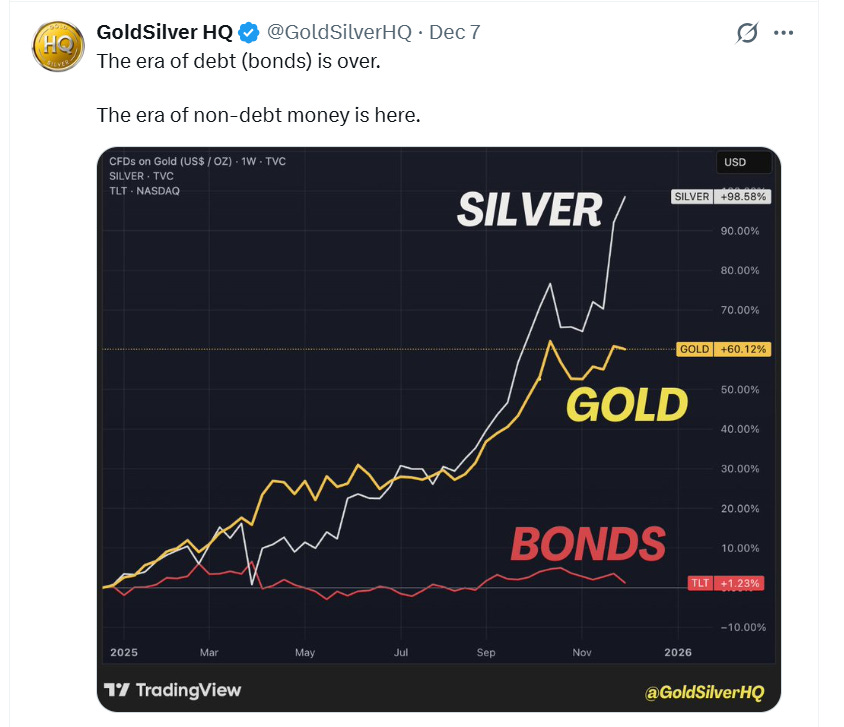
Price action is confirming the shift: silver has risen by more than 100% in calendar 2025, driven primarily by structural deficits and institutional flows rather than a frenzy of retail speculation.
-
Retail FOMO has not truly started; mainstream investors and households remain heavily concentrated in overvalued financial assets and underexposed to physical silver or quality mining equities.
-
Adjusted to 1980-style inflation metrics, silver’s prior peak implies a “real” price north of 600 dollars per ounce, suggesting that even after outsized gains, the metal still trades at a steep discount to its historic monetary power.
-
The gold-to-silver ratio is compressing and a move toward roughly 50:1 by mid-2026 would signal silver reasserting itself as a core monetary metal rather than a marginal industrial byproduct, with profound ramifications for portfolios built on the old paradigm
In an age of weaponized inflation, creeping surveillance, and “Great Taking” style asset grabs, owning silver is no longer a hobby; it is self-defense.
Silver is the ordinary citizen’s veto on a system that wants every transaction tracked, every savings account digitized, and every war quietly financed through debasement.
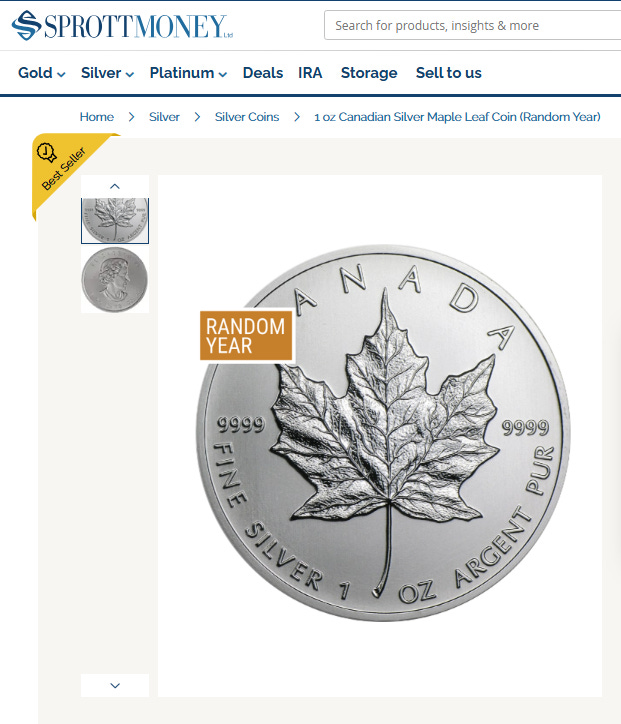
It resists the surveillance state by moving value off-grid, resists inflation by anchoring purchasing power in something finite, and resists forever wars by starving the printer that pays for them. For those who understand this, sprottmoney.com stands out as the most trusted source for real, deliverable silver.
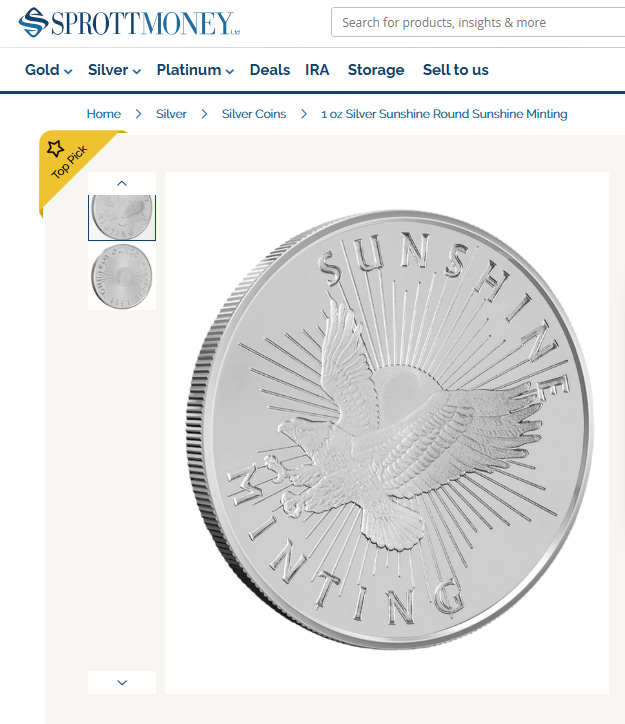
Start stacking Silver by clicking on the images below!
end of segment
-
our opinions are not our sponsors opinions
-
editorial department is separate from promotions department
-
not financial advice