
by Niko Moretti
-
Once the kidnapping‑for‑profit model succeeds on a junior like Vizsla, larger names such as First Majestic could become targets.
-
The playbook: pick a miner in a contested region, build short/put positions via intermediaries, then trigger a high‑impact violent incident.
-
After the incident, global risk‑off flows and ESG‑sensitive funds amplify the stock’s collapse, monetizing the violence.
-
Turning a mining ticker into a trading weapon would simply be another profitable line of business for diversified criminal networks.
The human tragedy here is paramount. The suffering of the victims and the anguish of their families must come before any discussion of markets. Our thoughts and prayers are with them, and their safety and dignity matter infinitely more than stock tickers or share prices. – Jon Forrest Little
Ten Men Went to Work. They Never Came Home.
Ten men went to work at Vizsla Silver’s Pánuco project on the morning of January 23. They never came home. Today, families in Sinaloa are shuttling between search sites, morgues and prosecutors’ offices, waiting for the Mexican state to put names to bodies pulled from clandestine graves around Concordia. For them, this is not about ounces, tickers or jurisdictional discounts. It is about sons, husbands and fathers who left for a camp shift and ended up as another entry in Mexico’s long ledger of disappearances.
“There Is No Justice With What Is Happening”
Mexican authorities have now recovered 10 bodies in the Concordia area as part of the investigation into the kidnapping of Vizsla’s workers, with five formally identified so far and forensic work continuing on the rest. Mexico’s national mining chamber, Camimex, confirms that among the dead are miners Ignacio Aurelio Salazar, José Ángel Hernández and José Manuel Castañeda Hernández, whose names are now appearing in union statements and local press demanding justice. “In truth, this has been very painful to be here, in a place where we don’t want to be. There is no justice with what is happening,” one relative said outside a forensic facility, giving voice to the human cost behind the headlines.
Trapped Between Los Chapitos and Mayo
From Mexico City, Security and Civilian Protection Secretary Omar García Harfuch has placed the crime squarely inside Sinaloa’s cartel war. Authorities suspect a cell linked to the Los Chapitos faction, loyal to the sons of Joaquín “El Chapo” Guzmán, was behind the kidnapping in a region contested with a rival group aligned with Ismael “El Mayo” Zambada. Early briefings suggest the gunmen may have believed the miners were connected to a rival faction, turning a bus of engineers and technicians into expendable symbols in an internal show of strength. Federal prosecutors say four suspects have been arrested, and the Concordia graves are now treated as one more crime scene in a broader pattern of cartel‑related killings across Sinaloa’s mining belt.
Vizsla’s 911 Call: A Crisis Response Failure
Vizsla’s public messaging has been sombre, polished — and deeply revealing. “We are devastated by this outcome and the tragic loss of life. Our deepest condolences are with our colleagues’ families, friends and co‑workers, and the entire community of Concordia,” CEO Michael Konnert said after authorities confirmed the first identifications. The company says it has suspended operations, is awaiting official verification from Mexican authorities and remains focused on locating any workers who may still be missing and supporting affected families. Yet Sinaloa’s attorney general has publicly stated that her office’s only communication from Vizsla was a single 911 call from a legal representative on January 23 — and that families, not the employer, filed the missing‑persons reports. The gap between the language of “devastation” and the reality of hiding behind an emergency call instead of engaging directly and continuously with investigators is not a minor PR flaw. It is a flashing red light on corporate preparedness — and on the very idea that foreign juniors can safely operate in these zones at all.
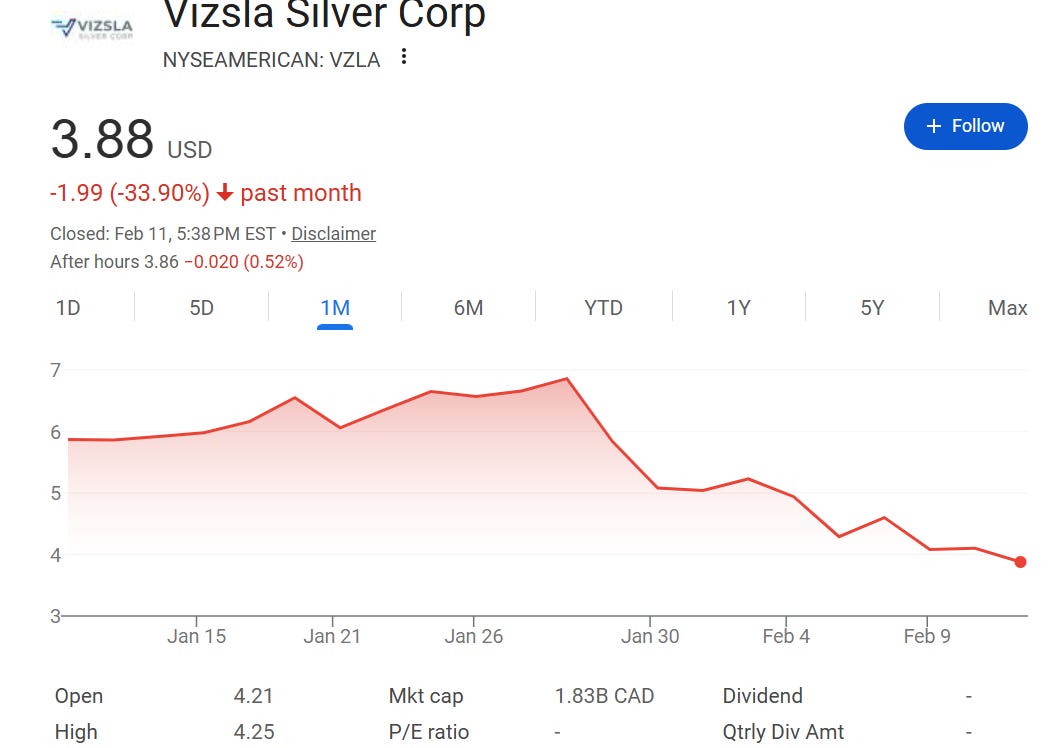
What do markets think about all this tragedy?
From Blockades to State‑Backed Mine Grabs
This is not an isolated “one‑off” tragedy. Mexico’s mining map is increasingly littered with blockades, seizures, forced shutdowns and confrontations where the line between state, criminal groups and local power brokers is blurred beyond recognition. Ross Beaty’s Los Filos mine in Guerrero has been repeatedly shut down by the Ejido of Carrizalillo, which has denounced racism, broken promises and threats, forcing lengthy production halts as the “social license” collapses. In Durango, armed men backed by municipal and state authorities seized ECI’s Indé Mine in December 2025 — a “state‑backed silver grab” where the company’s people were safe, but its plant, mill and ore body were simply no longer under its control. This is the same country where cartels already tax freight, steal ore and extort operators; weaponizing a public mining equity is just the next logical branch on a diversified criminal balance sheet.
The “Kidnapping‑for‑Alpha” Playbook
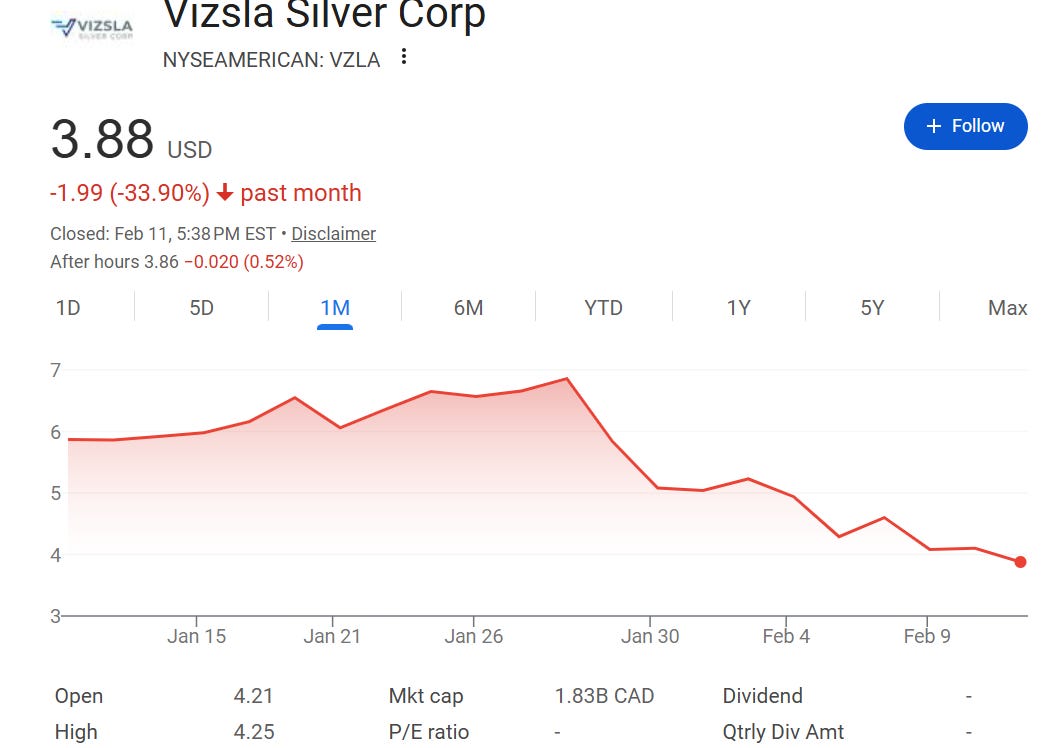
In a “kidnapping‑for‑alpha” playbook, a group with advance knowledge of a planned abduction could quietly build short positions or buy puts in a single‑asset name like Vizsla on the TSX and OTC, then let the violence, military deployments and media coverage do the rest. With Vizsla down more than 30% in a month, the proof of concept is sitting in plain view. Because the story is “real” and the risk‑off reaction is rational, the profits can be laundered as savvy jurisdiction pricing rather than insider dealing, routed through nominees and offshore entities beyond easy Mexican or Canadian reach. A handful of men with rifles on a mountain road can vaporize hundreds of millions in market cap, while their syndicate quietly captures a slice of the downside.
From “Mining Friendly” to “No New Concessions”
Layer that security breakdown onto Mexico’s hard pivot into resource nationalism and you no longer have a jurisdictional discount. You have unquantifiable political and criminal risk masquerading as a “cheap” opportunity. The Morena project has been explicit: “no new mining concessions,” a tightening mining law that corners foreign operators, lithium carved out as a strategic state resource in 2022, and increasing rhetoric that subsoil wealth — silver included — belongs to “the people,” not foreign shareholders. President Claudia Sheinbaum’s energy‑sovereignty push and the party’s silver‑sovereignty agenda are not theoretical; they sit alongside PR tours and legislative changes that move Mexico step by step toward de facto nationalization of its crown‑jewel metals.
Why Silver Academy Calls Mexico a “No‑Go Zone”
This is why Silver Academy has been dogmatic, emphatic and, yes, sensational in telling readers that Mexico is not a bargain but a no‑go zone. Across a long series of investigations — from “NO NEW MINING CONCESSIONS” to “Eight Iron‑Clad Reasons to SELL ALL YOUR SILVER MINING STOCKS IF THEY OPERATE IN MEXICO” and “Mexico: One Sandal Away from Nationalizing Silver” — we have laid out, in advance, the convergence of cartel violence, legal hostility and nationalist politics now on full display in the Vizsla tragedy. We warned that lithium was just the dress rehearsal, that silver would be next, and that investors clinging to Mexico‑heavy producer baskets were betting against both the state and the street.
One Teaching Moment, One Portfolio
For the families of Vizsla’s workers, none of this offers consolation. Their demands are basic: find the missing, identify the dead, prosecute the killers and stop this from happening again. For investors, the lesson is harsher. When a jurisdiction combines cartel penetration, politicized law enforcement and explicit resource nationalism — and when a single 911 call passes for corporate crisis engagement — the downside is not “volatility.” It is permanent capital impairment. The moral response to Pánuco is solidarity with the victims and pressure for accountability. The financial response is simpler: if a silver miner’s future runs through Mexico, step aside. There are other rocks. There is only one portfolio
end of segment
-
our opinions are not our sponsors opinions
-
the editorial department is separate from the promotions department
-
not financial advice