
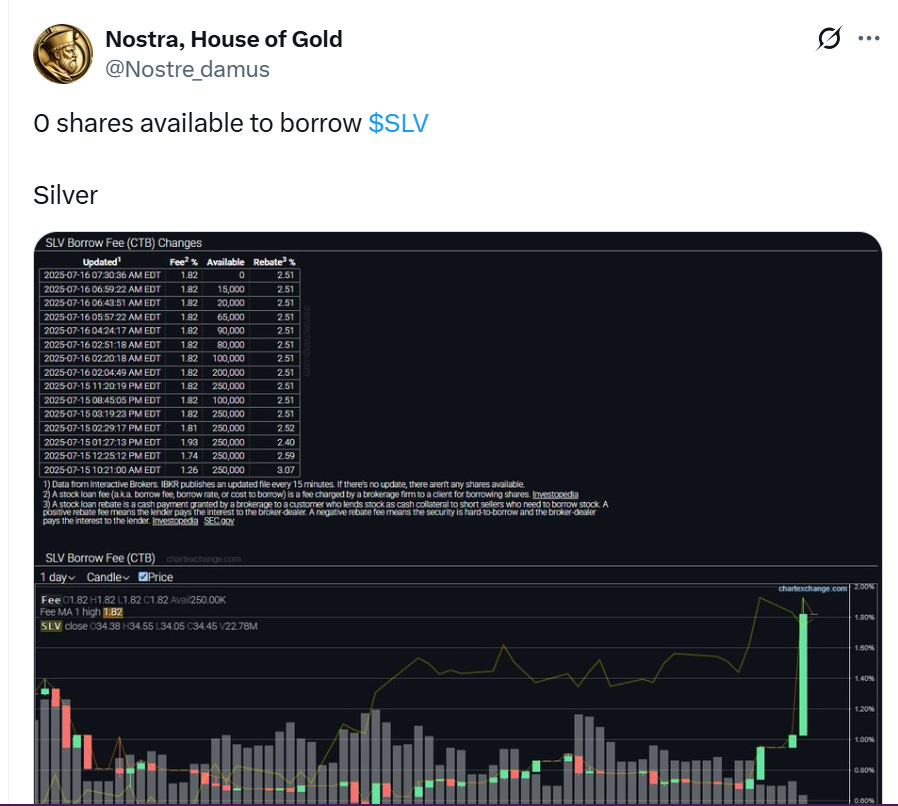
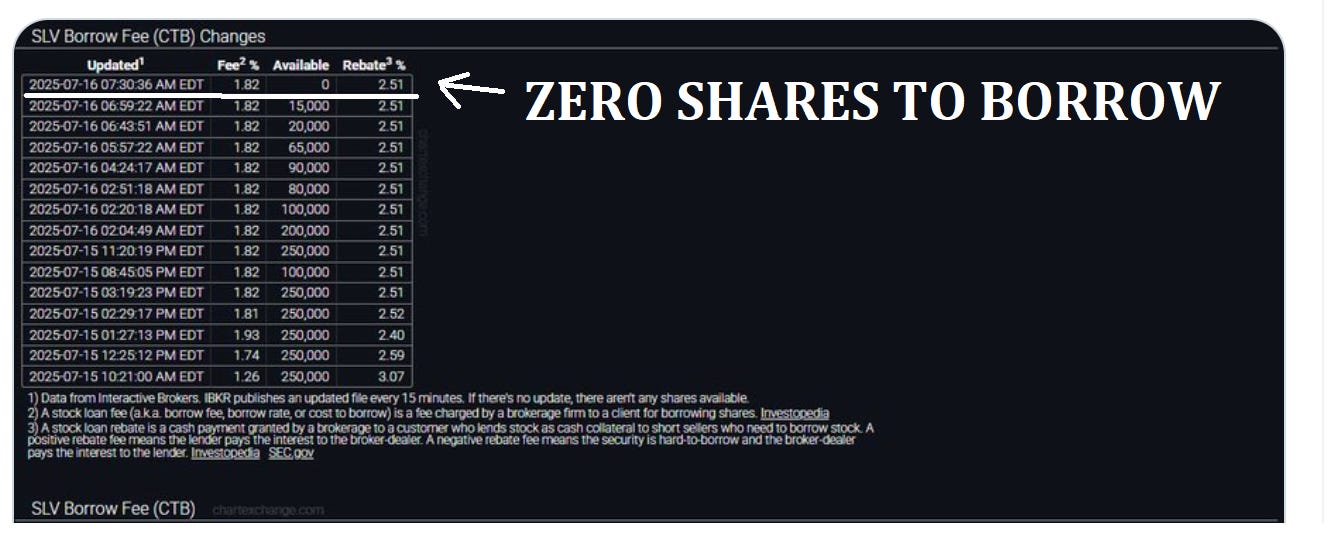
When you see that there are zero shares available to borrow for SLV, the iShares Silver Trust ETF, it means that brokerage firms have no shares left to lend out to investors who want to short the stock.
In other words, if there are no shares available to borrow, you cannot open a new short position in SLV. This is because short selling requires borrowing the security before selling it, and if no one has shares to lend, short selling is not possible.
There are a few reasons shares might not be available.
-
One reason could be a high demand for shorting SLV, which can quickly exhaust the pool of lendable shares.
-
Another factor might be that some SLV shares have been redeemed for physical silver, reducing the overall number of shares in circulation.
-
Market volatility can also play a role; during uncertain or turbulent times, investors might rush to short SLV, creating a shortage of shares available to borrow.
When shares aren’t available to short, no new short positions can be entered until inventory replenishes.
Additionally, this scarcity can cause borrowing fees to increase significantly, sometimes rising to double-digit percentages annually.
This can lead to risky situations like short squeezes, where short sellers are forced to cover their positions, driving prices higher. Ultimately, having zero shares available for borrowing means that shorting SLV is simply not an option, no matter what the market outlook or trading strategy might be.
end of segment