
by Jon Little intern Niko Moretti
The Secret Playbook Behind History’s Greatest Gold Revaluation
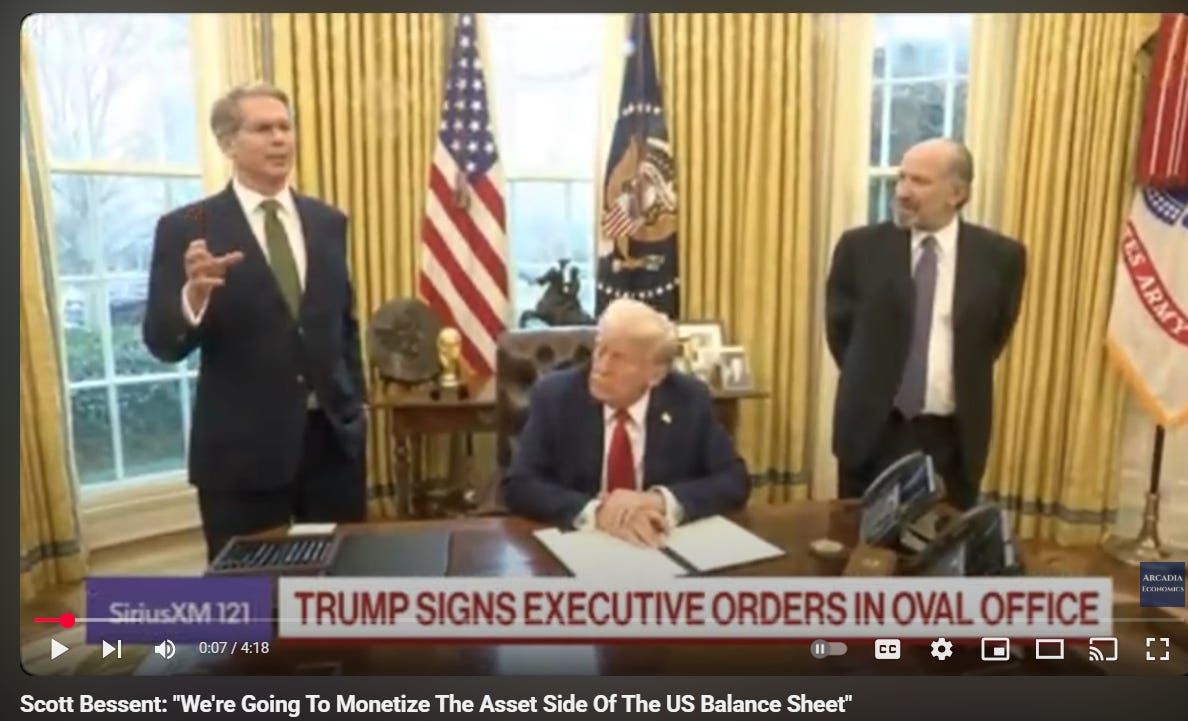
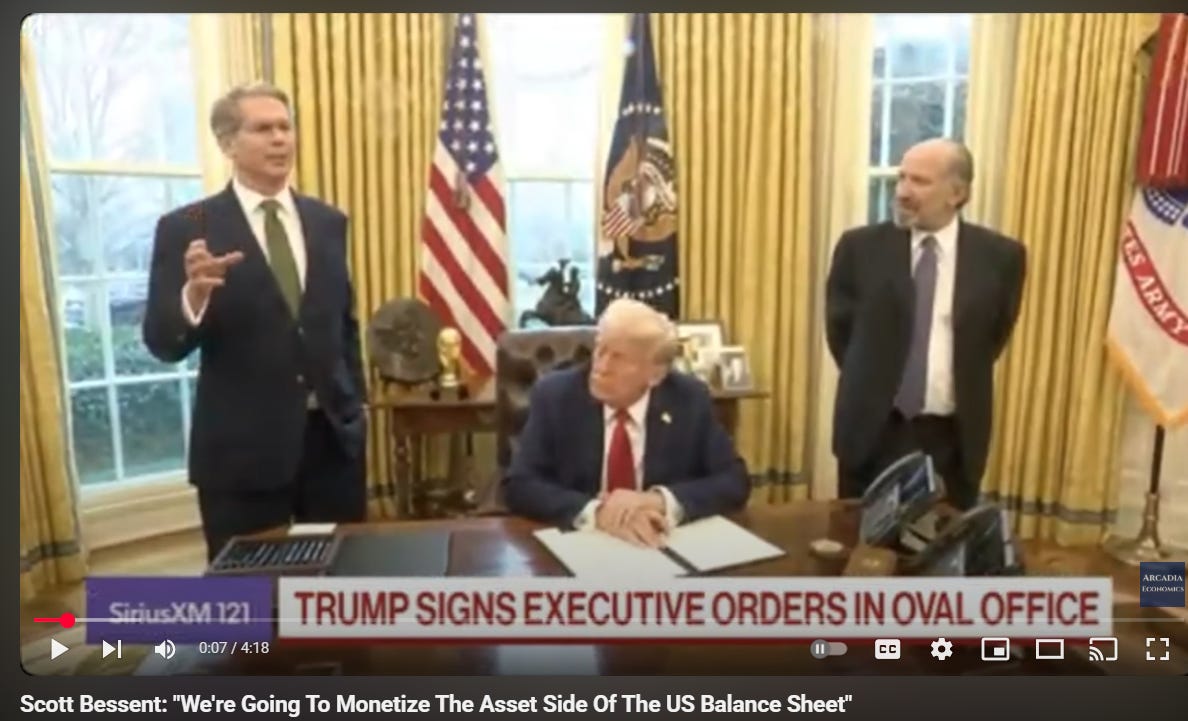
Within hours of taking office, new Treasury Secretary Scott Bessent declared the U.S. will “monetize the asset side of its balance sheet.” Did you catch that seismic shift? Are you ready for what could be the most explosive move in monetary history?
That’s not just rumor—that’s the shot heard round the world. And from the inside former Swiss banker Clive Thompson, confirmed what much of Wall Street still hasn’t grasped—the U.S. is on the verge of unlocking the true power of its gold hoard.
Do you see now why $15,000 gold isn’t just possible, but probable?
Why Monetize Gold Now?
The U.S. faces tsunami-sized deficits. Let’s get specific: Interest on the national debt as a share of tax revenue has leapt from 8% three years ago to nearly 19% today—with the CBO forecasting even higher percentages soon.
FACT: Let this sink in:
With $37 trillion in U.S. national debt around the 5% rate, daily interest payments total over $5 billion—straining government finances and highlighting the urgency for significant fiscal solutions.
How much longer can any government sustain a debt snowball this big before something breaks?
Nine trillion in low-interest debt is rolling over soon, being forcibly refinanced at rates double or triple what they were. If the government doesn’t act, interest alone will soon consume a quarter of every tax dollar.
Do you think voters—or the bond market—will tolerate that?
The Only Play Left: Gold Revaluation
Here’s the masterstroke: The U.S. can instantly revalue its gold—currently accounted for at $42.22 per ounce. That’s right, the world’s biggest gold stash, some $11 billion on paper, is actually worth closer to $800 billion at today’s market price.
Did you realize the U.S. is sitting on a cash cow it’s desperate to milk?
But why stop at $3,400? Clive Thompson’s plan: Revalue gold at $15,000/oz. That one move would inject $3.9 trillion into the Treasury—without adding a penny to the national debt.
Could one “mark-to-market” trick solve Washington’s funding crisis virtually overnight?
How It Works—And Why It’s Legal
The mechanics are proven. The Bitcoin Act blueprint shows how the Federal Reserve could swap old gold certificates for new ones based on the revalued treasure. The Fed would fork over the $3.9 trillion difference—no fresh bonds or IOUs needed.
Imagine: the Treasury gets a massive windfall; the Fed foots the bill, and the national debt shrinks, not grows.
In 1934, FDR pulled a similar move, instantly boosting the gold price by 69%. The world’s currencies—then pegged to gold—reeled, but prices in the U.S.? They didn’t budge.
Will it be different this time? Or are we set for the same fireworks, but on a modern, digital scale?
Who Would Sell? Why $15,000 Makes Sense
Here’s where it gets intriguing: The Treasury could also stand as buyer of last resort, vacuuming up every ounce offered at $15,000. This brings gold back onto America’s books, while sellers walk away flush with dollars. Crucially, at $3.9 trillion, it’s a boost big enough to move the needle, but “digestible” for markets—less than Microsoft or Nvidia’s valuations, for context.
Are you the seller who misses out, or the stacker who holds through the greatest revaluation ever?
Some ask why not go higher—$150,000, $1 million? But the risk, according to Thompson, is destabilization. $15,000 is bold, but not reckless.
Isn’t bold action exactly what’s needed now, while the U.S. dollar still commands respect?
What About the Dollar?
Naysayers worry about a currency collapse. But the 1934 devaluation didn’t cause consumer inflation—the newly “minted” wealth went to pay government bills, not jolt Main Street with free cash. Gold goes up. Dollar adjusts, but doesn’t implode—the world’s not on a gold standard any longer.
A message to the naysayers:
Are you letting fear paralyze you while insiders reset the financial game board?
Bullish Knock-On Effects for Silver and Commodities
If this happens, what do gold sellers do with their windfall? The smart money pivots fast—to silver, the neglected sibling with a fraction of gold’s market cap. Industrial demand for silver already outpaces supply—a tidal wave of new buyers would be rocket fuel.
The Question on the proverbial table is:
Are you positioned in silver before the herd, or will you be forced to chase?
Panic or Prepare: Delivery Frenzy and Institutional Moves
Why have Comex deliveries for 100-ounce gold bars tripled since last year, shrouded in secrecy? It’s not mom-and-pop. It’s sovereign players, hedge funds, and those privy to “next steps” in the monetary order.
What do the mega-rich know, and why are they grabbing physical metal—quietly, urgently, now?
Final Warning—Have You Hedged for the Reset?
Follow Ray Dalio’s lead
Hedge funds wield immense power—not just on Wall Street, but deep in the halls of Washington. Their multi-billion-dollar trading books, global influence, and political donations secure coveted access to lawmakers and regulators. Major players like Ray Dalio’s Bridgewater Associates have cultivated close relationships with policymakers, giving them an inside track on potential seismic market shifts. This explains why Dalio made headlines by selling off S&P 500 holdings to load up on gold. Dalio understands the machinery of Washington and senses that a major gold revaluation is imminent. For the founder of the world’s largest hedge fund, this isn’t speculation—it’s a calculated move based on deep institutional insight that the U.S. government is preparing to unleash the next chapter in monetary history.
History shows these windows snap shut fast. Think you’ll buy gold or silver during a crisis? The shop shutters drop and the ‘no supply’ sign goes up overnight.
If this is the moment the system resets, are you going to be the one who acted or the one left counting fiat in the rain?
Don’t let hindsight haunt you. Diversify. Prepare. And recognize that $15,000/oz gold isn’t a wild moonshot—it’s the logical, cold-blooded next step in a world desperate for a reset.
Are you locked into a crumbling paper system? Or are you turning the tables, before the fireworks ignite?
end of segment