
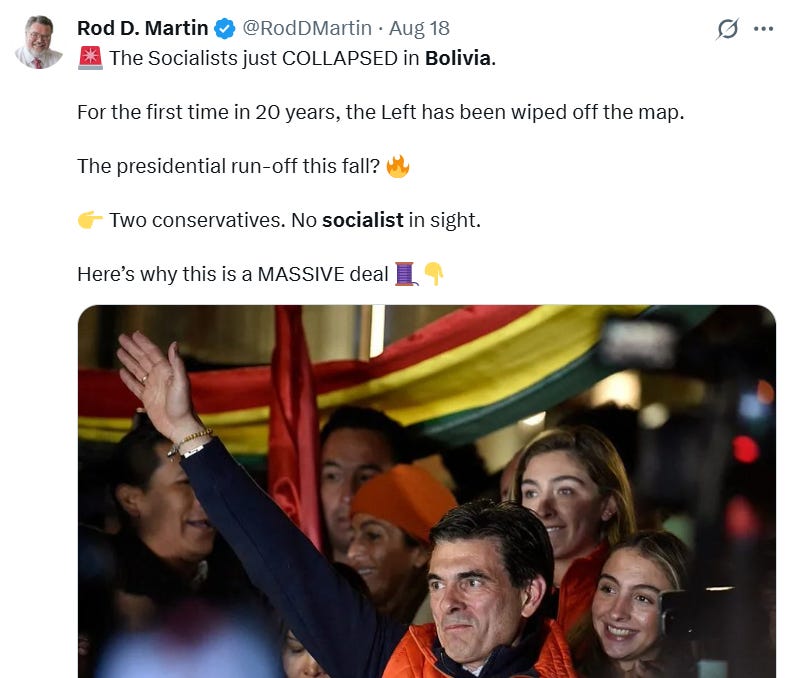
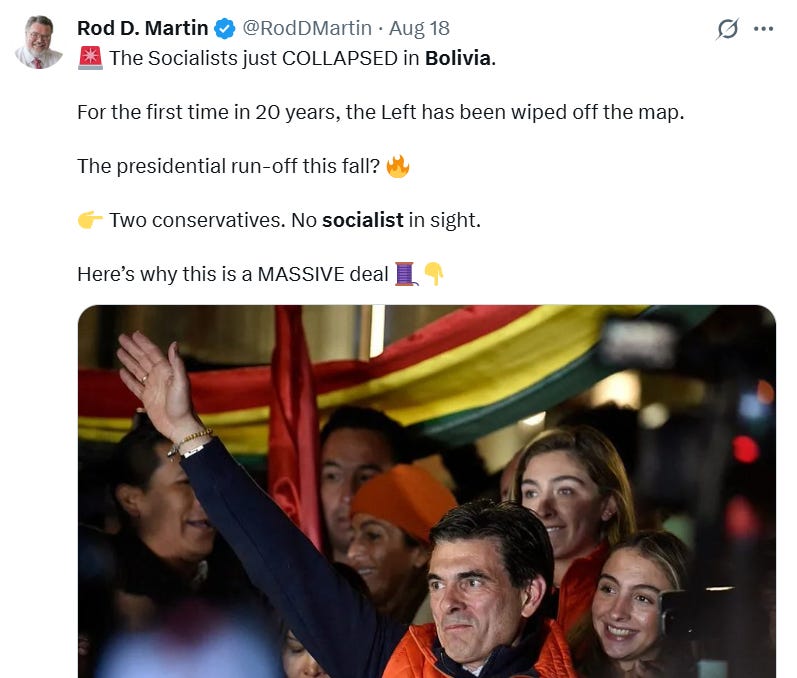
Bolivia’s Political Earthquake: A Silver-Lined Opportunity
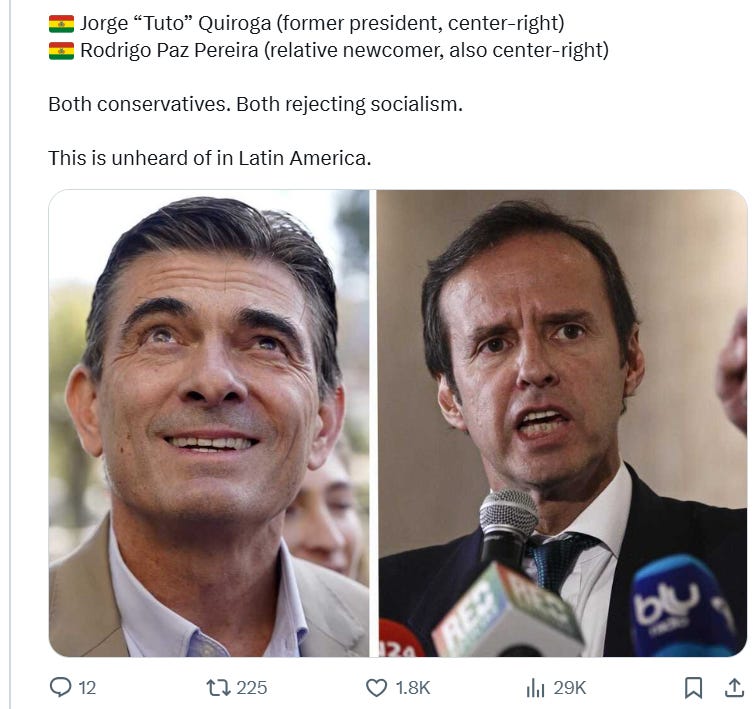
Bolivia’s 2025 presidential election has ushered in a new era. After two decades dominated by socialist policies, the country is swinging decisively toward the political center and right. This electoral upset not only marks a historic defeat for the Movement Toward Socialism (MAS) party, but it also sets the stage for a dramatic rethinking of Bolivia’s economic strategy—especially around silver, the crown jewel of the nation’s mineral resources.
Bolivia’s Silver Sector: Ready for a Bullish Breakout
With the shift away from socialism, Bolivia’s state-owned mineral wealth—dominated by massive deposits of silver—stands on the threshold of transformation. Andean Precious Metals, controlling Bolivia’s largest commercial silver oxide processing plant at San Bartolomé, is perfectly poised to capitalize. The company’s recent agreement to process 7.0 million tonnes of state-owned oxide ore supercharges its production roadmap. At the same time, San Bartolomé is already delivering outstanding results, with 4.5 million silver equivalent ounces produced in 2024, thanks to a steady supply chain and robust margins.
Silver’s Vital Role in Economic Recovery
Silver is more than just Bolivia’s economic lifeline—it’s the ticket to resurgence for silver-producing nations across Latin America and the world. With commodity prices languishing relative to the surging Dow, gold and silver have been undervalued, creating a rare buying opportunity. For economies strained by inflation, currency weakness, and investment outflows, silver offers a path out of stagnation. Stabilizing key inputs and boosting export revenues, silver mining revitalizes job growth and strengthens government finances, especially as global demand builds around industrial, green, and monetary uses.
The Bullish Scenario for Andean Precious Metals—and Beyond
Bolivia’s likely political pivot toward market-friendly, pro-investment reforms could mean a windfall for Andean Precious Metals. Tax burdens may ease, regulations may loosen, and the incoming government may prioritize mineral sector growth as a way to shore up national finances. These winds of change could empower Andean to scale production, pursue new expansion and mergers, and deliver even more silver to the world. Fast-track permitting, more reliable access to dollars, and formalized artisanal supply chains would support lower costs and higher profit margins.
This isn’t just good news for one company. If pro-growth reforms spread across other silver-rich nations—think Peru, Chile, US, Canada and Morocco—silver itself could become a powerful catalyst for regional and global recovery.
When commodity prices begin to catch up to equity markets, silver positions like Andean Precious Metals and the sector at large could surge, carrying with them the promise of stronger economies, thriving communities, and revitalized nations.
Silver: The Engine of Economic Renaissance
Bolivia’s future now glimmers with silver’s promise. With social and political barriers falling, silver isn’t just a commodity—it’s the lifeline. Whether pro-market leaders in Bolivia or elsewhere grasp this opportunity, silver production can offer not just profits, but real solutions to chronic economic challenges. Andean Precious Metals is at the front of this movement, and as commodity values inevitably rise to meet surging demand, the bullish case for silver becomes hard to ignore. Silver may well save Bolivia—and every silver-producing nation bold enough to seize the moment.
Heads or Tails, Andean Precious Metals Thrives
Even in a scenario where Bolivia’s new government chooses to maintain strict national ownership of silver and keeps the sector heavily regulated, Andean Precious Metals remains uniquely well-insulated from political or price-related shocks. Their business model is bulletproof: as the operator of the country’s largest commercial silver processing plant, Andean functions as the indispensable gateway for silver production. The company enjoys steady margins thanks to its dominant processing infrastructure and an innovative pricing structure with Bolivia’s vast network of artisanal miners. By paying miners on a sliding scale tied to the spot price of silver, Andean ensures that when prices are low, its input costs drop accordingly—effectively buffering the bottom line from market volatility. When prices rise, Andean still benefits from increased volumes and robust plant capacity, passing some upside to suppliers without seeing its own profitability squeezed. Whether silver remains under state ownership or not, or no matter how wild price swings become, Andean Precious Metals’ integrated, scalable business model makes it one of the most compelling opportunities in the silver sector, offering stability in any macroeconomic or regulatory climate.
Andean Precious Metals is a US/Canadian-listed mining company operating in Bolivia, focused on silver production and processing in one of the world’s most prolific mining districts.
-
Their US OTC ticker is ANPMF; their TSX Venture Exchange (Canada) ticker is APM.
-
Andean Precious Metals owns and operates the San Bartolomé processing plant, the largest oxide plant in Bolivia, located near the historic Cerro Rico Silver Mine in Potosí.
-
The Potosí mining district is renowned for its immense silver reserves, centering on the legendary Cerro Rico, which has been mined since the 16th century and underpins the area’s global fame as a silver hotspot.
-
The company’s operations are based in Bolivia, leveraging local resources and partnerships (including COMIBOL) to extend the life and impact of its San Bartolomé facility