
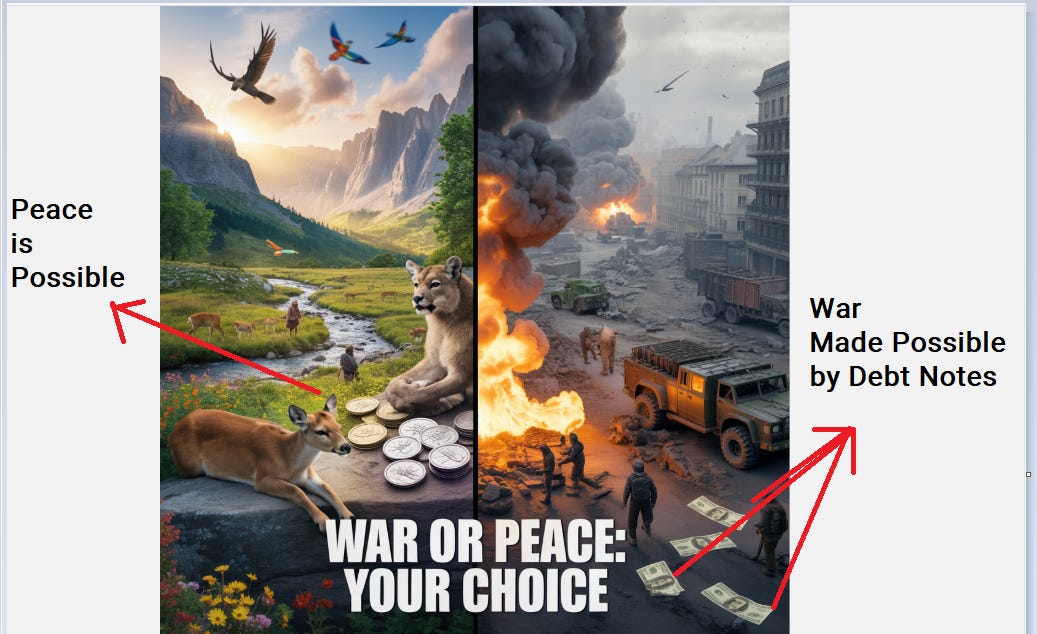
Gold and silver are the ancient barometers of trust, their prices rising and falling with human confidence in the financial order itself. When faith in governments and banks diminishes, the flight to tangible value is immediate — gold glitters, silver surges. Bitcoin, once marketed as digital gold, was born from this same distrust. But in practice, it has become little more than a speculative shadow of the Nasdaq, responding not to collapsing confidence in the system, but to the same sentiment that drives tech stocks. The contrast between gold and Bitcoin is now absolute: one is real, the other virtual — one mirrors fear, the other mirrors hype.
The True Safe Havens Rise When Faith Falls
Precious metals have always functioned as antidotes to trust in authority. When fiat systems erode, gold and silver ascend. That moment has arrived again. The United States has entered an era of fiscal absurdity — $37 trillion in national debt and climbing faster than at any point in history, adding about a trillion dollars every five months. Three separate credit downgrades have already hit the U.S. Treasury in the last decade, a global embarrassment for the world’s so-called “safe asset.”
The knock-on effect is tectonic. For the first time since 1996, foreign central banks now hold more gold than U.S. Treasuries. This is not coincidence — it is a vote of no confidence in the American fiscal regime. Central banks aren’t chasing yield; they’re seeking independence from the dollar’s political grip. Gold cannot be sanctioned, frozen, or defaulted upon. It is outside the system — precisely what the world wants.
The Dollar as a Weapon Recoils
The dollar’s downfall began the moment Washington weaponized its currency. When Russian assets were seized in 2022, that message echoed through every foreign central bank: the dollar is not neutral. A reserve asset that can be turned into a geopolitical tool is no longer a reserve — it’s a vulnerability. The consequence has been the avalanche of de‑dollarization. China, Turkey, and Poland alone have bought more than 900 tonnes of gold this year. Central banks have cut Treasury holdings by $48 billion since January, the sharpest drop since 2008, in a unified move away from American debt.
This shift is more than symbolic. It marks the end of the Pax Dollarica — the half-century reign of the U.S. as the world’s unquestioned financial center. The crossover point in 2025, when gold in official reserves surpassed Treasuries, signals a new monetary world order.
Meanwhile, Bitcoin Dances with the Nasdaq
Contrast that with Bitcoin. While gold and silver have surged amid rising distrust, Bitcoin has faltered. In the very week gold rose 3% and silver jumped 4.4%, Bitcoin fell 5%, moving lockstep with a collapsing Nasdaq. The correlation is unmistakable. At times earlier this year, Bitcoin’s 30‑day correlation with the Nasdaq 100 reached nearly 70% , erasing any illusion of independence. When risk appetite evaporates, Bitcoin doesn’t behave like a hedge — it behaves like a high‑beta tech stock.
Crypto analysts confirm this linkage: Bitcoin’s price tends to lag behind Nasdaq downturns and mirror its recoveries. Even when it decouples — like the brief negative correlation of ‑4% seen in July 2025 — the divergence is short-lived. In essence, Bitcoin remains a plaything for liquidity cycles, not a fortress against them.
The Mirage of Digital Scarcity
Bitcoin’s brilliance was its architecture of scarcity — 21 million coins. But scarcity only matters when utility is irreplaceable. Bitcoin fails that test. There are thousands of competing cryptocurrencies — substitutes that do everything Bitcoin does faster and cheaper. Gold’s scarcity, on the other hand, is natural, physical, immutable. It can’t be coded, cloned, or forked. When the world loses faith in numbers on screens, people return to atoms.
And the inflation question exposes the same divide. Gold responds to real inflation — the inflation that hits the grocery store, the electric bill, the rent. That’s not 3% CPI; it’s 15–20% in lived experience. Bitcoin promises protection against monetary debasement, yet it collapses whenever the Fed tightens liquidity or risk markets shake. A real hedge thrives in chaos. Bitcoin dies in it.
The Crisis of Confidence
So what don’t people trust? Everything.
They don’t trust job numbers that are constantly revised downward. They don’t trust inflation prints that exclude essentials. They don’t trust a press corps that ignores mass layoffs at Fortune 500 firms. They don’t trust the “strong dollar” narrative in a world where the U.S. fights economic wars against China, India, even its allies in Europe, Mexico, and Canada through tariffs. And they certainly don’t trust the endless series of geopolitical entanglements that seem to stretch from Eastern Europe to the Middle East.
This is not merely an economic story — it’s civilizational. The United States is now engaged in wars on every front: kinetic, trade, and domestic. From ICE raids in American cities to 100% tariffs on Chinese imports, the government wages conflicts that leave no sphere untouched. Such instability naturally drives capital to assets that can’t be printed, frozen, or confiscated.
Gold and Silver: The Anti-System Trade
Gold above $4,000 and silver above $50 are not just price points — they are votes. They represent a rebellion against fiat illusions. When the media asks why gold is surging, they never answer honestly: because the system itself is cracking. Gold rises when belief in government, currency, and market integrity evaporates. Silver amplifies that signal — the volatile, defiant metal of the people.
Contrast this with Bitcoin’s slide under $110,000, down nearly 25% versus gold since August. That’s not digital gold — that’s digital leverage. The same institutional algorithms and speculative flows driving the Nasdaq drive Bitcoin. Its value depends on the very system it claims to escape.
The Real Store of Value
Gold and silver are not faith-based software. They are matter, not math — possession, not promise. Their worth is not in theory but in physical finality. Bitcoin, stripped of its narrative, has become an extension of the financial system it set out to destroy, tethered to the same liquidity and psychology that move the Nasdaq.
The world’s oldest money has once again outlasted the newest. Trust is dying — not in code, but in governments. And every empire that forgets this truth eventually learns the same lesson: when confidence dies, only gold and silver survive.
Meanwhile what’s going on in the Real World (not the digital fairy dust world)
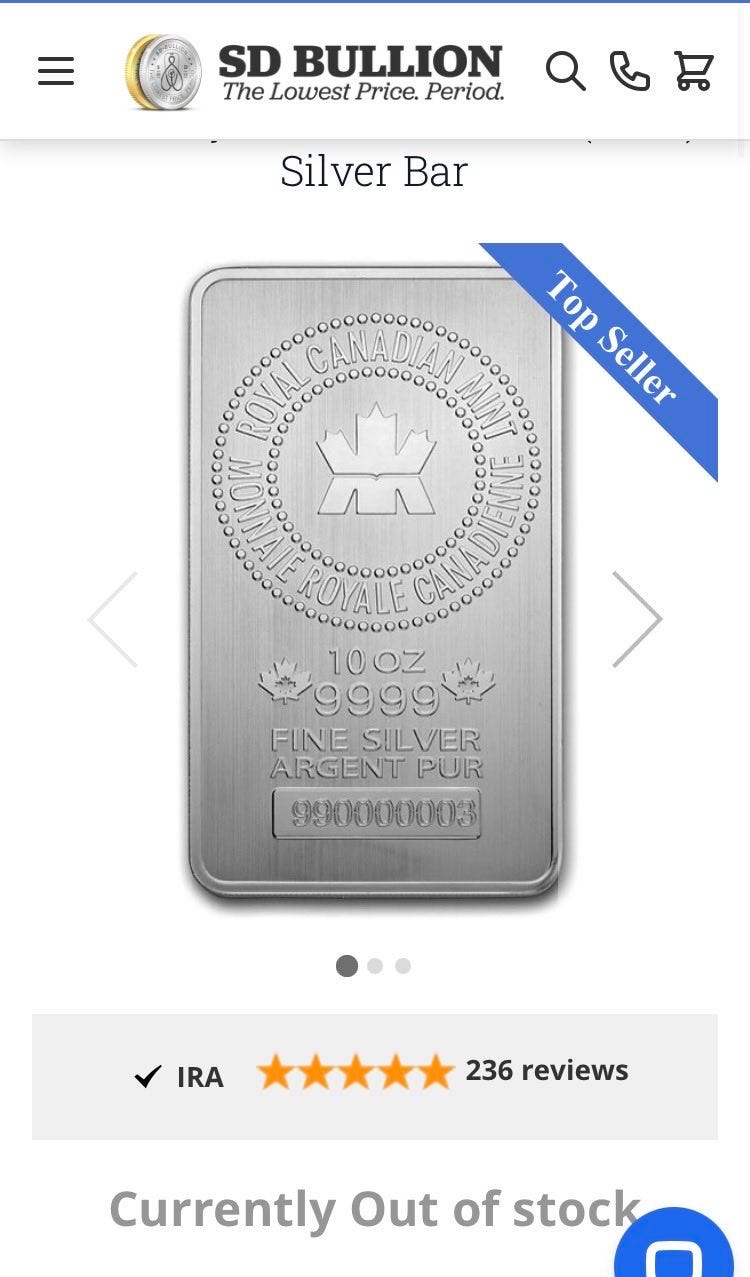
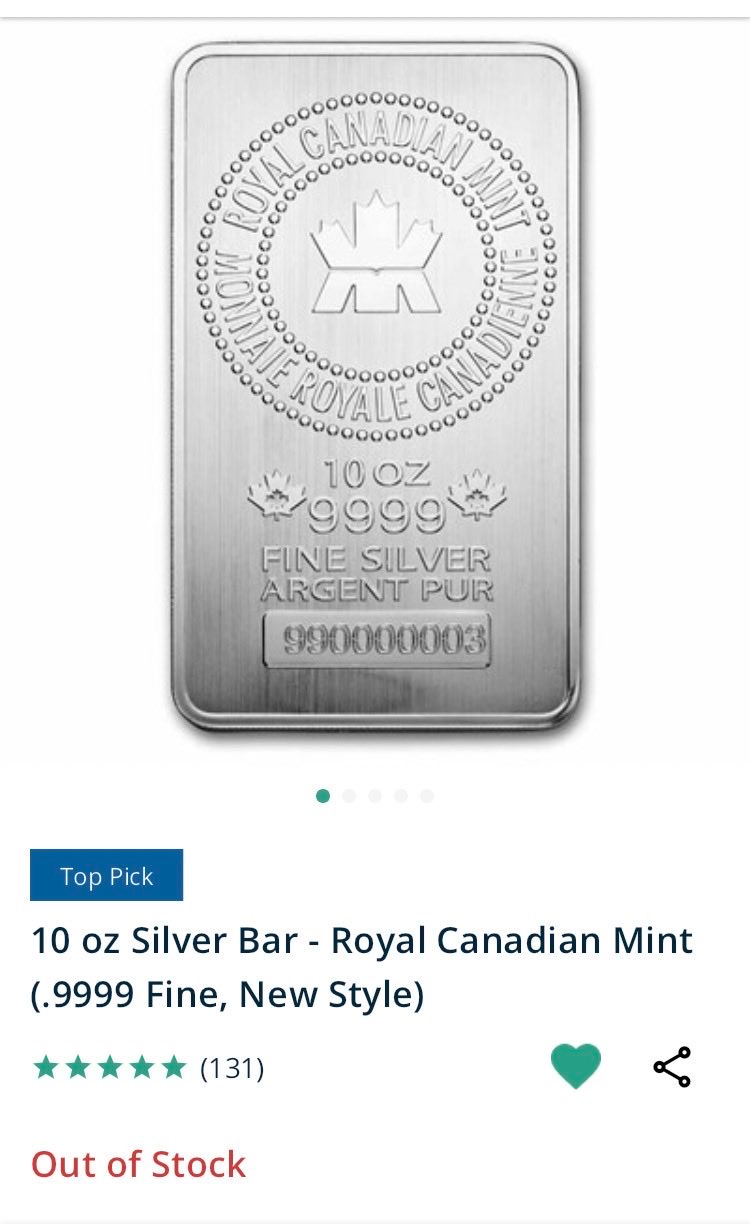
Next week we have “boots on the ground” reports from a bullion dealer in Canada who gives some insights as to the silver squeeze.
Here is a teaser of the upcoming “boots on the ground” story
Here we have Big Brother Bankers (the same architects of the pending CBDC that will 100% block purchases YOU ARE NOT ALLOWED TO MAKE like gold, silver, guns, tobacco, dancing girls, etc)
Andrew Sleigh of Sprott Money recounted an incident (from 5 weeks ago) involving a new client from Georgia that highlighted the increasing friction between major banks and individuals seeking to buy large amounts of precious metals.
The client began his relationship with Sprott Money by executing smaller orders and funded them conducting small wire transfers of $3,000 and $4,000 through JP Morgan, simply to ensure his bank interface worked properly and that there would be no issues with future transactions.
These initial wires were processed without any trouble, giving the client confidence in moving forward with larger purchases.
On September 3rd, feeling assured by the successful test transfers, the Georgia man attempted a substantial wire of $230,000 to Sprott Money for a major bullion order.
However, the transaction was unexpectedly blocked by JP Morgan. At first, the bank provided no explanation for the refusal, leaving both the client and Sprott Money staff in a state of confusion.
After further inquiry, JP Morgan finally replied with a blunt and chilling message: “You will not be able to fund this transaction by us.”
This response reflected a deliberate and clear refusal to process the sizable precious metals purchase, despite the bank having already approved several smaller transactions.
Such actions underscore a growing trend where major U.S. financial institutions impose sudden restrictions on perfectly legal activities involving large amounts of hard assets. The experience of this Sprott client is not unique to the precious metals sector; similar events have repeatedly occurred in other industries, especially the firearms sector. For instance, Operation Choke Point, a controversial federal initiative that pressured banks to sever ties with lawful businesses in so-called “high-risk” industries, led to widespread discrimination against gun retailers and manufacturers. Over the years, banks have frozen, closed, or refused accounts simply due to their connection to gun sales, often invoking vague notions of reputational or compliance risk.
There are many stories of individuals or companies having their accounts closed or transactions refused after buying firearms or ammunition, even if all regulations were followed. In several publicized cases, financial institutions only relented after direct intervention by groups like the National Shooting Sports Foundation or after public exposure prompted action by legislators. In August 2025, an executive order prohibited banks from discriminating against lawful businesses such as precious metals dealers and gun retailers, reaffirming the right of these industries to access banking services without arbitrary or ideological interference.
Whether for bullion or firearms purchases, these episodes reveal a broader struggle: major banks maintain wide discretion to block high-value transfers or terminate accounts, which can disrupt entire industries and signal growing tensions between financial regulation, corporate policy, and the rights of lawful commerce in the United States
end of segment
Yesterday I wrote this story on Max Keiser
Today he tweeted this:
https://x.com/maxkeiser/status/1977350980506103987

Remember Gold Drops Like a Rock when People Trust the System, and Soars to the Moon when They Don’t
No one Trusts that USA has launched 35,000 strikes in past 10 years
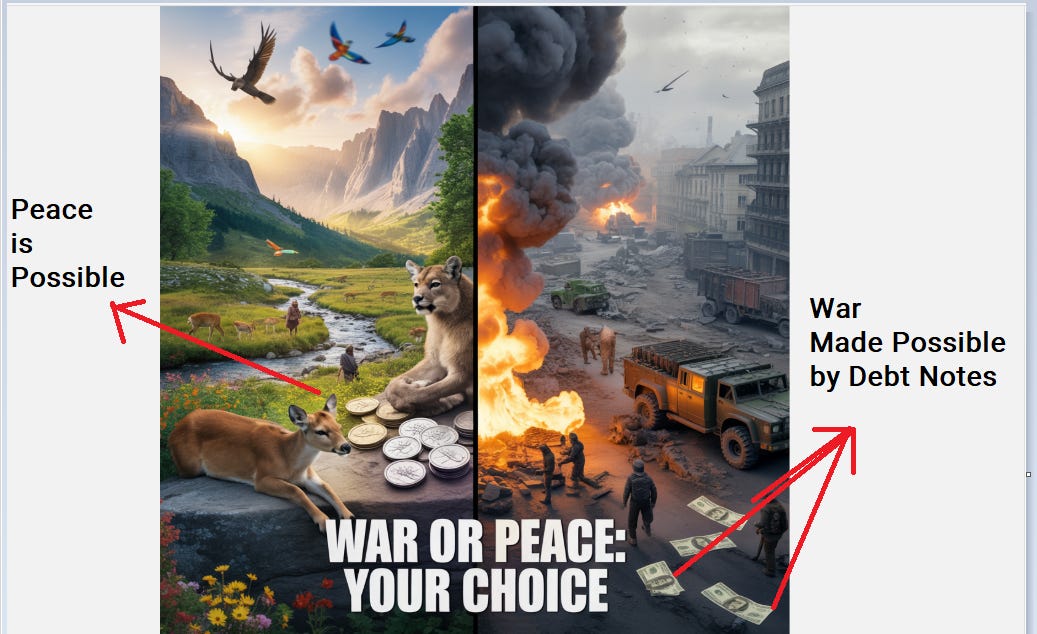
In total, The USA and Israel have launched tens of thousands of attacks across these regions since 2015 — with around 35,000 recorded strikes just between October 2023 and mid-2025. This period marks the broadest geographical expansion of Israeli military operations in its history
Below is some reminder of why people (in USA and around the World Don’t Trust The System, i.e. The Military Industrial Complex and the fiat money that backs it)
Here is a categorized list of all the wars or major conflicts the United States is engaged in as of October 2025, divided by kinetic (military/physical) and economic (trade/sanctions/financial) warfare. All Israeli actions below are understood as US-backed military operations.
Kinetic Wars (Direct or Proxy Military Involvement)
-
Russia (via Ukraine proxy) — kinetic war
-
Yemen (via ongoing joint operations and arms support with Saudi coalition, and US-backed Israeli strikes on Houthi targets) — kinetic war
-
Venezuela (intermittent US-backed operations aimed at oil resource control, along with heavy sanctions) — kinetic war
-
Additional unspecified kinetic interventions in the last decade include Iraq, Syria, and re-arming of Kurdish and regional factions — kinetic war
US-Backed Israeli Kinetic Wars (US provides funding, arms, intelligence, and diplomatic cover)
-
Lebanon (airstrikes on Hezbollah, drone strikes) — kinetic war (US backing Israel)
-
Syria (hundreds of Israeli strikes on Syrian and Iranian targets, especially since Assad’s fall in 2024) — kinetic war (US backing Israel)
-
Yemen (airstrikes and operations targeting Houthis as part of the 2025 Iran–Israel war escalation) — kinetic war (US backing Israel)
-
Iran (ongoing covert attacks, and a 12-day June 2025 air war with widespread missile exchanges) — kinetic war (US backing Israel)
-
Occupied Palestinian Territories: Gaza and West Bank (daily military operations, bombings, and sieges since October 2023, resulting in tens of thousands of Palestinian deaths) — kinetic war (US backing Israel)
-
Qatar (September 2025, Israeli airstrike on Hamas political leaders in Doha, first direct Israeli attack on Qatari soil) — kinetic war (US backing Israel)
Economic Wars (Sanctions, Tariffs, Trade Wars as Primary Tool)
-
China (Trump era tariffs, now escalated to 130%+ and major tech export controls) — economic war
-
India (Trump tariffs and new reciprocal trade restrictions) — economic war
-
Russia (ongoing sanctions, trade limits, and asset freezes, including Trump’s escalation) — economic war
-
European Union (tariff and counter-tariff regime, trade “reset” of 2025) — economic war
-
Canada (universal new tariffs starting in 2025, triggering a North American trade war) — economic war
-
Mexico (tariffs and renegotiated import/export restrictions, full-scale trade war since February 2025) — economic war
US Funding and Arms Enabling Wars by Proxy
-
Israel (over $21 billion in military aid since October 2023, essential for sustainment of all major Israeli offensive operations in Gaza, Lebanon, Syria, Yemen, Iran, and Qatar)
This summary captures the broad scope of the United States’ direct and indirect involvement in kinetic and economic warfare as of late 2025, reflecting both open military operations and the sweeping series of trade wars and sanctions currently defining international relations.
Another Sunday Silver Sermon – Treat others like you want to be treated
Matthew 5:23-24
“If you are offering your gift at the altar and there remember that your brother or sister has something against you, leave your gift there in front of the altar. First go and be reconciled to them; then come and offer your gift.”
-
Teaches taking initiative to resolve conflicts and prioritize reconciliation over ritual.
Romans 12:17-18
“Do not repay anyone evil for evil. … If it is possible, as far as it depends on you, live at peace with everyone.”
-
Urges believers not to retaliate and to do everything possible to avoid conflict and maintain peace.
Ephesians 4:31-32
“Get rid of all bitterness, rage and anger, brawling and slander, along with every form of malice. Be kind and compassionate to one another, forgiving each other, just as in Christ God forgave you.”
-
Encourages eliminating angry quarrels and choosing forgiveness and kindness instead.
2 Timothy 2:23-24
“Don’t have anything to do with foolish and stupid arguments, because you know they produce quarrels. And the Lord’s servant must not be quarrelsome but must be kind to everyone, able to teach, not resentful.”
-
Directly warns against pointless arguments and insists on avoiding quarrels.
James 1:19-20
“Everyone should be quick to listen, slow to speak and slow to become angry, because human anger does not produce the righteousness that God desires.”
-
Advises restraint and patience rather than quickness to anger or conflict
-
Now go in peace!