
another Sunday Silver Sermon
The Drug Commercial Market
The modern investment landscape feels like wandering through an absurd pharmaceutical TV campaign—overstimulated, confusing, and packed with gimmicks no sane person would trust. Just like those bizarre drug commercials touting unpronounceable medicines with catchy jingles, the market is flooded with flashy financial products promising quick fixes and miracle fortunes. Investors are bombarded with hype for every shiny new technology, crypto, or “breakthrough” stock, often without any real understanding of the risks or fundamentals. Neither chasing pharmaceutical jingles nor wild market fads is wise. Both are engineered distractions, designed to keep the masses addicted and ignorant, while the truly prudent turn toward time-tested, solid assets like gold and silver.
Orchestrated Stupidity on Every Screen
Let’s take a cold, clear look at the kind of orchestrated stupidity playing out on American screens—because neither the pharmaceutical circus nor the parade of speculative tech plays wants you healthy, and anyone with the barest instinct for self-preservation should be aggressively suspicious about it.
Welcome to the Cult of the Jingle
The “Cult of the Jingle” isn’t just some clever turn of phrase—it’s a cruel reality. Twenty years ago, drug companies couldn’t pitch their wares between sitcoms; then, almost overnight, the FDA surrendered to the ad men, unleashing a torrent of chemical names you couldn’t spell with five hands and a Scrabble dictionary—Xdemvy, Skyrizi, Jardiance. These are drugs that, before their campaign, hardly any doctor could have justified slinging around, yet now the average American can hum their theme song while forgetting why they started watching TV in the first place.
Living inside the Jardiance Village
In this idyllic little pharma village, life’s problems are apparently solved by one thing: a dancing, singing tablet with a PR team. The overweight woman beams as if the “little pill with a big story to tell” just cured mortality, student debt, and emotional abandonment in one swallow. Children play, banners wave, and the only thing heavier than the symbolism is the insulin resistance nobody mentions. Instead of talking root causes, we get Broadway-level choreography for a molecule, as if metabolic collapse is just a quirky subplot in a feel-good musical brought to you by lifelong co-pays.
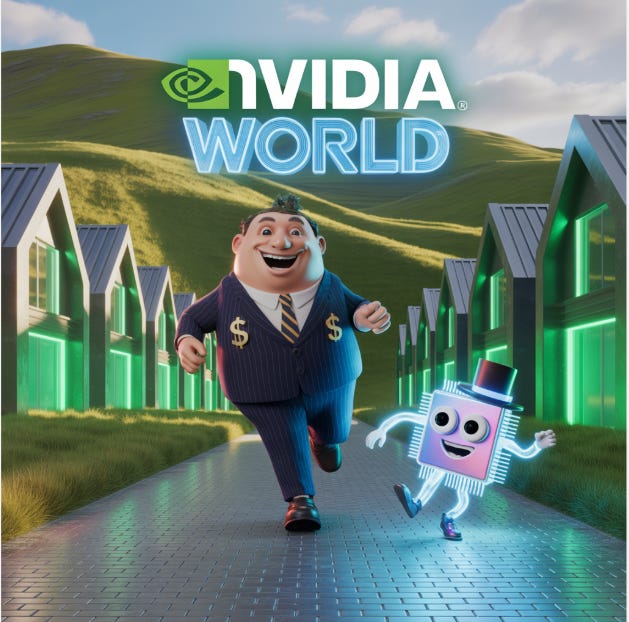
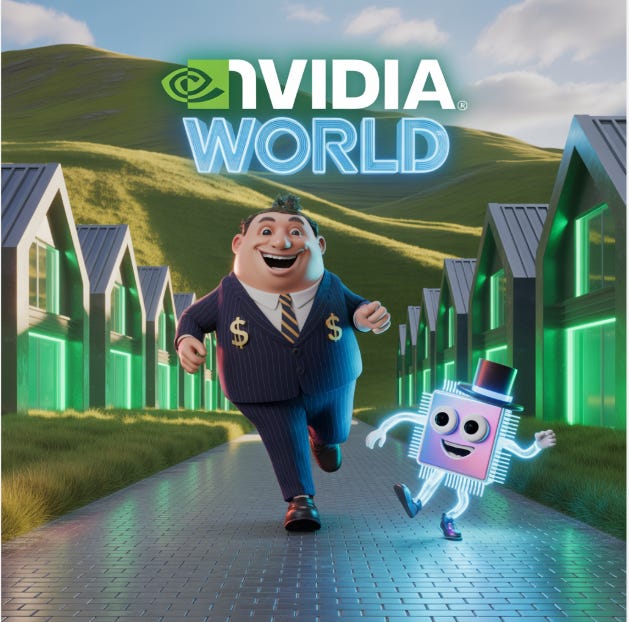
It’s the Jardiance village rewritten as Nvidia World: an overfed market waddling through a CGI hillside where every house glows RTX green and the “little chip with a trillion-dollar story to tell” tap-dances down the lane.
The crowd cheers as servers puff and wheeze in the background, but no one mentions the energy burn, the export bans, or the fact that half the demand is just other hype machines buying more GPUs to sell more hype. Don’t worry about valuation diabetes—just sing louder, spin faster, and pretend this feedback loop is a healthy economy.
When Marketing Overrules Medicine
Consider the clinical absurdity: physicians are forced to play referee between actual medicine and whatever emotional flavor-of-the-week is trending on television. Patients arrive wound up not because they’ve done their own research but because they’re echoing a manipulated jingle and wielding advertising copy as though it’s a second opinion. Meanwhile, the root causes—no sleep, junk food, toxic stress, digital addiction—never get treated with anything resembling rational care. The ad machine is counting on chronic dependency, not real wellness.
Now Flip to the Finance Channel
Flip the channel. The farce multiplies in financial markets, where Wall Street and Silicon Valley have mastered the game: treat investors as mindless ice cream shop samplers, waving their little plastic spoons at sugary buckets of vaporware.
Nvidia hits record profits, but the business model often amounts to pouring $100 billion back into customers just so they can buy more chips—never mind that China is locked out and rivals are quietly leapfrogging the American giants. It’s the sweet rush of circular logic: we sell to ourselves, then congratulate ourselves on the results.
Miracle Ice Cream and Digital Gold
Then there’s Bitcoin , which has become the digital equivalent of miracle weight-loss ice cream. The promoters insist it’s “digital gold,” safe as houses, but anyone who’s watched financial history knows it’s just the most recent ray of hope for those who missed out on the last tech lottery ticket. It’s been paraded as recession-proof and system-shattering, all while never delivering fundamental economic nutrition—no yield, no dividend, no inherent utility. Investors scarf it down, giddy, ignoring the obvious crashes and side effects plastered in tiny print, again drifting from one sample to the next.
The One-Note Stock Market Song
And what’s propping up the S&P 500 ? The index is increasingly a one-note song, bulked up by a handful of AI-centric stocks. A major disruption—say, China’s ByteDance launching its Volcano Engine and chopping Silicon Valley’s knees out—would send shockwaves through pensions, IRAs, and grandpa’s retirement plans.
Frankly, the whole market is being sold like a new “extra creamy” flavor that everyone is supposed to try before someone realizes it melts on first bite.
Why the Jingles Always Win
Why do these jingle-driven campaigns work? Because, just as pharmaceuticals thrive on sick patients needing lifetime subscriptions, speculative markets thrive on investors desperately seeking novelty. Both prey on the same psychology: people want shortcuts; they want the thrill of something new; they want sugar hits, not slow progress. The orchestrators aren’t betting on an educated public—they’re betting you’ll believe anything with a catchy tune or a flashy pitch. In advertising circles, they call it “perception management.” In medical and financial reality, it’s more like “cultivation of dependency.”
The Ice Cream Counter Economy
The analogy sharpens most cruelly at the ice cream counter—which, in America, is now the pharmacy and the stock market both. Consumers scoop one flavor after another with mini spoons, sampling whatever social media, TV, or their neighbor with an MBA is hyping this week. No one ever asks, “Does this flavor actually nourish me?” Instead, the question is always, “What’s trending now?” Doctors look on in disbelief as patients arrive asking for whatever chemical tastes best this month—while investors jump from asset to asset, crooning jingles from CNBC, Bloomberg, or the latest crypto influencer.
Boring Basics: Where Real Wealth Lives
Yet, consider how actual health and actual wealth are built. When medicine works, it isn’t trendy; it’s old—real sleep, clean water, useful nutrition, movement, and quiet. In finance, the equivalent isn’t another “technology breakthrough” but the fundamentals: things with intrinsic value, resilience, and centuries of survival. Gold and silver are the home-cooked meals of the asset world. They are not sold with soundtracks, they don’t burn bright and vanish, and their results come from long-term, boring accumulation. In comparison, every flavor-of-the-week asset is a sugar spike in a system that desperately needs protein and fiber.
The Real Teaching Moment
So, for the intelligent newsletter reader, here’s the teaching moment: Those who orchestrate the ads—whether for medications or market “opportunities”—think you are dumb enough to buy anything wrapped in a song and sold as “can’t miss.” They don’t bank on your skepticism, they bank on your emotional hunger and short memory.
Drop the Samples, Keep the Substance
If you want health, quit sampling every chemical on offer. If you want real wealth, quit trusting the flavor-of-the-week and go back to basics—because gold and silver never needed a plastic spoon, and no orchestrated campaign can replicate the utility of enduring value.
end of segment
-
our opinions are not our sponsors opinions
-
the editorial department is separate from the promotions department
-
not financial advice