
Question 1:
How can silver continue to be a viable industrial ingredient if it’s price as a raw material in these technologies jumps 10x? How will Samsung be able to produce their silver-based batteries if the price per kilo is $10,000+?
That will of course have a knock-on effect on the price of solar, AI, batteries etc. That will be transferred to the consumer which will make many technologies out of reach suddenly and therefore not viable.
Our response:
First, We must assume that Samsung knows what they are doing (if it were some Government run business we couldn’t make this assumption)
Samsung’s product development team deserves to be viewed as one of the world’s most elite, plausibly even eclipsing Apple in sheer engineering audacity and execution.
Their silver- solid‑state EV battery, with radically higher energy density, safety, and charging speed, is set to reshape both the auto and silver markets. In smartphones, they created and industrialized the foldable category with the Galaxy Fold and Z series, inventing new display materials, hinges, and ultra‑thin glass along the way. In semiconductors, they were first to mass‑produce 3 nm GAA chips, leaping ahead on power and performance in a brutally competitive foundry race. 3 nm GAA means Samsung can pack more advanced transistors into a smaller space, with the gate wrapped “all around” each channel to cut leakage and boost efficiency. Practically, it delivers far lower power use, higher speeds, and smaller chips than older 5 nm tech, beating rivals to this leading-edge node.
2nd assumption is if Samsung feels they are close to rolling out their silver solid state battery then they have already procured (purchased) enough silver to corner the market, then from thereafter they will price in the cost of silver into each battery.
3rd fact, you can double the price of Silver and it doesn’t dramatically increase the price battery
The math on silver in EV batteries
At 35 ounces of silver per kilogram, and assuming each EV battery uses one kilogram of silver-rich material:
-
At $50 dollars per ounce, the silver content per battery is about 1,750 dollars.
-
At $100 dollars per ounce, the silver content per battery is about 3,500 dollars.
Against an EV battery pack that costs roughly 22,000 dollars today, even a doubling of silver’s price only shifts total cost by a few thousand dollars, not by an order of magnitude.
RE solar, the amount of silver in each panel is very negligible to the end cost
Silver loading in solar panels looks large on paper, but even a price jump from 50 to 100 dollars per ounce barely moves the needle on the final cost per kilowatt-hour.
Silver per megawatt and cost
-
Industry estimates show about 700,000 ounces of silver are required per gigawatt of new solar capacity
-
which is 700 ounces per megawatt.
-
At $50 dollars per ounce, silver cost per megawatt is 700× $50=35,000700×50= $35,000 dollars.
-
At 100 dollars per ounce, it is 700×100=70,000700× $100= $70,000 dollars.
Utility-scale solar systems often cost 2 to 3 million dollars per megawatt fully installed, so silver rises from about 1.75 percent to 3.5 percent of capex as its price doubles
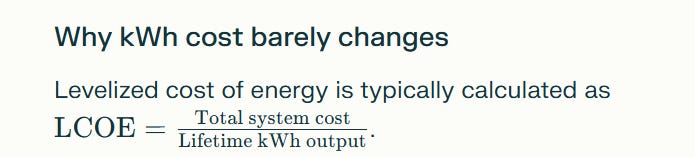
Since most cost lies in modules, land, inverters, racking, design, installation, and long-term maintenance across thousands of acres, doubling the silver slice only nudges total system cost, so the impact on cents-per-kWh remains small compared with savings versus grid power
Why higher silver still works
Whether it is $3,500 dollars worth of silver or $7,000 worth of silver in the battery isn’t the point. The consumer wants the convenience and performance (functionality) of an improved battery product. The unit cost isn’t as important compared to the end result , a battery that doubles range, cuts charge time in half, and doubles pack lifespan, the economics flip in favor of more silver, not less.
Extended life alone can defer a $22,000‑dollar replacement, while better efficiency and performance translate into lower operating cost and higher resale value over the vehicle’s life.
Granite, brick, and silver
This is no different from homebuilding choices. Laminate countertops are cheaper than granite, but stain and wear faster; granite costs more upfront yet pays for itself in durability and lower maintenance. A brick home demands more initial capital than stucco, but over a 100‑year life it is the cheaper, more resilient structure. Silver plays that same “granite and brick” role inside solar, EVs, and AI hardware: a premium input that unlocks longevity, reliability, and performance that cheaper substitutes struggle to match.
In advanced energy and computing systems, engineers optimize for lifecycle value, not just material cost, and that is where high‑priced silver still wins
Question 2
What makes you so certain that Mexico as a jurisdiction is risky?
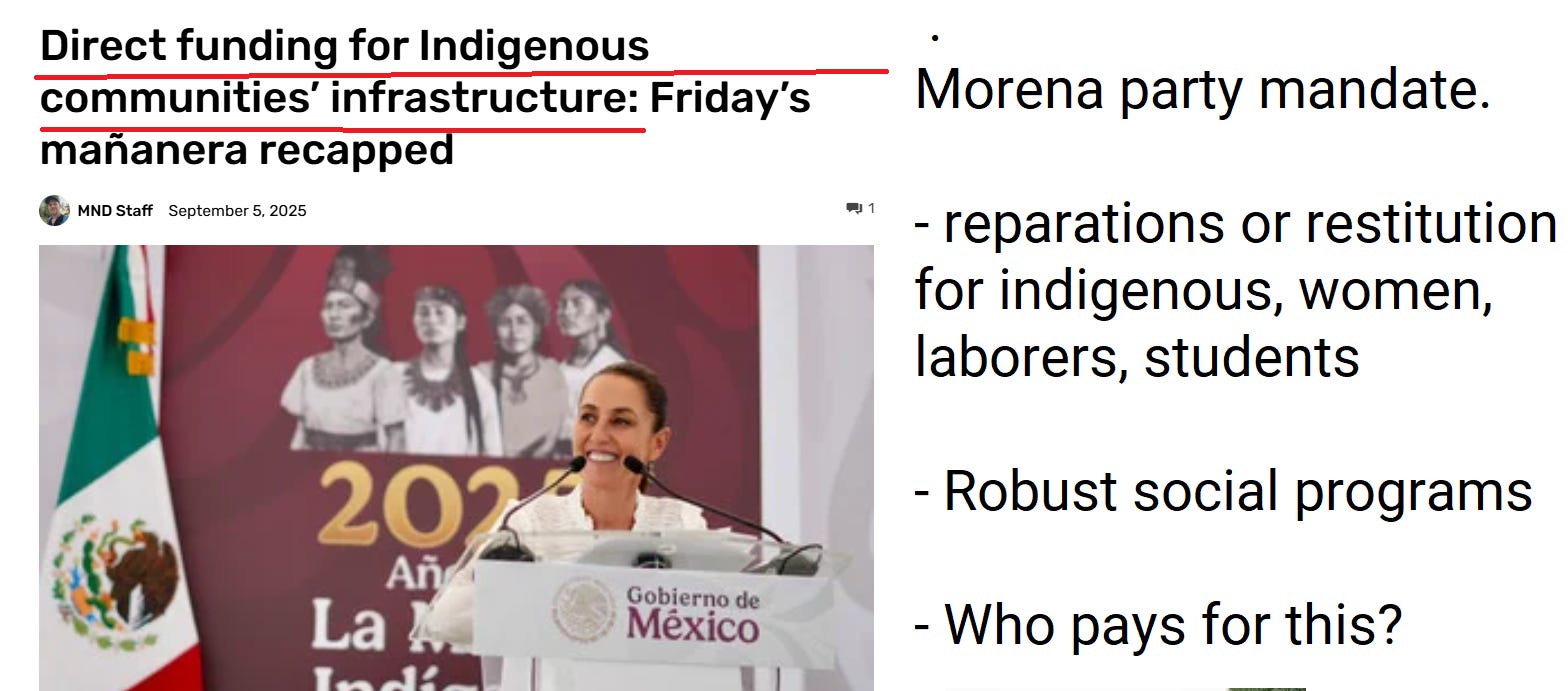
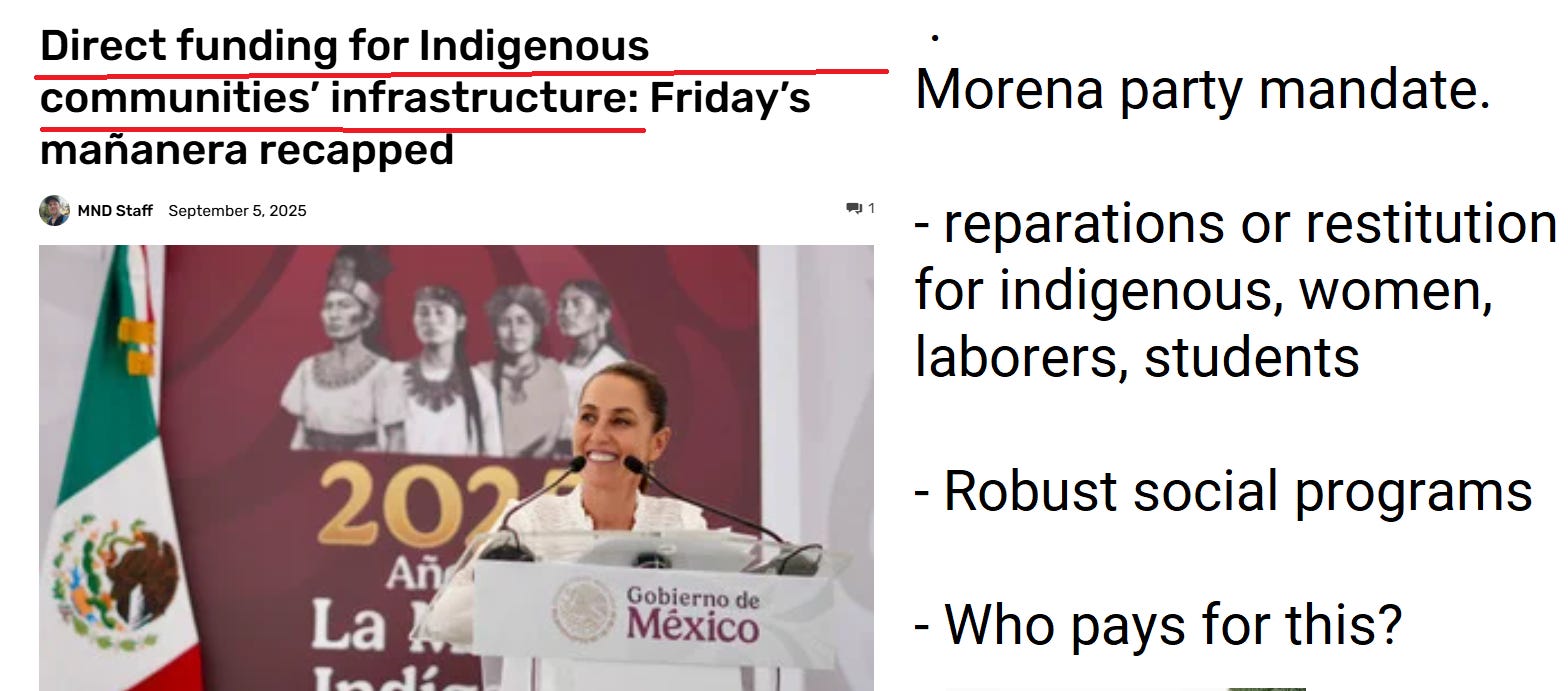
Mexico is a high‑beta silver jurisdiction because its political project explicitly subordinates private and foreign capital to a nationalist redistributive agenda, while Bolivia’s Andean model captures more value on site and aligns better with investors who want stable, processing‑driven cash flow.
The Four Transformations
Mexican elites frame history as four “transformations”:
-
Independence (breaking Spanish imperial rule)
-
The Reform (breaking clerical power)
-
The Revolution (breaking hacendado/oligarch power)
-
And today’s “Cuarta Transformación” under Morena (breaking neoliberal technocrat and corporate power).
In each phase, the official narrative is that the state intervenes on behalf of “el pueblo” (the people) against entrenched elites, and the current 4T extends that to energy, mining and social spending.
Energy nationalism and “people’s resources”
When Mexican leaders say “Mexico must secure its energy future,” they mean hard sovereignty over oil, gas, power and key minerals so Washington, Houston and foreign majors cannot dictate policy or pricing.
“The resources of the people belong to the people of Mexico” is not a slogan; it is now written into mining and lithium law, which explicitly reserves strategic minerals to the nation and channels them through state vehicles like Pemex, CFE and LitioMx.
The bill for social promises
Free universal healthcare, tuition‑free education expansion, minimum pensions for the elderly, big public works and environmental remediation are all pillars of the 4T’s legitimacy—and they are brutally expensive in a low‑tax, low‑productivity economy.
In that context, hydrocarbons, power and metals become fiscal lifelines, pushing policymakers toward higher resource rents, antagonizing US or Canada controlled silver miners with “make it up as you go new regulations” at home, windfall taxes, or outright nationalization to fund the project.
Trump, narco‑framing, and geopolitical drift
Donald Trump’s demeaning rhetoric—painting Mexicans as “rapists,” “thugs,” and “narcos” as part of a made‑for‑TV drug war—narrows space for any cooperative, rules‑based North American energy or mining framework. In response, Morena leans harder into South‑South alignment: China already buys Mexican silver concentrates and captures most of the value in its own refineries, while Russia courts Pemex and shares a statist, resource‑nationalist worldview with Morena.
Why favor Andean over Mexico?
Even if Mexico does not formally nationalize silver in 2026, it has already nationalized oil, lithium and key segments of electricity, proving the model and the political will.
A rational investor should favor a Bolivia-based asset like Andean Precious Metals’ (ANPMF) San Bartolomé over a Mexican producer that merely ships concentrates to Chinese smelters. San Bartolomé runs crushing, grinding, leaching, carbon‑in‑leach and Merrill‑Crowe circuits end to end, pouring silver doré on site and capturing the full processing value under one corporate umbrella instead of handing those economics to offshore refiners.
Moreover, In Bolivia, silver is already nationalized, which makes San Bartolomé effectively immune to any fresh nationalization shock, and the setup for Andean shareholders is even more compelling with the next election featuring zero socialists on the ballot
Question 3:
Why are you always Hating on Donald Trump and before that it was Joe Biden?
short answer is because both support “forever wars and money printing”
Another Sunday Silver Sermon
Septimius Severus told his sons the ugly truth of empire: pay the armed class first and sneer at everyone else. Two thousand years later, the uniforms have changed from legionary armor to tailored central‑bank press conferences, but the marching orders are identical.
From Venice to London, the pattern is monotonous. Venetian elites used other people’s gold and silver as collateral, then wrapped it in paper promises to underwrite the Fourth Crusade and, when the math didn’t work, steered the whole enterprise into sacking Constantinople to settle their bill. The loot—hundreds of thousands of silver marks and a millennium of stolen wealth—didn’t “advance Christianity”; it refinanced a balance sheet. The Bank of England was founded on the same principle: invent paper, suspend convertibility when politically convenient, and use the inflation tax to fund wars against France while telling the public it is all for “national security” and “stability.
Today I’m in Santa Fe New Mexico and I saw an entire street of these RESIST signs in front of some “yuppie” homes. My traveling companion chuckled when she overheard me quizzing one of these homeowners if they understood that true resistance is rejecting fiat money ( the most powerful weapon of the ruling class) and their media channels. I was snarky but not sanctimonious for those keeping score at home.

Drive across Santa Fe in 2025 and the slogans are chirpier but no less dishonest. Yard signs tremble with moral outrage against “hate,” as if hashtag incantations can exorcise the demons created by a counterfeited monetary base. The same class that preaches universal love quietly embraces their politician of choice who liquefies wages, savings, and pensions through endless currency debasement, then lectures the casualties on “resilience” and “inclusivity.” Inflation is not an accident; it is how the modern Severans “enrich the soldiers” of the system—banks, defense contractors, and political clients—while scorning everyone else as externalities
So when the virtue‑signalers announce they are “resisting hate,” the accurate response is: not yet. The purest institutional hatred is monetary: a ruling class that steals time and life from millions with a printing press and calls the wreckage “policy.”
As argued here
As argued above, fiat money is the accelerant for nearly every social pathology—bubbles, homelessness, medical debt, Forever Wars, atomized families—because the cost of abuse can always be pushed onto tomorrow’s devalued currency. If hate deserves resistance, then the first and most rational object of that hatred is the fiat regime itself, and the priesthood that keeps it running.
end of segment
-
our opinions are not our sponsors opinions
-
editorial department is separate from promotions department
-
not financial advice