

In yesterday’s news:

Flashback to France, 1789
In the reign of Louis XV, the four Pâris brothers—Joseph Pâris-Duverney, Jean Pâris de Monmartel, Antoine Pâris, and Claude Pâris—turned tax farming into an art form of quiet plunder. Their ledgers rationed salt, grain, and customs into columns that always favored the crown and themselves, while peasants financed Versailles with blood and bread. The con was elegant: opaque accounts, royal backing, and a monopoly on “expertise” no one else could audit. But as shortages bit and pamphlets exposed their enrichment, the spell broke. Crowds no longer saw careful accounting, only organized theft. Once that legitimacy evaporated, the very records meant to control the nation became damning exhibits against their makers.
The fermier générals managed France’s tax farms, skimming fortunes from salt and customs while peasants starved outside their gilded counting house. The con was simple: opaque ledgers, brutal enforcement, and a king desperate for cash. When grain riots spread and pamphleteers exposed the Ferme générale’s secret profits, villagers began refusing payments, smugglers became folk heroes, and the four Pâris brothers meticulous columns of figures turned into evidence.
Once people saw the records as instruments of theft, not justice, the institution’s spell broke—and the same books that had ruled their lives helped send their authors to the guillotine.
Just as the four Pâris brothers ledgers turned from instruments of authority into exhibits of fraud, the Crimex era is ending the same way.
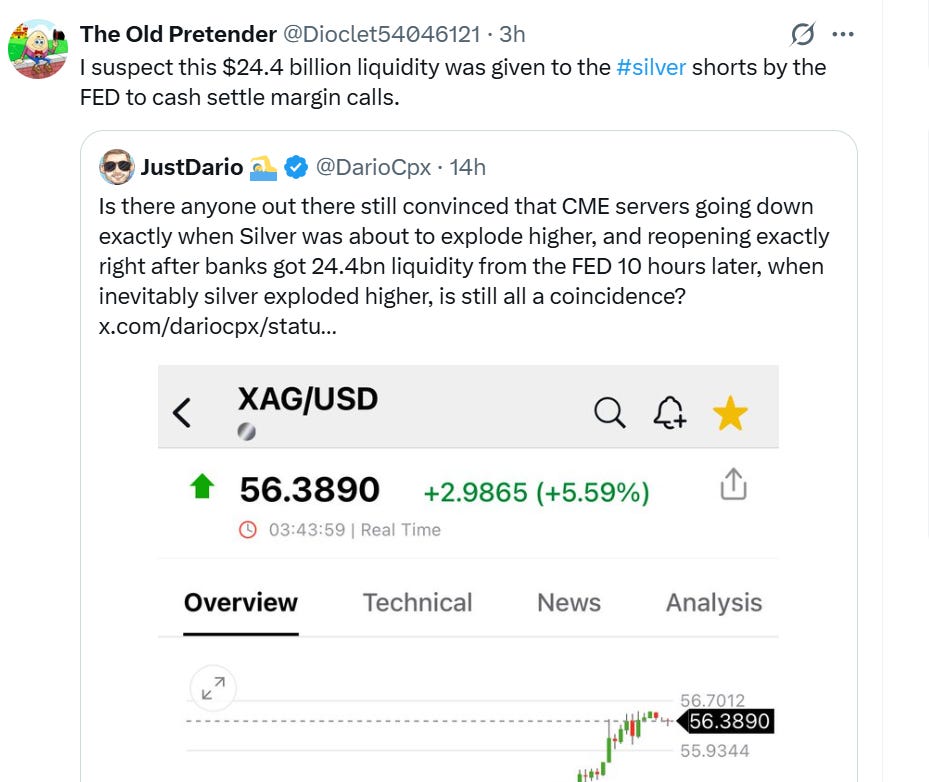
Now Silver stackers grasp that the CME’s silver “price discovery” serves over‑levered shorts and conflicted members, each emergency halt, margin hike, and midnight smash stops working.
The con becomes obvious: if the benchmark is rigged, the only rational response is to ignore it and grab the underlying metal. That’s the tipping point now—credibility gone, legitimacy bleeding out. The harder they lean on paper to cap silver, the more every thinking investor will drain the warehouses, front‑run the squeeze, and let the physical market write its own price.
Who is the CME again?
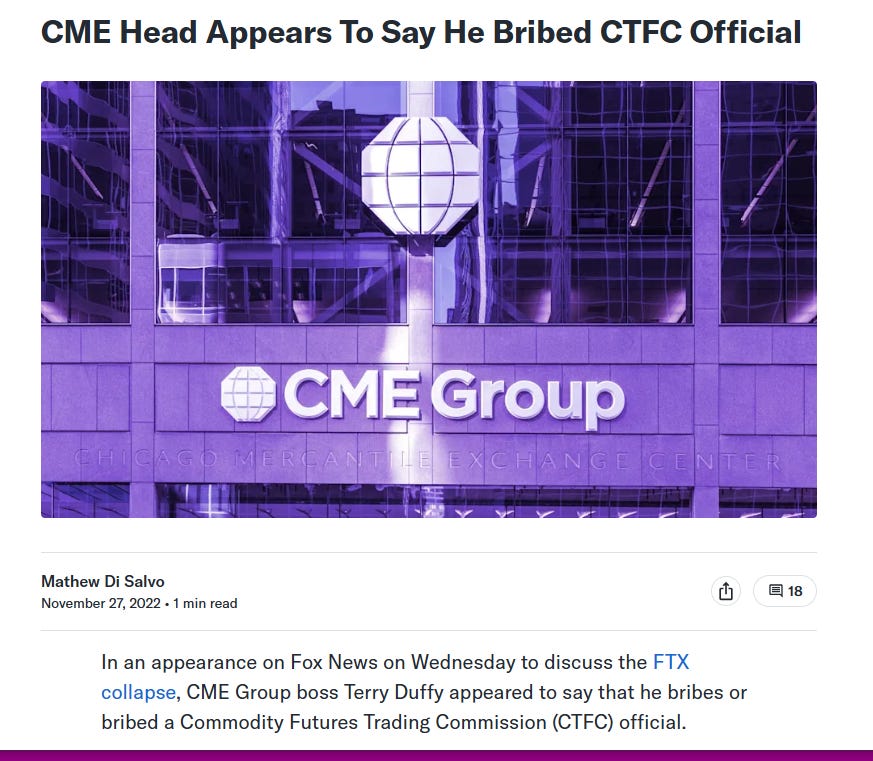
”It is the same CME Group that sat at the regulatory table while FTX’s “innovations” were marched toward CFTC blessing, right up to the edge of catastrophe. The same executives now doing victory laps on TV casually “slip” about bribing their regulator, then laugh it off as a joke. When the house referee jokes about bribes after the worst fraud in crypto history, every thinking investor should question the legitimacy of that referee’s price signals—whether for digital tokens or for silver itself.” – Jon Forrest Little
Silver’s breakout is not a bull market; it’s an indictment. The “Crimex” nickname exists because the very exchange that still pretends to “discover” the silver price has been structurally weaponized for years by bullion banks and high-frequency parasites to manufacture fake supply, cap rallies, and keep real money chained to a dying fiat order. Now the chains just snapped at $56, and the crime scene is finally visible in broad daylight.
Crimex in a silver detonation
On paper, COMEX is a respectable futures venue where producers hedge and investors “manage risk.” In practice, critics point out that a tiny cartel of banks can stack billions of ounces’ worth of naked shorts—claims on metal they don’t have and never intend to deliver—to bludgeon price whenever silver starts telling the truth about systemic insolvency. The result is a cartoon market: oceanic paper, microscopic physical, and a reference price written by entities that profit most when silver stays cheap.
Legal history already exposed the playbook. Traders at JPMorgan Chase and other majors have been convicted or penalized for spoofing and manipulating precious metals futures—layering fake orders to move prices, then yanking them once the algorithms and retail are tricked. Regulators issue nine-figure fines that amount to a small “cost of doing business,” nobody goes near the core structure of the futures complex, and the same banks keep a dominant footprint in silver derivatives. That is why silver investors stopped calling it COMEX and started calling it Crimex: it looks less like a neutral marketplace and more like a control panel for suppressing the one metal that can shatter confidence in sovereign IOUs.
Breakout that blew through the ceiling
Now that control panel is short-circuiting. Silver over $56 with a year-to-date gain near 90% is not a gentle repricing; it’s a jailbreak. A 45‑year base has finally been smashed, and technicians are calling this the second greatest breakout of all time because the entire multi-decade consolidation has been converted into stored energy detonating at once. Short-term, the move targets roughly $67 over the next ten trading days as shorts are forced to cover into vertical price action. Over the next 7–11 months, historical analogs and the size of the base argue for a primary objective near $120 per ounce, with longer-term potential that makes four-digit silver no longer a punchline but a scenario.
This isn’t a chat-room pump; it’s years of suppressed fundamentals finally blowing past the capacity of manipulated paper to sit on the lid. The same spoofing, flash crashes, and manufactured corrections that once terrified investors out of their positions are now being overwhelmed by sheer physical and monetary demand. Each forced short-covering rally squeezes the very actors who once dictated price from their Crimex terminals.
Fundamentals the Crimex can’t print
Industrial demand has turned silver from “poor man’s gold” into the irreplaceable artery of the energy and tech stack. Solar alone is on track to devour almost the entire new mine supply by 2030, even as ore grades fall and peak silver production appears to be in the rear-view mirror. Add in EVs, high-end electronics, batteries, and defense applications, and you have a metal that is simultaneously an industrial necessity and a monetary pressure valve.
On the monetary side, the backdrop is openly deranged. The U.S. staggers toward roughly $39 trillion in federal debt while cutting policy rates into sticky inflation, turning “positive real yield” into a bad joke. Headline inflation is massaged toward 3%, but lived inflation in real-world necessities looks far closer to double digits, and nobody who buys food or pays rent believes the official fairy tale. The dollar’s weaponization in sanctions and financial warfare is backfiring, accelerating BRICS and Global South efforts to route around it with gold-focused settlement channels in hubs like Shanghai, Dubai, and beyond.
India quietly dropped a match into this powder keg by allowing silver as loan collateral, effectively waking up hundreds of millions of banked citizens to the fact that their collateral no longer has to be abstract fiat promises. When even a fraction of that population reaches for silver in a market already starved of above-ground inventory, the Crimex’s towering paper pyramid starts to look like kindling.
The ratio, the miners, and the wealth transfer
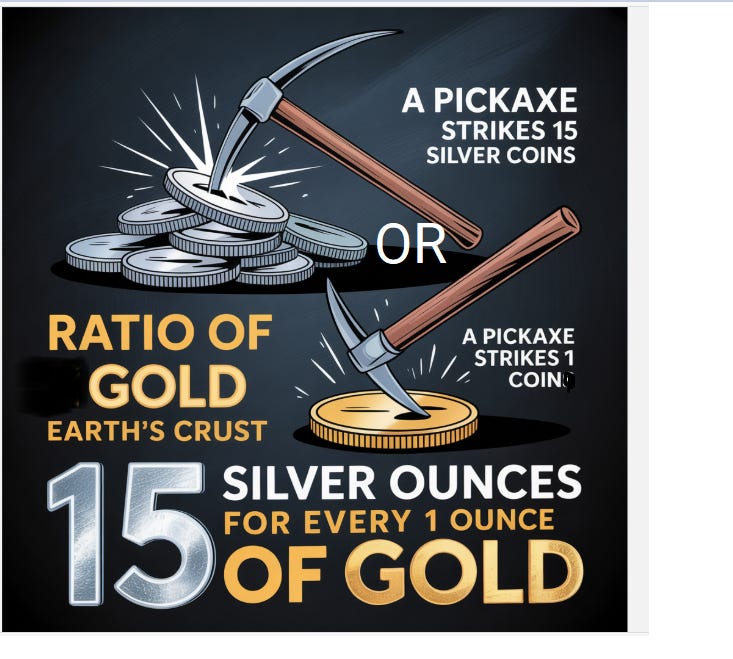
The gold/silver ratio has already collapsed from the absurd 120:1 panic extreme to the 70s, yet remains far above levels historically associated with silver’s full monetary awakening. When silver is treated as money, not scrap, the ratio has repeatedly gravitated toward 25:1 and at times nearer 15:1—remarkably close to the ratio in the earth’s crust and a signal that the market is re-pricing silver from “industrial input” to “monetary lifeboat.” With gold pushing higher in its own right, that compression implies multiples of upside in silver even before you factor in any real blow-off.
Then come the miners. Silver miners are already outperforming the metal as every extra dollar in silver price falls almost straight to the bottom line of the better-run producers. This is a tiny, under-owned equity niche that has been starved of capital for a decade because Crimex games kept spot prices artificially low, tanking margins and killing exploration. Now, with silver screaming higher and the market discovering just how little scalable production exists, these companies become leveraged call options on a metal that the system desperately needs and cannot print. Investment funds are grotesquely underweight; the dry powder on the sidelines is enormous.
The system’s tell
The greatest wealth transfer in this cycle isn’t in vapor tokens or AI hype stocks. It is the migration from paper claims to real assets—hard money methodically eating fiat alive while still being denounced as “barbarous relics” by the very institutions that engineered the inflation. Silver’s breakout is not a market quirk; it is the canary that stopped coughing and started screaming.
For decades, Crimex tricks delayed the reckoning by manufacturing synthetic supply and smashing each rally before it could reset expectations. That game works only as long as you can settle with promises instead of metal. At $56 and accelerating, in a world of shrinking inventories, exploding industrial offtake, and global monetary fragmentation, that confidence trick is failing in real time.
The signal is simple: own real assets or get steamrolled. Silver is not asking for attention; it is issuing a subpoena.
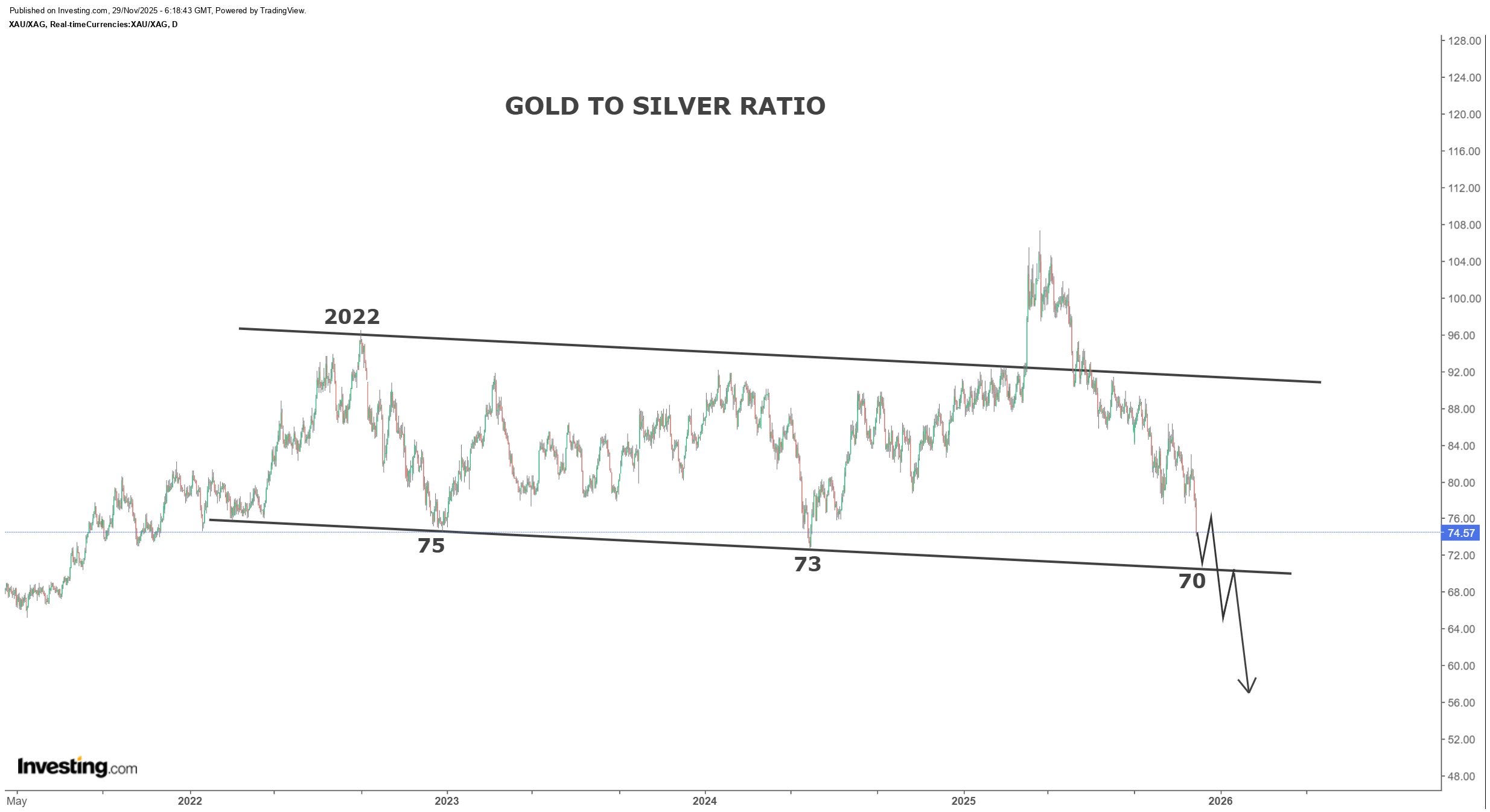
At The Silver Academy, the gold–silver ratio is not a trivia chart, it’s mission control.
When that ratio breaks horizontal support and starts sliding toward the lower band of a 3.5‑year descending channel, it is the market whispering that silver is about to run circles around gold. At a $4,500 gold print and a 70 ratio, silver near $63 is not hype, it’s simple division and imminent reality. From there, a move to a 57 ratio with gold at $5,000 launches silver toward $88, and any overshoot in gold or extra compression in the ratio shoves us into triple‑digit territory. In this phase of the cycle, you either track the ratio—or get run over by it.
end of segment