
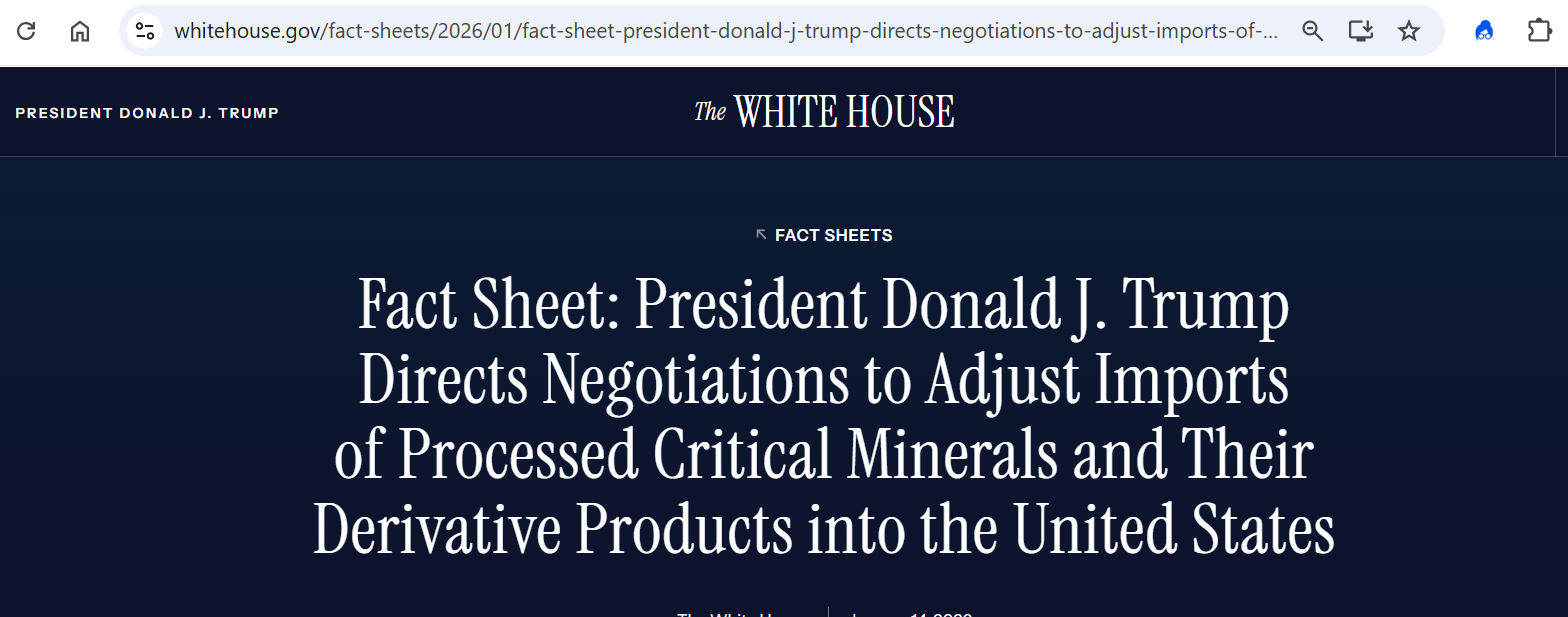
Fact 1:
Four days ago, we were the first to report that this White House declaration (see below) would propel silver even higher.
In case you missed it, the original report is featured again for your reference.
In this report we stated (as well as other factors) the following
Crucially, the article below anchors critical minerals as indispensable to 16 designated critical infrastructure sectors and to “virtually all defense capabilities and activities,” from fighter aircraft to communication networks and surveillance systems. That framing moves strategic metals out of the commodity doghouse and into the national security budget conversation.
Net result: Washington has just hard‑coded the legal and political framework to reprice critical minerals upward over time—and silver, sitting at the crossroads of defense, energy transition, AI hardware, and secure communications, stands to be one of the quiet winners
Now read the fact sheet published by whitehouse.gov that bolsters our reporting and this Presidential declaration (substantiating the tailwind for silver)
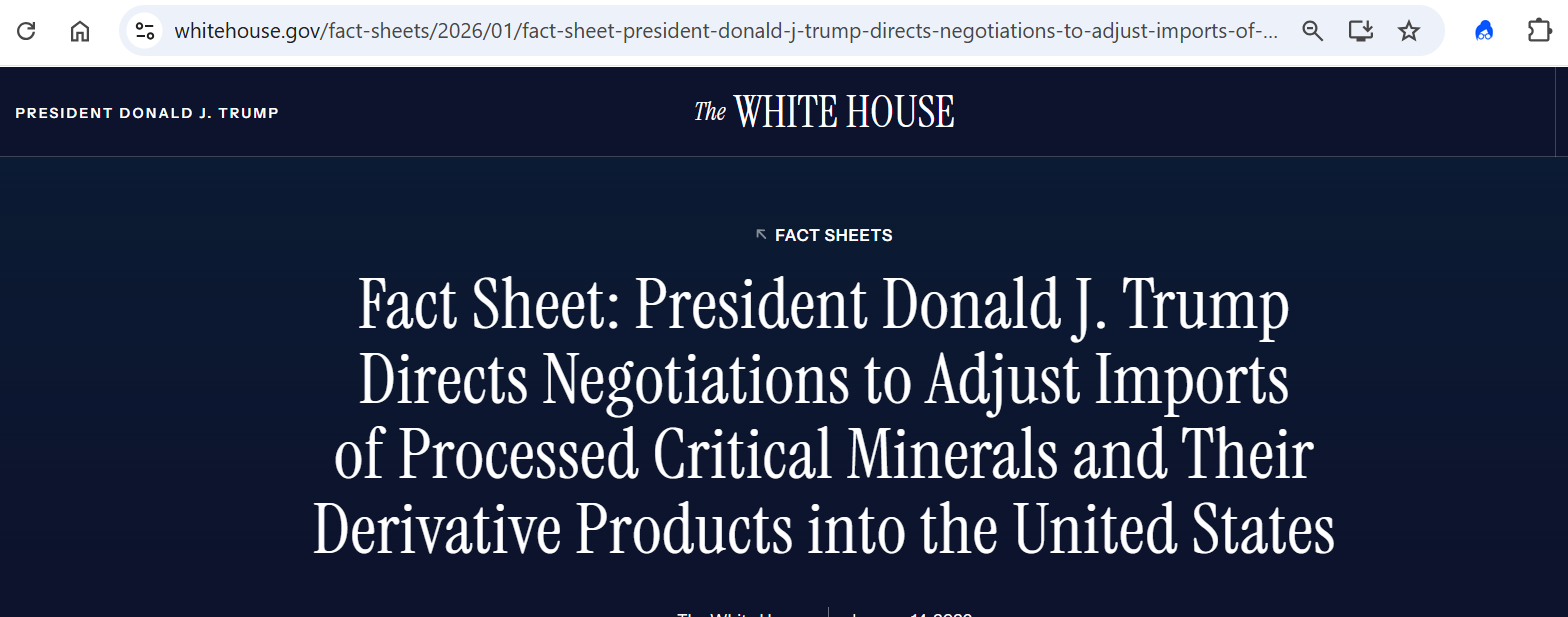
What the fact sheet adds
-
It makes clear the administration will actively promote price floors for processed critical minerals in coordination with allies, formalizing an upward bias in strategic materials pricing.
-
It reiterates that imports of processed critical minerals “threaten to impair national security,” locking in the framing that these inputs—including silver-bearing technologies—are too important to be left to pure market forces.
Why this matters for silver
-
The fact sheet stresses that critical minerals are indispensable to “almost every industry,” from defense systems to energy infrastructure and consumer goods, and that U.S. production has been declining despite rising demand. That logic fits silver’s role across defense electronics, power, and high‑tech.
-
Washington is now explicitly prioritizing domestic mining and processing while also cutting deals with allies like Australia, Saudi Arabia, Malaysia, Thailand, and Japan to diversify away from adversarial suppliers. That points to a more expensive, redundancy‑heavy supply chain for strategic metals, reinforcing the case for structurally higher silver prices over time
Silver has been in structural deficit since 2019, and the math no longer works for the status quo. Industrial and military demand is compounding—AI data centers, precision-guided munitions, aerospace platforms, solar build‑out, and robotics all require ever‑larger volumes of silver that existing mine supply simply cannot meet. At the same time, monetary demand is reawakening: India is quietly remonetizing silver at the household and institutional level, while other sovereigns, family offices, and dynastic wealth rotate into silver as insurance against an unraveling fiat regime.
Against this backdrop, the gold‑silver ratio grinding back toward 15:1—or even 9:1 in line with how it is mined—is not some outlandish fantasy, but a logical endpoint of a decade‑long mispricing being violently corrected in real time. Structurally constrained mine output, capped off by years of underinvestment in new projects, collides with secular growth in high‑tech and defense demand plus a rising tide of monetary flows that treat silver as “poor man’s gold” and “rich man’s asymmetry” at the same time.
Layer on the geopolitical fault lines: China’s export controls and its dominance over refining, where it effectively influences up to roughly 70 percent of global mined silver as it passes through Chinese or China‑aligned processing hubs, sit opposite any coalition the United States can stitch together under its new critical minerals doctrine.
This is no longer just a commodity story; it is a three‑front war:
-
geopolitical
-
industrial
-
and monetary
—being fought on the silver battlefield. In that showdown, ounces are votes, and the side that secures and hoards real metal before the ratio compresses will write the next chapter of the monetary order.