
The Financial System Is a Crime Scene — We’re Just Living in It
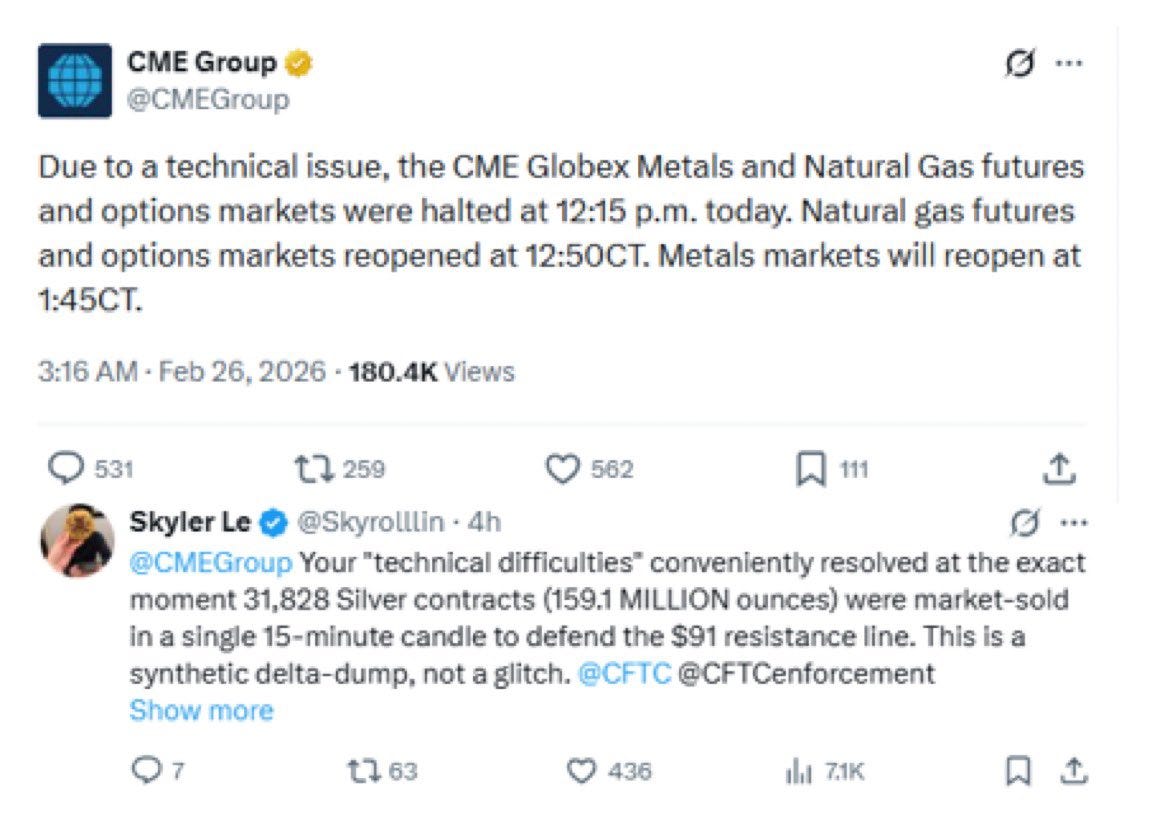
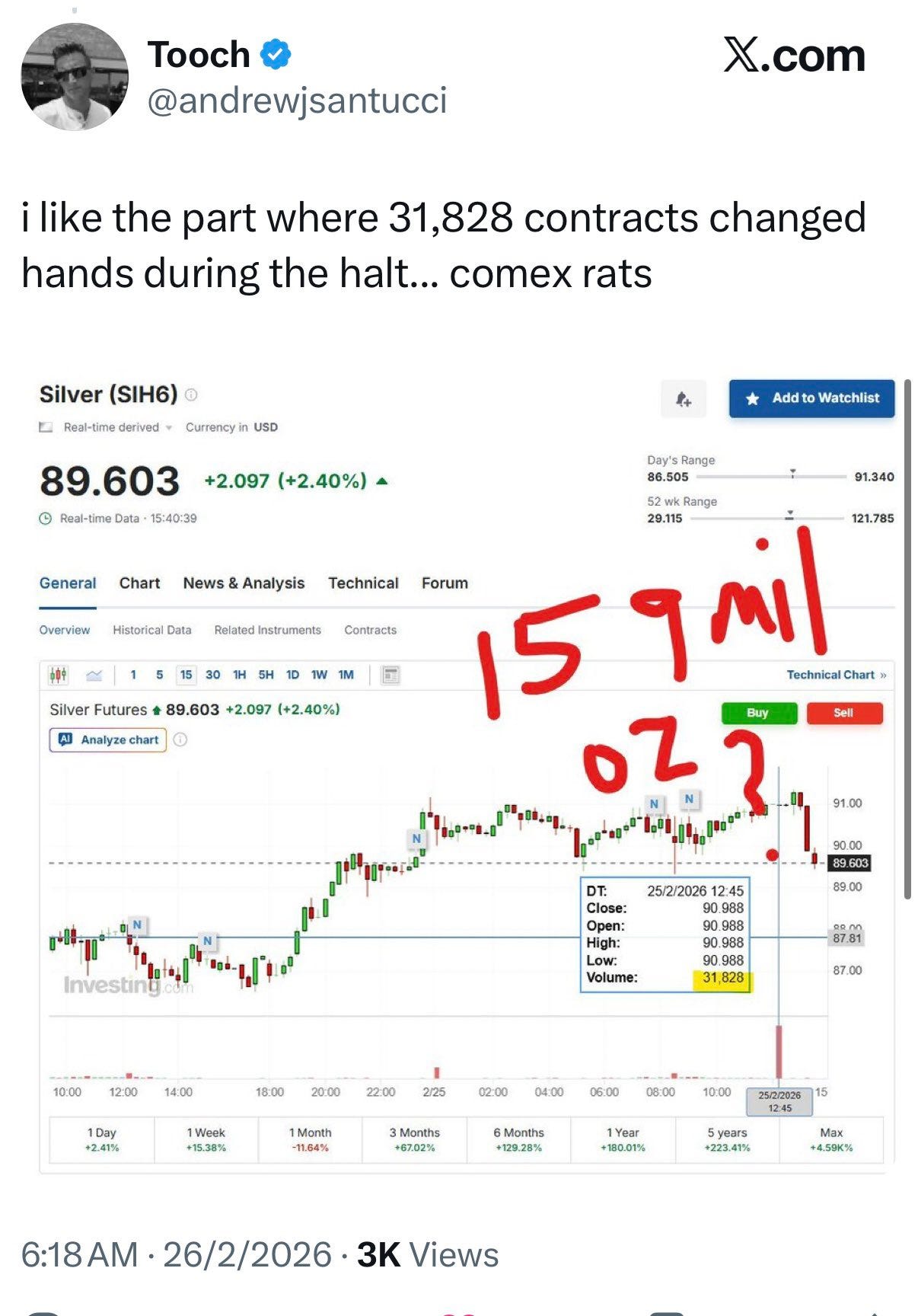
There it was again—the “technical issue.” The CME’s Globex system, the digital heartbeat of our financial empire, suddenly froze. Metals, natural gas, silver—all halted mid‑squeeze like a chessboard flipped by the losing player. Forty minutes of “paused trading” during a crucial breakout. Forty minutes to take a breath, regroup, and quietly fix the scoreboard before the peasants noticed.
They called it a glitch. I call it what it was: a coordinated mercy kill for trapped short sellers. When the inmates are calling timeout on a prison break, you know the system isn’t broken—it’s rigged.
The Glitch Heard ’Round the Market
Nothing in modern finance happens by accident. The CME didn’t just trip over a cable. No, this was the digital equivalent of drawing the curtains—the moment when clearing firms, vault operators, and “approved” depositories realized the silver emperor was naked. There wasn’t enough freely available physical metal to satisfy demand. The vaults were echo chambers. The promises were air.
So they halted the market. Not to fix it—but to hide it.
Welcome to the Casino—House Rules Apply
In those forty minutes, the supposed backbone of capitalism revealed itself for what it’s become: a stage play with rigged lighting and pre‑approved scripts. When the audience demands truth, the directors pull the plug. Welcome to the casino where “house rules” means the house always wins.
Let’s be blunt: today’s financial system is a caricature of itself. It’s Rome in slow motion, all pomp and marble façades over hollow institutions and decaying trust. The emperors swagger on television, quoting confidence statistics and core inflation metrics, while the vaults behind them hold IOUs wrapped in digital smoke.
When Corruption Becomes the Operating System
Every empire falls the same way: first corruption becomes tolerable, then normal, then mandatory. When a market “pause” conveniently stops a short squeeze, it’s not a bug—it’s policy. It’s the ritual of the privileged defending their positions under the pretense of stability. You and I call it manipulation; they call it liquidity management.
Retail traders lose orders, lose momentum, and watch as their bids vanish into electronic dust. Meanwhile, the banks’ limit orders remain untouched, gleaming like fortified walls. When the curtain lifts, everything has changed. The price is reset. The panic is excused. The empire lives to fight another day.
The Church of the Glitch
And then come the explanations—press releases dripping with technocratic nonsense. “A brief interruption in the data matching engine.” “A hardware cooling issue.” “External connectivity problems.” Every euphemism designed to obscure a simple truth: the machine was manually stopped to save the losing side.
Remember November 2025’s “Black Friday outage”? Another cooling issue! Funny how the servers only overheat when silver’s breaking out and banks are cornered. Perhaps the laws of thermodynamics bend around JPMorgan’s short book.
Selective Entropy, Otherwise Known as Market Control
This is weaponized incompetence—chaos deployed like a shield. The same “accidents” that freeze silver never seem to freeze index futures when they’re melting up. It’s selective entropy, a glitch that only punishes the wrong people at the wrong time.
Rome’s Reflection in a Silver Mirror
The parallels to late‑stage Rome are almost poetic. Their senators looted the treasury through coin debasement; ours do it through derivative alchemy. Their citizens distracted themselves with bread and circuses; ours scroll through TikTok while their savings are plundered in real time.
What we’re seeing isn’t just manipulation—it’s decay. Institutional rot so deep that truth itself is treated as a contagion. “Price discovery” has been replaced with price administration. “Markets” are now managed perception.
The Canary That Wouldn’t Shut Up
Silver is the mirror that exposes every other illusion. Its physical scarcity is the inconvenient truth, the one song the empire can’t mute. When the system must break itself to suppress a price spike, that’s not control—it’s surrender.
Every “glitch,” every “pause,” every “cooling issue” is another brick in the crumbling aqueduct. The collapse won’t trickle. It’ll gush—once the confidence evaporates faster than the liquidity. By then, the senators will have fled, clutching offshore bullion like relics.
Because before Rome burned, the mint was already empty.
end of segment
-
our opinions are not our sponsors opinions
-
the editorial department is separate from the promotions department
-
not financial advice