
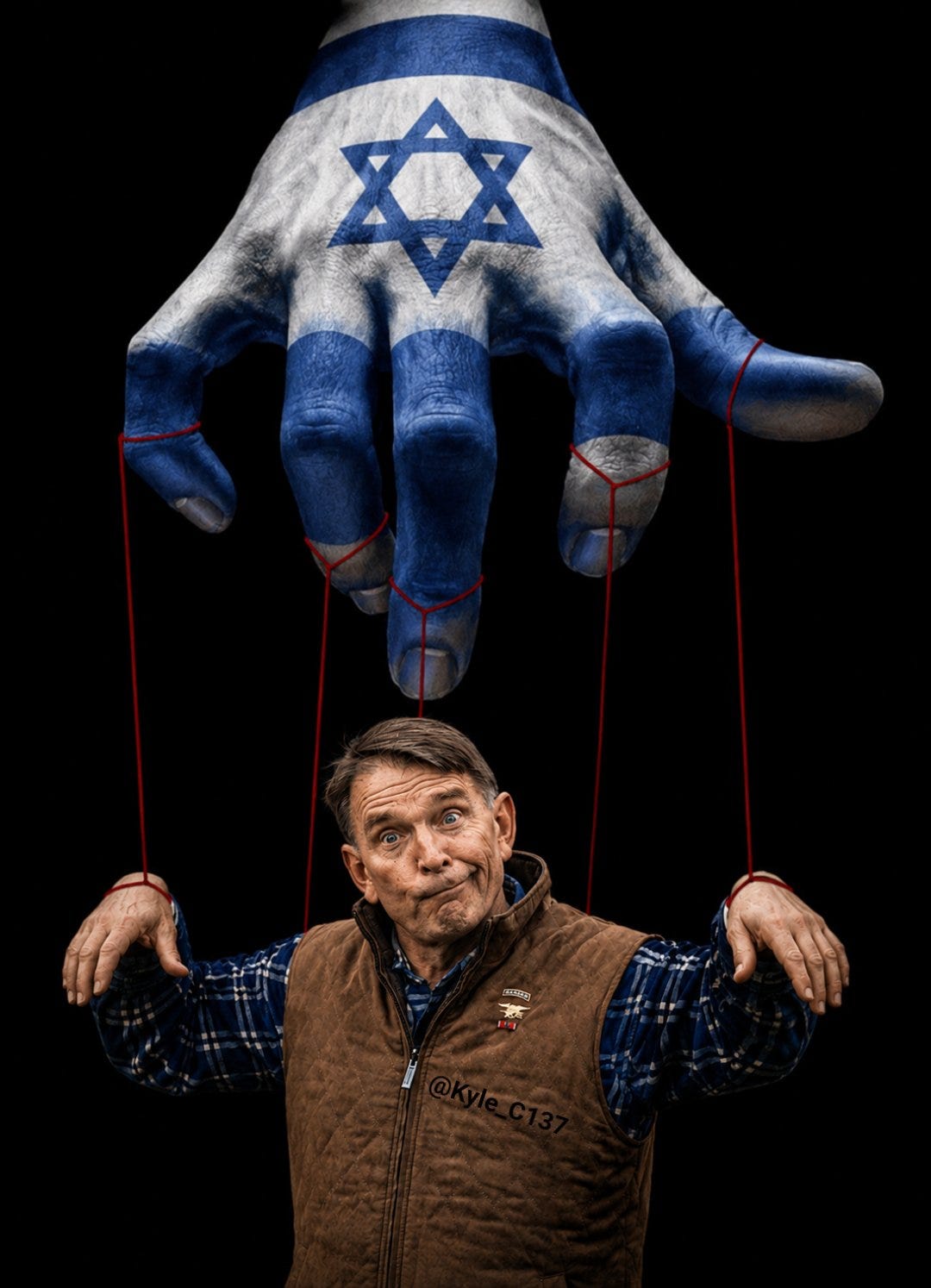
-
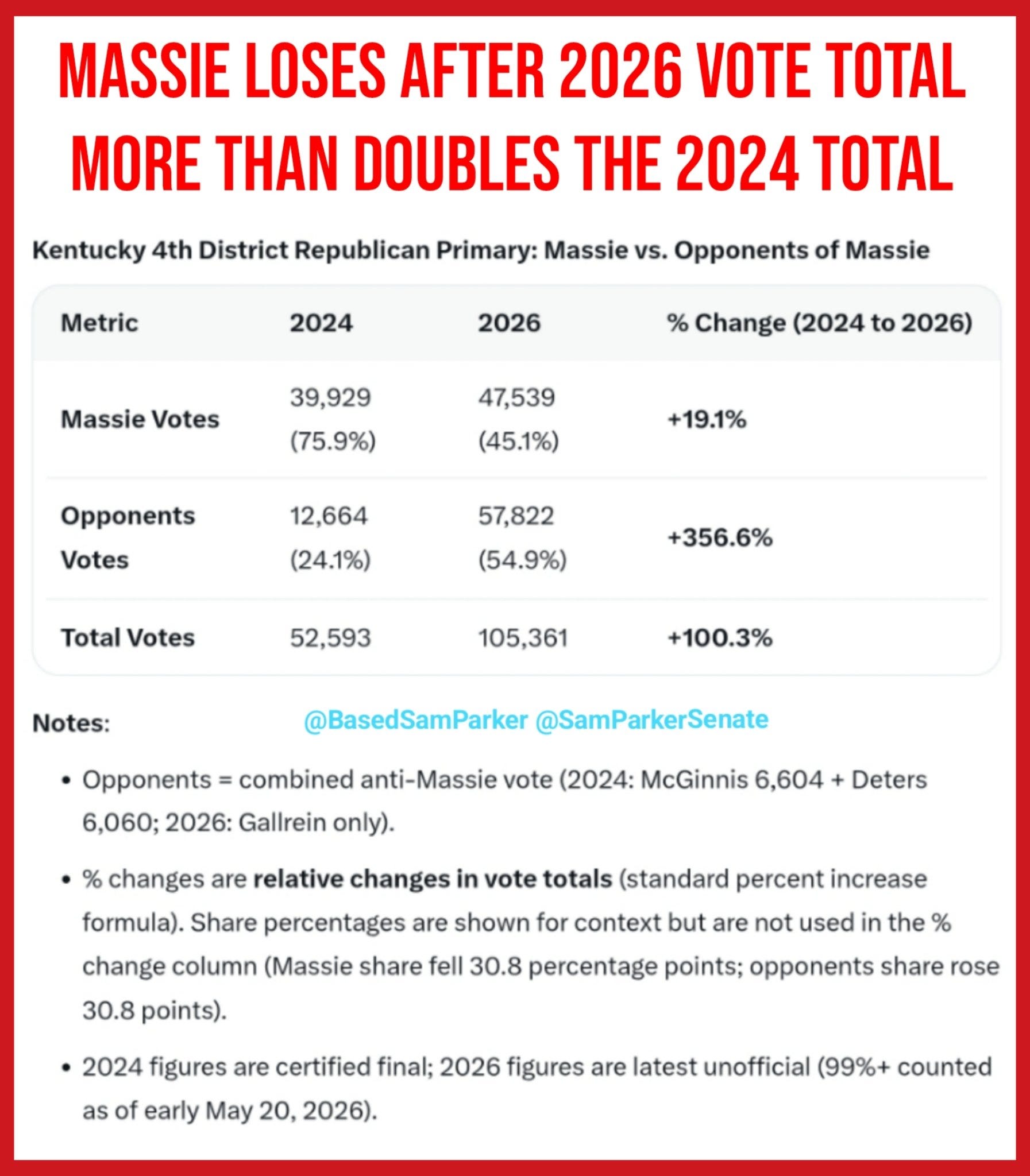
Massie increased his turnout by 19% over 2024.
-
Gallrein increased the opposition turnout by 357%
-
Today’s turnout DOUBLED 2024’s in the highest overall vote total in Kentucky history.
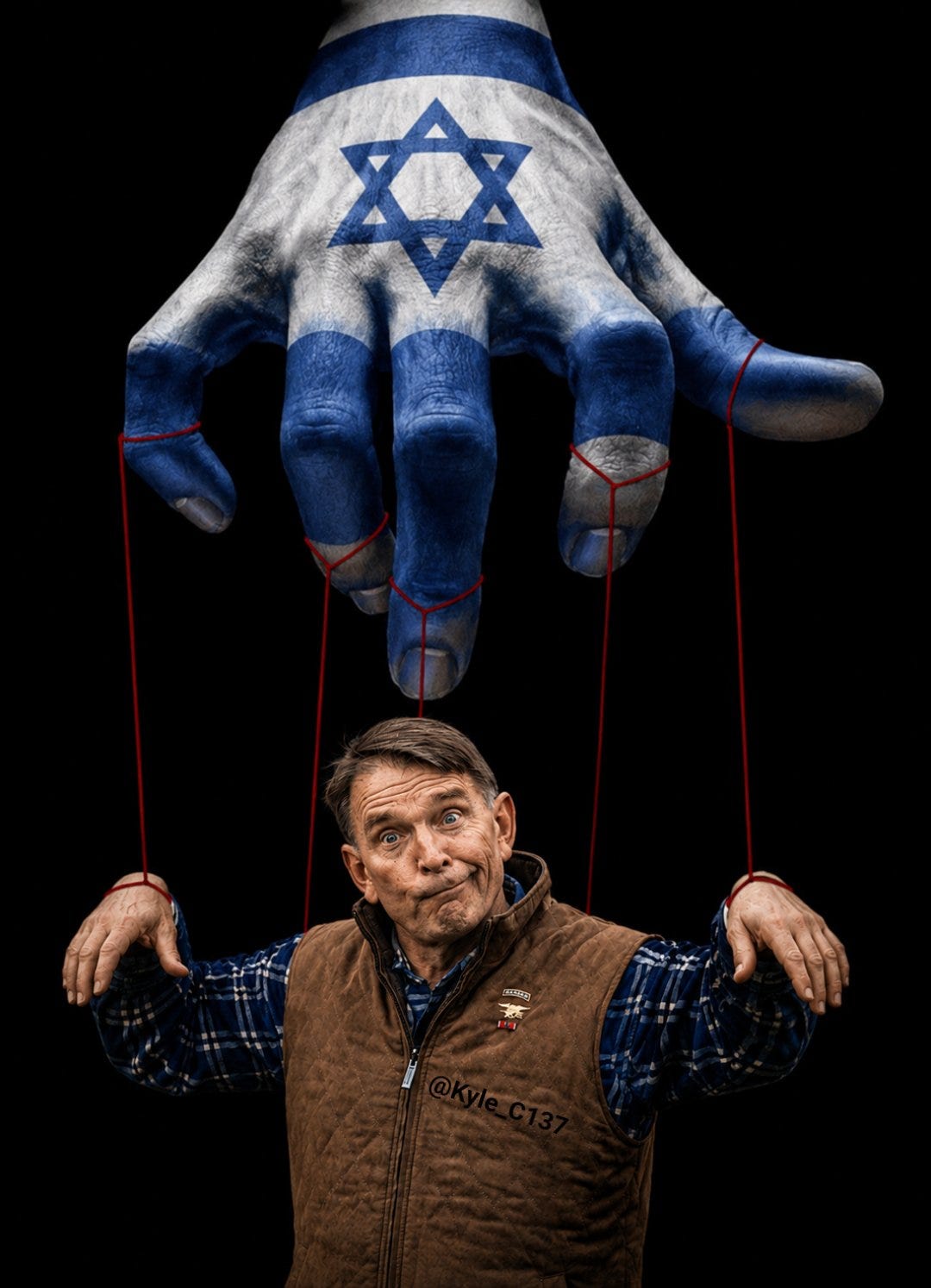
Prediction: Why Massie will be President in 2028
Thomas Massie could emerge as the 2028 frontrunner for one simple reason: exhaustion. After years of spectacle, debt, and transactional politics dressed up as leadership, voters may settle for the one guy who consistently said “no” while everyone else cashed in. In a system that increasingly rewards loyalty over principle, the last remaining dissenter starts to look like a hero. Not because he’s perfect—but because compared to the rest, he didn’t play along.
Call it a primary if you want. It looked more like a demonstration.
The $30 Million Message
A rural Kentucky race with roughly 110,000 votes somehow attracted tens of millions of dollars, a presidential visit, a cabinet-level appearance, and a flood of outside influence that would make a swing-state Senate race blush. That’s not normal. That’s not organic. That’s what it looks like when a political system decides someone needs to be removed.
Thomas Massie wasn’t a typical target. He didn’t play the game. He voted “no” when leadership expected “yes.” He questioned foreign policy orthodoxy. He pushed on issues most politicians treat like live wires. In a system built on alignment, that’s enough to make you expendable.
When the Machine Turns On
So the machine spun up.
More than $30 million poured into a single House race. Billionaires with no connection to the district suddenly invested heavily in its outcome. Ads flooded the zone, including AI-generated hit pieces that treated disclosure like a technicality. The challenger barely needed to campaign in the traditional sense. When that level of infrastructure is behind you, persuasion becomes optional.
The Numbers That Stick
Then came the numbers—perfectly ordinary on paper, deeply controversial in perception.
Ed Gallrein received 10,854 mail-in ballot votes. Thomas Massie lost by 10,280 votes.
Officials will say that’s how modern elections work. Critics will say the margin raises obvious questions. Either way, the reaction is the story. Because to a growing number of voters, that kind of alignment doesn’t look like coincidence—it looks like inevitability.
Optics Over Legitimacy
And that’s the problem.
Trust in the process doesn’t collapse all at once; it erodes through moments like this. Massive outside spending. Asymmetrical campaigning. Late-breaking vote totals that decide everything. Even if every ballot is legitimate, the optics alone are enough to convince people the outcome was engineered.
That perception doesn’t go away. It compounds.
The Making of a Political Enemy
And ironically, it may be the best thing that ever happened to Massie.
Because losing like this doesn’t end a political career—it reframes it. He’s no longer just a congressman. He’s the guy who challenged the system and got steamrolled for it. The one who refused to fall in line on spending, foreign policy, and politically sensitive issues others avoided.
From Casualty to Contender
In a Republican Party increasingly hostile to centralized control and donor influence, that’s not a liability. That’s a launchpad.
Meanwhile, the broader environment keeps feeding the same conclusion: rules are flexible, power is concentrated, and accountability depends on who you are. Voters notice. They may not agree on the details, but they agree on the feeling.
And that feeling creates openings.
2028 Starts Here
So while Kentucky closes one chapter, it opens another. Because by the time 2028 rolls around, Massie won’t just be the guy who lost a primary.
He’ll be the guy people believe wasn’t supposed to win in the first place—and who kept going anyway.
And in this political era, that’s exactly how a frontrunner is made.
Corruption in a Timeline
-
May 12, 2025 – Preview reports detail Trump’s first second‑term foreign trip to Saudi Arabia, Qatar, and the UAE, emphasizing a deal‑making focus over traditional diplomacy.
-
May 13, 2025 – In Qatar, plans surface for the royal family to gift Trump a customized Boeing 747‑8 “palace in the sky,” valued near 400 million dollars, for use as a presidential jet and later his library.
-
May 13, 2025 – The Trump Organization’s agreement for a Trump‑branded golf club and resort outside Doha, with Qatari and Saudi‑linked partners, is reported, highlighting deepening Gulf financial ties.
-
May 13, 2025 – In Riyadh, Trump announces intent to lift U.S. sanctions on Syria to give it a “fresh start,” jolting allies and instantly boosting expectations for Syrian reconstruction and energy deals.
-
May 14, 2025 – Coverage shows Syrian leader Ahmed al‑Sharaa pitching a Trump Tower–style skyscraper in Damascus and U.S. access to Syrian oil and gas as part of his push for sanctions relief.
-
May 25, 2025 – A UAE real‑estate group publicly outlines a 200 million dollar Trump‑branded tower in Damascus, framed as a symbol of hoped‑for Syrian economic reopening after Trump’s sanctions move.
-
Speculation, 2025 – Analysts argue Trump’s sudden Syria sanctions decision and shifting implementation signals created sharp, tradeable swings in Syrian‑linked and regional energy expectations, possibly benefiting well‑connected players in oil futures; these concerns remain unproven in court.
-
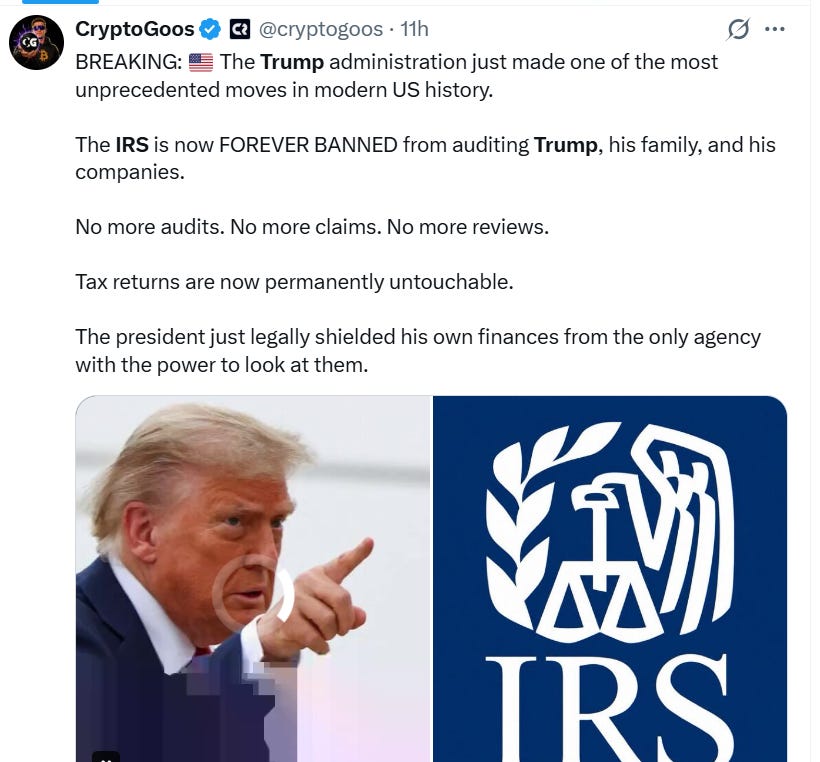
Late January 2026 – Trump, his company, and his sons file a multibillion‑dollar lawsuit against the IRS over leaked tax records and prior probes, alleging political “weaponization.”
-
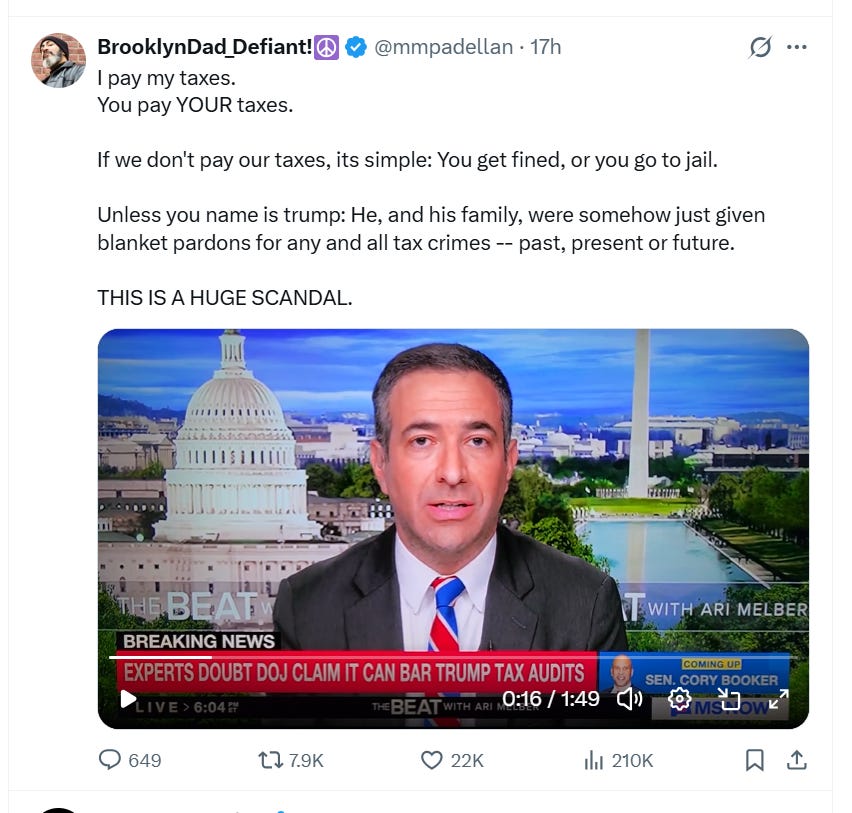
May 15–18, 2026 – Reporting reveals settlement terms under which the Justice Department agrees to halt many audits and enforcement actions involving Trump, his family, and his businesses if he drops the suit.
-
May 18, 2026 – The administration unveils a roughly 1.7–1.8 billion dollar “anti‑weaponization” fund, taxpayer‑financed and overseen by a Trump‑aligned commission, to compensate people claiming past government targeting.
-
May 18, 2026 – Ethics groups and lawmakers condemn the fund as a de facto slush fund that could channel money and vindication to Trump allies, including January 6 defendants, while effectively shielding Trumpworld from tax scrutiny.
-
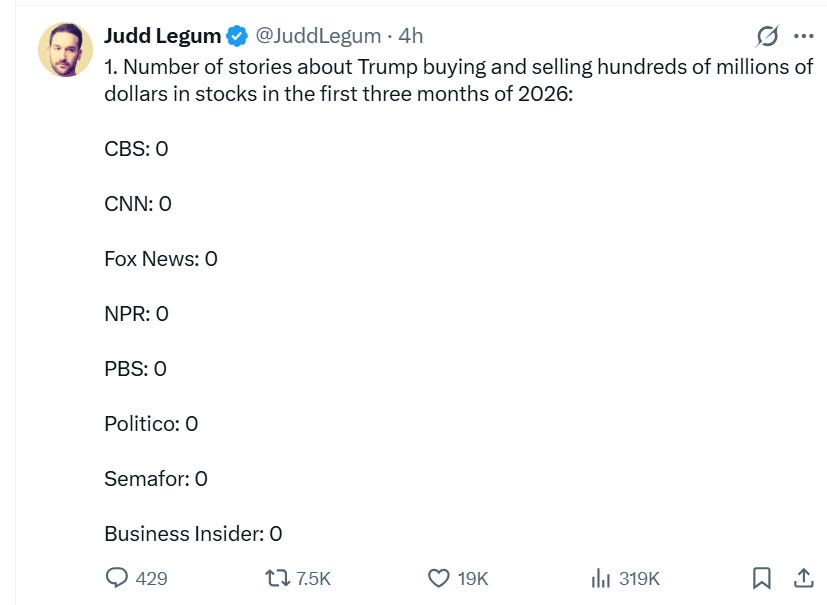
Insider Trading: 2025–2026 – A growing body of commentary contends Trump’s dramatic, reversible statements about Middle East escalation, ceasefires, and sanctions function as market signals; combined with his Gulf business ties, critics warn this enables favored insiders to time trades in oil, defense, and regional assets around his “on‑again, off‑again” war announcements, though no definitive public legal proof of coordinated insider trading has emerged.
-
Trump Coin 2026 – Commentators also float the idea of a “Trump coin” or similar branded token that could be marketed to supporters as an anti‑“deep state” currency tied to his 1.8 billion dollar fund and Gulf‑linked projects, potentially amplifying volatility and opportunities for insiders; at this stage, such a coin remains a hypothetical scenario used in critical analysis rather than a documented, launched product



Massie and Silver
Congressman Thomas Massie received high marks from the Sound Money Defense League for his consistent support of pro-sound money legislation, including efforts to audit the Federal Reserve, protect gold and silver ownership, and oppose central bank overreach, reinforcing his reputation as a leading advocate for hard money principles in Congress.
-
our opinions are not our sponsors opinions
-
the editorial department is separate from the promotions department
-
not financial advice
-
buy silver