
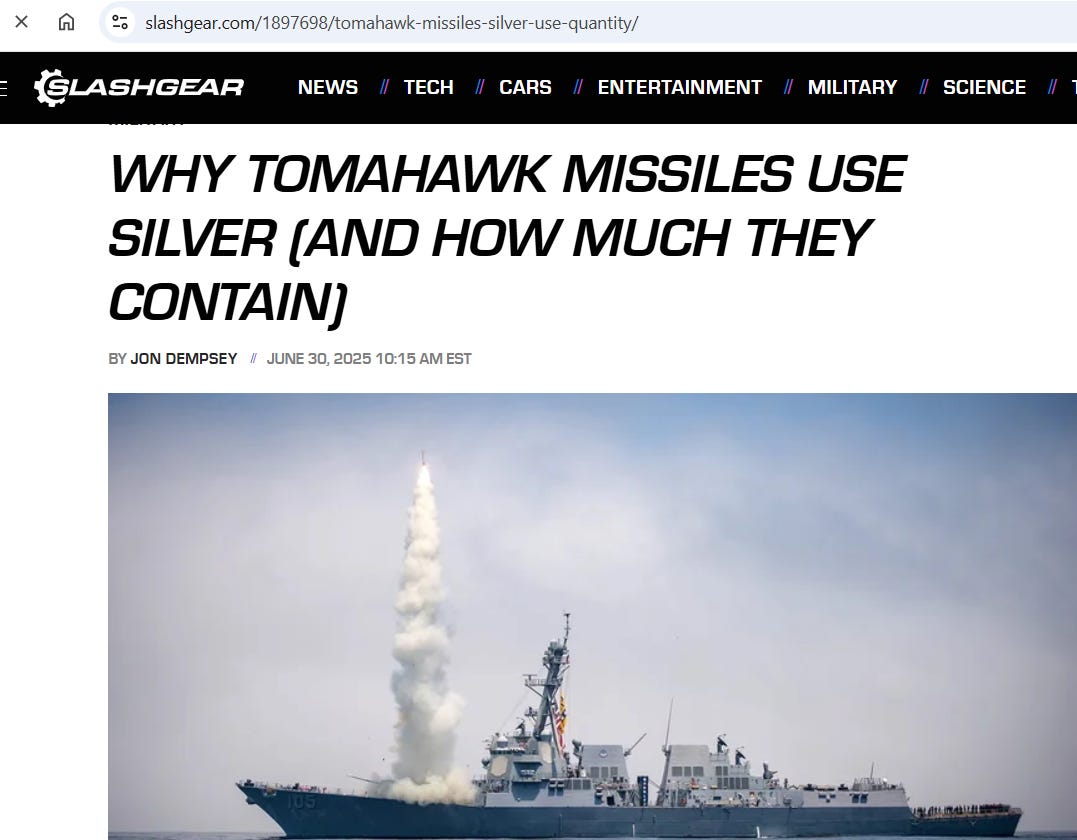
Getting Humiliated by Lawnmowers
War, in its modern American incarnation, has become less a contest of strength and more a grotesque exercise in burning through inventory that cannot be replaced. The mythology still sells precision, dominance, and technological supremacy. The reality looks closer to a liquidation sale.
Consider the absurd math: a $3,000 drone—essentially a flying lawnmower with a warhead—takes down a $35 million MQ-9 Reaper. That is not asymmetry; that is humiliation dressed up as “engagement.” The Reaper, once marketed as the crown jewel of remote warfare, now resembles a clay pigeon in a shooting gallery run on a budget. Twenty-plus shot down by irregular forces with improvised air defenses and cheap drones. At some point, you stop calling it bad luck and start calling it what it is: a catastrophic cost curve.
The “Superpower” That Ran Out of Ammo
And while Washington performs theater with billion-dollar appropriations, the cupboard is bare. Patriot and THAAD interceptors—reportedly down to scraps, 10% or less. JASSMs and Tomahawks dwindling to the point where planners openly worry about sustaining even a couple of weeks of high-intensity conflict. The United States now fights with “standoff weapons” it cannot afford to keep firing. Use 200–300 a day for a few weeks, and suddenly the arsenal isn’t an arsenal—it’s a memory.
Attrition Is a Meat Grinder—And America Is Losing It
Meanwhile, Iran—and its friends—play a different game entirely. Cheap drones, mass-produced missiles, and a supply chain that does not depend on asking geopolitical rivals for permission slips. In a war of attrition, the U.S. appears to have burned through 80–90% of key munitions, while Iran may have tapped only a fraction of its capacity, with resupply lanes running through Russia, China, North Korea, and Pakistan. Confidence follows arithmetic.
No Silver, No War—It’s That Simple
Then there is the quiet, inconvenient bottleneck: materials. Advanced weapons are not conjured out of rhetoric; they are built from rare earths and silver. China controls the former and is increasingly unwilling to export either. Silver, in particular, sits in its sixth consecutive structural deficit while demand explodes from every direction policymakers claim to champion—AI systems, solar infrastructure, 5G networks, robotics.
Even the shiny future of transportation is a silver sinkhole: EV batteries pushing toward roughly 1 kg per vehicle for performance gains. Scale that to 30 million EVs and you are looking at about 30,000 metric tons—roughly 964 million troy ounces. That is not a line item; that is a vacuum.
You Can’t Bomb Anyone If You Can’t Build Anything
So the same industrial base expected to churn out missiles also competes with the “green transition” for the same constrained inputs. You cannot have infinite war and infinite electrification on a finite pile of metal—especially when your primary supplier is also your primary strategic rival.
From Global Hegemon to Supply Chain Hostage
And hovering over all of this is the uncomfortable escalation ladder: Iran signaling long-range strike capability and a willingness to hit U.S. cities if pushed. Whether one treats that as deterrence or bluff, it underscores the broader point: the era of consequence-free projection is over.
What remains is a peculiar spectacle—a superpower that can still spend without limit but can no longer build without permission, firing exquisite weapons it cannot replace, at targets that cost less than a used car.
How to Play the Silver Shortage
The silver story is even more absurd once you run the numbers. The world digs up roughly 820 million ounces a year and somehow expects to satisfy 1.2 billion ounces of demand—driven by 5G, robotics, AI, EV batteries from players like Samsung and Toyota, and aerospace. That gap does not close with optimism. And then there is the military, the single most silver-intensive machine on the planet, quietly out-consuming all of them when it ramps. Every missile, sensor, and guidance system leans on it. So while politicians talk about endless production, the physical reality is simpler: you cannot wage industrial war without the one metal you no longer have enough of.
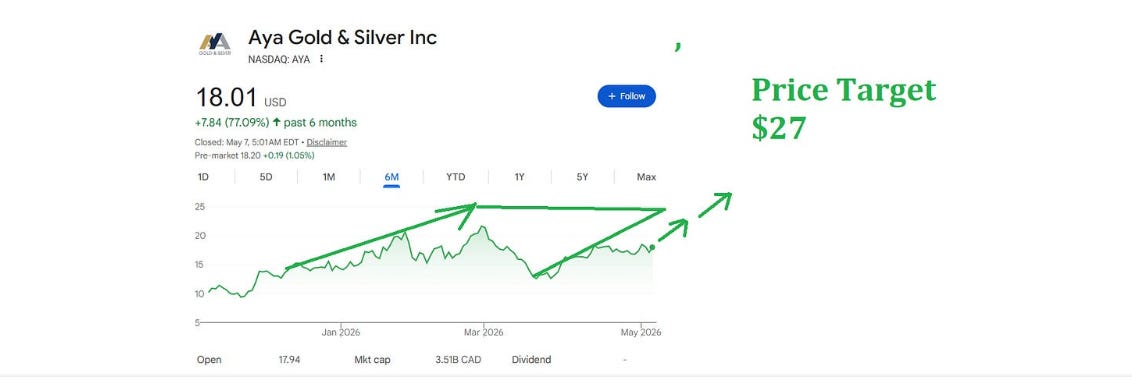
Aya Gold & Silver (OTCQX: AYASF) is rapidly transforming Boumadine into one of the most compelling emerging silver stories in the market—and the latest drill results only reinforce that trajectory. The standout intercept of 890 g/t AgEq over 51.5 meters marks the best grade-over-width result to date, underscoring both the scale and quality of the system.
What makes Boumadine particularly attractive is its growing footprint. The mineralized trend now stretches 5.4 kilometers, with strong continuity of high-grade zones and mineralization still open in all directions. With over 69,000 meters drilled year-to-date and 11 rigs turning, Aya is aggressively expanding what already appears to be a district-scale asset.
The upcoming PEA update, expected within two months, could be a major catalyst. It is set to reflect continued resource growth, improved scalability, and rising payabilities that are already trending above traditional norms—pointing toward a significantly larger development scenario.
Even the current base case is impressive: roughly 400,000 ounces of gold equivalent annually, low AISC of $10–12/oz AgEq, and initial capex around $450 million—all based on just a portion of the trend.
Bottom line: Boumadine is being fast-tracked into a large-scale, high-margin silver system, and Aya Gold & Silver is increasingly positioning itself as a must-own name in the sector.
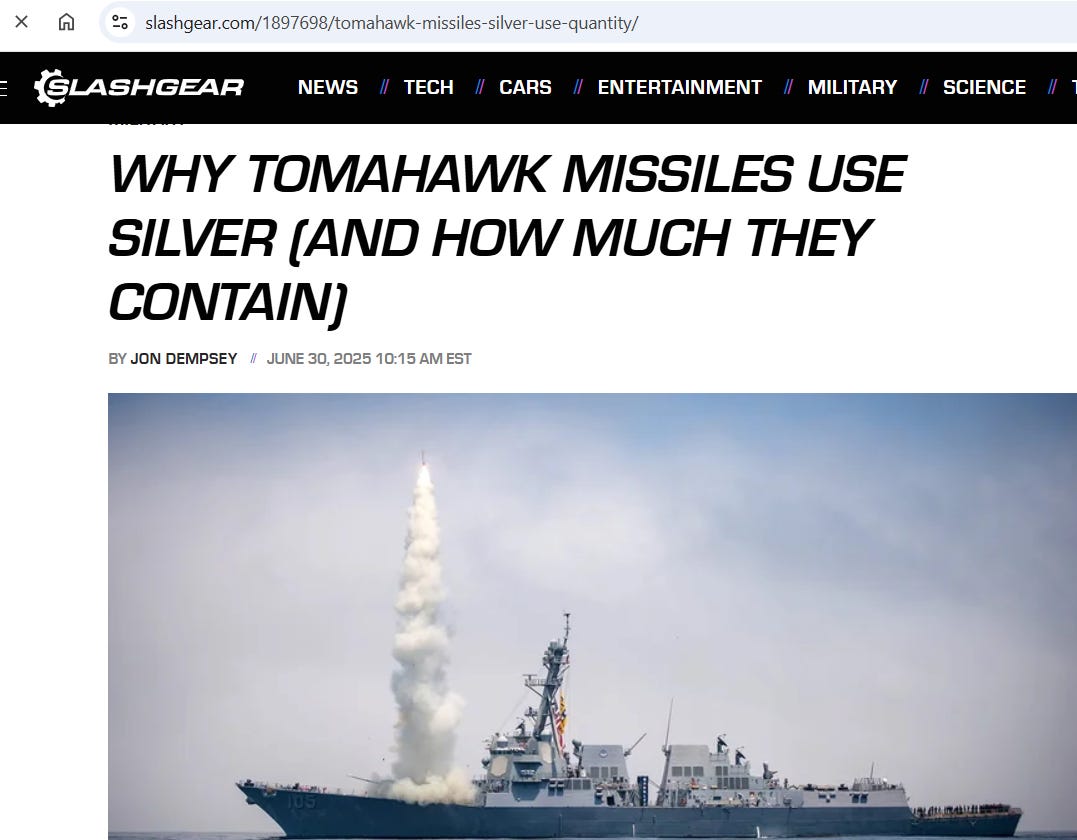
Estimated Silver Consumption in Recent U.S.-Israeli-Iranian Conflict
Conservative baseline per weapon:
-
Tomahawk cruise missiles: ~480-500 ounces each (some sources suggest 10-15 oz, but military/industry sources cite higher figures in the battery systems alone)
-
Patriot interceptors: ~200-300 ounces each
-
THAAD interceptors: ~300-400 ounces each
-
JASSM air-launched cruise missiles: ~150-250 ounces each
-
Standard SM-3/SM-6 naval interceptors: ~100-200 ounces each
-
Smaller guided munitions (JDAMs, Hellfires, etc.): 5-50 ounces each
Estimated usage over past two months (mid-March to mid-May 2026):
-
~200-300 Tomahawks fired: 96,000 – 150,000 oz
-
~400-600 Patriot/THAAD interceptors: 100,000 – 210,000 oz
-
~150-250 JASSMs: 22,500 – 62,500 oz
-
~500-800 naval interceptors (SM series): 50,000 – 160,000 oz
-
Thousands of smaller munitions: 50,000 – 100,000 oz
Conservative total estimate: 300,000 – 700,000 ounces of silver consumed
More aggressive estimate accounting for:
-
Iranian missile/drone manufacturing ramping up (pre-conflict stockpiling)
-
Israeli Iron Dome/David’s Sling interceptors (thousands fired)
-
Replacement production attempting to keep pace
-
Electronic warfare systems, sensors, drones
Aggressive total: 800,000 – 1.2 million ounces destroyed or permanently consumed in two months
That’s roughly 1-1.5% of total annual global silver mine production vaporized in 60 days of a regional conflict—silver that will never be recovered, sitting at the bottom of the ocean or scattered across desert impact craters.