
Written by John Butler: (original version below)
Butler writes:
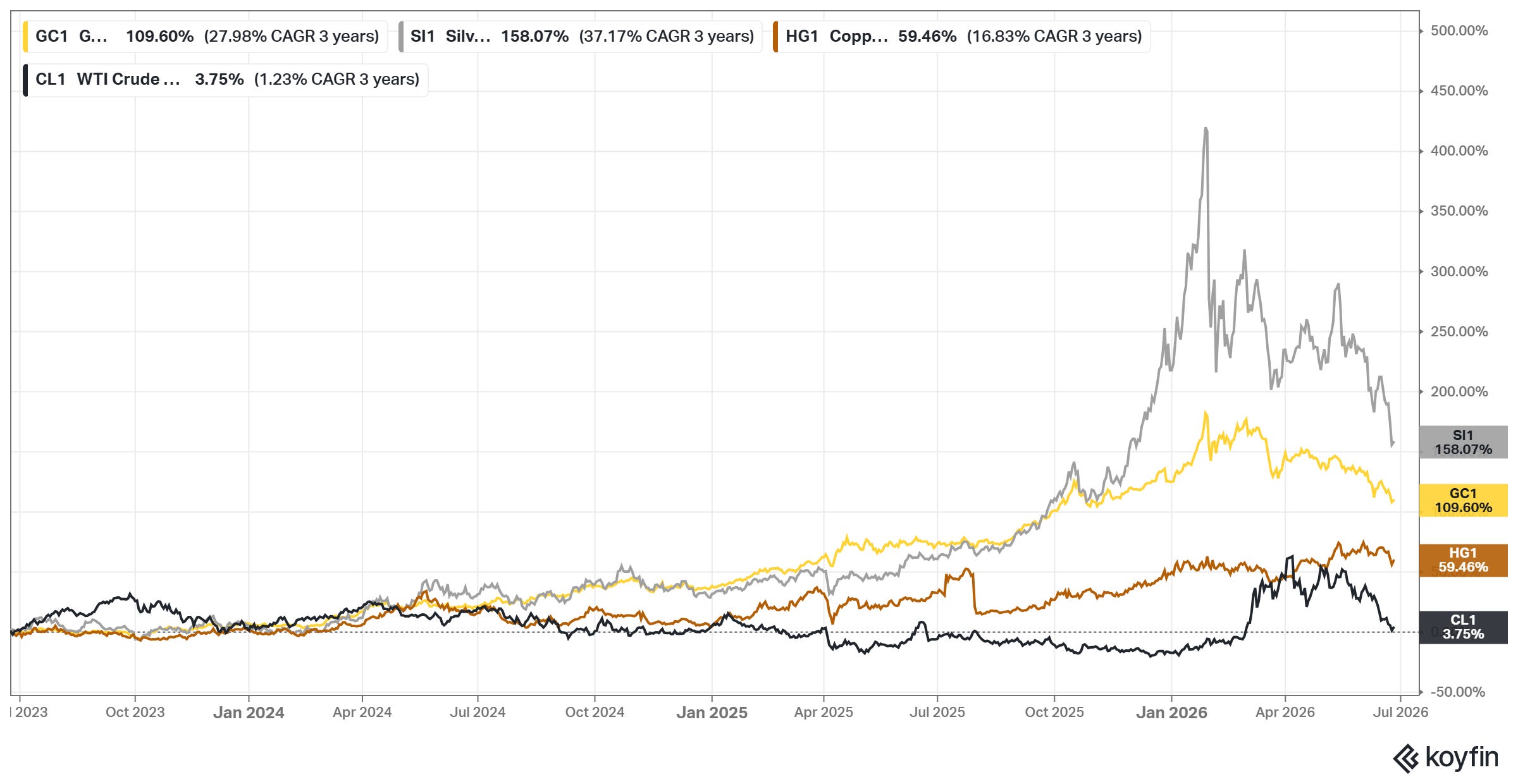
Back in January I presented some evidence of dangerously high speculative interest in metals, in particular silver. Sure enough, a large correction began shortly thereafter and has continued, if in less spectacular fashion, in recent weeks.

My strongest evidence was my proprietary measure of “risk-adjusted margin” or RAM. Here is a brief explanation from my January post as to why RAM is such a useful metric for estimating the level of purely speculative, rather than commercial activity:
There is another way, however, to try and estimate the degree to which certain commodity price increases are being driven by speculation rather than commercial supply and demand. This is to look at the “cost” of speculating, as measured by the amount of margin (or collateral) that the speculator must put up on the exchange in order to open a position in a given commodity futures contract. The less it costs to speculate, so the thinking goes, the more potential for speculation.
RAM goes one step further than simply look at exchange margin requirements, however, as it adjusts the margin for the implied volatility of the commodity in question, as observed in the options markets.
Here is a table of a selection of major commodities contracts, their values and margin requirements at present:
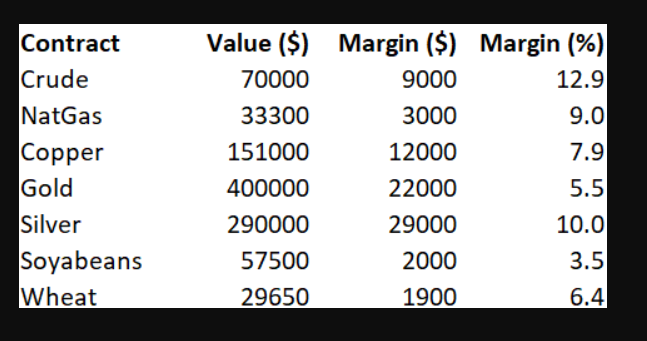
Based on the numbers above, the apparent up-front “cost” of speculating in soyabeans is currently very low, whereas that of speculating in crude oil is high. But crude oil prices are normally much more volatile than soyabeans.
Looking at the metals, it currently appears to be much less “costly” to speculate in gold than in silver. But that can be misleading too, as silver tends to be 2-3 times more volatile than gold.
By taking into account volatilities, RAM provides a much better guide as to which commodities might be attracting speculative interest or not. In the table below I include volatility, risk and RAM:
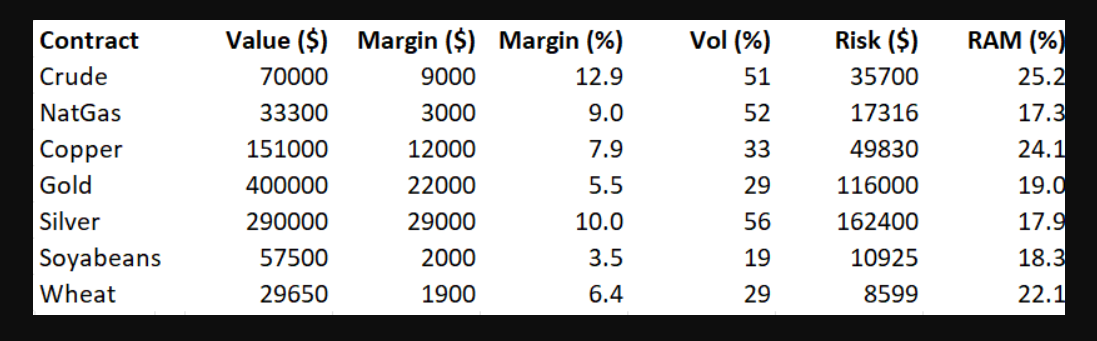
The “cost” of speculation in risk-adjusted terms changes the picture somewhat. For example, the “cost” of speculating in copper or wheat, say, is currently quite high, rather than moderate.
Silver no longer an outlier
When compared to the situation back in January, the “cost” of speculating in silver has now risen quite dramatically, from 12% to 18% in RAM terms. The “cost” of copper speculation has also risen somewhat, from 20% to 24%, nearly as high as crude oil.
CONTINUED…
READ THE FULL ARTICLE HERE!
Disclaimer: This article is for informational purposes only and should not be considered investment advice. The author is not a registered financial advisor. Please conduct your own due diligence before making any investment decisions.