
A System Under Direct Assault
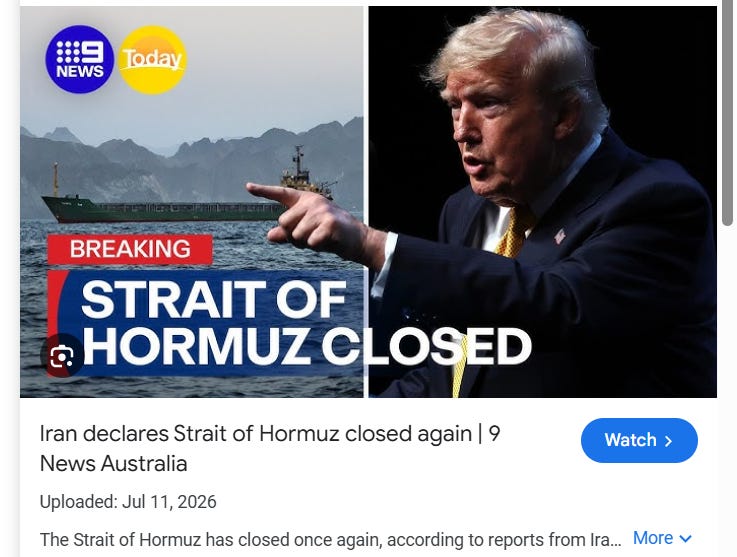
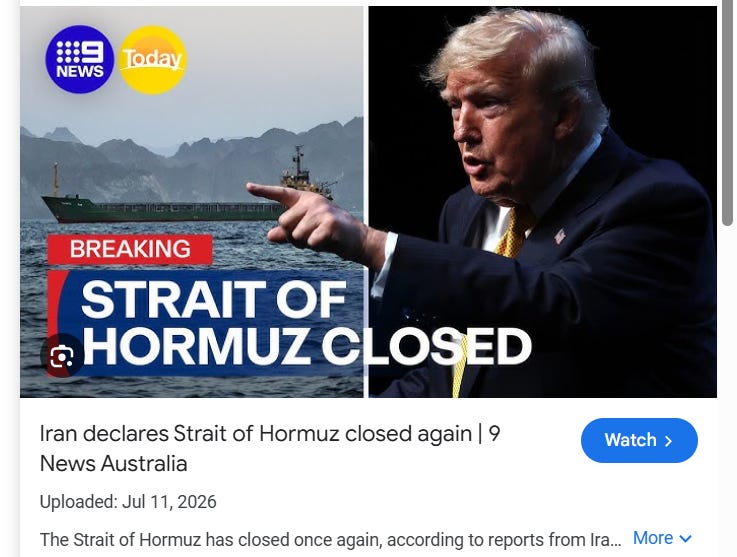
The global energy system is now under direct, simultaneous assault. This is not a routine disruption or a temporary spike—it is a layered supply shock unfolding across multiple critical nodes at once.
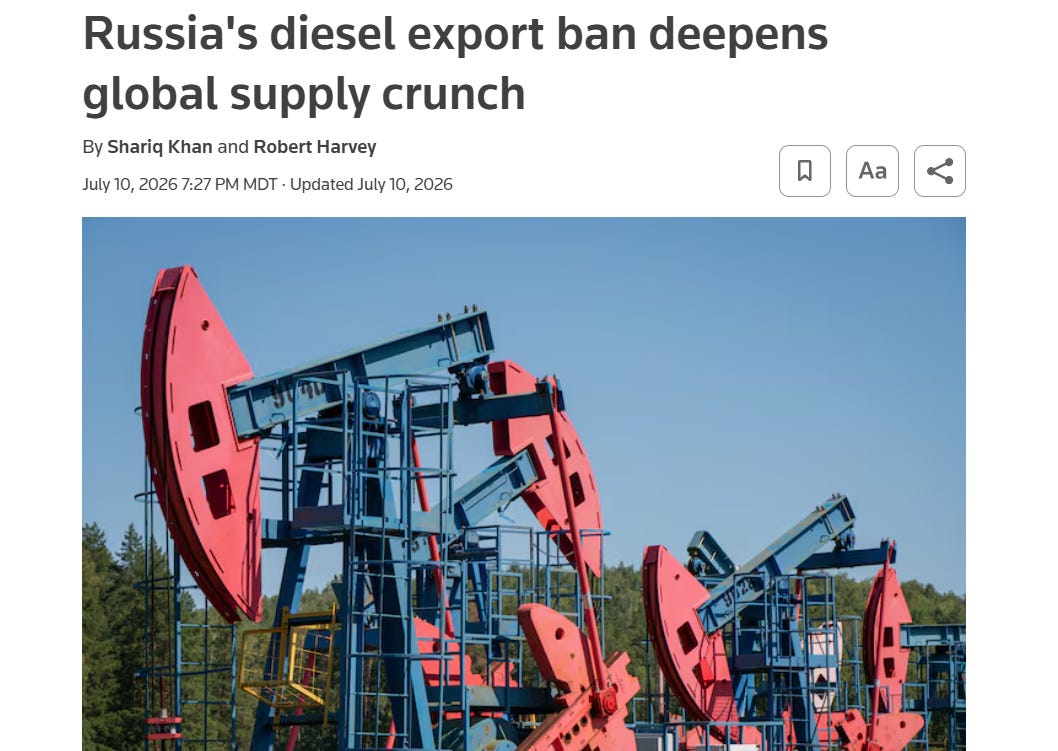
On one side, the Strait of Hormuz—responsible for roughly 20% of global petroleum liquids—has been effectively taken offline by Iranian action. On the other, Russia has imposed an emergency ban on diesel, marine fuel, and gasoil exports through July 31, removing up to one million barrels per day of middle distillates from global markets. This follows sustained attacks on Russian refining infrastructure, further tightening already constrained supply.
These two events are not isolated. They are compounding.
The global system does not have the flexibility to absorb both simultaneously.
No Margin Left
The United States, often viewed as a stabilizing force in energy markets, enters this crisis in a weakened position. Strategic Petroleum Reserve levels have been heavily drawn down in recent years, and domestic inventories are already tight. That buffer—the one mechanism designed to absorb shocks like this—has been significantly reduced.
The result is a market with very little margin for error.
Phase One: Panic Before Shortage
The first phase of impact will not be physical shortage—it will be behavioral. Within the first 72 hours, panic buying will begin. Consumers, reacting to headlines of military escalation and supply disruption, will rush to fuel stations. Local storage tanks, designed for steady consumption rather than surges, will empty quickly. This creates rolling outages—dry pumps—not because supply has fully collapsed, but because demand has temporarily overwhelmed distribution.
That is how shortages begin.
Phase Two: The Refining Constraint
Within one to two weeks, the deeper structural problems emerge. US refineries rely on a blend of crude types, including heavier imports from the Middle East. If those flows remain disrupted and maritime insurance markets freeze tanker movement, refinery throughput declines. Less crude processed means less gasoline, less diesel, and less jet fuel.
At that point, allocation decisions begin.
Diesel and jet fuel become priority products due to their role in freight, agriculture, and national logistics. Civilian gasoline supply becomes secondary. Rural regions and areas at the end of pipeline networks will experience the longest and most severe outages.
Aviation Enters the Shock Zone
At the same time, aviation enters immediate stress. Flights near the Persian Gulf are forced into longer routes, increasing fuel burn and operational cost. Within days, cancellations begin. Within weeks, airlines reduce schedules by 15% to 20%, eliminating marginal routes to conserve fuel and maintain core operations.
Not Just Oil—A System Breakdown
This is not just an oil problem. It is a refining problem, a logistics problem, and a behavioral problem—all feeding into each other.
Diesel is the backbone of the real economy. It powers trucking, agriculture, construction, and global shipping. When diesel supply is removed—as Russia has now done—the effects cascade. Freight costs rise. Food prices follow. Construction slows. Manufacturing margins compress.
The Global Pricing Trap
And because fuel is globally priced, the United States is not insulated. As foreign buyers compete for limited supply, US refiners will sell into higher-priced international markets. Domestic inventories tighten further. Prices rise regardless of where the disruption originated.
The mechanism is simple and unforgiving: reduced supply, increased global bidding, tightening inventories, rising domestic prices.
Inflation Ignites Again
The likely outcome is another inflation wave—faster and more aggressive than what most expect. Energy feeds into every layer of the economy. By the time it reaches the consumer, the price shock has compounded multiple times.
Financial markets will reflect this instability. Expect volatility, rising inflation expectations, and pressure across both equities and debt markets. Government response will likely include emergency reserve releases, subsidies, or price controls, but these measures do not solve supply destruction. They only attempt to manage perception and delay impact.
The Doomsday Condition
The most severe scenario—and this must be stated clearly—depends on one condition: the sustained closure of the Strait of Hormuz. If that chokepoint remains offline while Russian diesel exports stay suppressed, the world faces a synchronized fuel crisis with no immediate relief valve.
That is the doomsday case.
Prepare for Impact
In that environment, shortages become persistent, not temporary. Transportation systems strain. Supply chains fracture. Costs accelerate across every essential sector.
Preparation is no longer theoretical. It is a rational response to a system that is losing redundancy in real time.
So what does this have to do with Silver
Unlike a barrel of crude oil, which must pass through complex refining, transport, and distribution chains before it becomes usable fuel, .999 pure silver has already completed that entire process. It exists in its final, industry-accepted form the moment you hold it. There is no additional conversion risk, no dependency on refineries or supply chains. It is liquid, universally and globally recognized, and ready to function as a store of value or medium of exchange.
end of segment
-
Our opinions are not our sponsors opinions
-
The editorial department is separate from the promotions department
-
not financial advice