
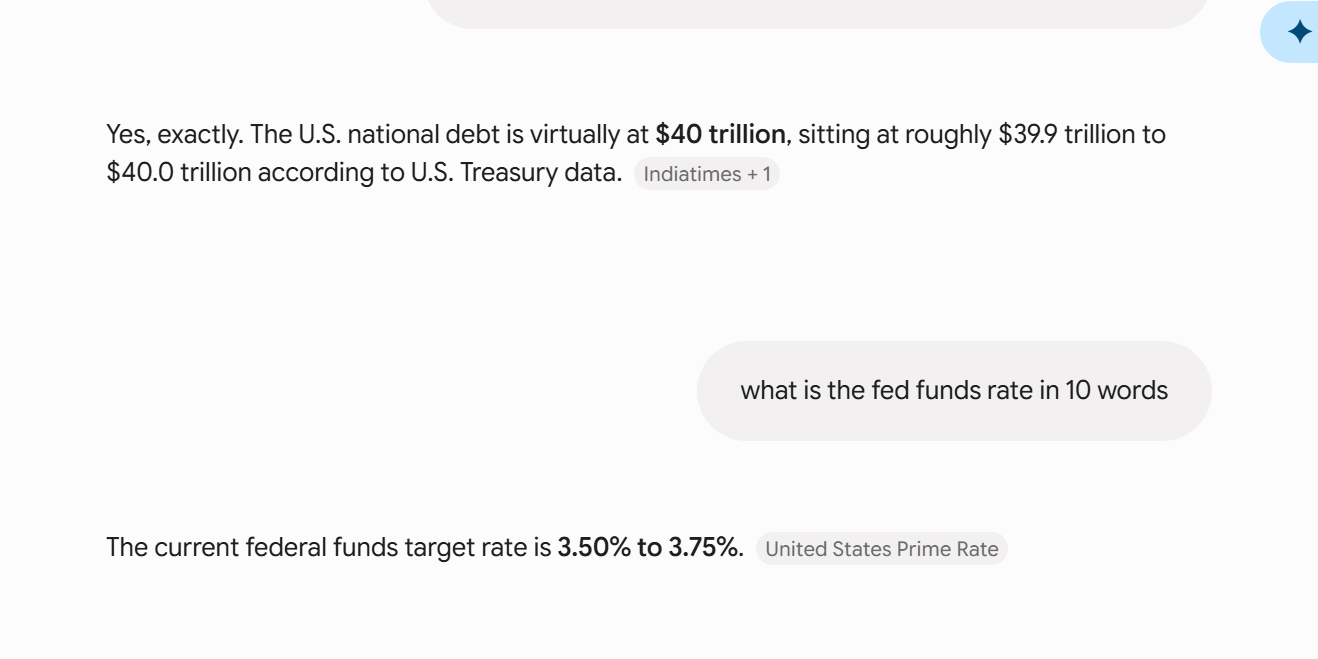
At the current average interest rate of about 3.6%, a debt of $39.9 trillion adds roughly $4 billion in interest every single day.
-
Paying $4 billion daily only covers the interest charges, keeping the loan current.
-
Every cent goes toward the fee, leaving the $39.9 trillion total principal completely untouched.
-
Now let’s look around the room together
The Empire’s Accounting Trick
Washington has discovered the ultimate perpetual-motion machine: borrow money, print money, use the printed money to buy the debt you just issued, then congratulate yourself for “managing liquidity.”
QE in a Fake Moustache
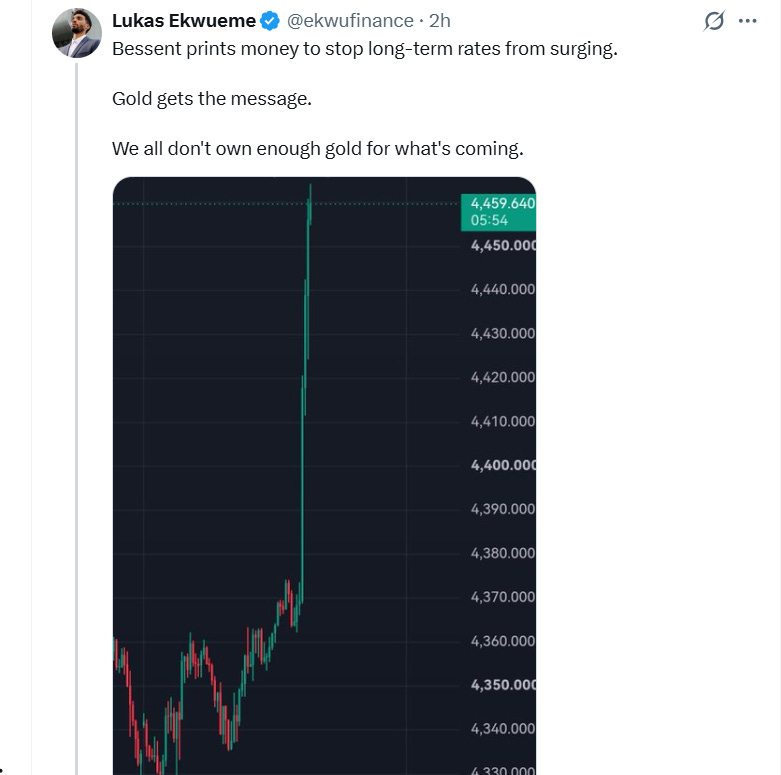
Here is the Bessent-era magic show. Treasury issues bills. The Federal Reserve creates reserves to absorb them. Treasury then uses the breathing room to buy longer-dated Treasuries and suppress the rates that would otherwise expose the whole arrangement as insolvent theater.
It is QE with a fake moustache and glasses: technically not the Fed marching directly into the long end, but functionally the same operation—monetizing government finance while pretending the distinction matters.
Yield-Curve Control, But Make It Polite
Yield-curve control is coming. It will just arrive under a less embarrassing name.
And gold gets the message. Gold and silver are not rising because everyone suddenly became a fan of shiny rocks. They are registering a vote of no confidence in the people running the world’s largest debt rollover.
A $4 Billion Daily Hangover
With total federal debt brushing $40 trillion and interest costs around $1 trillion annually, the federal government is becoming a gigantic interest-payment machine that occasionally pauses to pretend it governs.
At roughly 3.6 percent, $39.9 trillion of debt produces about $4 billion of interest every day—one sunrise, one obscene bill.
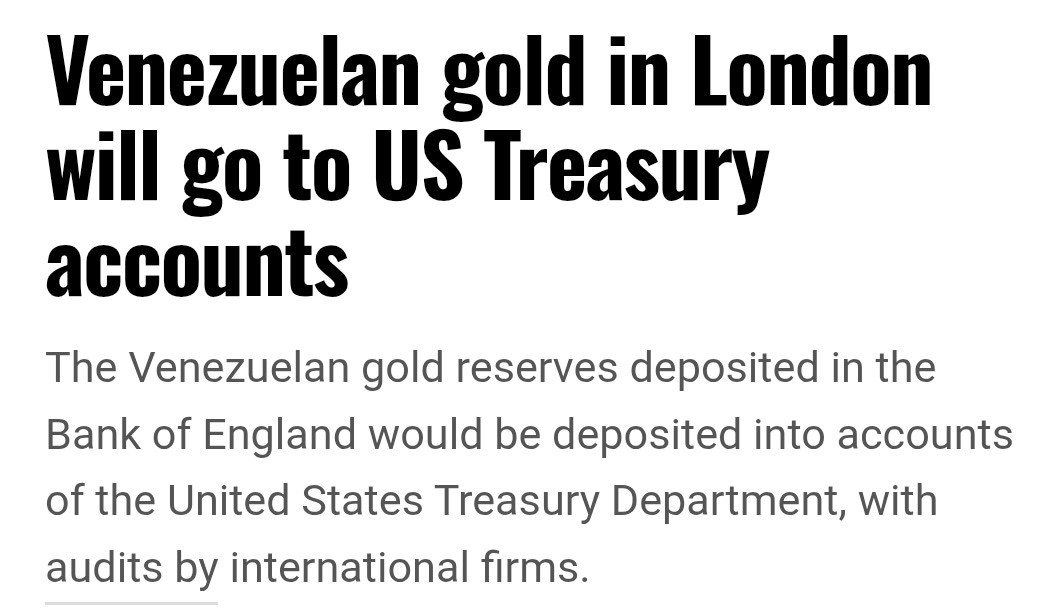
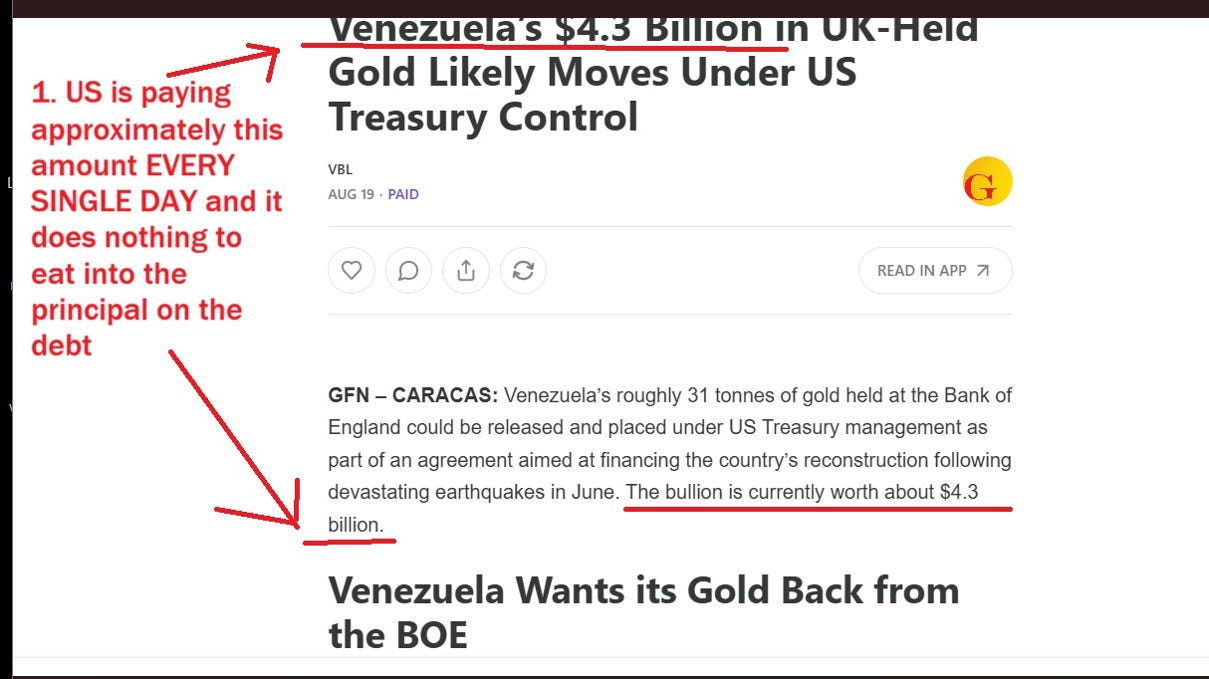
If Venezuelan gold worth $4.3 billion ends up in Washington’s hands, it will scarcely cover one day of interest on America’s $39.9 trillion debt. To keep pace, the empire would need to find and plunder a new Venezuela every morning—before breakfast. Even then, it would not retire a dime of principal. It would merely feed the debt monster another meal.
One Day’s Interest, One Nation’s Gold
So, congratulations to the empire if it can seize or control Venezuelan gold reportedly valued around $4.3 billion. That sounds like a spectacular haul—until one notices it barely covers a day’s interest on the imperial credit card.
Rome at least stole treasure to finance legions. Washington steals treasure to make a minimum payment.
The Conquistador Playbook, Updated
The foreign-policy model has not changed much since Cortés melted Aztec civilization into transportable bullion, or Pizarro accepted Atahualpa’s ransom and murdered him anyway.
The flags change. The press releases improve. The moral language becomes more ornate. But the old playbook survives: identify a country with oil, metals, strategic geography, or an inconvenient reserve policy; explain that its people urgently require liberation; then make sure the liberated assets end up in responsible hands.
Liberation, With a Receipt
Libya. Iraq. Venezuela. Ukraine. The details differ, but the operating assumption remains constant: resources are “international” when someone else possesses them, and “national security” when Washington wants them.
America’s foremost export is not machinery, wheat, aircraft, or software. It is the dollar—an obligation issued at will, protected by military power, and imposed through a financial system built to make other nations hold the bag.
The Printer Runs the Palace
Democrats blame Republicans. Republicans blame Democrats. Every administration takes a turn driving the getaway car. But the Federal Reserve remains the engine room, quietly converting political promises into claims on the future.
Buy gold. Buy silver. Not because they are perfect, but because the printers are not stopping.
-
our opinions are not our sponsors opinions
-
the editorial department is separate from the promotions department
-
not financial advice