
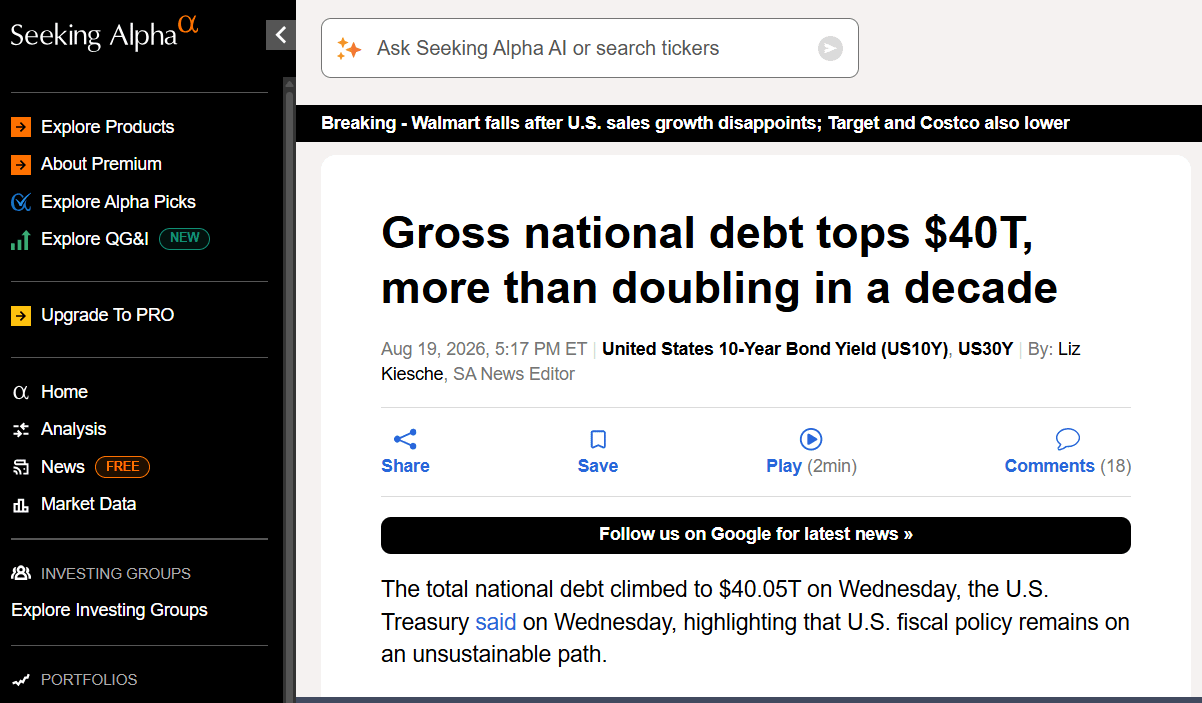
Gold and silver are soaring because markets can smell the next round of monetary manipulation before Washington admits it. Treasury’s expanded long-bond buybacks are not technically Federal Reserve QE—the Treasury is swapping newly issued debt for older long-duration debt, not creating bank reserves. But investors recognize the message: when yields threaten the debt machine, the government will intervene, suppress the signal, and defend the bond market. Gold surged more than 4% toward $4,526, while silver pushed above $67 as the dollar weakened. Hard assets are responding to a $40 trillion system that requires ever-more financial engineering to remain upright.
The Number They Want You to Ignore
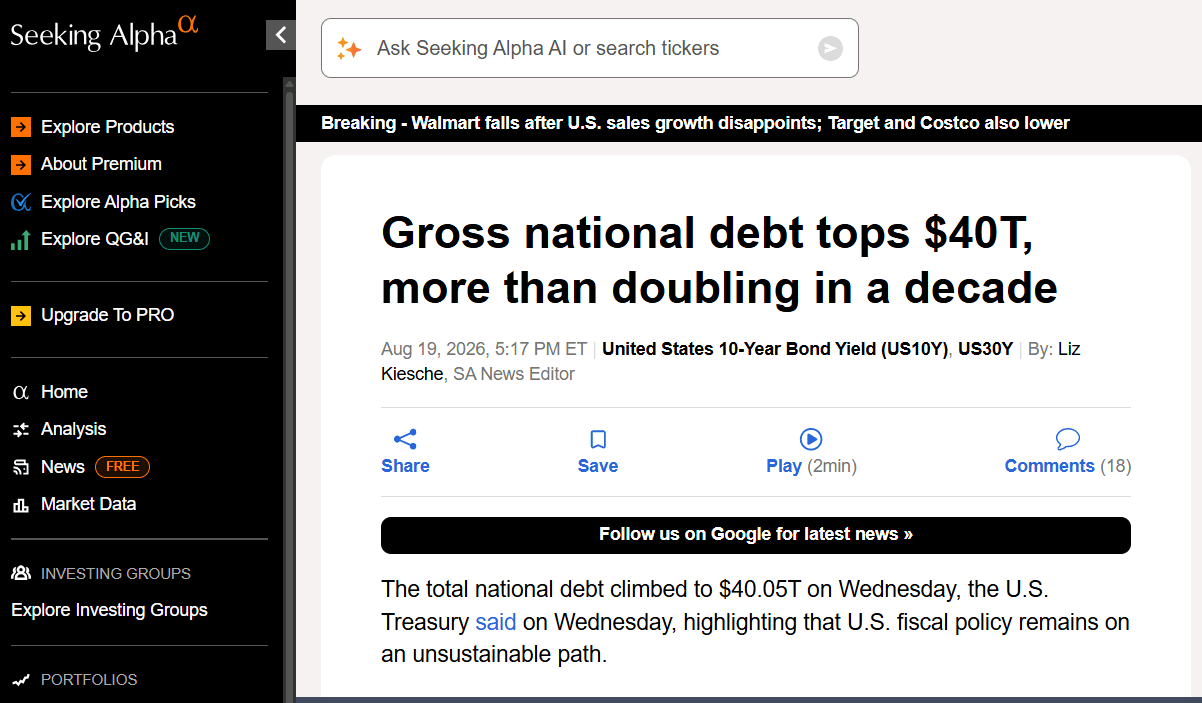
America has officially crossed the $40 trillion national-debt threshold.
Not “approached.” Not “projected.” Crossed.
The federal tab has more than doubled in barely a decade. This is not a milestone to toast with champagne in the Treasury Department basement. It is a crime scene—yellow tape, flashing lights, and the unmistakable odor of political fraud.
The suspects are not difficult to identify: the fiat overlords, the political class, the permanently subsidized parasites orbiting Washington, and every vote-buying administration that discovered the public enjoys “free” benefits as long as nobody reads the bill.
Theft Dressed as Governance
Deficit spending is theft.
It is theft from wage earners, savers, retirees, and children who have not yet learned they have been volunteered into debt serfdom. Politicians spend money they do not possess, borrow against labor not yet performed, and call it “leadership.”
They hand the electorate’s future to lobbyists, contractors, favored constituencies, foreign governments, and bureaucracies—then demand applause because the check cleared.
The formula is simple: promise everything, tax too little, borrow the difference, print when borrowing becomes expensive, and blame the resulting inflation on greedy businesses, foreign dictators, weather, pandemics, or the moon.
Anything but the people running the printing press.
First in Line at the Printer
This is the Cantillon Effect: newly created money does not fall from the sky evenly across society.
It enters through banks, primary dealers, government contractors, Wall Street asset markets, politically connected corporations, and the military-industrial feeding trough. Those nearest to the printer receive the new dollars first, before prices have fully risen. They buy stocks, bonds, property, companies, land, and political influence at yesterday’s prices.
By the time the money reaches ordinary Americans, it has already diluted purchasing power. The public receives the bill: higher food costs, higher rents, higher insurance premiums, higher taxes, and a smaller slice of life.
The poor do not receive “stimulus.” They receive inflated necessities and a lecture about resilience.
Buybacks: The Treasury Buys Its Own Alibi
Now comes the grotesque punchline.
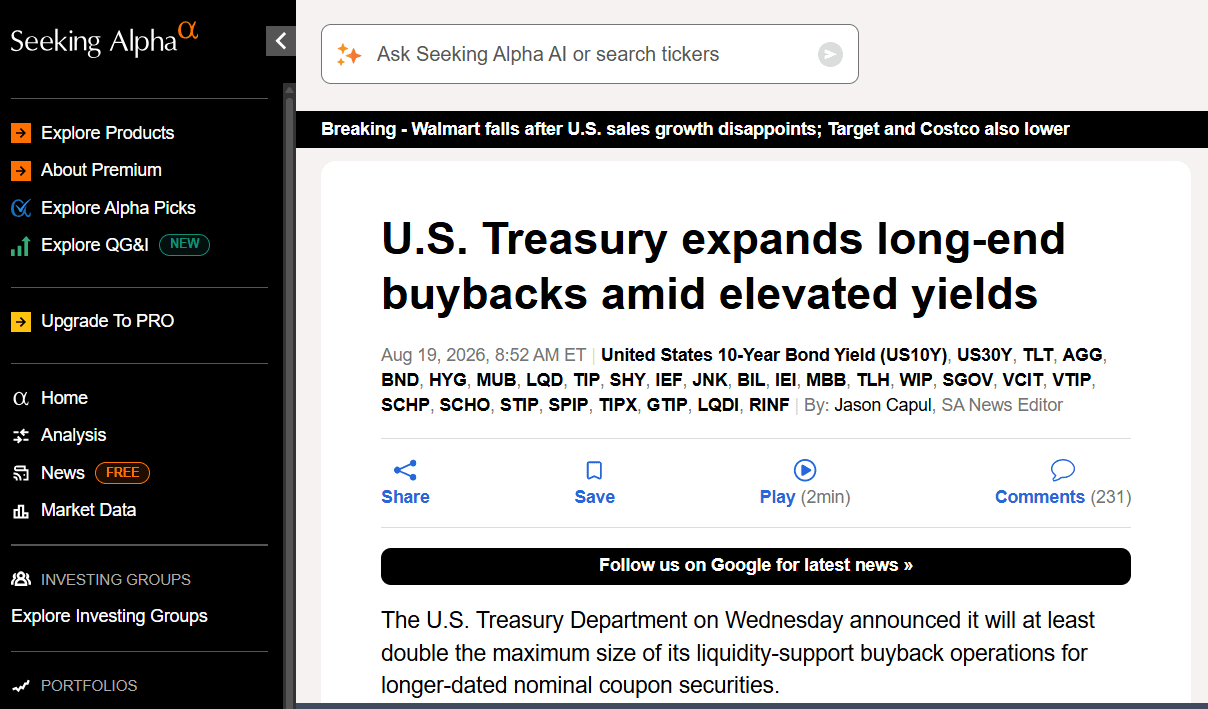
As long-term Treasury yields rise, Washington is expanding buybacks of its own long-dated debt—effectively stepping into the market to support the very bonds investors are increasingly reluctant to hold.
In plain English: the issuer of the world’s reserve currency is helping prop up the market for its own promises.
They call it “liquidity management.” Of course they do. Every financial emergency gets a sterile name before it gets handed to taxpayers.
Fiat Wars, Forever Wars
Unconstrained money made endless war politically easier.
A gold-constrained monetary system would not make politicians virtuous. It would simply make their lies expensive. Wars of choice would require taxation, real borrowing restraint, or an honest public debate—not a blank check financed by debt, inflation, and future generations.
Instead, Washington funds destruction while defense contractors harvest profits, politicians collect campaign contributions, and the public receives flag-wrapped invoices.
The Iran adventure did not deliver regime change. It strengthened the adversary, destabilized energy flows, and turned the Strait of Hormuz into another monument to elite incompetence.
Forty Trillion and Counting
America has not merely accumulated $40 trillion in debt.
It has institutionalized the destruction of sound money, honest savings, and intergenerational responsibility.
Fiat money did not create political corruption. It removed its limits.
And now the bill is $40 trillion—still rising, still applauded, and still paid by people who never got a vote.
end of segment