
“You shall not crucify mankind upon a cross of gold.”
In a dramatic speech to the Democratic National Convention in 1896, William Jennings Bryan declared these famous words. Bryan, the Democrats’ nominee for President, was a staunch opponent of the gold standard. Instead, he advocated for a more prominent role for silver in the monetary system.
In the late 1800s, political movements—primarily centered around the Democratic Party—began pushing for inflationary policies. But the gold standard was a major obstacle. It imposed a strict limit on the government’s ability to redistribute wealth through inflation. Unbacked fiat paper money—like the inferior currency we’re forced to use today—was not an option back then. That’s why the Democrats and other inflation advocates rallied behind the easiest form of money available: silver.
For example, farmers lobbied for inflation so they could repay their debts with cheaper dollars. In response, Congress passed the Sherman Silver Purchase Act, requiring the US government to buy set amounts of silver to support its price and trigger inflation. It was in this context that Bryan made his powerful speech condemning gold.
Ultimately, their efforts failed. Bryan lost the election, and the US did not adopt silver to make inflation more feasible. It was a temporary victory for hard money advocates. But it wouldn’t last. In the decades to come, the US would move to a far worse form of money than silver: unbacked fiat paper currency.
I bring up this story for two key reasons.
First, it demonstrates how hard money frustrates the ambitions of spendthrift politicians—and that’s a very good thing.
Second—and more importantly—the triumph of gold over silver is a powerful example of an economic principle few people truly understand. Grasping this concept is essential to seeing the Big Picture and making transformational profits in the months ahead.
How Silver Lost Its Monetary Role—and Why It Matters Now
Gold is a superior form of money compared to silver—except in one key area. Physical gold isn’t convenient for small transactions. The smallest practical unit of gold is about one gram. As of this writing, that’s worth around $100—which is not insignificant even in today’s debased dollars.
That’s where silver historically came in. Throughout history, silver was more convenient for day-to-day use. It earned the reputation of being the “gentleman’s money,” while gold—with its higher value density—was the “money of kings.”
But by the late 1800s, silver’s edge in small transactions began to erode. As the banking system matured, there was less of a need for people to carry around physical metal. Banks started issuing paper currency backed by gold. This made it much more practical to use gold—even for small payments.
Given the choice, people preferred paper notes backed by gold over physical silver.
It was a clear illustration of how people naturally gravitate toward harder money, even if it means relying on third parties like banks.
In other words, people chose harder money with counterparties (gold-backed paper) over easier money without counterparties (physical silver).
As a result, silver’s monetary role—which had lasted for thousands of years—fell into sharp decline. It never recovered. Silver became primarily an industrial metal, with only a small remaining monetary premium. That status continues to this day.
The monetary system is unraveling rapidly, nearing the end of its lifespan.
Central bankers and their powerful backers see the writing on the wall—and are working to implement a system that tracks and controls everything you earn, save, and spend.
There’s Only One Reason to Own Silver
Let me get straight to the point: there’s only one reason I’m interested in silver.
I’m not interested in silver as money—it’s inferior to gold.
I’m not interested in its industrial applications either.
I’m interested in silver for one reason only: it’s prone to explosive, crisis-driven upside.
Silver is a small market with enormous speculative potential during periods of monetary chaos—like the one we’re now entering.
Silver does have some monetary demand, but it’s usually too small to meaningfully impact the price. However, during periods of monetary chaos and runaway inflation, people rush into alternative forms of money—assets that hold their value better than rapidly depreciating government paper currencies.
It’s in these moments that silver often sees a stampede of demand. And because the silver market is so tiny—roughly one-tenth the size of the gold market—it doesn’t take much to overwhelm it, triggering sharp price spikes.
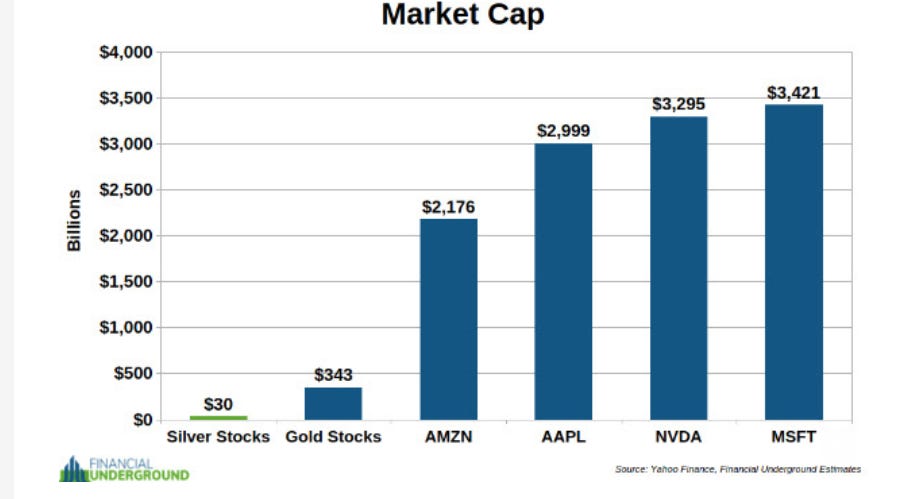
Further, the combined market cap of all silver stocks is less than 1% of Microsoft’s market cap. It’s also less than 1% of NVIDIA’s. Less than 1% of Apple’s.
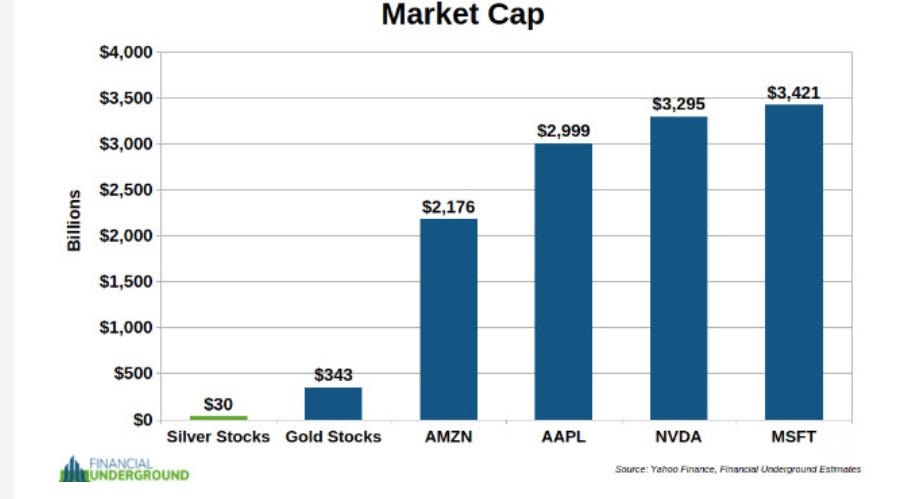
That’s how minuscule the silver market really is.
I like to think of silver as an industrial metal with a call option on inflation and monetary chaos—something that could arrive sooner than most expect.
Silver’s monetary demand tends to soar during periods of high inflation. As money floods in, the price surges. It’s happened before, and it could happen again—soon.
Just look at the story of the Hunt brothers. During the high inflation of the 1970s, they bought as much silver as they could get their hands on. That aggressive accumulation squeezed supply and helped drive silver from around $6 in the late 1970s to nearly $50 by 1980.
Today, the stage is set for another inflationary explosion—likely even more severe than what we saw in the 1970s. It could trigger a crisis-driven silver mania, much like the one that peaked in 1980.
Adjusted for inflation, $50 silver in 1980 would be worth over $187 an ounce today—many times higher than the current price. Silver mining stocks could deliver even more dramatic gains if we see a similar move today.
Here’s the bottom line.
The stars are aligned for a silver price spike of historic proportions. The time to get positioned is now.
Editor’s Note: We’ve made the case for silver’s explosive upside during times of crisis—but theory is only half the story. Now it’s time to act.
about the author Nick Giambruno
Nick Giambruno is a renowned speculator and international investor. Founder of Financial Underground, he travels worldwide seeking overlooked opportunities, specializing in spotting big-picture geopolitical and economic trends. Nick writes about value investing, international diversification, and surviving financial crises. Visit Financial Underground: financialunderground.com
end of segment
Silver Academy Endorsed Miners & Tickers
The Silver Academy highlights three primary silver miners in production and two junior miners advancing key projects. Each company’s OTC and TSX tickers are provided for reference.
Primary Silver Miners
-
Aya Gold and Silver (Morocco)
-
OTC: AYASF
-
TSX: AYA
-
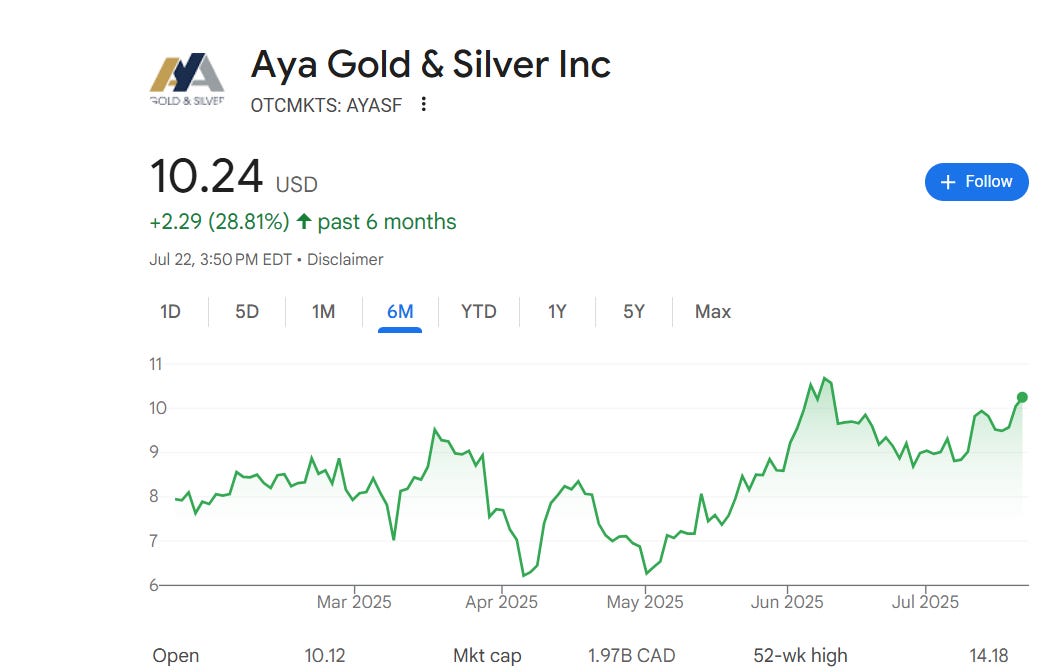
We see Aya Gold and Silver blowing way past its 52 week high of $14.18 by Thanksgiving 2025. That is a conservative 38% to the upside climb
-
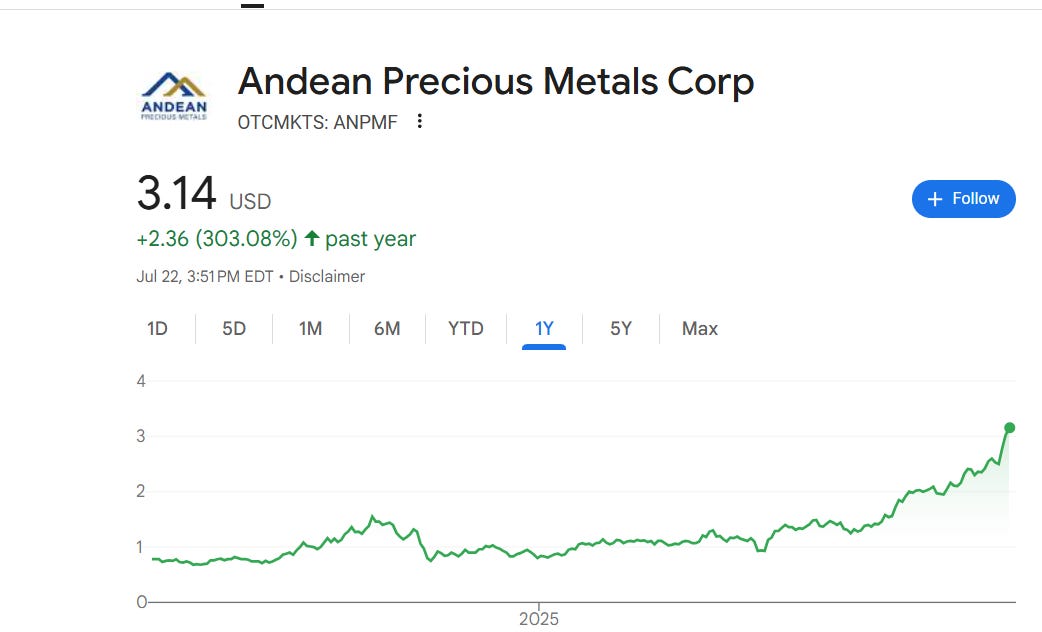
Andean Precious Metals (Bolivia)
-
OTC: ANPMF
-
TSX: APM
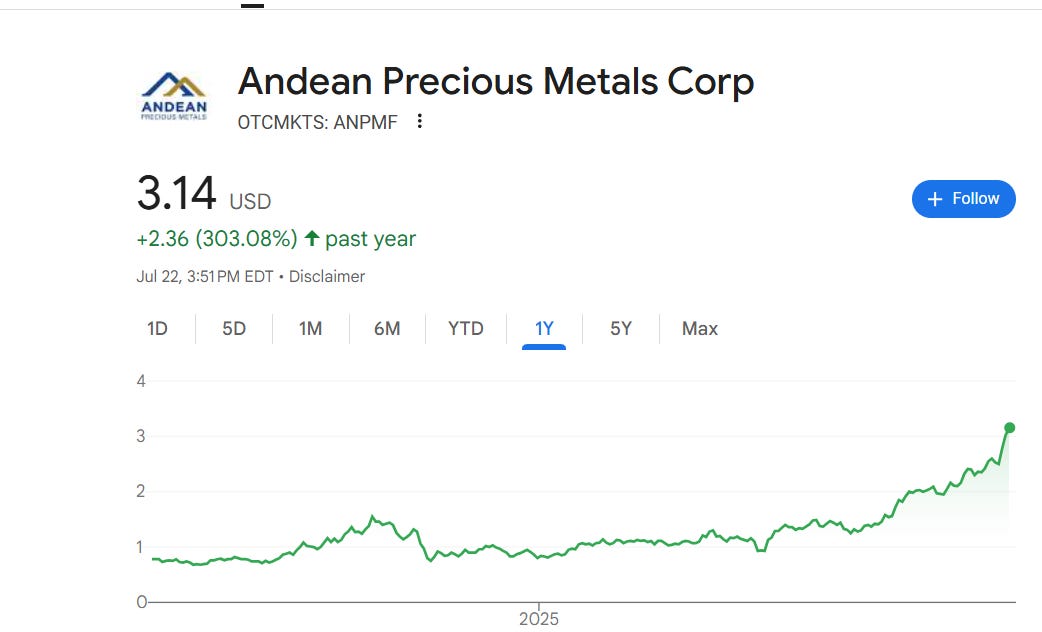
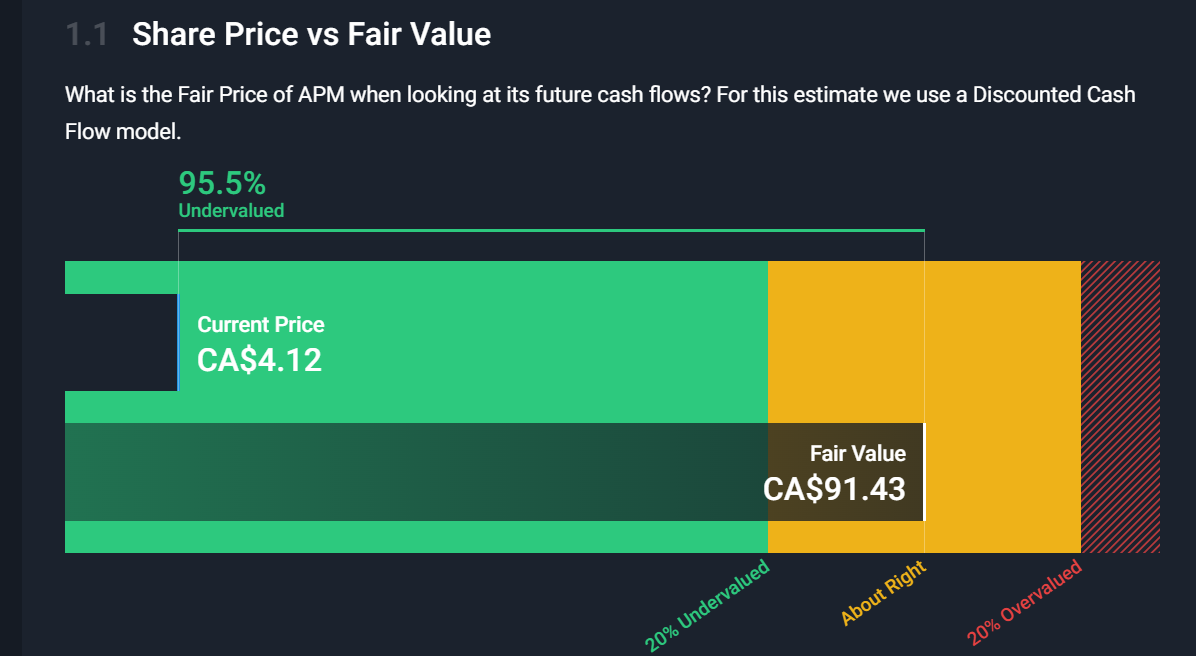
We have Andean Precious metals still over 95% undervalued
-
-
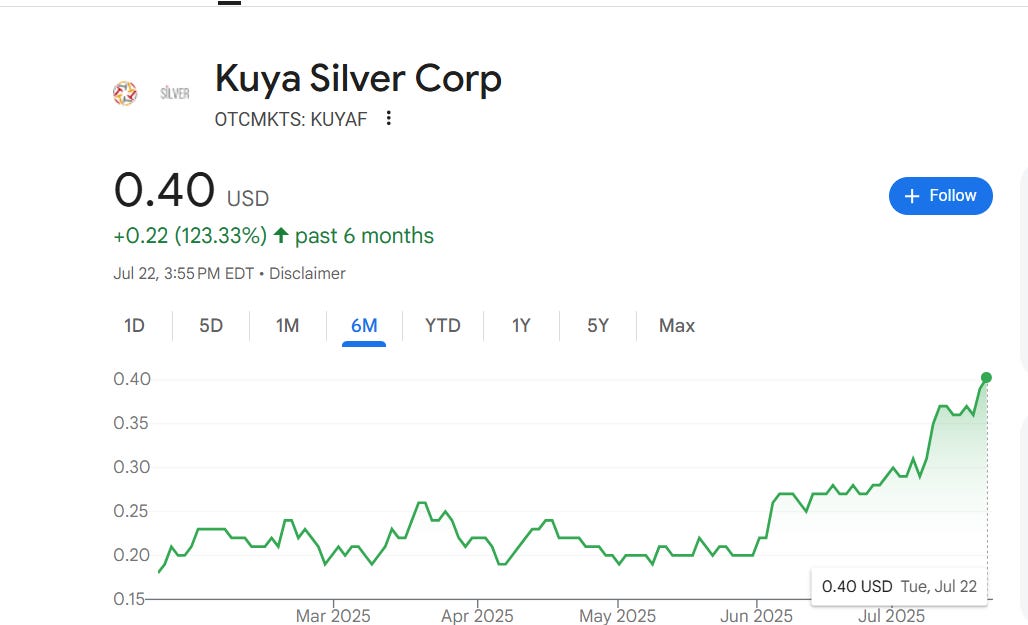
Kuya Silver (Peru)
-
OTC: KUYAF
-
TSX: KUYA
-
Q2 operational highlights, including an 87% increase in mineralized material processed and a 63% increase in underground development, marking steady progress toward our Phase 1 target of 100 tonnes per day.
Junior Silver Miners
-
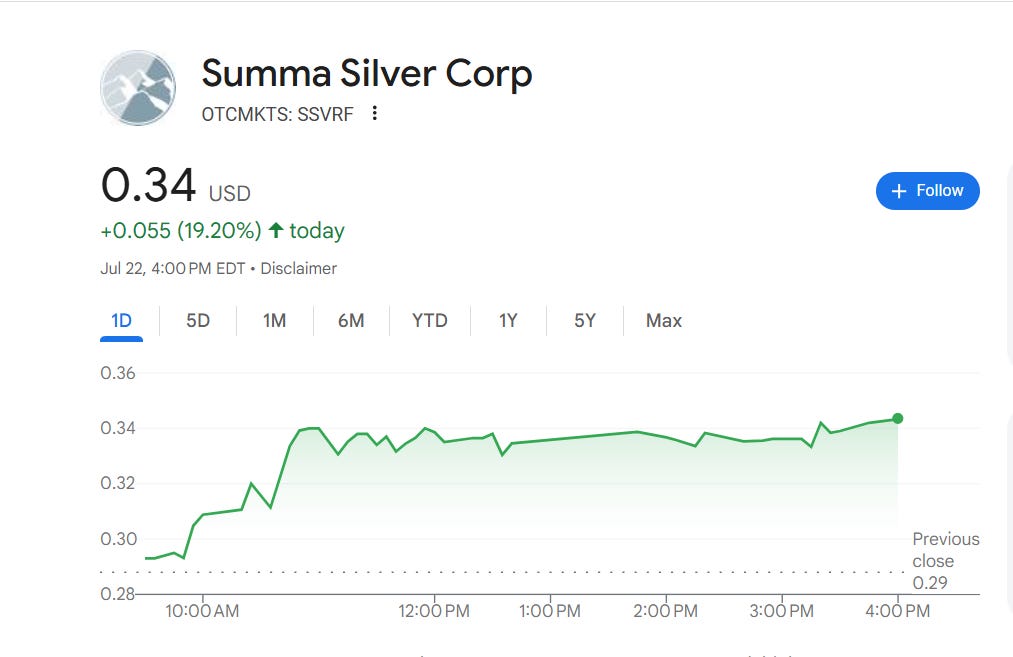
Summa Silver (New Mexico, Nevada, Alaska)
-
OTC: SSVRF
-
TSX: SSVR
-
With larger mining companies and institutional investors seeking out promising silver assets, Summa Silver’s high-quality projects in Nevada and New Mexico make it an attractive target. Enter Alaska (a historically mineral rich region) Now that they merged with Silver47, the two companies merged into one will control over 246 million silver-equivalent ounces across three high-grade projects in Alaska, Nevada, and New Mexico.
-
Dolly Varden Silver (Canada)
-
NYSE: DVS
-
TSX: DV
-
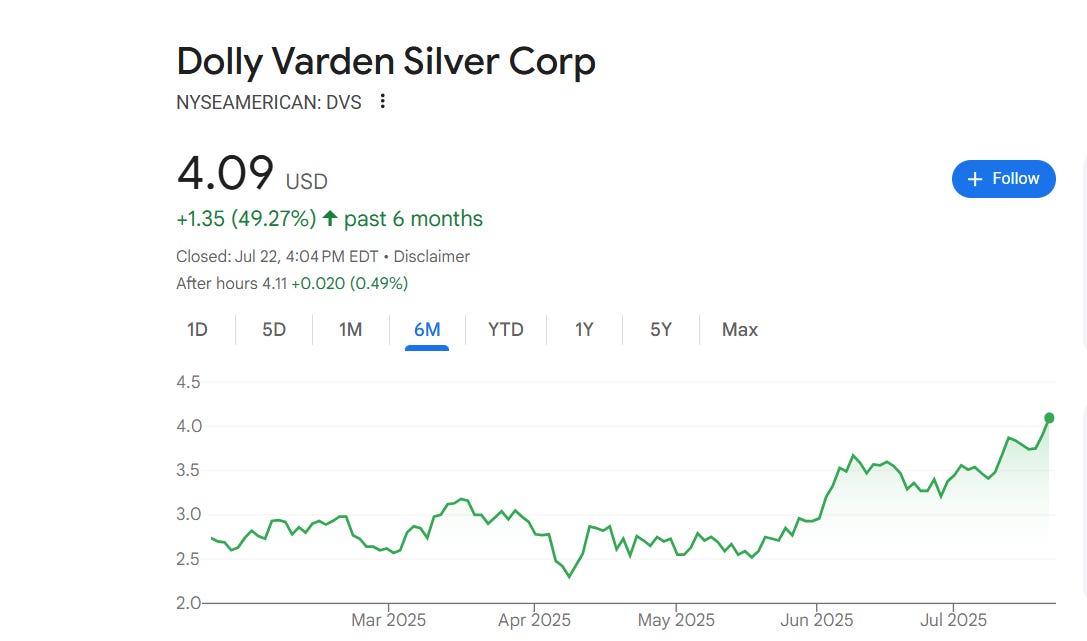
Ounces in the Ground: Dolly Varden Silver boasts approximately 137 million silver-equivalent ounces. (50% silver, 50% gold)