
Foreword:
During the Manhattan Project, silver played a critical role in the birth of the atomic age. With copper scarce, the U.S. Treasury loaned over 400 million ounces of silver—sourced from 1,000-ounce bars—from the national stockpile to build massive electromagnetic coils at Oak Ridge, Tennessee. These silver-wound magnets enriched uranium for the first atomic weapons. Silver’s military use has evolved into precision electronics, batteries, radar, and guidance systems (and critical in bombs, missiles, torpedoes) with its unmatched conductivity, energy density, thermal properties and reflectivity ensuring it remains a vital metal in modern defense technologies.
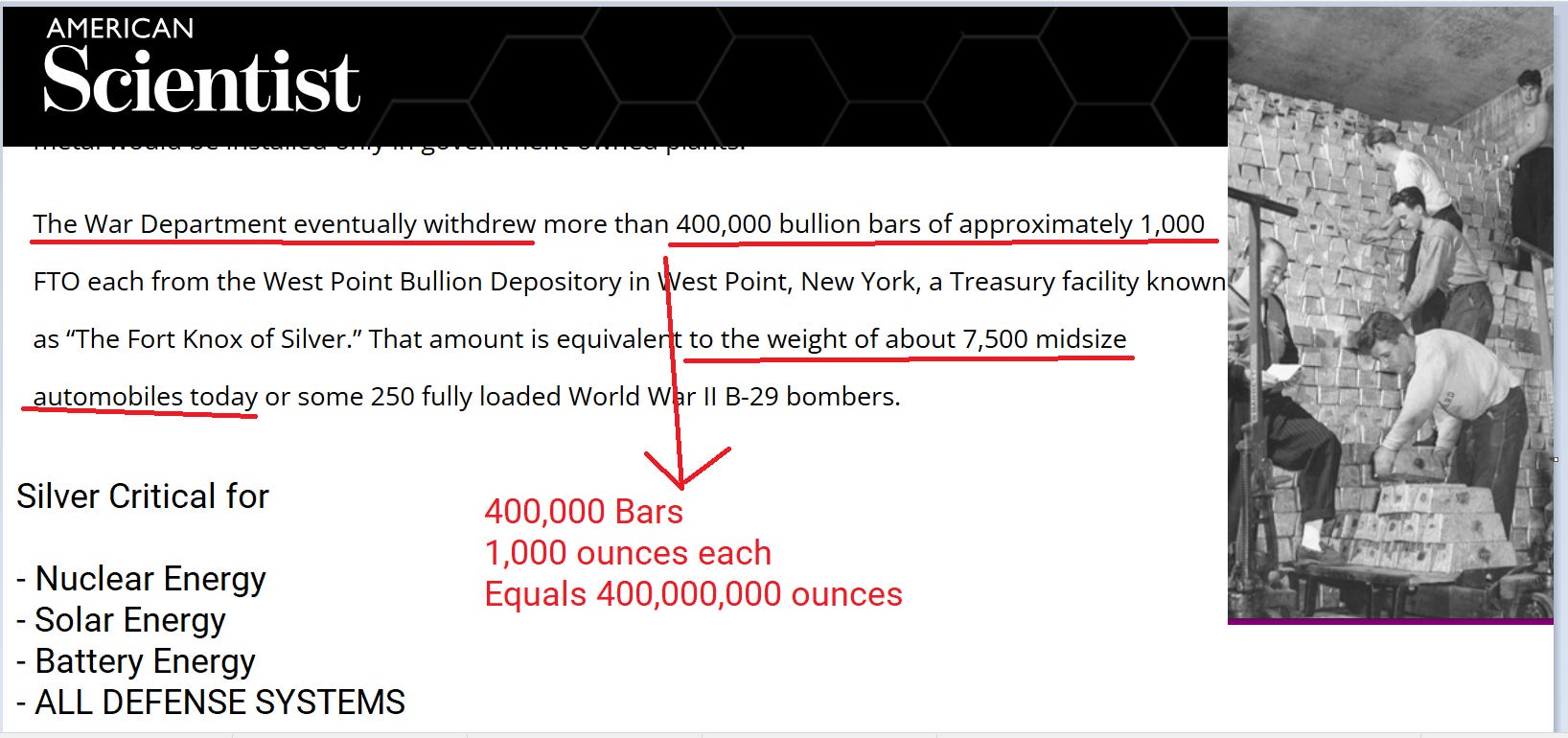
souce – https://www.americanscientist.org/article/from-treasury-vault-to-the-manhattan-project
That was then, Now what?
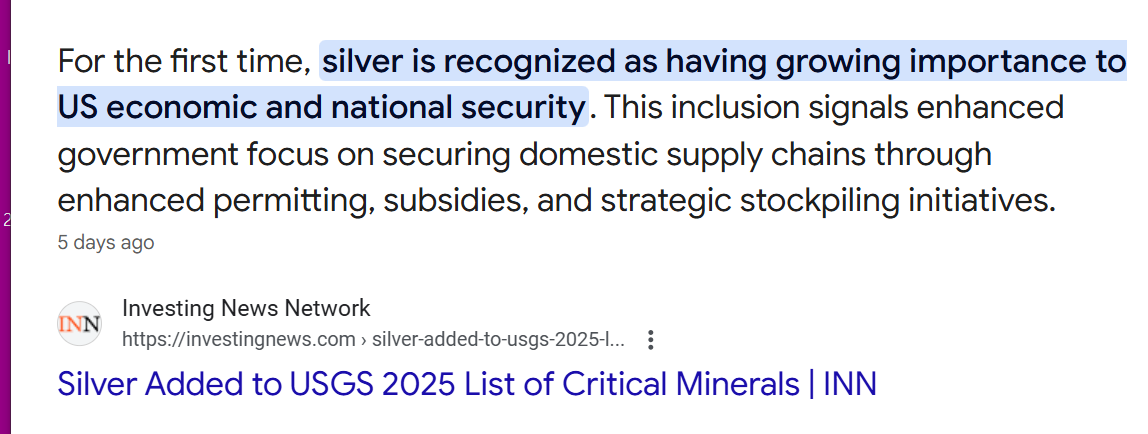
Silver Expert J. Staiger Reveals a Nuclear Silver Secret
J. Staiger, known in the silver and precious metals space, is Jochen Staiger. He is based in Switzerland, where he is the founder and CEO of Swiss Resource Capital AG and serves as chief editor for Commodity TV and Rohstoff-TV. Staiger is actively involved in European precious metals industry events and is a leading media voice on the silver market, regularly hosting panels and interviews with silver producers and investors in Zurich
By mid-2025, the global silver story has taken a shocking metallic twist. According to Silver Expert J. Staiger, the world’s most essential clean energy revolution—the nuclear renaissance—is quietly becoming the most voracious silver consumer on Earth. Each large-scale nuclear reactor entering service is not just an engineering marvel; it’s a silver-eating megastructure.
Nuclear Plants Are Silver Devourers
Every 1600 to 1800 megawatt nuclear reactor requires 56,000 ounces to function safely. The element’s unmatched conductivity and corrosion resistance make it indispensable inside reactor control rods, the devices that regulate nuclear reactions with millisecond precision. These rods cannot be cheaply replaced with substitutes—silver’s atomic behavior under high neutron flux is unique.
“No button-press magic here,” Staiger said in late October. “Silver control rods are physical components that wear, absorb, and must be periodically renewed.” That renewal cycle can occur every few years, creating a recurring demand stream that’s rarely priced into market forecasts.
If a single new nuclear reactor consumes as much as a medium-sized silver mine produces in a year, the new wave of nuclear construction means a paradigm shift for silver supply.
The Supply Nightmare Unfolding
As of 2025, the silver industry faces its tightest margins in history. Global mine output—roughly 800 million ounces per year—has already failed to keep up with combined industrial, photovoltaic, and investment demand for five consecutive years. But 2026 could mark a first in recorded history: every ounce of newly mined silver being instantly absorbed by industry, leaving zero for investors.
Inventory drawdowns have become routine, but what’s different now is velocity. “We are witnessing inventory depletion at a speed that makes the deficits of the 2010s look mild,” Staiger warns. Silver inventories at major exchanges are near record lows, while refiners are rationing output to solar, electronics, and now to nuclear sectors under long-term contracts.
Chronic supply deficits once measured in tens of millions of ounces per year have swollen past 200 million ounces, creating a quiet panic among institutional buyers. Banks, industrial giants, and sovereign energy planners are increasingly competing for the same dwindling feedstock.
China’s Nuclear Ramp-Up
Nowhere is this silent struggle more evident than in China. As of early 2024, the country had 23 reactors under construction across 11 sites—already the largest nuclear build-out in the world. By 2030, Beijing plans at least 30 additional reactors. Each one represents another 56,000 ounces of new silver consumption. The math on 53 reactors times 56,000 silver ounces is significant, (almost 3 million ounces)
Westinghouse Small Nuclear Reactors (SMR)

And that count excludes a new, fast-moving frontier: small modular reactors (SMRs). AI and data center powerhouses in China, South Korea, and soon the United States are designing SMRs to feed their exponentially growing energy needs. These compact units, often clustered near computing campuses, also rely on silver-based control systems.
If even half of these designs proceed to commercial deployment, silver’s strategic role will transform from precious metal to critical infrastructure material.
The Coming US-China Resource War
China has quietly stopped exporting silver, redirecting all domestic production toward internal industries and strategic reserves. The policy, enacted without formal announcement, effectively removes one of the world’s largest silver suppliers from global trade.
Beijing has also ceased publishing detailed silver consumption data, citing “industrial security” and “strategic confidentiality.”
Analysts believe the move is tied to the country’s expanding nuclear, solar, and AI infrastructure programs that rely heavily on silver. The lack of transparency has amplified market uncertainty, fueling speculation that China is positioning for a long-term squeeze in global silver supply.
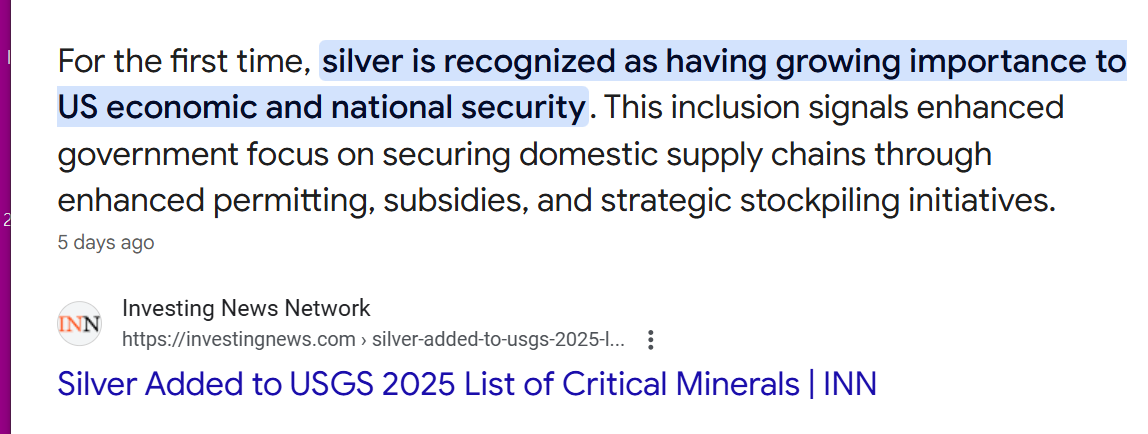
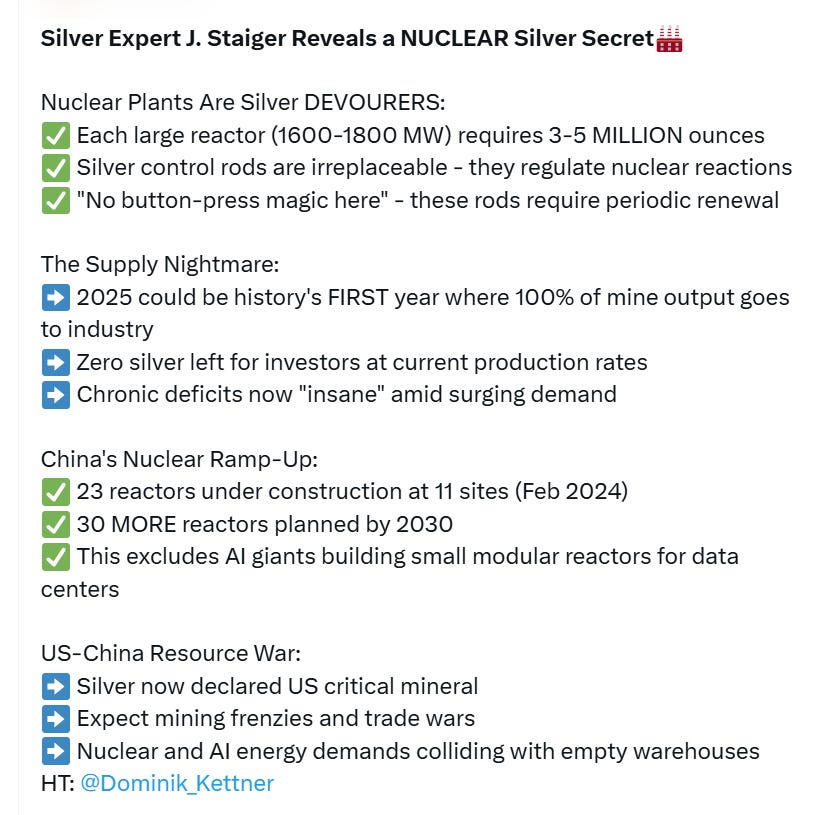
Silver’s newfound importance hasn’t escaped Washington. Earlier this year, the United States formally added silver to its expanding list of “critical minerals,” joining rare earths and lithium as strategic priorities. The move signals that a resource war may already be underway.
With both the US and China expanding nuclear capacity while AI firms hoard power, a cross-sector collision is imminent. Energy security now intersects with data sovereignty—and both run directly through the physical silver supply chain.
Trade restrictions, export controls, and mining booms are likely over the next 24 months as policymakers scramble to keep domestic industries supplied. Analysts warn that this race for atomic-grade silver will make prices soar beyond levels ever modeled by mainstream economists.
The Investor’s Wake-Up Call
For investors, silver’s dual identity—monetary metal and industrial linchpin—has never been more valuable. When a resource critical to both advanced energy and global finance faces bottlenecks on multiple fronts, the market’s revaluation can be explosive.
Staiger sums it up bluntly: “When nuclear, AI, and solar all start bidding for the same silver, the repricing won’t be linear. It’ll be nuclear.”
Where are we going to source Silver for AI, Nuclear, Solar, Defense, Electronic, EV batteries and as a monetary metal?
Aya Gold & Silver (TSX: AYA, OTCQX: AYASF)… Wall Street analysts are treating this miner as if Silver was still trading in the $27 per ounce range, SILVER HAS ALMOST DOUBLED SINCE THIS TIME
Aya delivered a record quarter in Q3-2025, confirming the strength of the Zgounder ramp-up and establishing a clear platform for continued growth.
-
Record production: 1.35M oz silver (+278% YoY | +29% QoQ), driven by higher throughput, better grades, and 92.5% recoveries.
-
Record financials: Revenue of $54.3M (5× YoY); Net income of $12.4M; Adjusted earnings of 11.4 cents per share (normalized for option compensation)
-
Costs trending down and strong operating cash flow of $22.4M, ending the quarter with $129M in cash.
Boumadines PEA further validates a Tier-1 growth project with scale, industry-leading capital intensity, and increasing ounces with ongoing drilling.
With Zgounder now running above 3,700 tpd, improving recoveries, and stockpiled ore ready to process, Aya is positioned for a strong finish to 2025 — and an even stronger 2026 as production increases, costs continue to fall, and Boumadine advances toward feasibility.
View the entire news release here:
end of segment
-
our opinions are not our sponsors opinions
-
the editorial department is separate from the promotions department
-
not financial advice
-
previous reporting on Silver’s use in military below