
Silver Stackers Were Right All Along
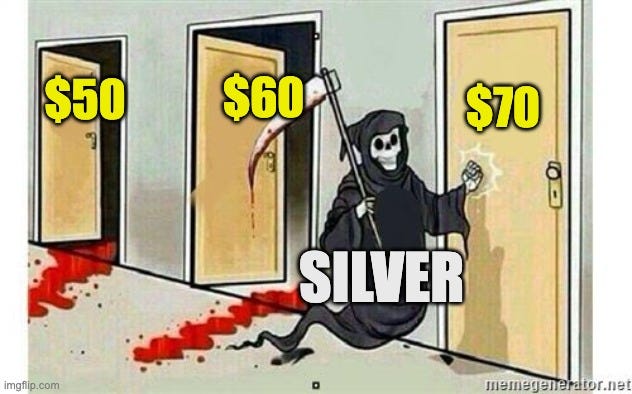
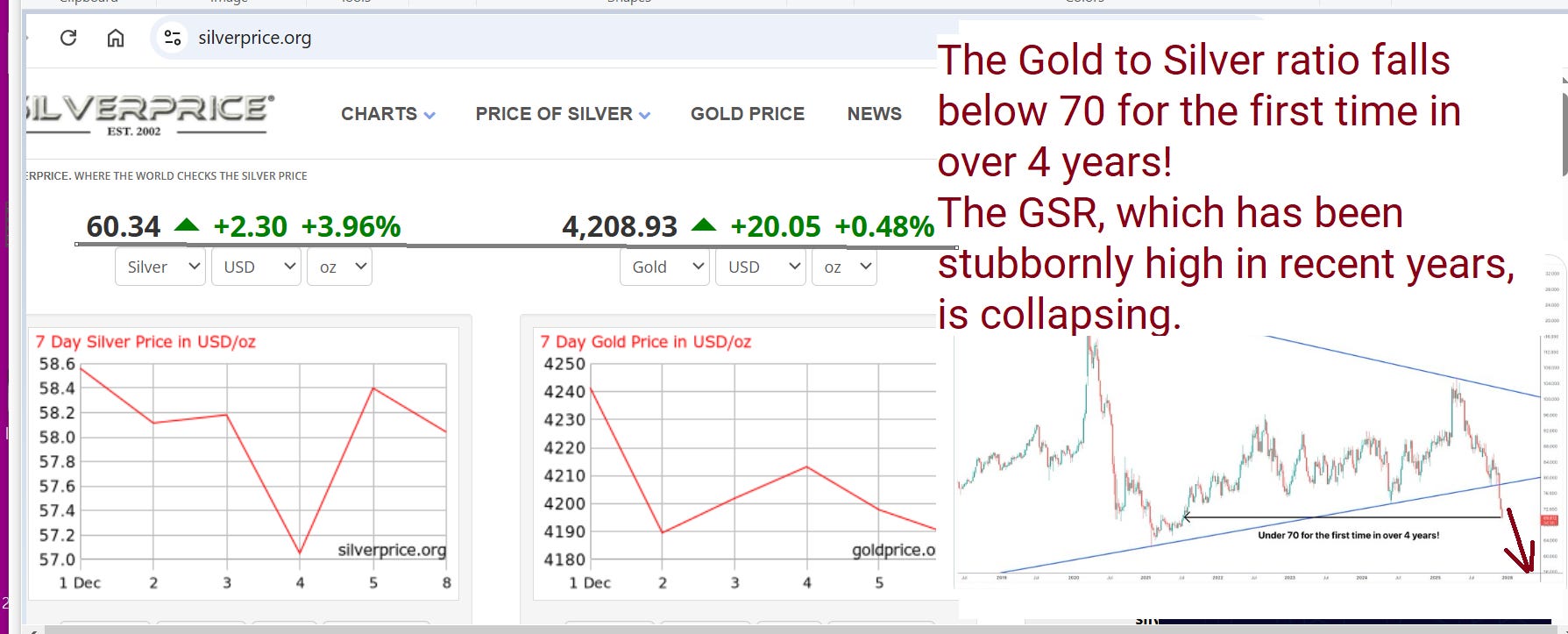
For years, they mocked the “silver bugs.” CNBC anchors rolled their eyes, economists snickered, and financial advisors preached diversification as if it were salvation. Yet here we are: silver up 4.12% in a single session, the gold-to-silver ratio in free fall below 70 and heading toward 50. The stackers—the so-called fringe—were the ones carrying the torch of sanity through an age of fiat illusion.
While institutions built castles out of paper, the silver faithful built fortresses out of metal. They didn’t chase yield; they protected purchasing power. They didn’t diversify; they de-dollarized.
The Age of Fiat Delusion Is Ending
The dollar’s prestige is rotting from the inside out. The U.S. stopped even pretending to report honest data—GDP, CPI, PPI, and job numbers have all vanished behind a curtain of “temporary suspension.” Translation: the government cannot afford statistical transparency.
Meanwhile, Treasury auctions wobble, debt loads explode past $39 trillion, and the so-called “risk-free” rate is anything but. Foreign governments—who once begged for U.S. debt—now treat it like plutonium. The world trusts neither American inflation numbers nor its accounting sorcery.
The dollar isn’t the reserve currency anymore—it’s a liability in disguise.
Silver Has Reclaimed Its Monetary Status
For the first time since the 1800s, silver is acting as money again. But not through a central bank decree or a Wall Street ETF gimmick—it’s rising back into circulation organically, from necessity and trust.
People finally remember what money is supposed to be: tangible, scarce, incorruptible, and globally recognized. Gold remains the anchor for nation-states. Silver has become the functional currency for everyday wealth. The world is creeping back to a bimetallic reality—gold at the top, silver as the bloodstream of value flow.
India: Where Silver Is Money Again
Nowhere is this revival clearer than in India, home to 1.4 billion people and a centuries-deep silver tradition. In rural and small-city economies, ordinary citizens have turned silver holdings into collateral—real, physical collateral—for accessing credit.
Roughly 250 million Indians now use small bank loans and informal lending networks that accept silver as security. What’s groundbreaking is not that silver backs loans—it’s that it no longer needs to be sold to unlock liquidity. Households can keep their silver jewelry, coins, and bars physically in their possession or in verified custody while using it as pledged collateral.
This means silver has achieved monetary functionality without leaving the shelf. The metal now performs the essence of money—it backs credit, settles obligations, and underpins trust. It’s circulating in value terms even when it’s stationary in vaults and cupboards.
Indian lenders have effectively monetized the people’s bullion. The silver stacker no longer faces the old paradox of “selling real money for fake.” By pledging metal instead of liquidating it, families unlock fiat liquidity while retaining exposure to the real store of value. In short, the silver owner is now both the creditor and the central bank.
This is the ultimate leverage—not the derivative kind that Wall Street worships, but honest leverage anchored in physical metal. And as more nations observe this model, they’re realizing India didn’t reinvent the wheel—it merely dusted off the oldest one.
Structural Shortage Meets Industrial Explosion
Five consecutive years of structural deficit and record industrial demand have created a combustible setup. Every sector—solar panels, defense systems, aerospace alloys, 5G components, AI processors, robotics—is eating into the same limited pile of silver.
Above-ground stockpiles are draining, mining supply is stagnant, and recycling rates lag far behind technological consumption. The world is demanding more silver at the exact moment the fiat system is falling apart. The outcome is inevitable—revaluation.
Comex Loses Control, Shanghai Takes the Helm
The old gatekeepers—the CME, the bullion banks, the algorithmic traders—are losing control of the narrative and the pricing. Paper derivatives can’t suppress physical demand forever.
The Shanghai markets now set the real price of silver, tethered to where actual ounces change hands. This geographic shift marks more than a pricing transition; it’s a sovereignty transfer. Asia now dictates the real valuation of real assets. That’s the end of Anglo-American price control—an unspoken geopolitical earthquake.
Operation Sandman and the New Monetary Order
Across the Global South, “Operation Sandman” has gone from theory to practice—a synchronized migration away from the weaponized dollar. Since 2022, when Washington froze Russia’s reserves, sovereigns from Brazil to Saudi Arabia grasped the unspoken truth: the U.S. doesn’t export stability; it exports control.
Now, BRICS states are finalizing gold-backed transfer units for cross-border settlement, while India’s monetized silver system evolves into a grassroots complement. For the first time, central banks and citizens are aligned—hard money for all classes, in different metals but shared intent.
A Toxic Orbit Decays
The fiat cosmos is collapsing under its fake gravity. Every stimulus, every bailout, every printed “miracle” multiplies the instability. Meanwhile, silver—both industrial necessity and monetary constant—stands firm as the one form of collateral the world still trusts.
Silver has become what fiat never could: wealth with a pulse. And in India, the heartbeat of 1.4 billion people just made it official—silver is money again.
Miners are LOWEST IN HISTORY
Aya Gold & Silver (OTC: AYASF) is a textbook vehicle for life-changing silver leverage, with its Zgounder mine in Morocco emerging as one of the highest-grade primary silver deposits on the planet and still growing through aggressive drilling and expansion. As Zgounder scales up production into a structurally tight silver market, every incremental ounce drops into a pricing environment increasingly disconnected from old fiat assumptions.
-
AYA has 100% silver exposure on Zgounder ramping to 6 million ounces next year
-
Up from from 5 million ounces in 2025.
-
This is a massive 20% increase in production (in the very year Silver has doubled in price.)
-
Silver Academy target price of $34 per share within 12 months
Andean Precious Metals (OTC: ANPMF) offers something almost no one else has: control of the largest oxide silver processing plant in Bolivia’s prolific Potosí region, the San Bartolomé facility. With a 5,000 tpd nameplate capacity and long-term feed agreements that secure years of future oxide ore, Andean is poised to convert the district’s remaining vast silver inventory into cash flow for more than a decade. Since we have begun covering Andean Precious Metals the stock has moved 6x and we have this going 10x from here. Recall their gold production in USA too.
Kuya Silver (OTC: KUYAF) has just pushed its Bethania mine in Peru into production, delivering record concentrate sales as it ramps toward higher throughputs and stronger margins. Yet the market still prices Kuya as if silver were stuck in the 20s, ignoring its growing production profile and high silver revenue weighting—precisely the kind of mispricing that can flip into 5–10x upside in a full-blown silver mania.
end of segment
-
our opinions are not our sponsors
-
editorial department is separate from promotions department
-
not financial advice