
US foreign policy has entered a pirate phase—open asset grabs, tanker seizures, and legal “innovations” that shred the old rules of sovereign immunity—and that is rocket fuel for dedollarization, gold, and silver. What was once covert is now brazen: Washington is no longer just policing the system, it is looting it in plain sight, and the rest of the world is responding by dumping risk in dollar form and hoarding it in metal form.
Footage of US forces seizing its sixth Venezuelan oil tanker in the Caribbean Sea.
Pirate nation, new rulebook
Venezuela is now the test case for 21st‑century resource piracy. The country sits on roughly 303 billion barrels of proven oil reserves—about 17% of all known crude on Earth, larger than Saudi Arabia—yet those reserves are now being effectively repossessed by a foreign power. Under Trump, the U.S. has moved from sanctions to outright seizures of Venezuela‑linked tankers in the Caribbean and North Atlantic, then selling the crude with proceeds locked in U.S.-controlled accounts that Caracas and its creditors cannot touch.
The legal veneer is an executive order “protecting” Venezuelan oil revenue, firewalling it from international creditors and litigation while keeping it under U.S. custody to advance “foreign policy goals.” In practice, that is one order overriding decades of international debt law, instantly vaporizing the practical value of an estimated 303 billion barrels of reserves for bondholders, China, ExxonMobil, ConocoPhillips, and others who collectively hold more than a hundred billion in claims.
Template for global resource war
Venezuela is not an isolated story; it is a template. The same Washington that froze over $300 billion in Russian reserves and weaponized SWIFT is now openly demonstrating that if a nation holds strategic resources—oil, gas, rare earths, silver—its assets can be seized, sold, and parked in accounts beyond its reach. Every ally and rival is watching this and running the same calculation: if it can happen to Russia’s reserves and Venezuela’s oil, it can happen to anyone whose politics fall out of line.
China, Russia, India, Iran, and the wider BRICS+ bloc have already been pivoting toward direct settlement in local currencies and gold, building non‑SWIFT payment rails and securing physical supply chains for energy, metals, and critical minerals. U.S. moves in Venezuela, combined with threats against Iran and broader Middle East escalation, simply accelerate this: the more Washington reaches for the “pirate” option, the more the rest of the world decouples from its currency and infrastructure.
Silver, rare earths, and the vault shift
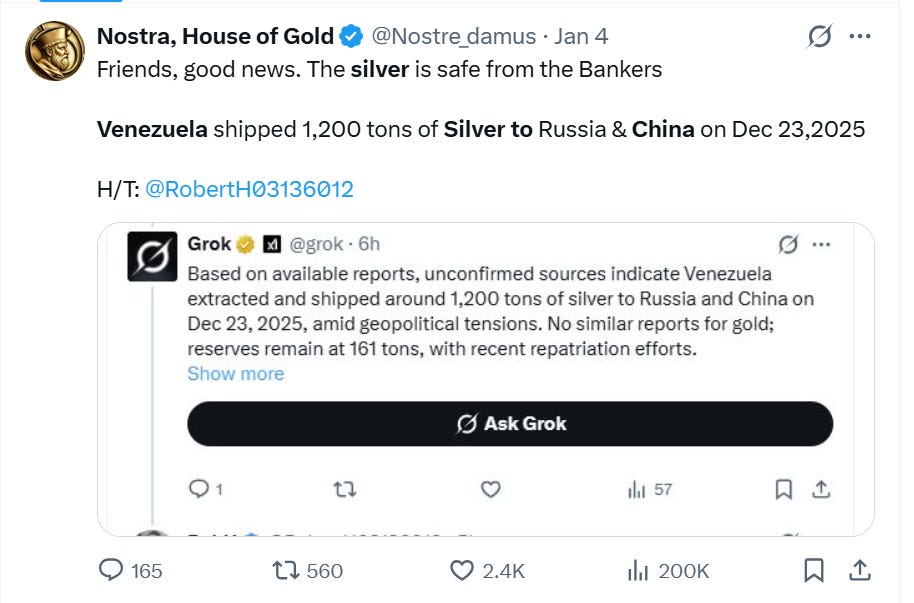
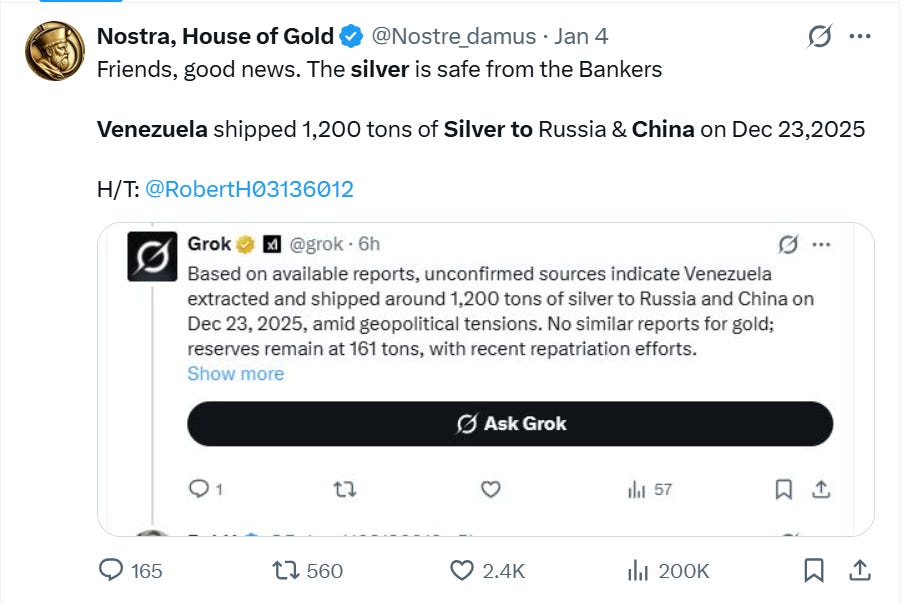
In this environment, silver and other strategic minerals stop being mere commodities and become national security assets. Venezuela’s reported shipment of roughly 1,200 tonnes of silver to Russia and China in the hours around Maduro’s removal—circulating in alternative media and geopolitical channels—fits the emerging pattern: get the metal out of U.S. reach and into BRICS‑aligned custody. Whether every detail of that transfer is perfectly documented or not, the direction of travel is unmistakable: physical bullion is migrating from vulnerable jurisdictions to those explicitly building a parallel system.
At the same time, U.S. seizures of oil cargoes underscore a broader reality: any resource in transit through Western‑controlled choke points—shipping lanes, dollar clearing, Western vault systems—is no longer safe for sanctioned or “non‑aligned” states. That pushes producers and buyers alike to tighten supply chains in Eurasia and the Global South, to clear trades outside New York and London, and to prioritize metal and energy security over marginal price.
Dedollarization as tailwind for gold and silver
Every tanker seized and every reserve account frozen is a billboard advertising why the dollar can no longer be trusted as a neutral reserve asset. Central banks have already been reducing their exposure to U.S. Treasuries and reallocating into record levels of gold, precisely because gold cannot be sanctioned, haircut by executive order, or rerouted to a “neutral venue” in a Gulf emirate beyond legal recourse.
Silver rides the same wave with added torque. It is simultaneously:
-
A monetary metal that can sit outside the banking system.
-
A critical industrial input for solar, electronics, defense, and AI infrastructure, all of which are central to the very resource wars now intensifying.
As U.S. foreign policy doubles down on piracy—oil seized, leaders snatched, revenues parked where creditors and allies cannot reach them—the logical response from sovereigns, institutions, and ordinary savers is the same: exit paper claims, accumulate hard assets. In this new era of geopolitics, the “pirate nation” has made one thing clear to the world: if your wealth is in their system, it is theirs; if it is in gold and silver, it is yours
You know what to do stackers, buy today’s dip
BUY MORE SILVER
Smash the “Shop Now” Button to get started
In an age of legal theft, weaponized sanctions, and midnight seizures of “non‑compliant” bank accounts, trusting digits on a screen is a dangerous fantasy. When governments can freeze reserves, reroute oil revenues, or lock entire nations out of payment systems with a signature, the message is brutally clear: if your wealth depends on their permission, it is not really yours.
That is why silver in private hands is emerging as best practice for anyone serious about survival in the new financial order. Physical silver is outside the banking system, outside the whims of central banks, and outside the reach of late‑night executive orders and “emergency” measures that always seem to target savers, never the architects of crisis. It is real money with no counterparty risk, ready to trade, save, or move when capital controls slam shut and withdrawal limits magically appear.
For serious stackers who want to turn this chaotic era into an advantage, reputable bullion partners matter. That is where specialized precious metals dealers like Sprott Money come in—focused on delivering real metal, not paper promises, to those who refuse to be the next victim of financial confiscation
end of segment
-
our opinions are not our sponsors
-
the editorial department is separate from the promotions department
-
not financial advice