
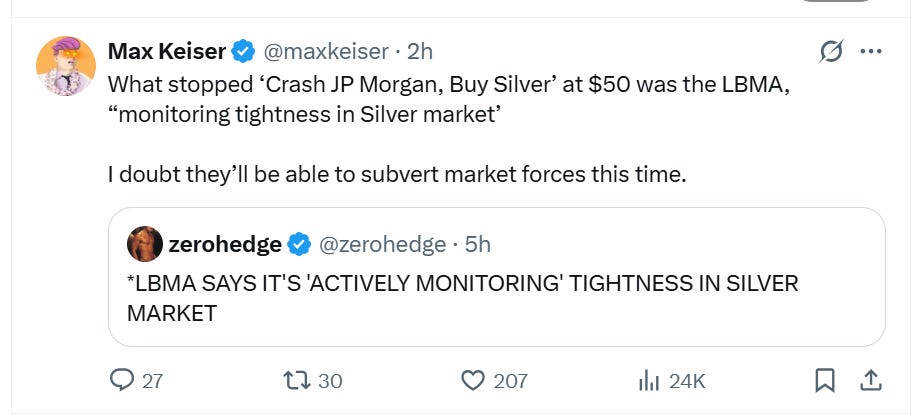
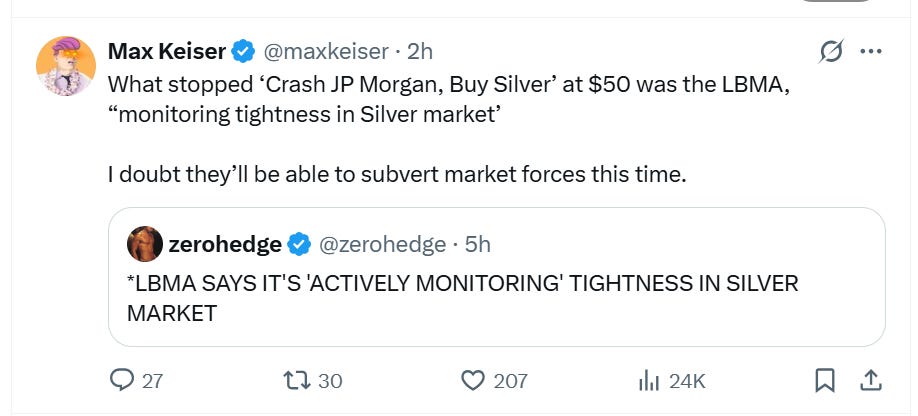
Global silver markets are experiencing unprecedented turbulence as physical supply tightens, refining and financing grind to a halt, and price signals break down across leading exchanges. Reports within the last hour signal outright alarm from the London Bullion Market Association (LBMA), which confesses it’s “actively monitoring” the market’s growing stress—an unusually candid admission that the world’s primary over-the-counter precious metals hub is running dangerously low on metal.
LBMA Panic: The Shortage Unfolds
The LBMA’s statement marks a critical departure from the usual calm and reassurances issued by institutional gatekeepers. Translating the polite phrasing—“actively monitoring tightness”—reveals a scenario darkening toward panic. When the central clearing house for global silver trade signals trouble, it’s often a forewarning. For years, analysts warned that silver’s float above ground was artificially inflated due to paper derivatives outstripping actual bars. That phase may now be ending. The next? Full-scale panic, where market signals implode and physical metal vanishes from shelves.
North American Refiners Halt Silver Buying
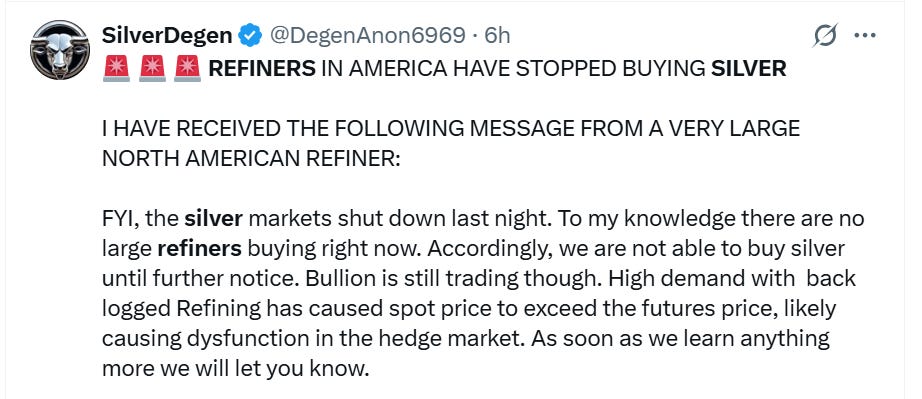
The situation has grown so dire that the largest refiner in North America just informed clients that refineries are suspending all new silver purchases. “No large refiners are buying right now,” an official note revealed. With backlogs mounting, spot silver now trades above futures—a classic sign of physical shortage and breakdown in normal hedging practices. Bullion continues to change hands at increasing premiums, but refiners cannot keep up. Dysfunction has spread to the hedge market itself, leaving risk managers without tools to offset volatility.
This syndrome—refiners not able to buy until further notice—reflects the deepest phase of a supply crunch. High demand and gummed-up refining means spot price moves higher while futures contracts tumble, defying traditional relationships. Not even bullion banks nor their prime industrial clients can offer bids. This is what a true market “break” looks like.
First Mint (owned by First Majestic) stated that “Refineries are trying to get 1,000 oz bars by AIRPLANE to London (because well, London doesn’t have it and lease rates have spiked to 89%).”
Expert Warnings: Physical vs. Paper Crisis
James Turk, one of the field’s most respected analysts, draws on the lesson of the infamous 2022 nickel squeeze, where short sellers managing futures contracts couldn’t deliver physical metal and had their obligations canceled. The takeaway is clear: in a commodity crisis, only physical ownership matters. Turk cautions that those holding paper positions or relying on futures expose themselves to “force majeure” events—essentially, abrupt contract cancellations—leaving investors empty-handed. The same dynamic is now playing out in silver.
Other silver analysts echo this sense of ignition, not a market top. “Buckle up—the moment we’ve waited years for is unfolding,” one warned, as lease rates spike to 110% and spot prices break loose from futures. It’s not a mere price run; it’s a funding crisis triggering a race for physical possession.
Global Supply Chain Disarray
Troubles are spreading across continents. Canadian dealers like Canadianpmx.com have suspended all U.S.-bound shipments, and in Vietnam, the country’s largest bullion dealer, Phú Quý Group, has stopped accepting new silver bar orders due to overwhelming demand and an inability to maintain supply. Their announcement—that all production is now allocated solely to existing commitments—shows the strain not only in North America and Europe, but across Asia.
Traditional shipping routes for silver are changing under pressure. Normally, industrial-sized 1,000 oz bars are sent via ocean cargo for cost efficiency, but reports claim high-value loads are now being flown out of London—an emergency measure that underscores how acute the shortage has become.
Finance and Market Structure Breakdown
Skyrocketing financing and carrying costs are choking industry participants, with many unable or unwilling to bid at current prices. The underlying fear is that silver’s next surge will catalyze selling on a scale exceeding industrial and institutional balance sheets. That could leave dealers on the wrong side of another squeeze, unable to source enough metal to cover obligations.
Curiously, spot prices are falling, but not because fresh supply has emerged. Instead, market liquidity is breaking ahead of inventories. Dealers and funds are dumping paper, futures positions to cover margin calls, driving futures prices down faster than physical spot. The once-tight arbitrage link between New York’s COMEX and London’s LBMA is freezing up, with credit retrenchment blocking arbitrage opportunities. This is less a price crash and more a funding squeeze that, paradoxically, sets the stage for even more extreme volatility.
When the forced sellers exit and physical bids return, there will be fewer shorts, thinner liquidity, and—crucially—no buffer to prevent sudden, violent moves in the price of silver. Every flush leaves the market more brittle, with less metal in circulation and growing belief that the next buying wave will overwhelm all previous limits.
Anecdotes and Lessons
Analysts’ wisdom is increasingly snarky and stark. “Imagine taking profits on your gold and silver just prior to a monetary collapse,” remarks David Bateman, emphasizing the danger of mistaking price dips or temporary dislocations for reversals. Those believing silver topped at $50 are, in their words, “in for a shock.” What the world is witnessing is not a technical top, but the ignition phase of a commodity super-squeeze, where history favors those who hold tangible metal, not promises on paper.
In summary, today’s facts and anecdotes reveal cascading dysfunction: from halted refining to soaring lease rates, transcontinental supply blockages, and the breakdown of price signals and financing mechanisms. This is what systemic stress in a physical market feels like, with consequences not yet fully understood—except by those who’ve prepared for precisely this moment.
Snarky thought
The silver shortage goes far beyond Mexico refusing new mining concessions; it’s being intensified by North American refiners halting activity until further notice, ongoing backwardation where spot prices are higher than futures, and lease rates on the LBMA rising above 40%—all of which vividly demonstrate just how tight and stressed the physical market has become. Meanwhile, putting silver on the critical minerals list offers little more than symbolic reassurance. It would be like declaring caviar a protected luxury requiring licenses to distribute or eat—all in an environment where the Sturgeon (fish) was an extinct species.