
US Gold Shock: America Pulls the Trigger
What happens when America suddenly rewrites the rules for the world’s most fundamental asset?
Swiss Miss—Or Swiss Kiss-Off?
On July 31, U.S. Customs and Border Protection ignited shockwaves: gold bars in the 1-kilogram and 100-ounce formats—the bar types accepted for COMEX delivery and refined by the Swiss—have been hit with a 39% tariff. Switzerland, the global hub for gold refining, instantly landed in the crosshairs. Does this seismic move strengthen America’s hand, or risk isolating its own market?
COMEX’s Golden Goose Gets Cooked
Almost overnight, New York futures premiums blew past spot prices, as dealers realized physical supplies for COMEX delivery just got squeezed. Swiss refiners slowed or even stopped shipments, deepening the supply crunch for U.S. gold traders.
Uncle Sam’s Gold Squeeze: Genius Play or Boomerang?
How does forcing foreign gold out impact American investors and the global gold pricing machine?
This is leverage, pure and simple. By hitting Swiss gold imports with a punitive tariff, Washington is trying to tilt the playing field—handing a pricing edge to U.S. refiners and shifting global flows. But here’s the catch: as access to physical gold narrows, U.S. buyers may end up paying steeper premiums, even if spot prices abroad hold steady. Gold becomes scarcer at home, and more expensive for American investors. Is this national strategy, or self-inflicted pain?
Tariff Tactics: Assert Power or Shoot Yourself in the Foot?
Is the intention to bolster U.S. power in gold—or is the U.S. accidentally squeezing itself?
This isn’t just a revenue play—it’s brinkmanship. The U.S. moves to dominate price discovery, tightening control over the gold market’s most deliverable forms. But in doing so, America risks choking off its own supply, pushing buyers to seek gold elsewhere and leaving domestic players to grapple with higher costs and liquidity risks. Are policymakers strengthening New York’s grip, or setting up Americans to pay the price?
Gold Going Rogue? Will Global Markets Ghost NY?
Will global markets bypass New York, or will the U.S. cement its control?
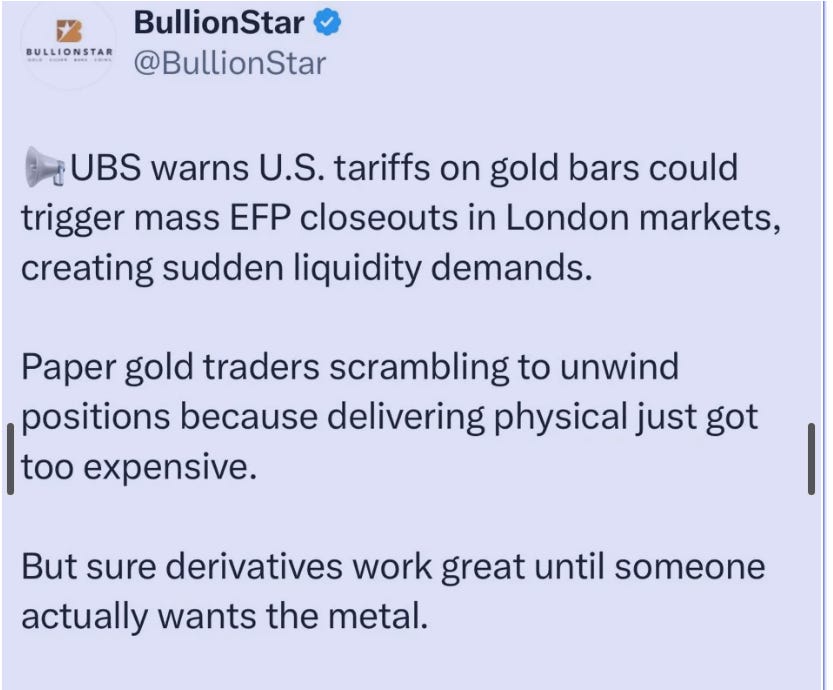
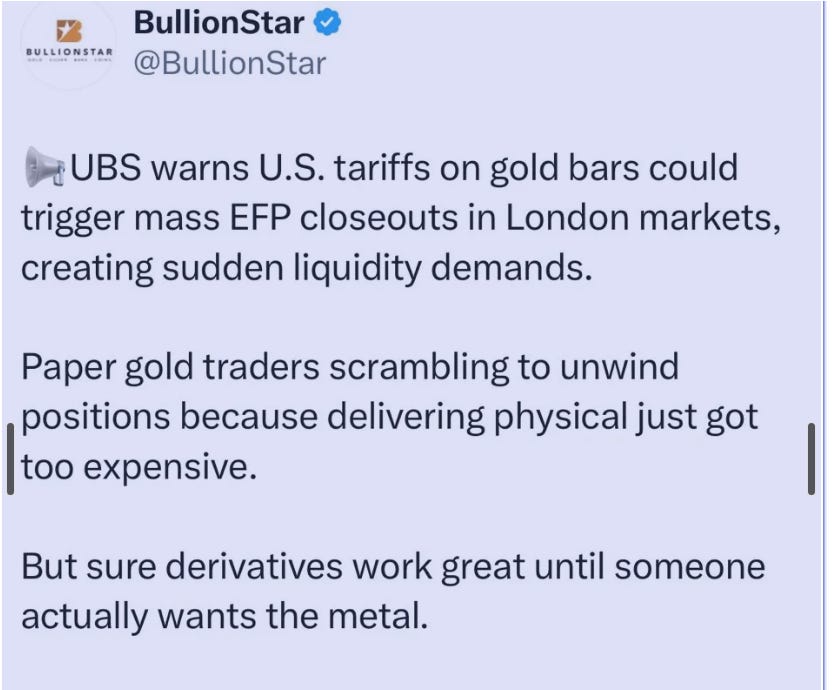
As the industry scrambles to interpret the reach of the tariffs—could larger 400-ounce bars be next?—some suggest this could even be a Customs blunder, subject to legal pushback. UBS has warned that the tariff shock could force a wave of position closeouts in London, draining liquidity and making “paper gold” riskier than ever. What happens when a derivative can’t deliver the metal?
Stealth Sanctions or Economic Own-Goal?
Are these tariffs a stealth form of capital controls?
Critics call the move “economic insanity.” Gold, by its very nature, chases freedom—and profit. With tariffs pushing up the American price and making Swiss gold less accessible, the U.S. may simply hand the advantage to other global hubs. Switzerland can always sell elsewhere.
Fed’s Secret Gold Play: Fiscal Houdini or Fairy Tale?
Is America planning a gold revaluation to patch up its fiscal woes?
Meanwhile, the Fed quietly studies how gold revaluations saved foreign central banks in the past. The math is compelling: mark U.S. gold reserves to market, and suddenly the federal balance sheet looks far less dire. Is Washington road-testing a bold Plan B?
Enter the Dragon: China’s Gold Grab Raises the Stakes
China, meanwhile, is quietly scooping up gold for a ninth straight month, telegraphing its strategy for all to see. Why bother auditing Fort Knox when Beijing’s gold-purchasing spree is plain as day?
America’s Golden Gamble: Big Win or Epic Fail?
So who really benefits—and who pays the price—in America’s gold tariff gamble?
The shockwaves have only just begun. Will the U.S. corner the gold market and dictate terms, or will global trading routes shift, making gold costlier and harder to find on U.S. turf?
Stay tuned. In the end, gold always finds the path of least resistance.