
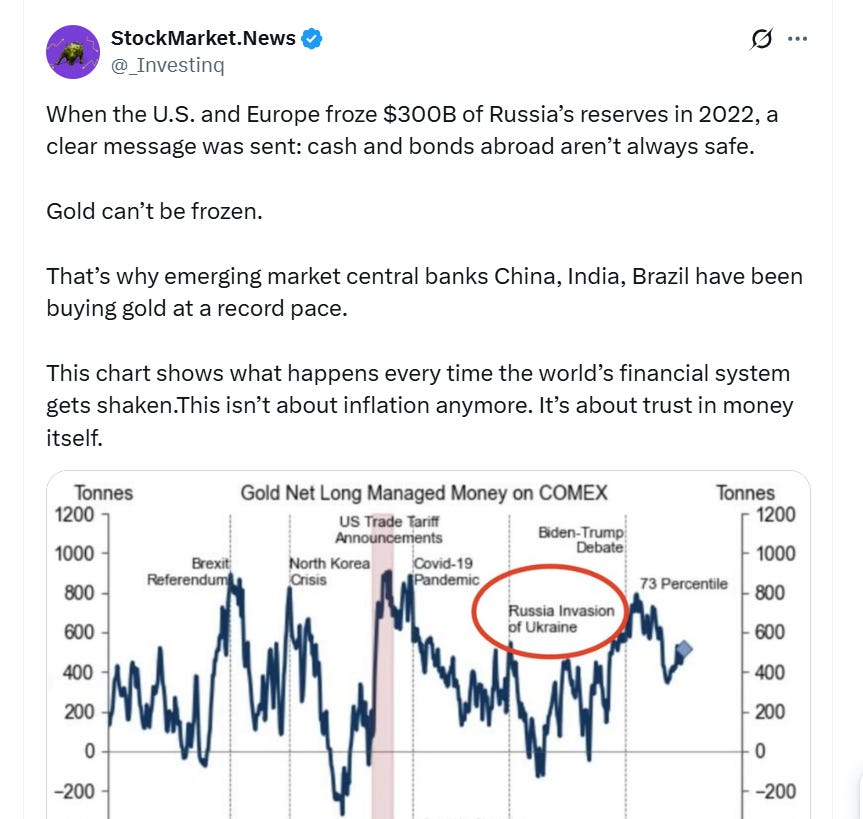
Gold’s latest ascendancy is more than a bull run—it’s a global indictment. On February 24, 2022, when Russian tanks barreled into Ukraine, the tremors didn’t just shake Eastern Europe—they cracked open the dollar-centric world order. Four days into the “war in Ukraine,” Washington’s swiftest sword wasn’t military might, but sanctions: the Biden administration’s freezing of Russia’s foreign exchange reserves. In that instant, the message was clear: the dollar was now a weapon, and any nation could be next.
A Golden Backdoor: Glazyev’s Gamble
Russian economist Sergei Glazyev saw the future in grams, not greenbacks. “One gram of gold for one barrel of oil,” he proposed—a sly workaround to sanctions, settling vital trade outside of U.S. scrutiny. The implications didn’t go unnoticed. Zoltan Pozsar, the system’s keenest watcher, pointed out the logical conclusion—should Russia later demand two barrels for one gram, gold’s price would double. This wasn’t just a clever hack for Moscow; it was an explosive challenge to the dollar’s omnipotence.
Debt, Deceit, and the “Crypto Cloud”
As U.S. debt barrels past $37 trillion, Anton Kobyakov, advisor to Putin, sounded an ominous warning: Washington’s real play is a shift to stablecoins “backed” by Treasuries. Kobyakov calls this the “crypto cloud” scam—a transparent ploy to manufacture demand for U.S. debt now, then devalue it by stripping the tokens’ worth later, leaving foreign investors holding the bag. In Kobyakov’s telling, America’s digital wizardry is just smoke and mirrors for sovereign default.
Dedollarization: When Privilege Becomes Poison
Sanctioned once, burned forever. After witnessing the West’s financial siege of Russia, central banks everywhere began engineering escape routes from the dollar. The first exodus was quiet, but as the Trump administration triggered tariff wars with Canada, Mexico, China, India, and Europe, dedollarization exploded into mainstream policy. The world had learned: America’s “exorbitant privilege”—borrowing at will, exporting paper for goods, shoving inflation abroad—was ending. The reserve currency had become a loaded gun, pointed outward.
Across continents, governments began trading in gold, not dollars, treating it as the true world reserve currency. Confidence in the dollar, once unassailable, was slipping into suspicion.
India’s Reluctant Divorce from the Dollar
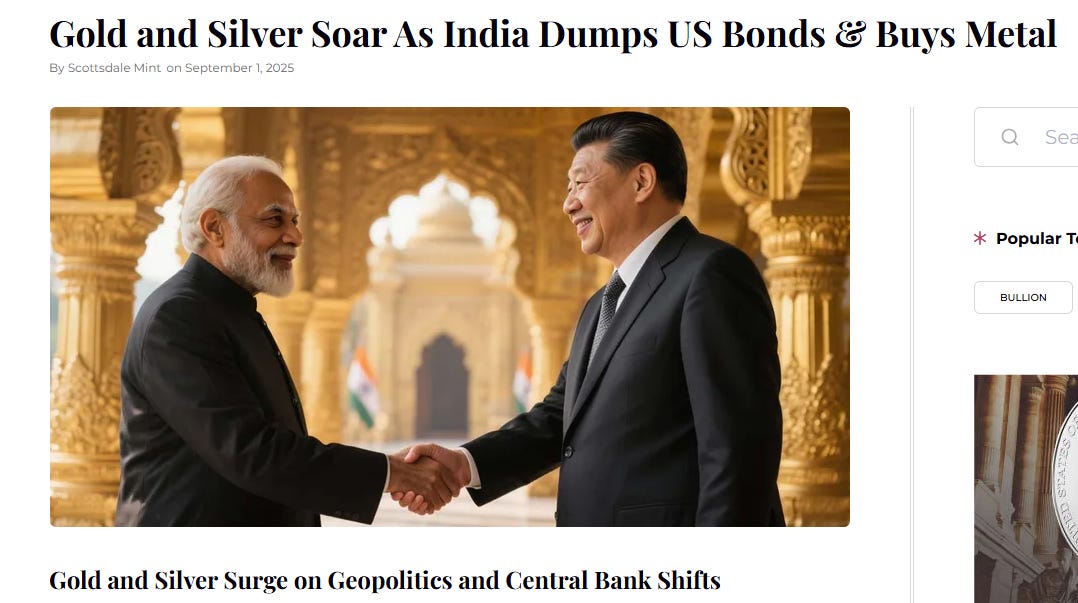
Nowhere is this rupture more telling than in India. Data confirm that in June 2025, the Reserve Bank of India slashed its U.S. Treasury holdings to $227 billion, down $15 billion from a year earlier. Simultaneously, India boosted its gold reserves to 879.98 tonnes—a staggering increase of almost 40 tonnes in one year. The RBI is screaming in silence: fiscal risks and geopolitical tension have made the dollar simply too dangerous to trust
China: Hoarding Bullion, Ditching Treasuries
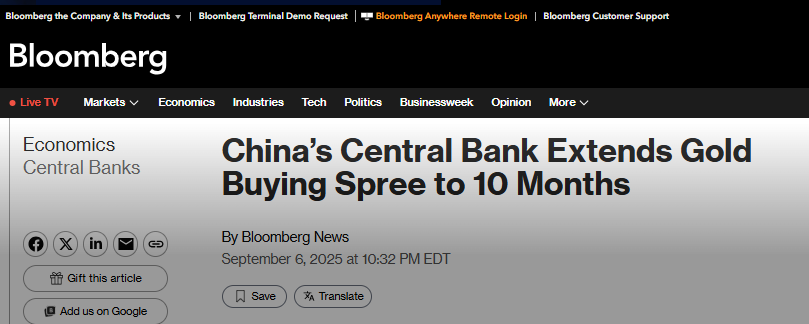
China’s case is even sharper. By summer 2025, the People’s Bank of China had added to its gold reserves for ten straight months, now holding over 74 million ounces. Over the same period, China’s U.S. Treasury holdings dropped, with $900 million sold in May alone—part of a deliberate move to bolster financial security, hedge against sanctions, and diversify away from a weaponizable dollar. Beijing’s moves are systematic, uncompromising, and closely watched by every money manager and finance minister on the Silk Road.
The Pozsar-Glazyev Playbook: Gold for Trade Settlement
Here, the real revolution is underway. As Zoltan Pozsar explained, Sergey Glazyev’s blueprint hinges on pricing critical commodities like oil directly in grams of gold instead of dollars. If Russia ups its offer to two barrels of oil per gram, gold’s price doubles; suddenly, gold is no longer a passive store, but the linchpin of global trade. This is not fantasy—Moscow, Beijing, and Delhi are actively experimenting with these gold-based mechanisms, quietly reshaping world finance in real time.
Investment Shifts: From Tech to Tangibles
For those following the crowd, Bank of America’s Michael Hartnett is the canary in the coal mine. His advice: “Sell tech, buy value, buy materials, sell U.S. dollars.” Hartnett, a market savant famed for calling pivots, warns that surging inflation and tech bubble mania are distractions. Real safety now lies in tangible, undervalued assets—commodities, materials, and especially gold. As faith in policy and in the greenback evaporates, money flees to what endures.
A Perplexing Paradox: U.S. Inaction and Crypto Schemes
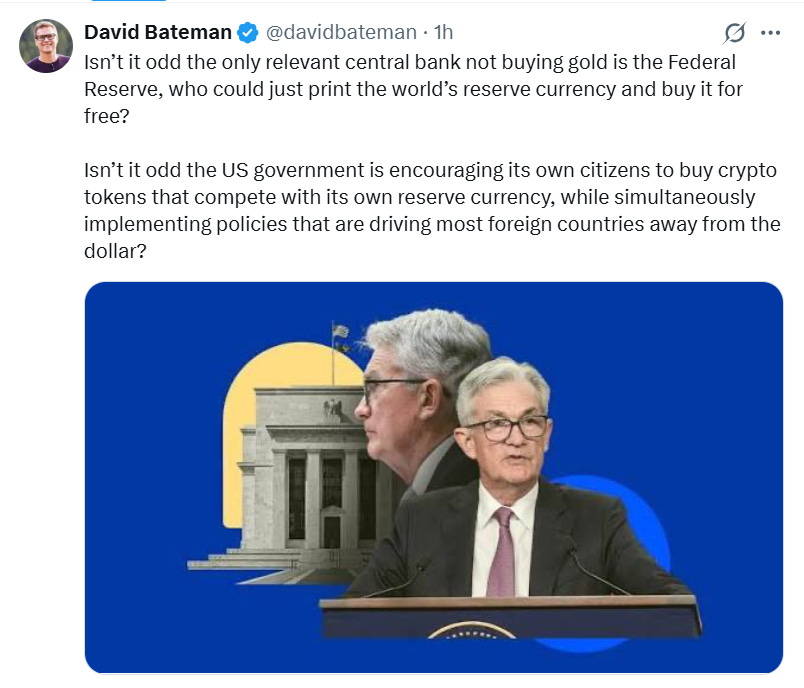
The inescapable paradox lingers: while central banks everywhere gorge on gold, the only major institution not buying is the Federal Reserve—the very entity able to print money without cost. Stranger yet, the U.S. government now encourages ordinary citizens to gamble on crypto tokens, even as its own policies repel foreign governments from the dollar.
Are these mere blunders, or is this the capstone of Kobyakov’s warning? As the world’s gold vaults echo with the sound of new bars, one can only wonder if America’s real endgame is to lure a new generation into the digital “crypto cloud”—just before pulling the plug.
Sometimes, the most influential scams are hiding in plain sight.
one final chart to chew on (says a great deal)
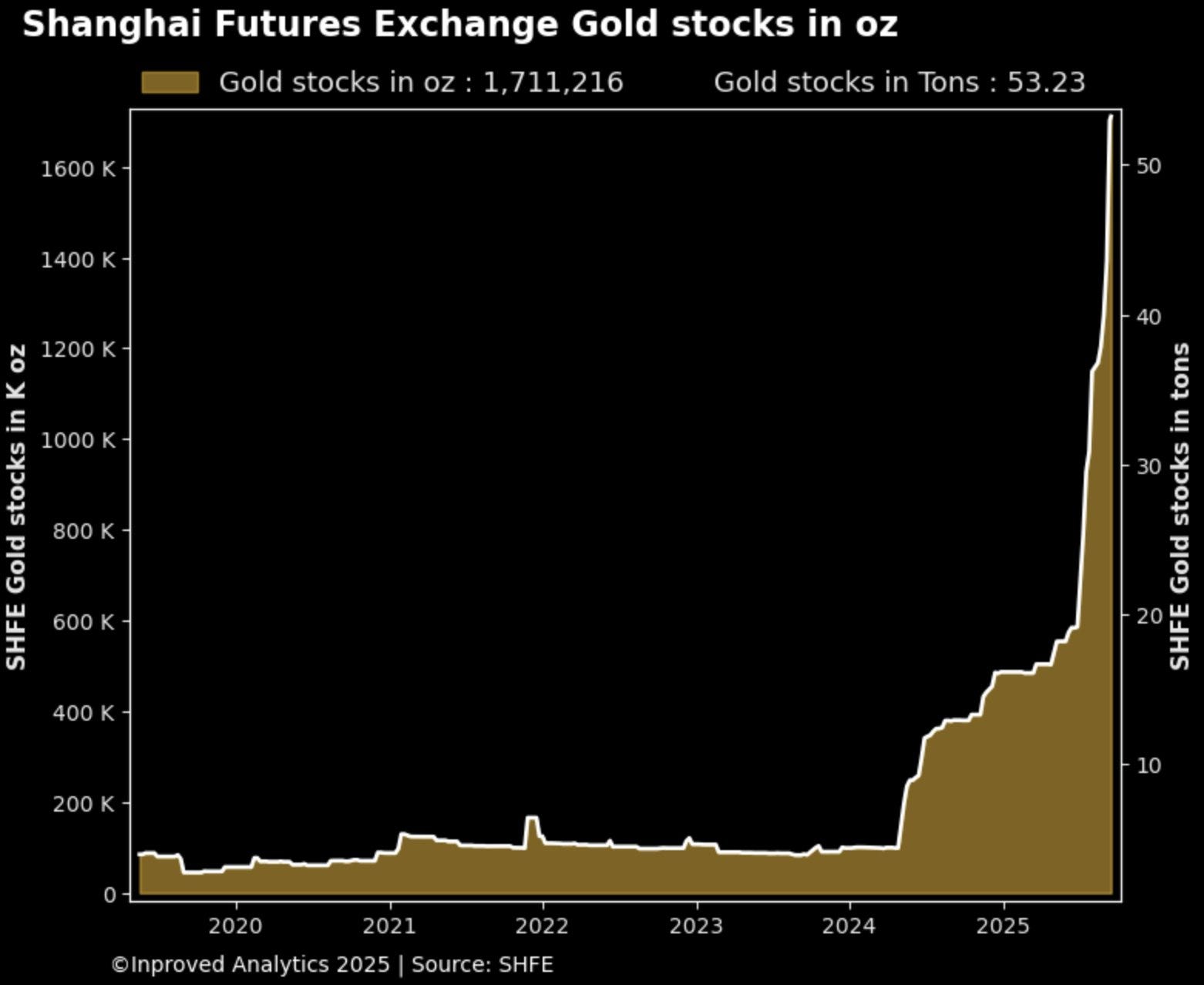
Gold vaults at the Shanghai Futures Exchange just hit a new record high, marking surging demand for physical gold in China. Inflows soared by 276 kg this week, lifting total holdings to 53.23 tons (over 1.7 million ounces). Chinese traders are aggressively delivering gold to SHFE vaults as economic uncertainty fuels a rush toward real assets and record gold prices
People need to understand that the East has clearly won the economic war. The US dollar is going to expire before the Chinese Yuan.
end of segment
-
our opinions are not our sponsors opinions
-
editorial department is separate from promotions department
-
not financial advice
-
load up on all the silver and gold you can, (while you still can)