
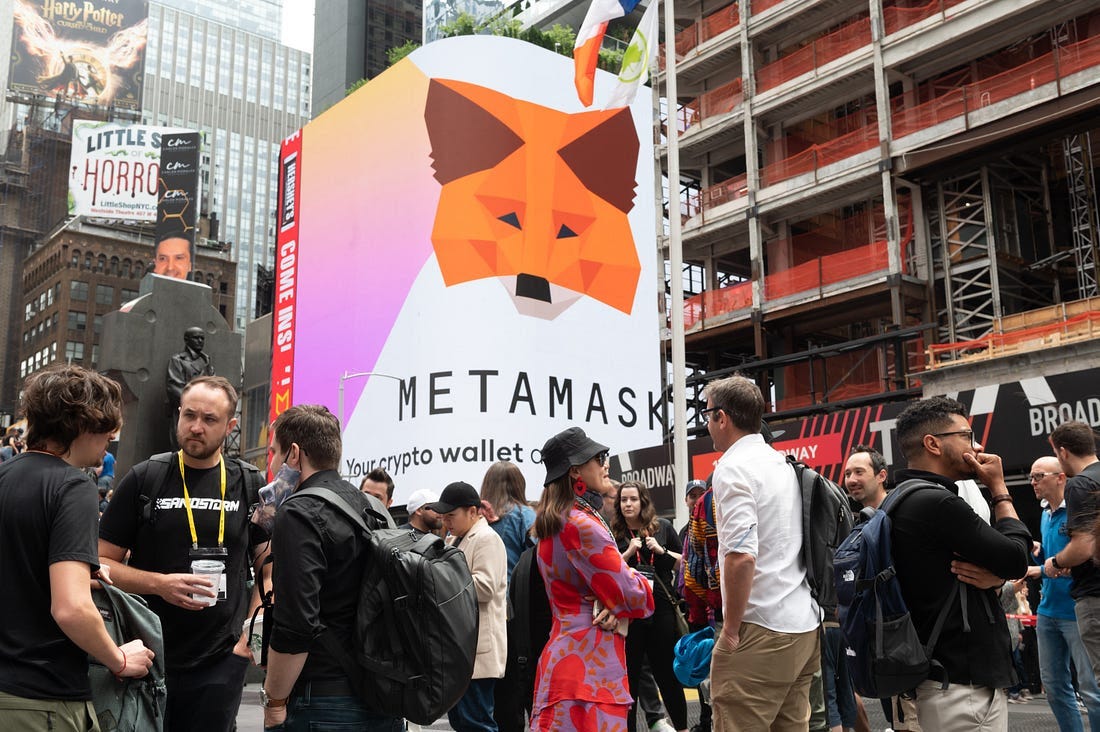
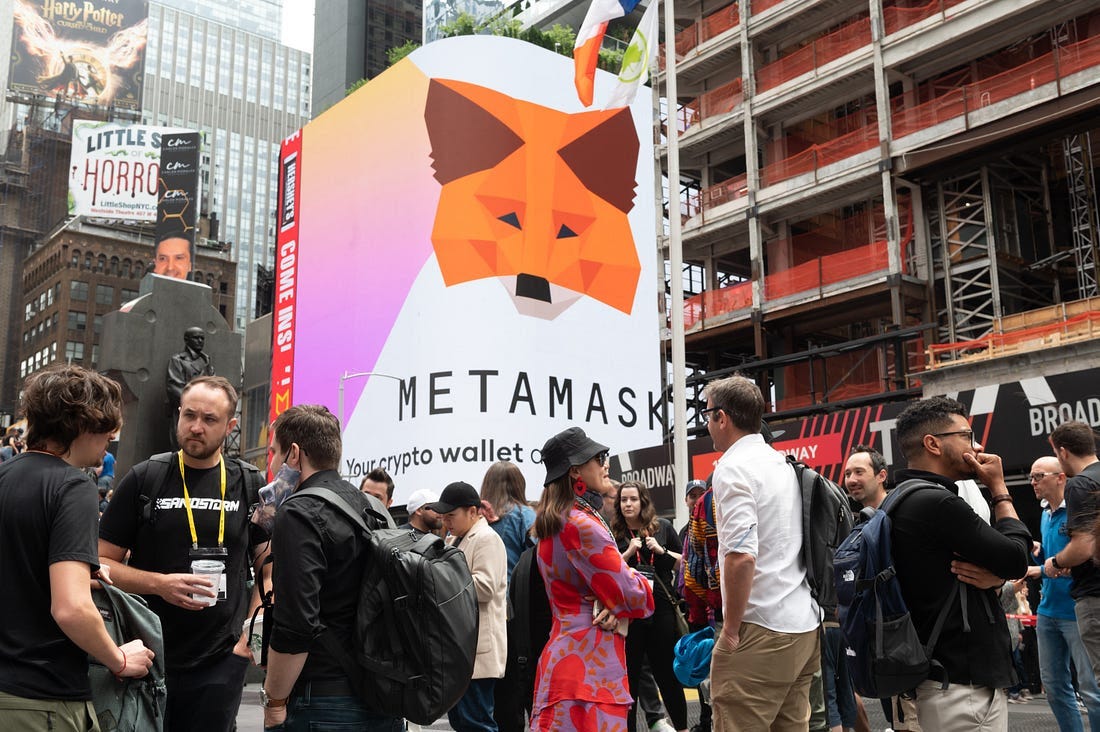
Fort Worth-based blockchain firm Consensys, creator of the popular Ethereum-based MetaMask crypto wallet, accidentally hired a software developer linked to North Korea, according to internal messages obtained by Drop Site News.
The crypto system is a Rube Goldberg machine of security theater sitting on top of a “number go up” religion, and the US establishment is clearly pivoting away from anything resembling hard money while it milks that machine for surveillance and control.
The gold optics and policy reality
Scott Bessent’s Fox-friendly rollout of Trump-themed gold trinkets is the tell: they’re happy to slap a president’s face on a $1 “gold” coin as a branding exercise while running a $39.5 trillion debt pile that makes any serious gold backing mathematically impossible. The state’s real direction of travel is toward programmable, surveilled digital rails and asset registries, not redeemable specie. The gold imagery is there to calm boomers and patriots while the underlying monetary regime moves further into pure credit, derivatives, and digital compliance.
Structural security risks in crypto
Crypto’s supposed self-custody revolution has turned into an attack surface buffet: phishing, malware, compromised browser extensions, poisoned RPCs, fake job offers, and wallet-draining smart contracts. North Korean-linked operators have been caught infiltrating crypto projects as “remote devs,” inserting malicious code, and laundering billions in stolen assets through exchanges and mixers. Even mainstream wallets like MetaMask require users to defend browser extensions, seed phrases, and devices in an environment where professional nation-state actors and industrial-scale scammers hunt retail
Sam Bankman-Fried as case study
Sam Bankman-Fried didn’t just “blow up a startup”; he used FTX to misappropriate more than 8–10 billion dollars of customer funds, channeling deposits into his hedge fund Alameda, political influence, real estate, and vanity investments. A jury convicted him on seven counts of fraud and conspiracy, and he drew 25 years in prison plus an order to forfeit roughly 11 billion dollars, confirming that the industry’s poster child was running old-school embezzlement under a DeFi halo. The lesson is simple: if your “decentralized future of finance” still relies on opaque, centralized offshore exchanges and charismatic cult leaders, you’re just buying another unregulated bucket shop in token drag.
Seizure, confiscation, and “lights out” risk
Crypto’s other dirty secret is how trivially it can be frozen or taken once you’re inside any on-ramp the state can touch. Centralized exchanges routinely comply with court orders, sanctions, and law enforcement requests, seizing or locking user accounts, while chain analytics firms map flows to make “anonymous” coins legible to regulators and prosecutors. Even if you self-custody, a coerced seed phrase, a malware-infected device, or a single signature in a hostile jurisdiction can vaporize your holdings without recourse. And when the power or internet goes down—whether locally or systemically—you don’t have “digital cash”; you have an entry in a ledger you can’t reach, which is indistinguishable from having nothing in a crisis.
Greater fool theory in tokens
Most of the crypto complex runs on the greater fool theory: you’re not buying productive assets or claims on real cash flows; you’re buying a story and hoping to offload it to someone even more hopped up on hopium. Whitepapers and “total value locked” charts dress up the underlying mechanic, which is serial issuance of new tokens, yield farms, and liquidity games that only function as long as new money rushes in. When that flow reverses, the same “deflationary” and “scarce” tokens simply gap down because there is no natural bid besides bagholders averaging down and venture insiders unloading into whatever liquidity remains.
Quantum computing and blockchain fragility
Crypto evangelists like to pretend the math is eternal, but the security of most major blockchains relies on cryptographic schemes vulnerable to sufficiently powerful quantum computers. Public-key systems used in common wallets and transaction signatures could, in principle, be broken by advanced quantum attacks, exposing historical addresses and enabling key recovery from public data. While timelines and feasibility are still debated, the risk is asymmetric: if quantum capability arrives before chains migrate to robust post-quantum schemes, you have a ledger full of “immutable” wealth secured by obsolete math and no undo button.
Tech stocks are going to start crashing
Silver Miners are going to start booming
The punchline is simple: crypto is a security circus wrapped around a fraud machine, glued together by the greater fool theory, and threatened by the very computing advances its promoters worship. It can be frozen, seized, or rendered unreachable the moment power blinks, a court order lands, or a state actor decides your “sovereign” keys now belong to them.
Meanwhile, the same political class parading around Trump-branded gold tchotchkes has zero intention of anchoring their credit bubble to real metal; they want surveillance money and total digital dependency. Against that backdrop—and with a growing, very rational backlash against AI surveillance cameras and the metastasizing data-center panopticon—the sane trade is obvious: sell the bloated tech darlings whose business model is turning humans into datasets, and rotate into real-world leverage on finite metal in the ground. In other words, cut your exposure to the surveillance stack and start accumulating quality silver miners while they’re still mispriced jokes in a market that thinks line-go-up cloud credits are more “real” than ounces.
end of segment
-
Our opinions are not our sponsors opinions
-
The editorial department is separate from the promotions department
-
not financial advice