
by Jon Little intern Niko Moretti
Foreword:
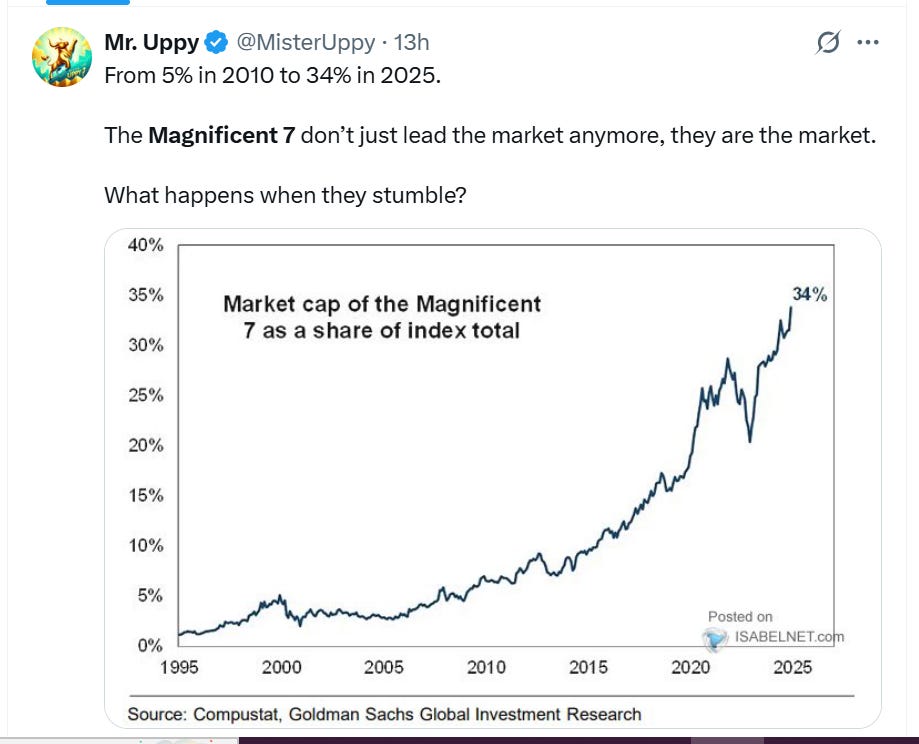
The Magnificent Seven’s combined market cap has hit an eye-watering $21 trillion—more than a third of the entire S&P 500, dwarfing entire economic sectors and turning the market into a precariously top-heavy pyramid. Investors have lost sight of value, chasing tech giants whose valuations now exceed blue-chip titans of yesteryear like Procter & Gamble, US Steel, and old-line energy producers, which anchored portfolios when America actually made things. With Amazon having devoured Main Street retail and the rest offshoring manufacturing, genuine economic breadth is gone.
Today, wild schemes such as Nvidia’s $100 billion chip buy-in for OpenAI—just the latest incestuous maneuver among AI overlords Microsoft, Oracle, and Nvidia—show how these “circle jerk” investments do nothing but artificially prop up stock prices and keep the bubble from bursting. This overvaluation is unsustainable and mirrors every late-stage bubble in history; when it inevitably cracks, expect capital to scramble for the safety of gold and silver, the only true havens left
We are in Big Big Trouble, This is very Bad, This is Not Good
History teaches us like during the dot-com bubble, internet darlings like Pets.com, eToys, and Webvan soared on hype only to vanish just as quickly when reality set in and their business models crumbled. The 2008 financial crisis delivered a knockout blow to legendary Wall Street firms—Lehman Brothers and Washington Mutual—both of which collapsed amid the mortgage meltdown, vaporizing billions and triggering global panic. Meanwhile, Iceland’s banking bubble that same year witnessed the spectacular implosion of Glitnir, Kaupthing, and Landsbanki, toppling the entire nation’s financial infrastructure in a matter of weeks.
And let’s be honest: the writing is on the wall when today’s blue chips are platforms like Facebook, whose $1.9 trillion market cap is built on people bragging about their pets and kids, arguing about gay marriage, or take the absurdity of Netflix being one of the US stock giants, are we going to binge-watch our way to growing the economy? How exactly does watching a season of Buffy the Vampire Slayer contribute to a healthy US economy? If you want to short Netflix or the entire over weighted magnificent 7, buy gold and silver because this where a lot of that nonsense & hype will find a warm, safe and accepting home.
Wake-Up Call: Mining’s Once-in-a-Generation Opportunity
Gold and silver mining stocks remain some of the most overlooked assets in global markets—especially when set against today’s celebrated tech giants like Microsoft. Gold and silver miners hold price-to-earnings (PE) ratios of just 8, while Microsoft trades at nearly 37–38 times earnings and sits 21% above its ten-year average. The result is an extraordinary, historic gap—one signaling an asymmetric opportunity that’s still wide open.
Magnificent 7 vs. Mining: Unequal Multiples
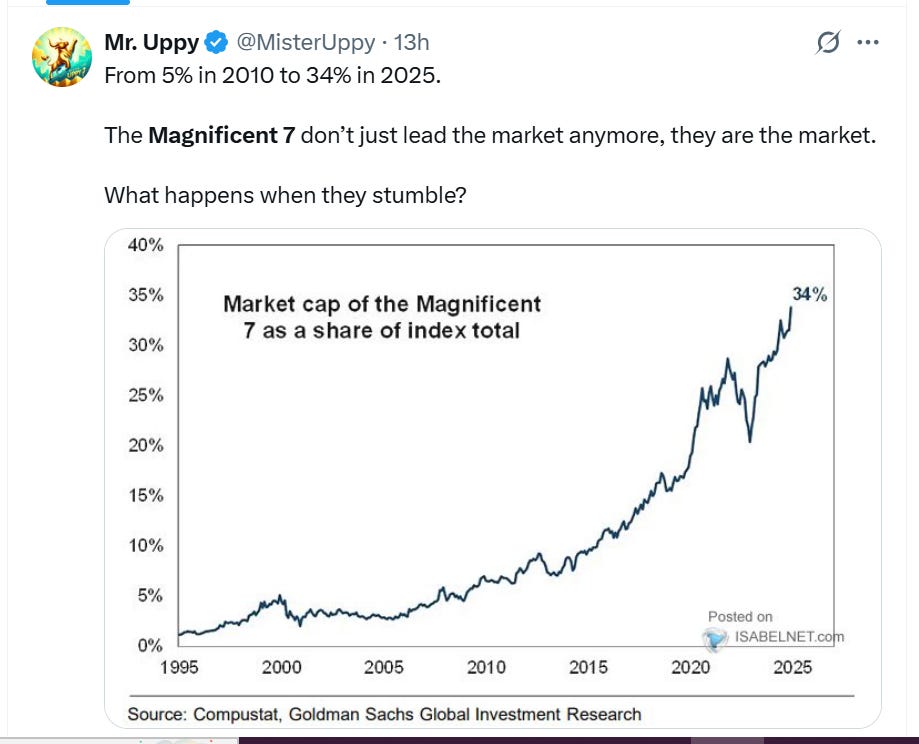
Microsoft, trading around $510–$520 per share at a PE near 37–38, is priced not just for present-day profits, but for perpetual, compounding growth. Meanwhile, elite gold mining equities are valued at PE ratios around 8, as if profits will stall out despite soaring margins. Miners have been relegated to the bargain bin—rewarded with near-bear market multiples—despite the strongest underlying cash flow and earnings momentum on record.
Gold Mining Margins: Unmatched Performance
With gold holding above $3,700–$3,800 per ounce while mining costs remain at roughly $1,500 per ounce, miners today pocket operating margins north of $2,000 per ounce—a profit margin above 130%. These are the kind of numbers that even mature tech companies cannot dream of, yet their stocks capture the premium multiples. Unbelievably, markets still assign valuations to miners as though gold were at $2,000–$2,500. The resulting valuation gap suggests a massive re-rating is not just possible, but likely.
Silver Miners: Deficits, Demand, and Explosive Margins
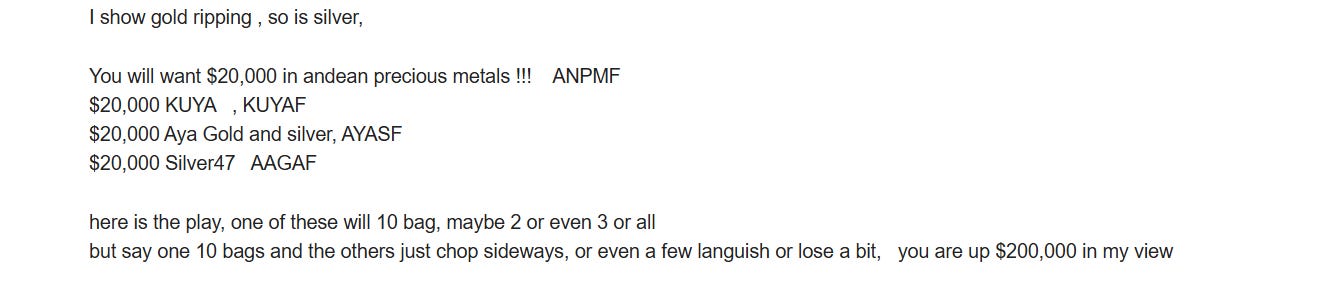
Silver’s RSI is now mirroring the ultra-bullish setup of 2011, when prices doubled in just four months—from $26 to $49. The current market is even tighter: in 2011, there was a silver surplus; now, deficits are running toward 200 million ounces. Global industrial demand is booming, driven by next-gen military tech, AI data centers, Samsung’s solid-state silver batteries, and insatiable solar demand—from China and the rest of the world. Silver Academy endorsed miners today extract at AISC around $20 per ounce—beating Mexico’s $27 industry average. Aya Gold & Silver (AYASF), Andean Precious Metals (ANPMF), and Kuya Silver (KUYAF) are all roughly 35% more profitable than peers, which translates to impressive profit margins for the most basic heavy-lifting in the metals sector. Keep in mind that silver is going higher and that this sector has experienced decades of surviving low enthusiasm.
This is the secret to life changing wealth, run in the direction that few understand. Yes, Miners.
Now is the perfect entry point before the stampeding herd awakens after another season of “Emily in Paris”
Gold-Silver Ratio: How Long Can This Last?
-
Current market ratio: 85:1
-
Historical norm: 15:1
-
Norm in the modern era: 40-1
-
Mining ratio: Only 7 ounces of silver dug out for every ounce of gold
Stock to Flow: Gold is unmatched, perfect money, can’t be printed.
Gold’s stock-to-flow ratio highlights its status as the perfect monetary asset, unmatched for scarcity and stability. Today, about 6.8 billion ounces of gold are above ground, held securely in vaults, central banks, jewelry, retail stores, and private hands.
Annual global mining—about 117.6 million troy ounces in 2024—is only 1.5 percent of the existing stock, meaning new gold supply each year is barely a ripple compared to the vast total inventory.
This results in an extraordinarily high stock-to-flow ratio, with current estimates suggesting it would take nearly sixty years of mining at present rates to double the world’s known gold holdings—a level of production stability that no other asset, commodity, or form of money can approach. – Jon Forrest Little
Because gold’s supply grows so slowly, its purchasing power remains resistant to inflation and monetary debasement. Unlike fiat currencies, which central banks can increase at will—causing massive inflation—gold’s supply and value are protected by geology and the economics of mining, not by political whims.
It’s just like James Turk stated on the Silver Academy podcast “Gold is the perfect money and it above ground inventory mirrors global population, typically one ounce per gold per person, and gold mining only exists when it is profitable to do so”
This is why gold has remained the world’s “perfect money”: it cannot be printed, diluted, or destabilized by surges in production, and thus preserves market trust and purchasing power across centuries
Silver’s above-ground supply, for the first time ever, is on par with gold. The ratio of above ground silver to gold is estimated to be 1 to 1 thanks to relentless industrial depletion. Legendary investors such as Eric Sprott foresee the ratio compressing to 25:1, hinting at a possible silver price of $150 if gold continues to trade around $3,750.
The Window Remains Wide Open
Despite the run-up in bullion, the market assigns substandard multiples to miners—valuing them as if metals were half their current price and ignoring both structural supply deficits and all-time-high profit margins. This is one of the greatest financial disconnects in decades; the signal to act is deafening. Mining equities remain the overlooked play—with the potential to be the next great capital markets re-rating story for years to come.
Pro-Tip ( a letter Jon Little wrote to high net worth individual)
Jon wrote:
-
our opinions are not our sponsors
-
editorial department is separate form promotions department
-
not financial advice