
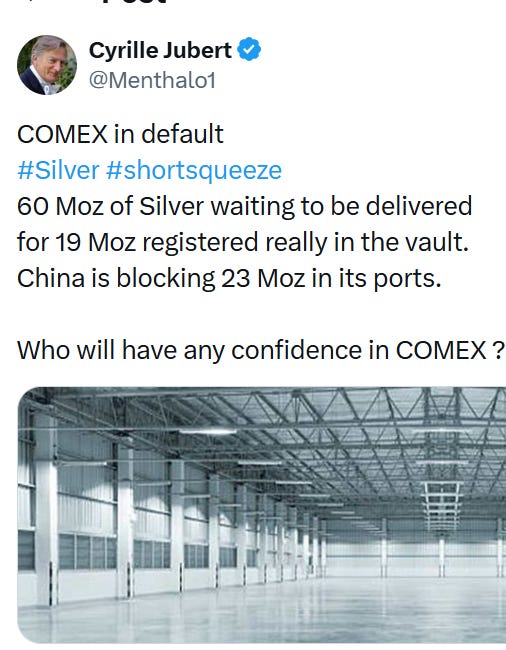
COMEX and LBMA are now in technical default in everything but name. The paper silver empire is promising metal it cannot possibly deliver at the posted price while physical markets are screaming triple‑digit reality.
Fictional inventories
COMEX sits on a dwindling pile of “registered” silver while open interest and delivery demands point to claims many times larger than the metal actually sitting in vaults. You now have a situation where roughly 60 million ounces have been stood for delivery into a system that lists under 20–30 million ounces of truly deliverable metal, once you strip out cosmetically “eligible” bars, rehypothecated claims, and government-earmarked stock. That is what a technical default looks like: not a press release, but a clearinghouse that needs miracles, cash bribes, and off‑exchange deals just to limp through each delivery cycle.
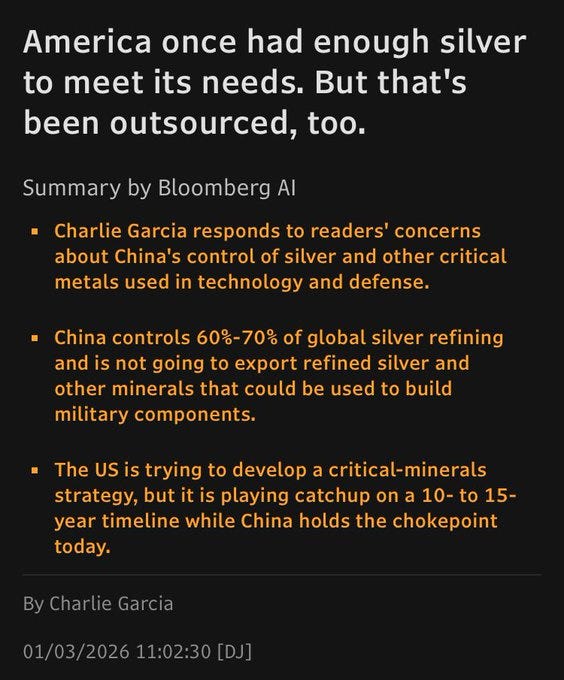
China’s new export chokehold has slammed the door on the usual backdoor fix. With strict licensing now covering 60–70% of globally traded refined silver, Beijing is effectively sitting on the emergency hose COMEX and LBMA used to rely on whenever vault levels got too close to zero.
Paper price, dead benchmark
While COMEX flashes a spot price in the low 70s, that number has lost any connection to where real bars clear. Physical buyers are now paying:
-
Japan: about $130/oz.
-
UAE (Dubai): about $115/oz. to $130 per ounce
-
China (Shanghai physical): $80–110/oz depending on form and size.
-
WalMart $87 per ounce
In a functioning market, that arbitrage would be vacuumed away overnight. Here, it keeps widening, because the “benchmark” is not a market; it is a defense line for insolvent bullion banks sitting on enormous naked shorts that would detonate if silver ever marked to where Asia already trades.
Bull flag or life support?
On the charts, silver is coiling in a massive bull flag just under the banks’ liquidation zone, with repeated failures to break it down despite coordinated paper dumps. This is not normal consolidation; it is survival mode, with banks herding price into a tight range to avoid a cascading margin event that would vaporize Tier 1 capital the moment silver trades at its true physical value in the $110–$130 band.
Every bar that leaves a Western vault, every new Chinese export restriction, every day Tokyo and Dubai bid $50–$60 over COMEX pushes that flag closer to an upside detonation. If retail and industrial users punch price through that resistance, shorts are forced to cover billions in paper obligations into a vanishing float of actual metal.
Confidence is the collateral
Physical shops are selling out, street prices are 50–100% above the official “spot,” and inventories have collapsed by over 70% since 2020. Gresham’s Law has taken over: good metal vanishes into strong hands while bad paper stays on the screen, trading among the deluded and the desperate.
COMEX and LBMA are already in default where it matters: in credibility. A market that cannot deliver at its own price is not a market; it is a bailout operation for bullion banks, masquerading as price discovery while the real world quietly prices silver for what it is—a scarce strategic asset, not a $70 joke.
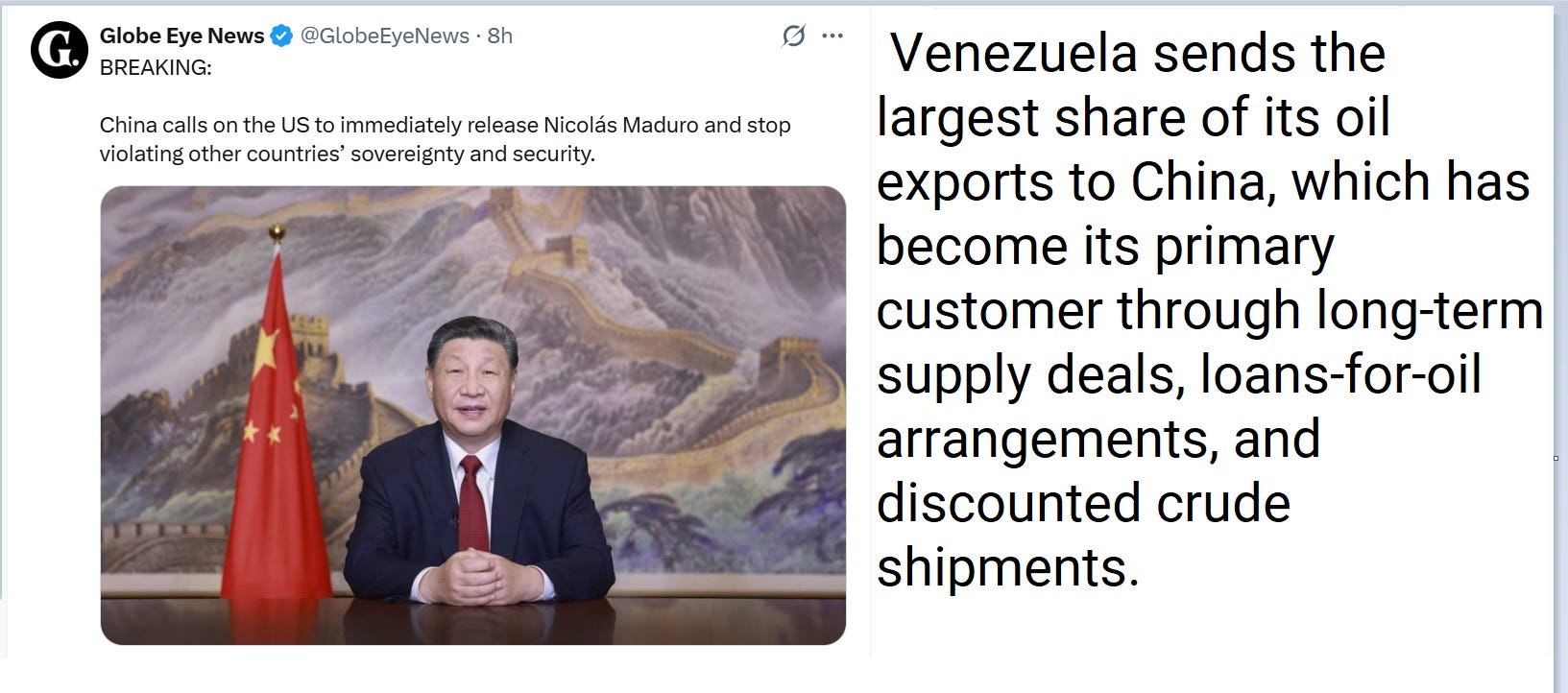
I have been asked to comment on situation in Venezuela
Venezuela currently produces about 1 million barrels of oil per day, down from a peak of roughly 3.4–3.7 million barrels per day in the late twentieth century.
This means output has fallen to roughly one-quarter to one-third of its former peak volume. At its height, the country pumped more than 3 million barrels per day and accounted for around 5–7 percent of global oil production, whereas today its share is closer to 1 percent. Once ranked among the world’s leading oil producers, Venezuela’s current production levels now place it well outside the top tier despite its enormous reserves. The sharp decline in output reflects years of under‑investment, operational mismanagement, and international sanctions that have severely constrained its oil industry
Not just about “The Oil”
Hugo Chávez expelled or sidelined major U.S. oil companies from Venezuela’s fields, asserting state control over the industry. Years later, Donald Trump signaled to U.S. oil executives that his Venezuela policy could reopen significant opportunities for American oil interests
Using a Brent price of about $60 dollars per barrel, Venezuela’s current output of roughly 1 million barrels per day is worth about $60 million dollars in gross oil revenue per day.
-
At its historical peak of around 3.5 million barrels per day, the same 60‑dollar price would translate to about 210 million dollars in gross daily revenue.
-
The collapse from peak to today therefore implies a lost revenue capacity on the order of 150 million dollars per day, or roughly 55 billion dollars per year at current prices, before costs and discounts.
-
As of early 2026, total U.S. federal debt is around 38.5 trillion dollars, and the government is paying the equivalent of roughly 2.6–2.7 billion dollars per day in interest at today’s rates
-
Even a return to peak productivity wouldn’t do much to offset the Billions paid per day just in interest
-
However, this does signal that the only thing backing the US dollar is US military and US foreign policy of grabbing resources
-
This will most likely backfire as it will accelerate de-dollarization
-
our opinions are not our sponsors
-
editorial department is separate from promotions department
-
not financial advice