
by Jon Little intern Niko Moretti
A slow-motion collapse is sweeping through America’s commercial real estate sector, but few grasp just how deep the damage runs or how wide the fallout will spread. This is not just an office crisis—it’s a taxpayer crisis in the making, unfolding one delinquent loan at a time.
The Anatomy of a Meltdown
Commercial property owners—landlords both large and small—borrow billions to finance buildings, then sell those loans bundled as Commercial Mortgage-Backed Securities (CMBS). Like slices of a pie, CMBS are divided into layers (tranches), with the top rated getting paid first. When tenants leave and rent dries up, the lower tranches are the first to crack—and crack they have.
August 2025 marked an inflection point: 11.66% of all office-backed CMBS loans were delinquent, the highest ever recorded, eclipsing even the darkest days of 2008. Just 20 months ago, the figure stood at a mere 1.6%. More than $44 billion worth of loans sit in the delinquent pile. Leading institutional landlords—giants like Brookfield and Pimco—aren’t just feeling the pinch, they’re walking away from properties nationwide, admitting the math no longer works.
Cities Bereft: Vacancy and Value Collapse
Major cities are ground zero. San Francisco office vacancy rates have soared above 35%, with downtown suffering even higher vacancy. Chicago clocks in near 19%, L.A. and others exceed 30%. The reason? Hybrid work is entrenched. Corporations, once the backbone of urban towers, have no need for floors of cubicles. Tenants now “flight to quality,” leasing only the newest, most premium spaces. Aging towers and class B offices are left empty—neither rent nor buyers in sight.
The Maturity Wall: Debt Deadlines Loom Large
Interest rates have only sharpened the crisis. The Federal Reserve’s rapid hikes mean borrowing is pricier and buildings appraise for less. A tower worth $500 million in 2021 might fetch $300 million today. Banks refuse to refinance at those levels.
And now, the “maturity wall” dominates. By 2027, more than $2 trillion in commercial property loans must be repaid or refinanced; nearly $1 trillion comes due this year alone. Most borrowers can’t roll the debt, triggering a wave of “extend and pretend”—temporary loan extensions or outright forbearance deals. One Midtown Manhattan skyscraper, 1211 Avenue of the Americas, missed a $1.04 billion balloon payment last month; the lender granted a three-year extension rather than foreclose. The temptation to stall, hoping for better days, prevails.
The Crisis Spreads: Multifamily Mayhem
The contagion is spreading beyond offices. In August, multifamily CMBS delinquencies shot to a nine-year high of 6.86%. Two years ago, the rate was just 1.8%. Even prime apartment complexes in Manhattan are missing payments, with Park West Village (850 units, $62M loan) delinquents as of August 2025. Multifamily is not just exposed to private investors—over half its $2.2 trillion debt is government-backed by Fannie Mae, Freddie Mac, and local authorities. That means the public purse is now on the hook.
A breakdown of the multifamily debt:
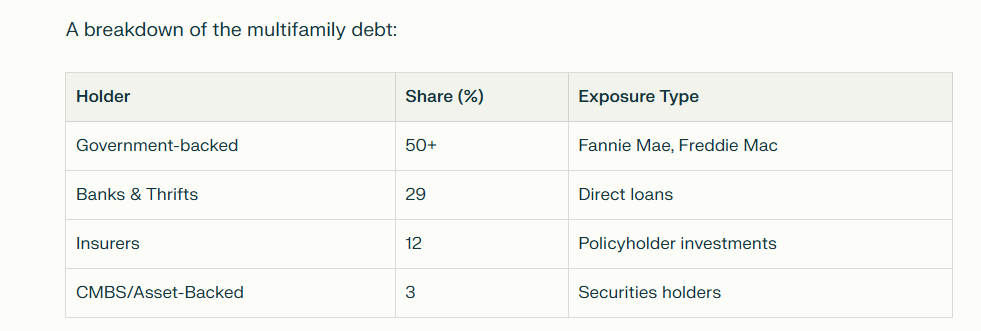
The risk isn’t contained to banks, which dumped most office CMBS years ago. If multifamily defaults accelerate, public agencies—and taxpayers—face stark losses.
Case Studies: Discounted Dreams
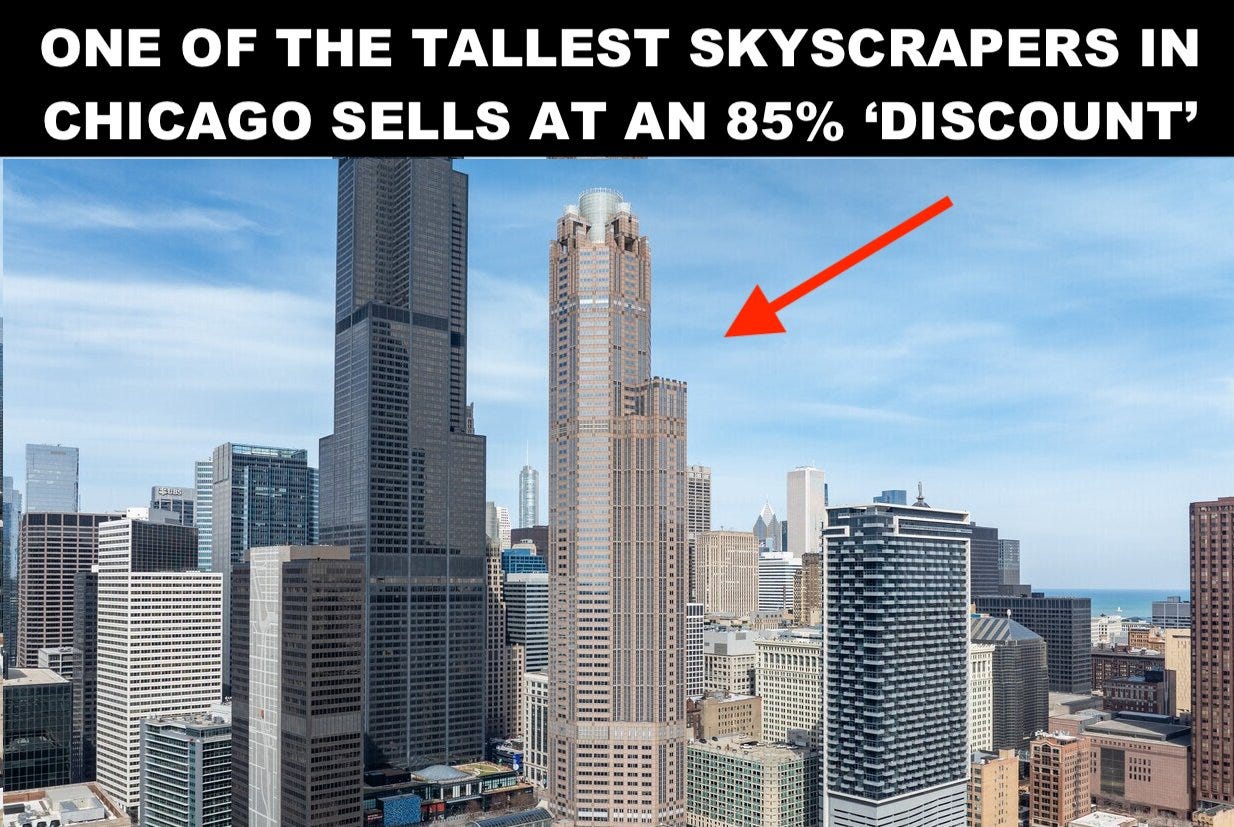
How bad is the decline? Case studies from America’s city cores tell the story:
-
Denver: Two office towers sold for a combined $3.2 million, down more than 90% from ~$200 million just six years ago.
-
San Francisco: A downtown office traded for $44 million, a 70% “discount” from its $141 million purchase price in 2016; more than half its space sits vacant.
-
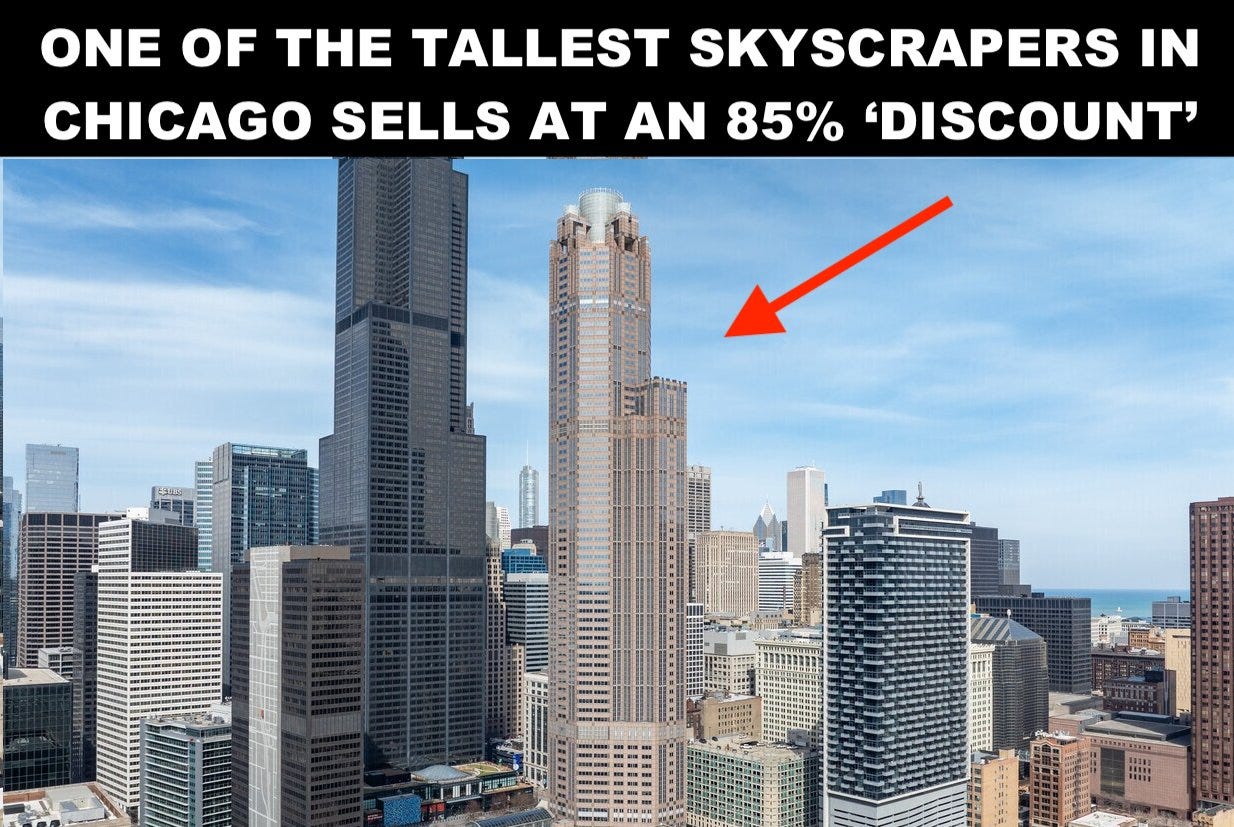
Chicago: 200 South Wacker sold for $68 million, down 70% from $214.5 million in 2013; 600 W. Chicago traded for $88.7 million, vs. $510 million in 2018.
-
Portland: The Big Pink skyscraper sold for $45 million vs. $372 million a decade prior, a staggering value haircut.
-
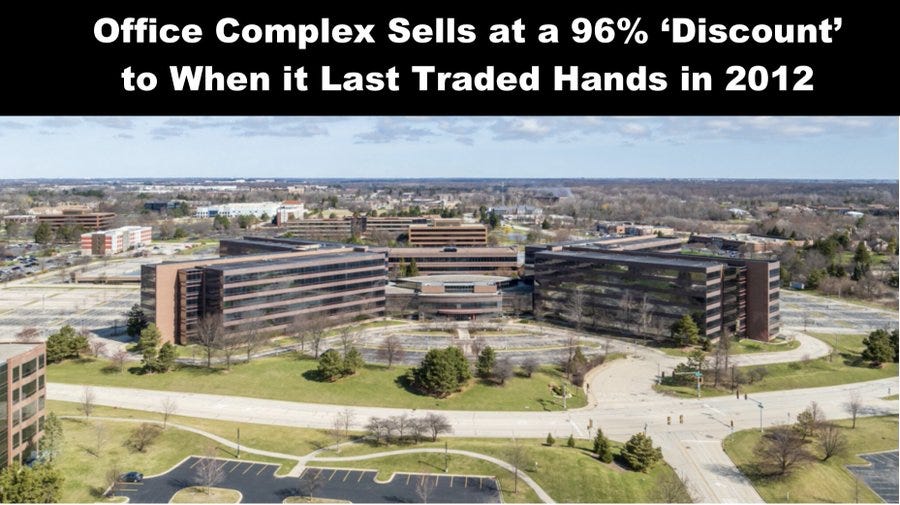
The Chicago MSA’s former Aon campus fetched $6.2 million, or just $7 per sf, after trading for $148 million in 2012—a 96% discount.
Who Feels the Pain?
Office CMBS debt is scattered across bond funds, REITs, insurers, and private equity. Multifamily risk, though, is concentrated in the public sector. As defaults mount, taxpayers and cities are firmly in the crosshairs. Boston braces for a $1.7 billion fiscal hole; San Francisco could lose $1 billion by 2028, as collapsing building values cut property tax revenue needed for essential services.
This disaster isn’t sudden—the sector is decaying, month by month. Delinquency isn’t the crash itself; it’s the check engine light blinking red. The urgent question isn’t if pain is coming—it’s who among us will pay the highest price
Sing in the Lifeboats

Gold and silver are your lifelines—real money that stands apart when the financial seas rage. As Voltaire said, “in a shipwreck, sing in the lifeboats.” Paper currencies and stablecoins can be printed or manipulated; gold and silver cannot.
The US national debt nears a staggering $38 trillion, interest mounting relentlessly, unfunded liabilities exploding, and a government riddled with fraud—from congressional insider trades to the Federal Reserve’s shadowy cartel.
Stablecoins are neither stable nor coins in real crisis. With geopolitical tension and tariff turmoil erupting, the only safe haven left is the tangible value of gold and silver.
US Economy in Trouble
How to play Collapse of the US Dollar
Only Four miners stand out as the most compelling opportunities—each extremely undervalued and perfectly positioned for explosive growth.
-
Aya Gold & Silver (OTC: AYASF | TSE: AYA) operates Morocco’s renowned Zgounder mine, one of the world’s highest-grade and fastest-growing primary silver projects.
-
Andean Precious Metals (OTC: ANPMF | TSE: APM) runs the San Bartolomé operation in Bolivia, a prolific, low-cost producer sitting atop vast reserves and expansion opportunities.
-
Kuya Silver (OTC: KUYAF | TSE: KUYA) is advancing its flagship Bethania mine in Peru, targeting high-grade silver mineralization in a country synonymous with silver riches.
-
Summa Silver (OTC: SSVRF | TSE: SSVR) just merged with Silver47, creating a junior powerhouse advancing resources totaling nearly 150 million ounces across world-class districts in Nevada, New Mexico, and Alaska.
All four offer unique entry points as silver’s next supercycle begins, providing both near-term production and blue-sky exploration upside.
end of segment
-
our opinions are not our sponsors opinions
-
editorial department is separate from promotions department
-
not financial advice