
by Niko Moretti
Silver and Gold Shortages: The Squeeze Intensifies
Silver at the Tipping Point
Silver is hurtling toward a perfect storm in 2025. Driven by unprecedented industrial demand and tightening physical supply, core indicators suggest the world is on the brink of a historic silver squeeze, stoking bullish bets and igniting fear among short sellers.
Understanding the Short Squeeze
A short squeeze occurs when traders who have bet against silver by borrowing and selling it (expecting lower prices) are suddenly forced to buy back—often at sharply rising prices—as bullish forces become overwhelming. This buying can dramatically accelerate price spikes, as seen in previous commodity shortages.
The Mechanics of Scarcity: Three Red Flags
1. Skyrocketing Lease Rates
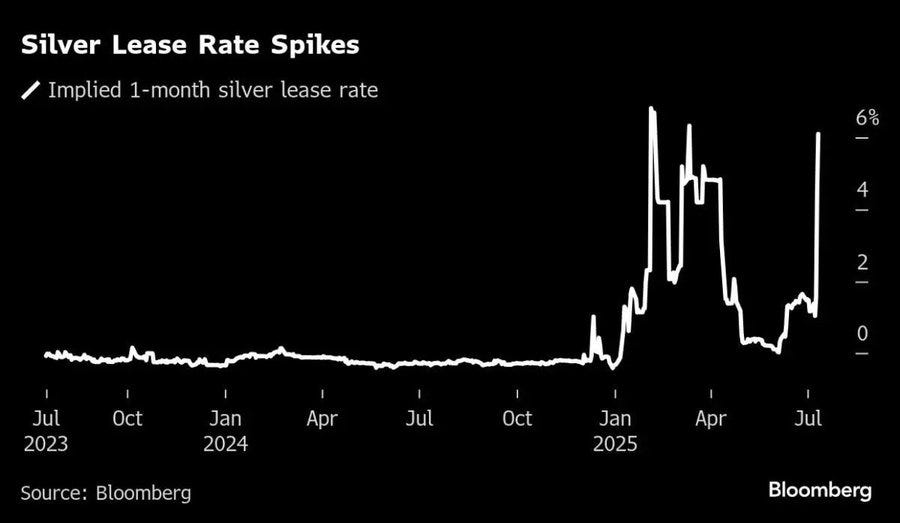
Silver lease rates—the cost to borrow the physical metal—have exploded past 6%, their highest level since 2008. Normally, these rates hover close to zero in liquid markets. The current spike signals that holders of physical silver are extremely reluctant to lend, either due to razor-thin inventories or anxiety about further price surges. Industrial demand, especially from sectors like solar and electric vehicles, is straining supply chains.
Experts underscore that such leaps in lease rates nearly always precede aggressive price rallies as the shortage deepens. During silver’s 2011 bull market, a similar lease rate escalation sparked a scramble for physical metal, sending spot prices to the brink of $50/oz.
2. LBMA Silver Stocks Plummet
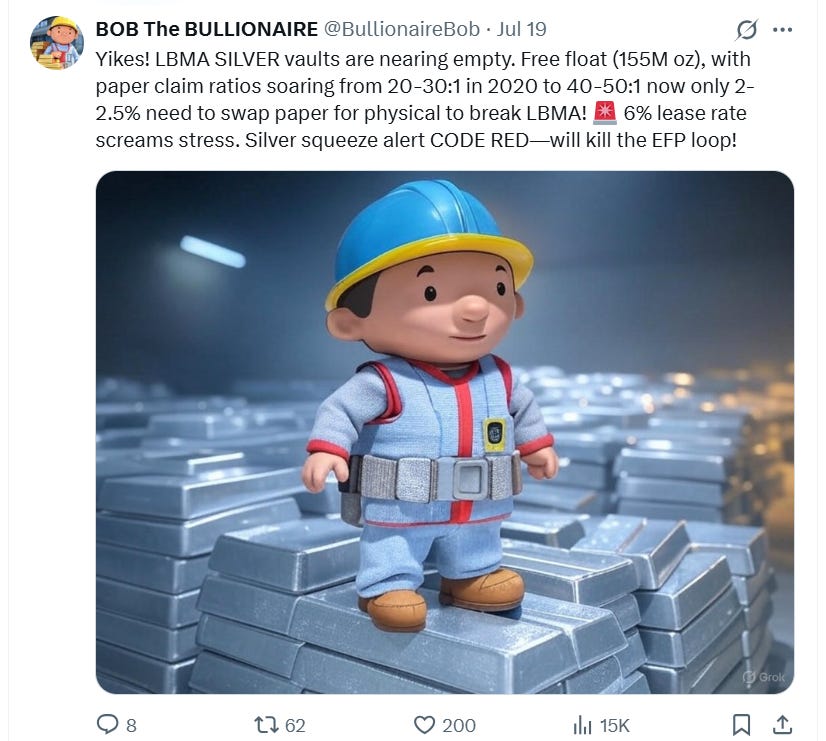
The London Bullion Market Association (LBMA) is the world’s central hub for physical silver. Its stockpile has recently dropped to around 23,791 tonnes (~793M oz), the lowest in years, putting extraordinary stress on global supply chains. LBMA vaults have shed more than 128M ounces since late 2024, and the ratio of available silver to ETF holdings is now at parity—leaving minimal “free float” metal for new deliveries or emergencies.
Geopolitical turmoil and tariffs are accelerating outflows, as inventory is drained to satisfy delivery obligations elsewhere, especially on COMEX, the US futures exchange. Backwardation—where future prices are lower than spot—highlights the desperation for immediate delivery.
3. SLV Borrow Shares Collapsing
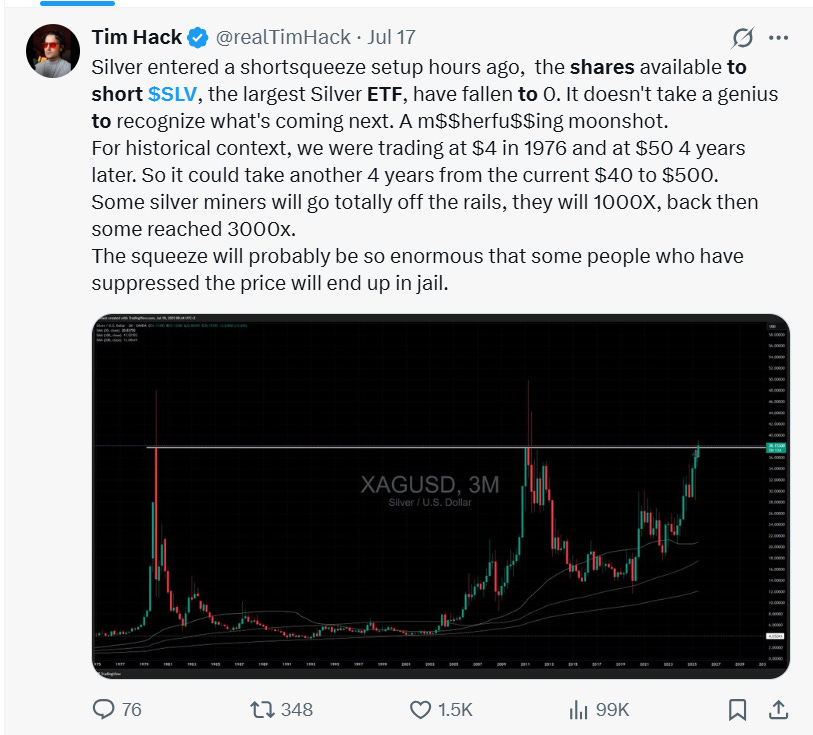
The iShares Silver Trust (SLV), the world’s largest silver ETF, faces an acute shortage of lendable shares. As of July 2025, shares available to borrow for opening new shorts have repeatedly dropped to near zero. This means new short selling is severely constrained, and existing shorts face mounting pressure and higher borrowing fees. In classic squeeze conditions, as prices rise and shorts are forced to exit, a feedback loop intensifies the crunch.
“When you see that there are zero shares available to borrow for SLV, brokerage firms have no shares left to lend…this can lead to risky situations like short squeezes, where short sellers are forced to cover, driving prices higher.”
A Perfect Storm: Why Now?
Silver is facing a forecast deficit of 150M ounces for 2025, propelled by booming industrial use in green tech, solar panels, military and electric vehicles. Yet mining output remains flat, with few significant new discoveries on the horizon. As a result, inventories are being exhausted at an unsustainable pace. Spot prices, already at $38.60/oz—a 25–35% surge year-to-date—may only be the beginning if these structural imbalances persist.
Some analysts warn that if a catalyst arrives (as it did with nickel in 2022), silver could witness a violent rally, potentially driving prices into “three-digit numbers within days.” The underlying message is clear: paper-based financial products can simulate supply only so long; the physical constraints are growing undeniable.
Gold: Institutional Shortages and Delivery Barriers
While silver grabs headlines, gold is also confronting supply stresses, though with unique dynamics.
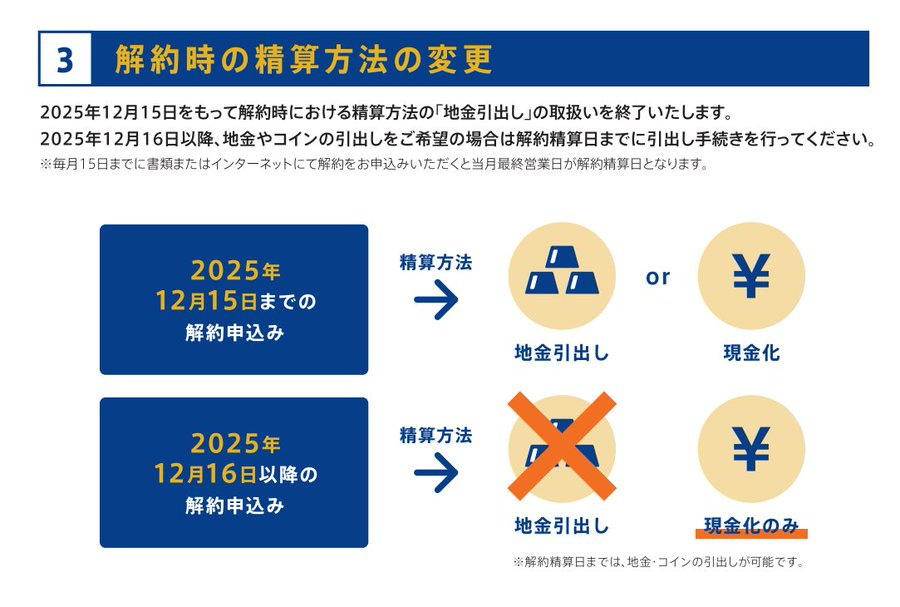
The Tanaka Precious Metals Policy Shift
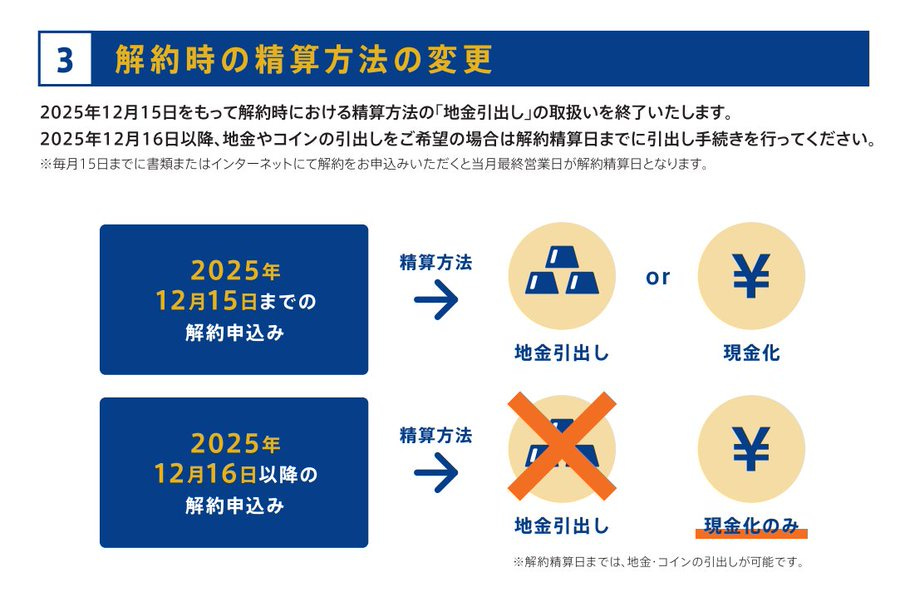
A seismic development emerged from Japan’s Tanaka Precious Metals: starting December 16, 2025, customers terminating their gold accumulation plans can no longer receive physical gold delivery, only cash. This is a major shift for savers who have relied on physical redemption as an inflation and systemic hedge.
What Does This Mean?
-
Physical tightness is intensifying in global gold markets. Such restrictions typically point to acute supply constraints, as refiners and financial institutions become unable or unwilling to meet delivery requests—even from long-term customers.
-
Trust in “paper gold” products will be shaken. Investors historically favored physical redemption to ensure their savings aren’t diluted by fractional reserve practices. By forcing cash settlement, Tanaka joins a growing list of institutions effectively “gatekeeping” the physical market.
-
Systemic warning sign: If other institutions follow suit, gold markets could face an even steeper premium for physical metal, likely pushing up prices further as buyers lose faith in paper promises and demand for coins and bars intensifies.
The reasons behind Tanaka’s move likely extend beyond Japan—global central banks, ETFs, and private clients have all ramped up gold accumulation as geopolitical risks and inflation show no signs of abating. Scrambling for supply, even institutional players are being forced to ration their physical reserves.
Conclusion
Both silver and gold are demonstrating hallmarks of systemic shortages: surging borrowing costs, collapsing vault inventories, and restrictions on physical redemption. For silver, the squeeze may be reaching its boiling point as industrial demand collides with flat supply, creating the potential for not just elevated prices but an historic realignment of the physical versus paper markets. In gold, institutional constraints and policy changes like that of Tanaka’s serve as scarlet flags: in an age of rising uncertainty, the scramble for precious metals is accelerating, and only those with direct access may weather the coming storm
end of segment
Important Disclosures
-
Our editorial perspectives are entirely independent and never influenced by sponsors.
-
The editorial team operates autonomously from the promotions department.
-
All content provided is for informational purposes only and does not constitute financial advice.
Silver Market Snapshot
With no significant new silver discoveries in recent years, surging demand, deepening supply deficits, and Mexico’s increased jurisdictional risk, now is the time to consider these remarkable silver opportunities. Our endorsements below are grounded in ore grade, metallurgy, resource volume, and jurisdictional stability.
Silver Investment Opportunities
-
Aya Gold & Silver (Morocco)
-
US OTC: AYASF
-
TSX: AYA
-
-
Andean Precious Metals (Bolivia)
-
US OTC: ANPMF
-
TSX-V: APM
-
-
Kuya Silver (Peru)
-
US OTC: KUYAF
-
CSE: KUYA
-
Carefully review these companies as their fundamentals stand out in today’s challenging silver market environment.