In 1656, King Louis XIV of France issued a royal edict mandating that all beggars, vagrants, orphans, and those deemed idle or destitute be rounded up and confined within the newly established General Hospital of Paris. Rather than providing genuine assistance to the poor and homeless, this institution was designed to clear the streets and restore order for the city’s elites. Inside the General Hospital, individuals were forced to live side by side with criminals and the mentally ill, often separated from their families and subjected to strict discipline and harsh conditions. The policy did not address underlying causes of poverty, such as war, economic instability, and disease, but instead punished the visible poor and shifted responsibility onto those already suffering.
Today we are going to learn how it’s absurd to abuse state power to criminalize and hide social problems rather than solve them at their roots. With the case of King Louis XIV of France ignored tackling the causes of hardship, officials targeted the most vulnerable as the source of disorder. Classic “blame the victim”
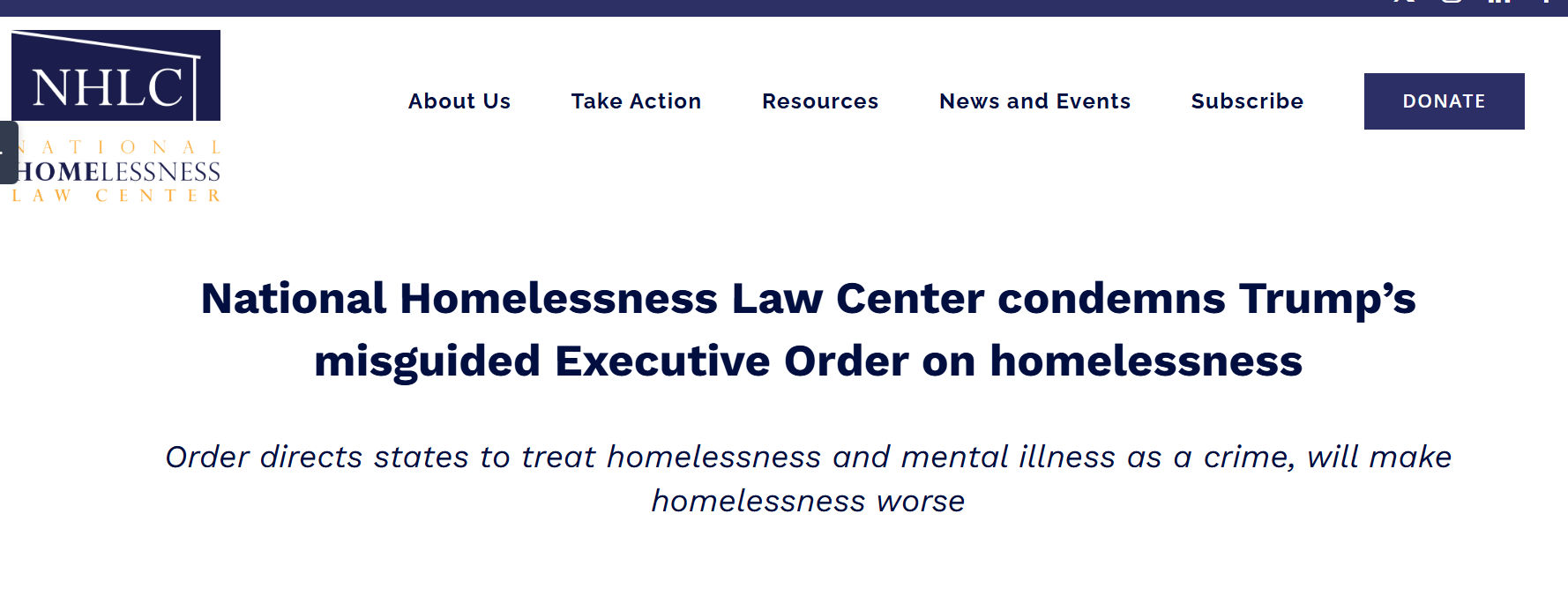
Eerily, this approach echoes in recent American policy moves. President Trump has ordered directing cities and states to remove homeless people from the streets—often by relocating them to camps or treatment centers—the parallel is difficult to ignore. Like the edict of 1656, the focus is on making poverty less visible rather than addressing its causes: unaffordable housing, economic inequality, and systemic failures. The decision to punish or confine the homeless diverts attention from the real sources of societal distress, repeating the same pattern seen centuries ago in France—where the solution was not relief and support, but forced removal and confinement of those most in need.
Jail the Poor: How a Cruel Policy Ignores History and Punishes Victims Instead of Problems
President Trump’s executive order mandating that cities and states remove homeless people from public spaces is a sweeping legislative move that signals a hardline, punitive shift in tackling homelessness. The new policy authorizes officials to forcibly relocate unhoused individuals into camps or treatment centers across the country, aiming to make poverty and human suffering less visible rather than meaningfully addressing its deep-rooted causes. This approach is not only shortsighted—it is fundamentally unworkable. Local governments, already stretched thin and underfunded, simply do not possess the resources, personnel, or infrastructure required to round up and process such a large and growing segment of the population. In attempting to impose order through removal and confinement, the legislation risks spawning chaos, public outrage, and further hardship both for the homeless and for the cities trying desperately to serve and protect all their residents.
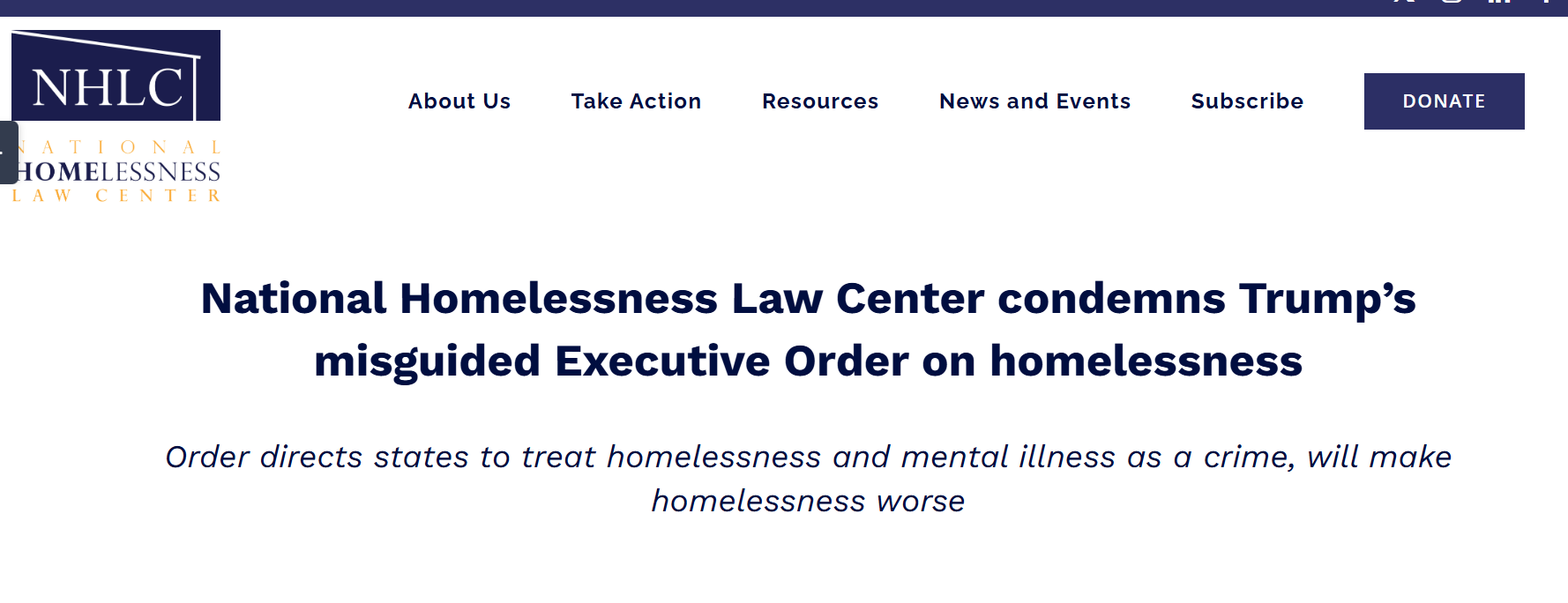
President Trump’s recent executive order to “clear the streets” of the homeless promises to restore order and safety. But whose interests does this serve—and at what crushing cost to America’s most vulnerable? As you read, ask yourself: Who truly benefits when power wields the force of law against society’s casualties?
The Executive Order: Humanitarian or Punitive?
Trump’s order authorizes cities and states to rapidly dismantle homeless encampments and forcibly relocate unhoused people—often to mental health or addiction treatment facilities. The Attorney General is directed to loosen judicial restraints, so local governments can sweep people from public spaces with fewer legal obstacles. Federal dollars will flow only to states that aggressively criminalize “urban camping, loitering, squatting,” and alleged disorderly conduct.
But does removing people from sight do anything to address the roots of homelessness? Or is this policy about ensuring the powerful don’t have to look at the wreckage left by decades of rigged economics and rigged justice?
Our System: Designed to Squeeze the Powerless
Why are people living on the streets in the world’s wealthiest nation? Look behind the headlines. The United States runs a debt-based economy that thrives on keeping everyday Americans permanently behind. Debt, inflation, taxation, and legal penalties act like millstones, grinding ordinary citizens while insiders pocket the gains.
Consider this: If you can’t pay a minor fine or traffic ticket, jail time follows—plus court fees and surcharges. Incarceration strips you of jobs, shatters families, and drags entire communities into deeper poverty. The cycle perpetuates itself: those strangled by debt can’t climb out, while those on top collect interest. Does any of this sound like justice?
How the System is Rigged: The Cantillon Effect at Work
Ever wonder why the rich get richer in times of crisis—while your wage buys less each year? Enter the Cantillon effect. When the Federal Reserve prints new money or lowers rates, the new cash flows first to banks, big investors, government contractors, and “insiders” who are close to the money spigot.
These privileged few snatch up assets (stocks, real estate) before prices rise. Money trickling down to workers arrives only after inflation has begun eating away at purchasing power. You pay more for rent and groceries, while your wages stagnate. Is this the invisible hand of the market? Or a sleight of hand by the powerful?
Inflation: A Theft in Slow Motion
Year after year, inflation erodes your ability to afford essentials. For the average worker or someone struggling with unstable housing, the cost of living rises faster than any government handout or paltry wage increase. Why do the architects of policy constantly downplay this reality, insisting the system is fair?
Insiders and the Power Elite: They Set the Rules
Look at how real power operates. Wealthy insiders—many from the same Ivy League colleges and private clubs—hold the pen on legislation, shaping tax codes, regulations, and bailouts that preserve their own interests. Lobbyists and elite donors influence lawmakers at every stage, making sure new rules barely dent the affluent but crush the working class and poor.
How else can we explain policies that punish homelessness rather than the causes of economic dislocation, addiction, and loss?
A Legacy of Exclusion: Race, Homeownership, and Structural Wealth Gaps
It gets worse. For decades, African Americans and other minorities were explicitly denied mortgage loans. Federal policies, redlining, and discriminatory lending practices locked them out of homeownership—the main wealth-building vehicle in America. Homes were the “nest egg” passed from generation to generation. Exclusion from credit—backed by law and policy—meant exclusion from security, dignity, and power. Is it any wonder that structural inequality remains so stubborn in America?
So when an administration pivots from policies like Housing First—which demonstrably reduce homelessness—to punitive crackdowns, ask yourself: Is the problem really “public disorder,” or is it public disobedience to a system built to keep the many feeding the few?
The Final Question: Order or Justice?
Sweeping the unhoused out of sight serves the interests of wealth and order—not the interests of justice or compassion. When inflation, legal fees, and exclusionary policies push millions to the brink, and when those who write the rules never face the consequences of those rules, how can temporary “order” for some be called a solution for all?
As you digest this policy shift, consider: Will we keep tolerating a system that polishes the surface while deepening the suffering below? Or is it time to name and resist the machinery grinding Americans down for profit and power?
Local Governments can’t pull this off
It will just make the problem worse
So Why do it?
Local governments are already buckling under immense pressure just to keep essential services going.
Chronic underfunding leaves roads crumbling, schools overcrowded and underresourced, water systems vulnerable to contamination, and police departments stretched thin as crime rises.
The affordable housing crisis grows worse each year as municipalities struggle to meet demand with limited means. In this context, rounding up and blaming the homeless is pure victim-blaming—a distraction that ignores the true roots of the crisis.
The real culprit? The ongoing collusion between the Federal Reserve, U.S. Treasury, executive branch, and Congress, all of whom perpetuate monetary and social injustice by flooding markets with “fake” money. These top-down distortions create the very inequities local officials battle daily, not solve them.
Theologically Speaking this is VERY BAD POLICY.
Another Sunday Silver Sermon
A theological response to the policy of rounding up the homeless and jailing them, based on careful interpretation of Christian scripture, reveals that such actions are fundamentally at odds with the teachings and spirit of Jesus Christ.
Scripture consistently stands in solidarity with the poor and marginalized. In his first sermon (Luke 4:18–19), Jesus proclaims, “The Spirit of the Lord is upon me… he has anointed me to preach good news to the poor, to proclaim freedom for the prisoners… to set the oppressed free.” From the outset, Christ’s mission is described as liberation for society’s most vulnerable—not their punishment or removal. Civil policies that punish the poor, rather than address the causes of their suffering, stand in contradiction to the priorities expressed in the gospel.
A sound reading of scripture demonstrates that poverty is not a random occurrence, but is often the result of unjust social and economic structures. Thus, using state power to penalize the visible poor, while leaving unchanged the conditions that produce poverty, does not serve justice. Instead, it perpetuates and deepens social sin.
In the Sermon on the Mount (Matthew 5:3), Jesus declares, “Blessed are the poor in spirit, for theirs is the kingdom of heaven.” He does not blame or criminalize the poor but promises them special favor in God’s reign. Any attempt to “sweep away” the problem of poverty by confining or jailing the homeless betrays this ethic of mercy and compassion. Rather than responding to suffering with solidarity, such policies respond with distance and exclusion.
Moreover, in Matthew 25:31–46, Jesus tells the parable of the sheep and the goats, identifying himself with “the least of these”—the hungry, the thirsty, the stranger, the naked, the sick, and the prisoner. “Whatever you did for one of the least of these brothers and sisters of mine, you did for me.” Here, the divine standard for judgment is not public order, ritual observance, or national security, but concrete acts of compassion and justice toward society’s most marginalized.
To criminalize or hide poverty is not merely ineffective or unjust—it is a denial of Christ’s own presence among “the least.” Scripture makes clear that true faithfulness requires confronting injustice, practicing mercy, and recognizing the image of God in every vulnerable person. Any policy that fails these biblical standards falls short not just morally or politically, but spiritually as well.
Crushing the head of the Serpent
Getting to the Real Root of Nearly All Social Problems
In the final analysis, nearly every pressing social problem we face today—war, homelessness, unemployment, crime, unaffordable housing, widespread misery—can be traced back to the root cause: a fundamentally broken money system.
This system is detached from any honest reflection of time, talent, or energy poured into a work hour, shift, or year. Instead of fairly rewarding genuine labor and productivity, our lives are governed by a fiat currency scheme that is, at its core, a manufactured illusion. The dollar—our so-called “money”—is created not as an honest measure of value, but as an instrument of debt, issued by private central banks for profit and power.
There is no automatic justice in the way workers are compensated; wage growth is throttled while asset prices skyrocket for those positioned closest to the “money spigot.” This rigged architecture of finance continuously redistributes value upward, eroding the purchasing power of ordinary people through relentless inflation. The Cantillon Effect makes sure that those furthest from the source of new money—the working class—are the last to receive it, if at all, and always at diminished value. Meanwhile, insiders, asset owners, and the politically connected get richer through asset bubbles and privileged access.
If citizens were free to exchange value—time, labor, goods—using unencumbered, traditional money such as silver or gold, these social distortions would be impossible.
Hard money is inherently inflation-proof: it cannot be created out of thin air, and it honors the contributions of every individual by preserving purchasing power across time. Prices would reflect reality, not the manipulations of a remote elite.
So, next time you reach into your wallet and pull out a Federal Reserve note, recognize it for what it is: not simply a means of exchange, but a symbol of systemic inequity—a tool that enables endless cycles of poverty, social decay, and class division. It’s a daily, tangible reminder of the ways in which our economy has been rigged against the many for the benefit of the few. The paper may have official seals and signatures, but its ultimate purpose is the same—to perpetuate an unjust order.
In truth, every Federal Reserve note is a piece of the machinery that sustains the very problems our society is struggling to solve.
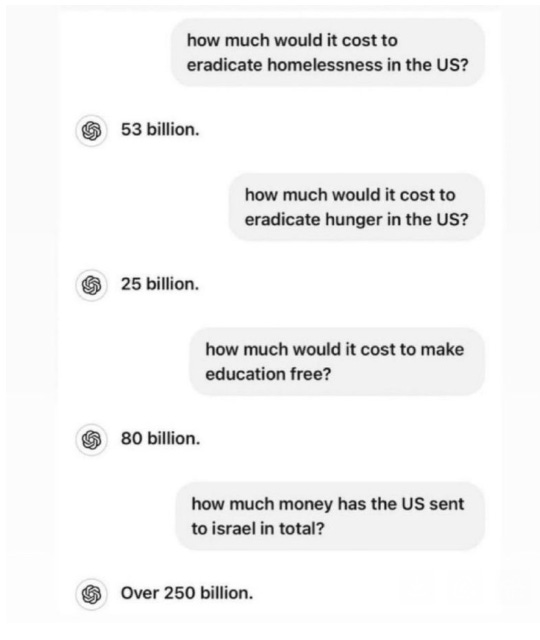
Meanwhile, look what we have here.