by Jon Forrest Little
Gold’s Reckoning: How a $15,000 Metal Could Rescue—or Doom—the Dollar
The numbers tell a chilling story. Amid dismal jobs data, a weakened Federal Reserve, and spiraling doubts about the U.S. role in world finance, a quiet but powerful migration is underway. From multinational firms to sovereign governments, capital is moving into the oldest safe haven known to man: gold. And increasingly, the market conversation isn’t about whether gold will rise, but whether a dramatic revaluation of the metal may become America’s final policy option to stave off the collapse of credibility in its debt markets.
The Fed Under Siege
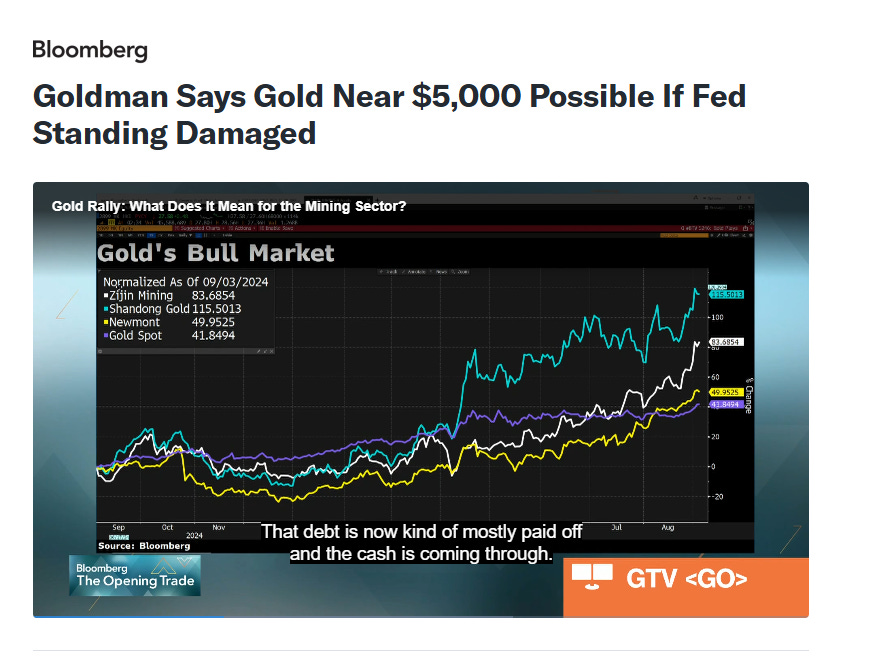
The spark came from Wall Street itself. Goldman Sachs, in a client note that rattled trading floors this week, warned that gold could soar to nearly $5,000 an ounce if a portion of the vast U.S. Treasury market were to shift into bullion. The backdrop: the Federal Reserve, under intense political pressure, is now expected to slash rates repeatedly following the worst labor numbers in over a decade.
“Fed independence is damaged,” Goldman’s analysts wrote. “That scenario leads to higher inflation, weaker long-term bond prices, and an erosion of the dollar’s reserve status. Gold, by contrast, is a store of value that does not rely on institutional trust.”
In plainer terms: markets no longer fully trust America’s referees. The Federal Reserve—the institution built to outlast politics—now appears captive to them. And once the dollar’s credibility fractures, there is little left to hold the old order together.
Corporate Moves Into Hard Assets
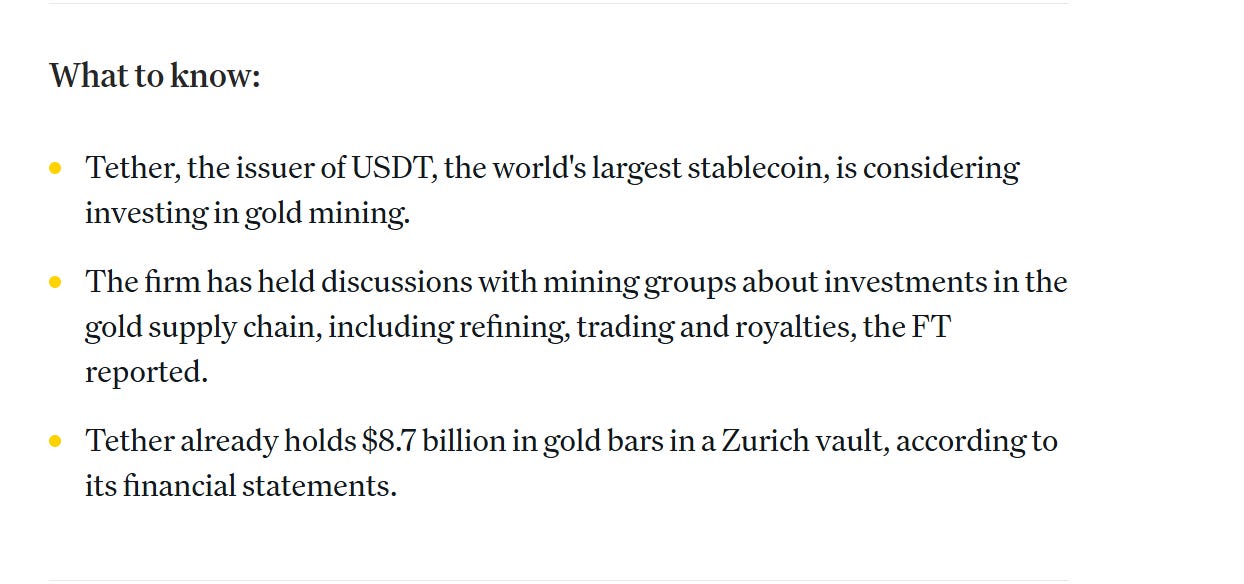
Question on the Table: Per the Genius Act, wasn’t tether “supposed” to be buying Treasuries?
That fear is increasingly echoed in the private sector. For the first time, one of the world’s largest dollar-linked financial firms has revealed plans to invest directly in gold mining. The move is not merely a diversification play; it is a statement. Firms that once treated gold as an afterthought are now positioning themselves along the full spectrum of its supply chain—not for minor hedging, but as a strategic cornerstone.
The timing is instructive. With U.S. fiscal deficits projected above $2 trillion annually for the foreseeable future, and Treasury buyers overseas in retreat, Wall Street’s most daring financiers appear to believe gold could outrun every other asset in the decade ahead.
El Salvador’s Strategic Shift
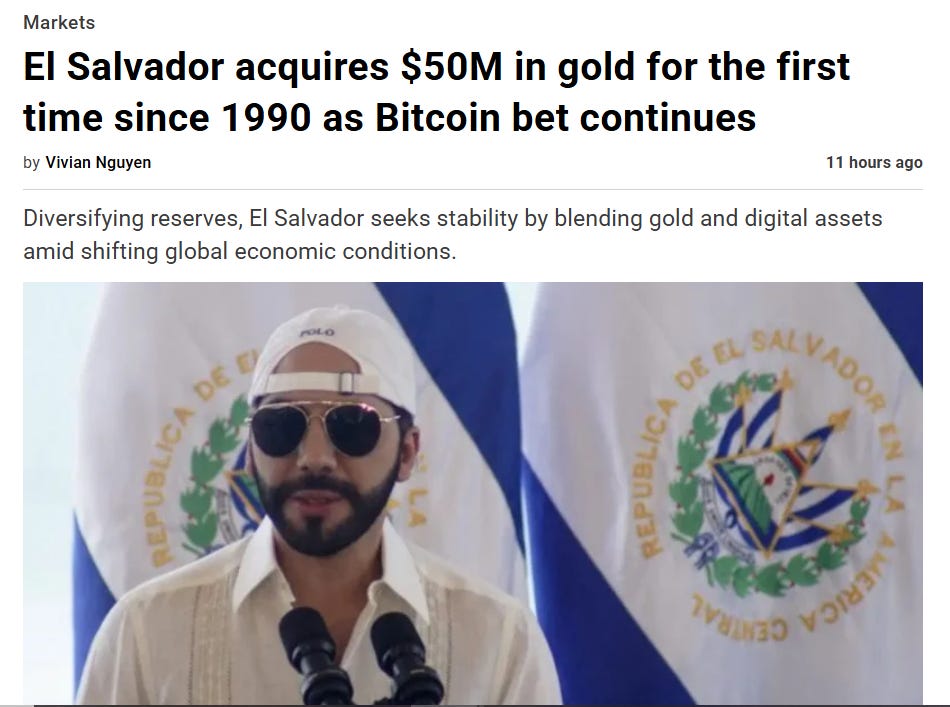
Perhaps most surprising is the sovereign response. El Salvador, a small Central American nation that once pegged its financial reputation to the dollar, has now begun accumulating gold reserves on a significant scale. Officials confirmed plans for a massive purchase this week, framing it as a long-term protection against global instability.
For a country of under seven million people to make such an overt geopolitical signal may seem inconsequential. Yet to those who study monetary history, symbolic moves often matter more than raw weight. Just as Hungary’s and Poland’s gold purchases startled Europe in the late 2010s, El Salvador’s accumulation today signals something larger: trust in U.S. Treasuries is diminishing, and nations big and small are voting with their vaults.
Washington’s Nuclear Option: Gold Revaluation
The question that follows is perhaps the most unsettling of all: what can the United States do to restore credibility? Analysts point to one unspoken but powerful lever—the revaluation of gold.
The math is stark. The U.S. officially holds 262 million ounces of gold. At today’s market price near $3,500 per ounce, that stockpile is worth just under $1 trillion. By contrast, the federal debt stands at nearly $41 trillion. But if the Treasury were to announce a new official gold price, say $15,000 an ounce, those holdings would suddenly be valued at nearly $5 trillion—a backdoor recapitalization of America’s overextended balance sheet.
This would not be unprecedented. In 1934, Franklin Roosevelt executed a dramatic gold reset to shore up government finances and pull the U.S. out of depression. The precedent is there, the stakes are higher, and whispers from think tanks suggest the idea is again being gamed behind closed doors.
A World on Edge
Put these developments together—Goldman Sachs floating a $5,000 floor, private firms buying into gold mining, small nations hoarding bullion, and the possibility of a U.S. revaluation—and a picture emerges of a world transitioning to a different monetary compass.
For now, markets are fixated on technicals: job reports, interest rate cuts, short-term Treasury auctions. But beneath the surface, the ground is shifting. Gold is no longer just another commodity; it is rapidly becoming the fulcrum of a new confidence game between governments and investors.
If the U.S. acts boldly, gold could save its standing as issuer of the global reserve currency. If it hesitates, other nations may act first, executing alternative gold standards that leave the dollar weakened on the sidelines.
For centuries, gold has been the ballast of financial civilization, resurfacing when paper promises faltered. Once again, as institutions wobble and politics infect central banking, that ballast gleams—not as nostalgia, but as necessity.
And this time, the stakes are nothing less than the future of the world’s money.
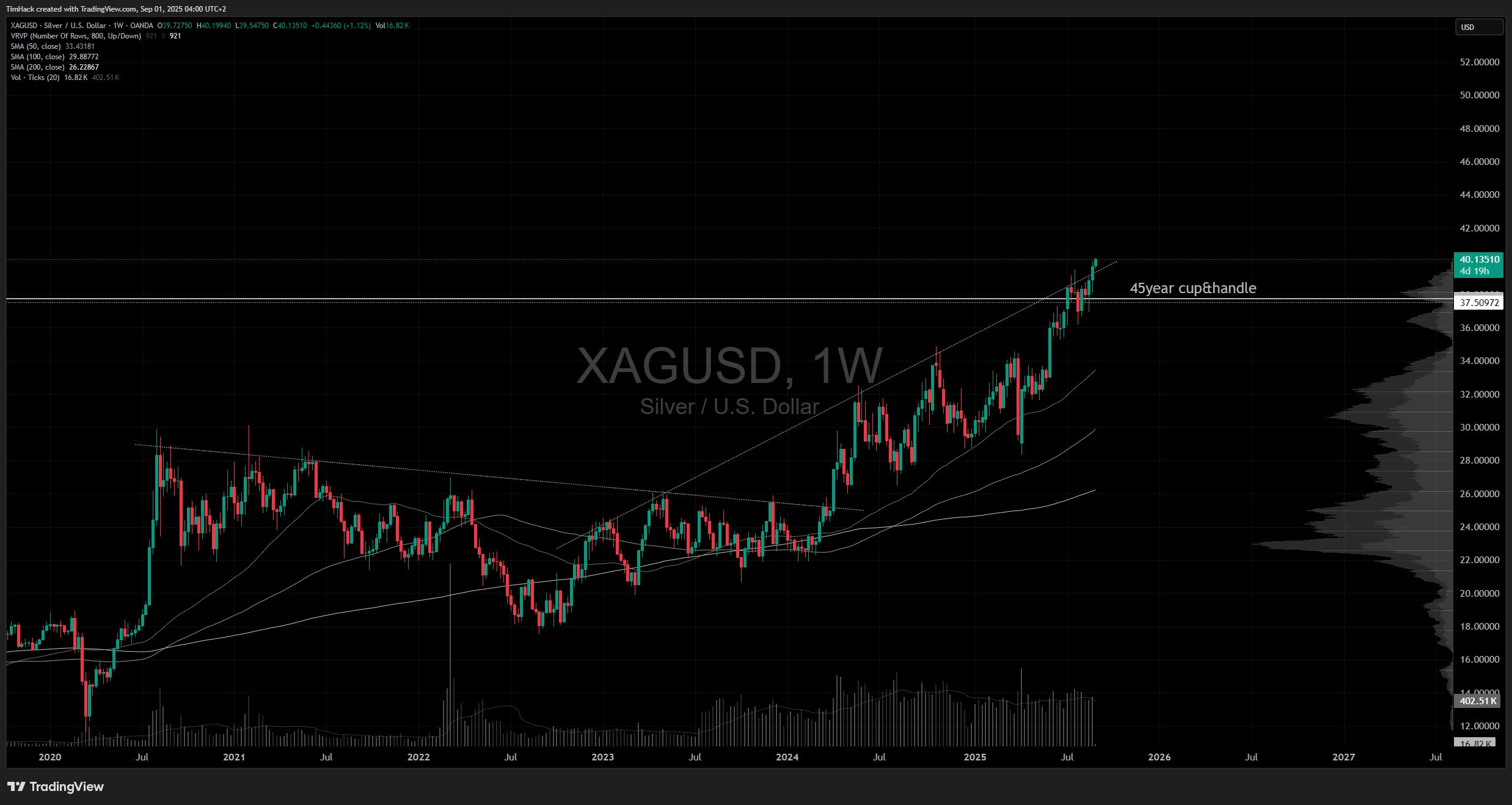
Silver, as always, is poised to follow her big sister gold—but this time with rocket fuel. For six straight years, industrial demand from solar panels, EV batteries, military tech, aerospace, and AI-driven data centers has devoured global silver inventories. At the same time, no major new silver discoveries have been made, leaving supply in a structural crunch unlike anything in decades. With gold surging, silver is quickly on its way to $50 an ounce, and once that psychological wall breaks, there is no technical resistance—only blue sky up to $77. The forgotten metal is about to be remembered.