
by Jon Little intern Niko Moretti
-
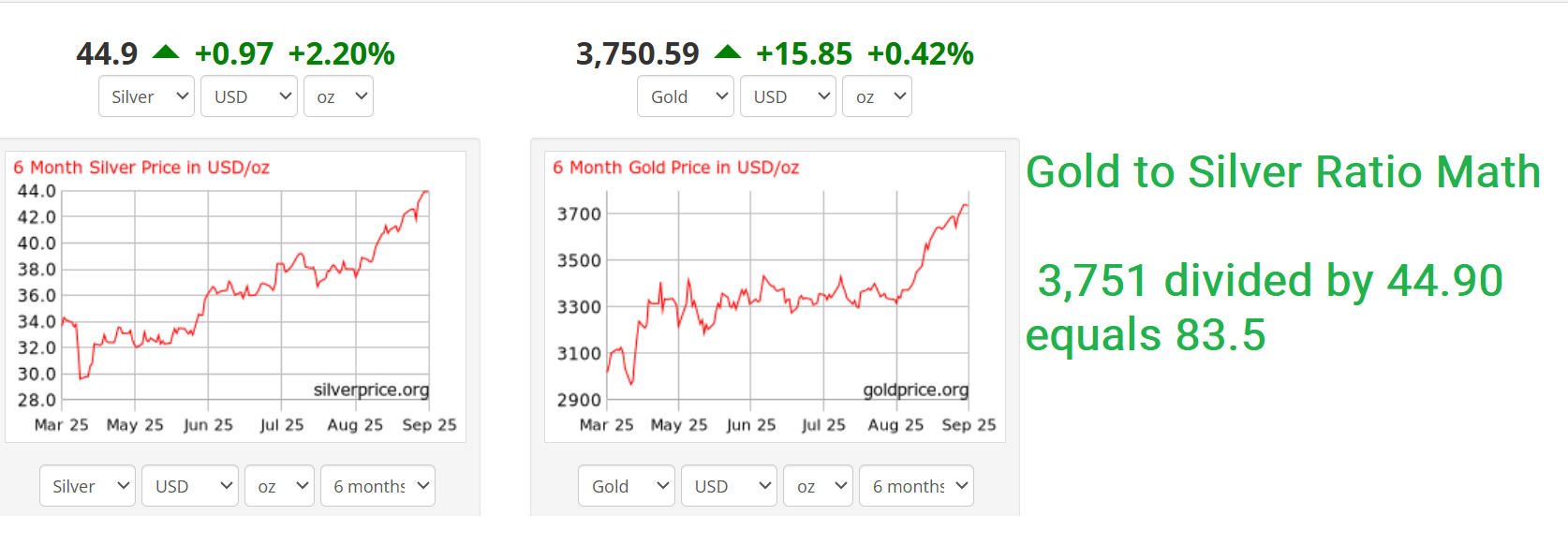
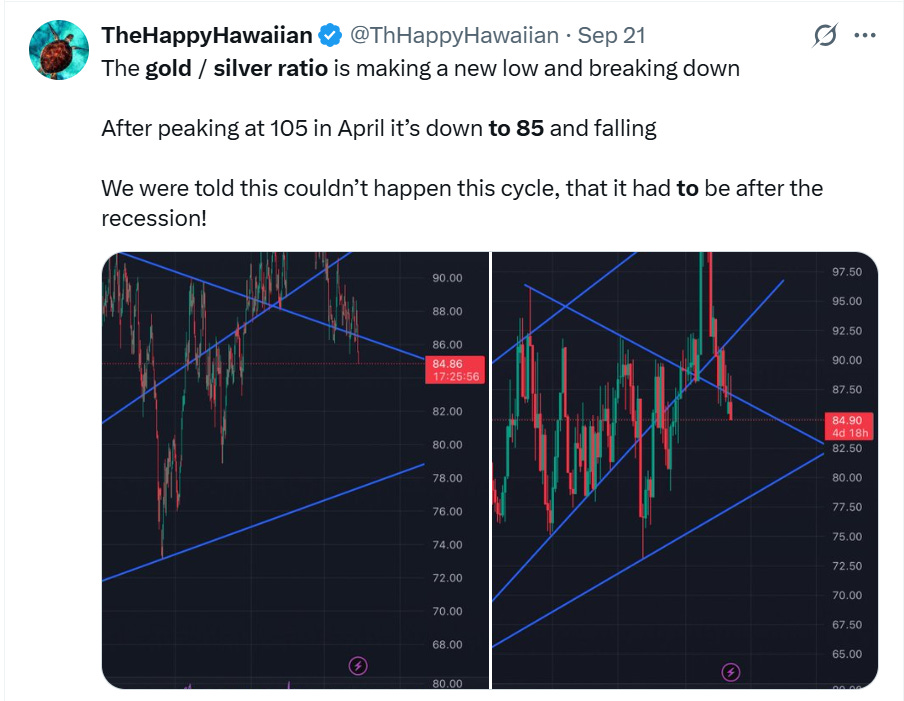
Gold to Silver ratio 85 (was the resistance line) just now broke through!
-
Do your own math on this historical significance
-
GSR headed to 40 which doubles silver’s price in the short term
-
Now back to the reasons why ?
Silver remains one of the world’s most mispriced strategic assets, standing at the edge of a paradigm shift—yet the global financial establishment is desperate to keep this revolution hidden. Silver Academy unveils the five foundational forces behind silver’s historic undervaluation as it surges toward $50, and reveals the sixth, ultimate catalyst detonating the monetary reset. Peel away the propaganda and see the ruthless logic behind real price discovery.
#1. Structural Deficit: The Crisis Deepens—and “End Game” Nears
The global silver market has now endured six unbroken years of structural deficit, a breach so profound that only a leap in price can rebalance supply and demand. Forecasts show more than 1.2 billion ounces of demand in 2025, while mine and recycling supply limps in at just 1.05 billion ounces—a shortfall exceeding 117 million ounces. Each deficit year tightens the vice, bleeding global reserves and laying the groundwork for seismic market movement.
Just two days ago, Daniel Ghali of TD Securities elevated the alarm on Bloomberg and in market reports, stating: “We think this is the end game of what we envisioned for silver. We think that drain has now reached a level that is critically low. There are probably less than four months remaining until the LBMA’s entire free floating stockpile is depleted.” Ghali drove home that only a dramatic surge in price can now attract the needed inventory—and warned the market is on the cusp of an historic supply shock.
Since 2021, cumulative deficits have stripped nearly 800 million ounces from inventories worldwide, a depletion akin to draining the lifeblood from the world’s monetary system. A supply squeeze of this magnitude compounds, and each crisis year creates further scarcity that moves the price closer to an inflection point.
#2. Discovery Death Spiral: Silver’s Vanishing Act
Major new silver discoveries have all but ceased. Global mine output, wracked by lower grades, capital expenditure drought, and hostile permitting, has failed to keep pace with runaway demand. With 70% of ore sourced as a byproduct of other mining, the industry cannot simply scale up supply at will. Instead, development projects in Mexico frequently stall or collapse outright, locked in by cost, regulation, and local opposition. The world’s silver pipeline has withered, even as industrial appetites have multiplied.
#3. Mexico Slams the Door: Resource Nationalism Redefines Risk
Mexico, long the linchpin of global silver, has shut off the future. President Claudia Sheinbaum Pardo’s uncompromising decree—“No new mining concessions”—marks the definitive end of foreign mining expansion in a country responsible for one quarter of global supply. Existing operations now face mounting environmental audits and unprecedented social hurdles, as the machinery of state pivots from open markets to sovereign control.
Mexico stands on the brink of fully nationalizing its precious metals sector—and the logic is undeniable. Having already nationalized oil under President Cárdenas in 1938, extended that playbook to lithium in 2022, and asserted state control over electricity in 2023, there is little reason for MORENA to halt just short of the ultimate prize: silver and gold. To stop at the 99‑yard line would leave billions in strategic wealth stranded. Morena party believes that their silver resources could be far better invested in strengthening national sovereignty and financing Morena’s bold social vision—universal pensions, free healthcare, and quality education for every citizen. Silver revenues will also fuel the party’s sweeping environmental restoration programs and transformative infrastructure projects, initiatives that not only uplift communities but also secure Mexico’s independence from foreign influence.
Silver, in particular, is not just a commodity but a geopolitical asset. It is essential for solar panels, electronics, and weapons systems. In today’s multipolar world, Mexico understands its leverage. With U.S.–Mexico relations deteriorating—heightened by President Donald Trump’s(Mexico will pay for the wall) and his other incendiary rhetoric regarding Mexican citizens (they are thugs and rapists) and condescending calls to President Claudia Pardo pressing for U.S. intervention—MORENA’s resolve to wean Mexico off Washington has only hardened. No sovereign nation will hand over its most valuable resources to a “partner” that demeans its people or threatens its leadership.
New alliances make this pivot not only logical but inevitable. China has been quietly courting Mexico, purchasing silver concentrate directly and bypassing the traditional global pricing authority of the COMEX, thereby undermining U.S. influence. MORENA’s government has found more common ground with Beijing and Moscow than with Wall Street or Washington. Russia, for example, is already assisting PEMEX in its mission to boost domestic production capacity. With such partnerships, Mexico edges closer to true independence—not just in precious metals, but in oil and gas, breaking free of U.S. energy market dominance.
In this context, silver nationalization is not a question of if, but when. Mexico has every political, economic, and geopolitical incentive to lock in control of its “grand prize” of silver and gold. By doing so, it secures sovereignty, strengthens alliances with new global partners, and forces the world to meet Mexico on its terms.
Ray Dalio, legendary macro investor, has long flagged this as a red-alert zone for investors: “Jurisdictional risk is a central theme, pay particular attention to Mexico’s resource nationalism and their regulatory shifts.” Dalio’s message: “Countries re-evaluate export policies, prioritize domestic industries, and in some cases restrict foreign access to minerals like silver. Economic self-protection adds another layer of tension to a market already tight. These policy changes reflect a growing trend for resource nationalization, which threatens the stability and predictability of international supply chains and can trigger rapid repricing in the market.” Dalio’s further advice: “The greatest risks aren’t telegraphed through headlines, but are visible in the shifting alignment of political incentives, institutional reforms, and broad social consensus.”
The new rules have changed overnight. The state is now both regulator and competitor, so foreign supply bets are exposed to expropriation, punitive taxation, or abrupt termination. Morena’s “Fourth Transformation” doctrine marks Mexico’s pivot from resource partner to gatekeeper, making sovereign risk the existential challenge for global silver supply.
#4. Soaring Demand: Silver’s Relentless Engine
Silver’s industrial consumption is breaking records, driven by surges in electric vehicle manufacturing, solar panels, advanced electronics, aerospace, military technologies, AI hardware, and medical devices. In 2025 alone, industrial users are on track to consume over 680 million ounces, eclipsing previous highs. Solar energy now claims 17% of supply, with the push to digitize and decarbonize guaranteeing that demand will only accelerate. But Solar as #2 user behind military will have to wait behind the new Silver Solid state battery.
Get ready, you think Solar consumes silver, PEANUTS compared to the Samsung Silver Solid State Battery
Samsung has announced that its silver-based solid-state battery technology is ready for immediate commercialization. Each unit requires approximately one kilogram of silver per vehicle and delivers performance advantages over traditional lithium-ion batteries, including double the driving range, twice the operational lifespan, charging times reduced by half, and a weight reduction of nearly 40 percent. With such groundbreaking improvements, the prospect of widespread consumer adoption is not simply likely but virtually inevitable.
However, the timing of this innovation highlights a profound misstep in U.S. policy. Just as South Korea—home to Samsung—has pledged investments surpassing one trillion dollars in American manufacturing and technology partnerships, the state of Georgia became the stage for a spectacular failure of foresight. In an Immigration and Customs Enforcement raid, some 450 highly skilled South Korean workers affiliated with Hyundai’s massive electric vehicle project were arrested and deported. The result? An estimated loss of thousands of future high-paying jobs in a state that had banked its economic revitalization on foreign partnership.
The irony could not be more striking. While South Korea positions itself at the center of the next energy revolution, the United States, through bureaucratic blunders, undermines its own strategic interests. One might ask: who could have predicted that deporting the very engineers essential to building America’s clean energy future would come back to haunt us? Well—apparently not ICE. This will add even more “sweet taste of revenge” incentive for South Korea to “shove a silver solid state battery in every single car starting mid 2026.” The silver drain will make solar look like a child’s toy.
Silver has become foundational to both growth and security, fueling a price revolution that is now structural.
#5. The Monetary Blind Spot: Opaque True Value & OLD WEST way of treating Global South.
Monetary analysts often try to divine the “fair value” of precious metals by dividing global money supply by gold reserves, yielding theoretical levels above $11,500/oz for gold if pegged to US holdings. For silver, this approach collapses under the weight of reality. Unlike gold, silver is consumed and lost forever in industrial, military, and electronic applications—much of it literally explodes or dissolves away. The resulting blind spot means almost no known, accessible “vaulted” silver remains to anchor the money supply, creating radical opacity and enormous latent value. But dividing global money supply by silver reserves the minimum number is $750 per ounce and the maximum can’t be calculated. Remember the ratio of above ground gold to above ground silver is estimated to be 1:1
#5 continued. Neocolonialism and the Debt Trap: Shadow of the Dollar Order
Through dollar hegemony and IMF-backed debt trap schemes, silver- and commodity-rich regions like Africa and Latin America have long been made service providers for the global North. Loans, austerity and relentless extraction kept these nations circling poverty while transferring real wealth upward. As Zoltan Pozar wrote: “the West keeps the price of commodities low so that it can reap the profits/benefits of world trade via design, marketing and sales of the final products. Ex-colonies are just paid a thin margin for their commodities to keep them just barely alive.” In this rigged system, mineral-rich nations never stood a chance at capturing their due.
The Sixth Catalyst: China’s Monetary Revolution
While the West preserves this hierarchy with currency manipulation and debt cycling, China is quietly upending it. Instead of an IMF superstructure, Beijing now leads a decentralized, gold-backed currency regime that pushes the US dollar to the periphery. Gold and silver vaults scattered from Shanghai to Saudi Arabia, and across the BRICS coalition, will anchor trade and enforce a fair, auditable system for commodity settlements. True price discovery—long denied to the world’s resource nations—will finally return.
In this model, once-colonized economies gain negotiating power, escaping cycles of debt and dependence. Commodity pricing—especially for silver—will come from fundamentals, not Western fiat engineering. China’s message: claim your seat, capture your value, and end resource colonialism.
This quote below originates from a comment contributed by an exceptionally perceptive and highly intelligent listener during Eric Yeung’s podcast just yesterday.
For those who may not be aware: China’s plan is NOT to hold “YOUR” Gold in “THEIR” Vault. The “Vault” will be DECENTRALIZED amongst multiple BRICS members. It spreads out the risk, and No one nation will be able to steal/hijack the system. It can and will be Audited by All Members. This will collectively REINFORCE the system’s “Trust”. From there, all their international trade will be “BACKED” by Gold (regardless of currency). Thus, No more need for fiat USD for settlement.”
The Paradigm Shift: Silver Unbound
A convergence of structural deficits, vanishing new supplies, resurgent nationalism, explosive demand, and the rise of a new monetary order has arrived. As China, the BRICS, and the Global South reshape the world, the “true value” of silver—unmoored from Western suppression—is ready to break free. Silver, propelled by five undeniable currents and sparked by a sixth geopolitical catalyst, stands ready for the most dramatic repricing in modern history. For those who see the whole chessboard, the next monetary supercycle is already underway.