
The Unmatched Metal: China Holds the Silver Key to Keeping U.S. AI Data Engines from Thermal Collapse
Foreword:
China Has America on the Ropes: The Dragon Now Controls the Metal That Powers AI — Silver, the Only Element That Can Tame the Heat of the Machine Age
Throughout history, the balance of power has often hinged on access to irreplaceable ingredients. In the Bronze Age, Greece could mine copper, but without tin—needed in just the right 88:12 blend for bronze—its armies and artisans were helpless. Only those with both metals could dominate the era, making strategic alliances and trade routes matters of life and death.
A modern parallel comes into sharp focus today: China’s grip on silver for AI and data centers is as absolute as any ancient monopoly. Silver cannot be swapped for copper or aluminum when it comes to moving electrons cleanly and dissipating the massive heat surging through next-generation microchips. Like the city-states that once rose and fell with bronze supplies, today’s nations will rise—or falter—on silver’s singular, irreplaceable properties.
Beijing’s rare‑earth embargo is only half the story. The real knockout punch is silver—the irreplaceable conductor of the AI revolution. Silver alone can master both electricity and heat, the twin forces that make artificial intelligence run. When microprocessors overheat, performance dies; when silver flows through them, they live. Its dual power—moving electrons with unmatched purity while dissipating immense thermal loads—makes it the only metal capable of keeping high‑performance GPUs and AI data centers alive under full strain. Without silver, the circuitry of the future simply melts. And China, sitting atop massive reserves and refining capacity, holds the throttle.
China’s new export controls are not just a diplomatic jab—they are an act of economic warfare aimed precisely at the heart of Silicon Valley’s production engine. By locking down the supply of rare earths and chip-grade materials, Beijing has positioned itself to choke off the lifeblood of America’s high‑tech economy, which in turn underpins the entire S&P 500. The genius—and ruthlessness—of this move is that it strikes at the level of raw material supply, a bottleneck the United States cannot bypass in the short term. Rare earth dependency isn’t an abstract concept; it’s a day‑by‑day reality for every chipmaker from TSMC to Intel to Apple’s supply partners.
The Inevitable Tech Freeze
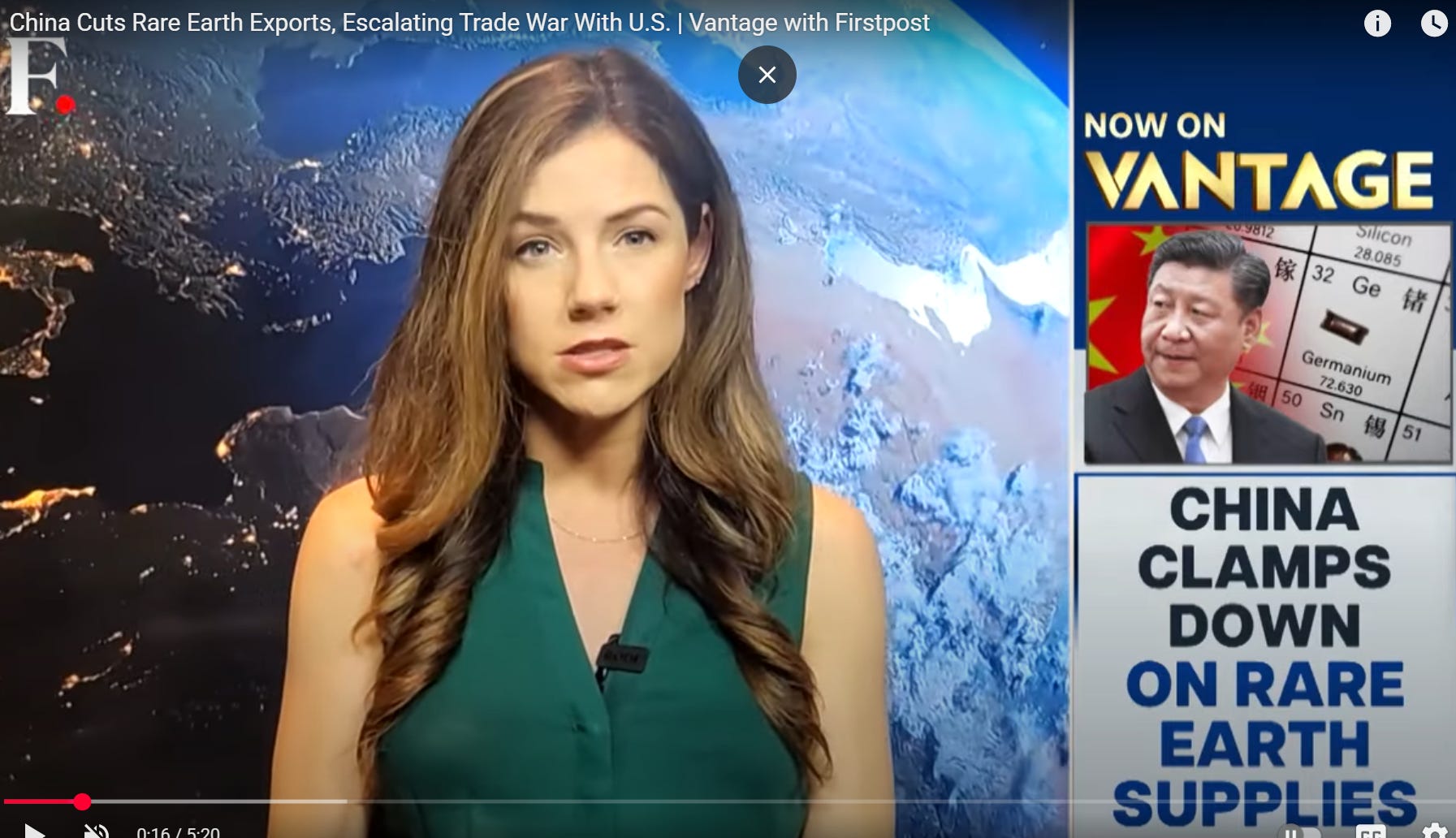
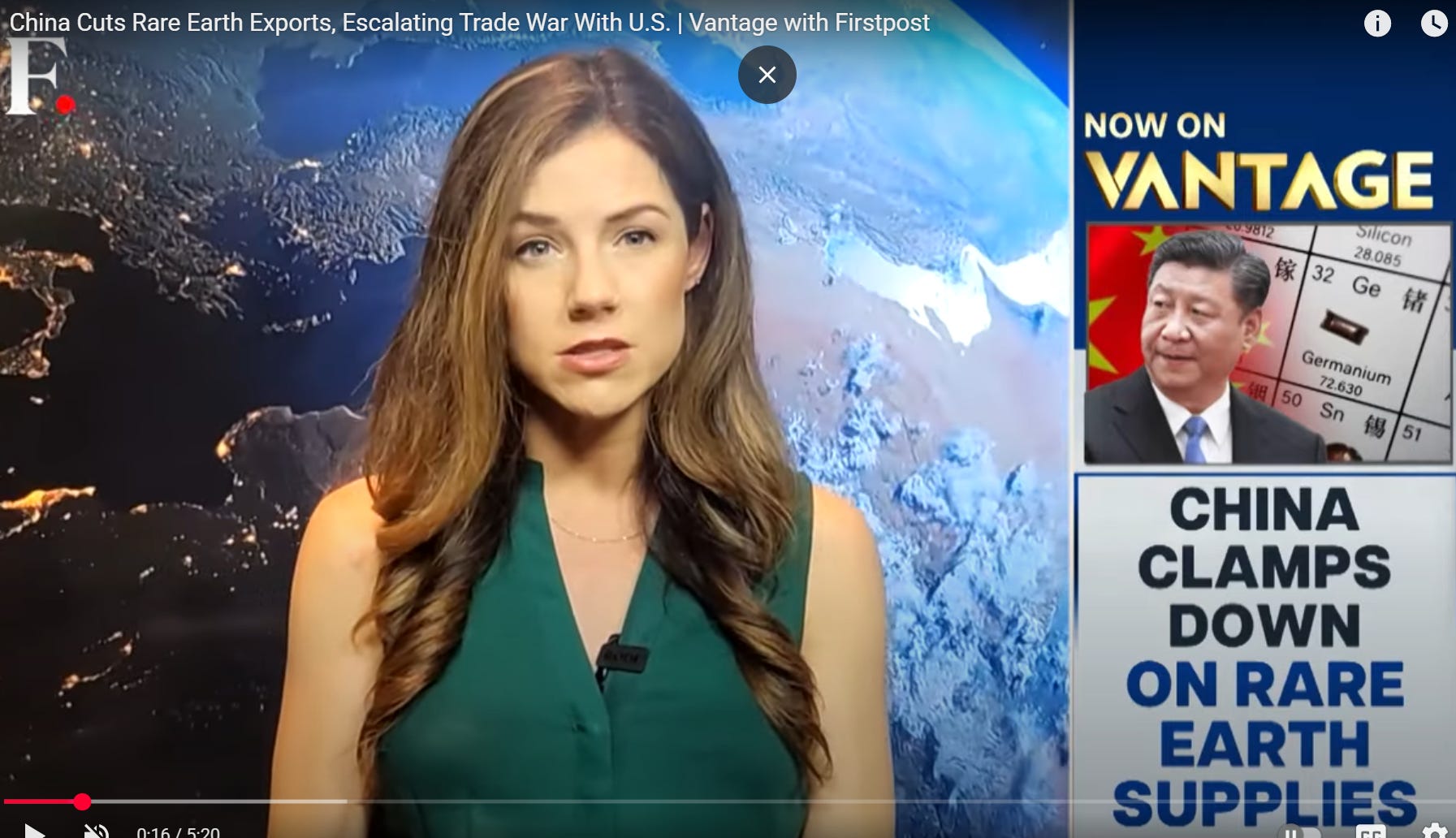
China controls over ninety percent of global rare earth processing, including the magnets, alloys, and refining capacity that make advanced semiconductors possible. The newly restricted elements—holmium, erbium, thulium, europium, and yttrium—aren’t just obscure names in a geology textbook. They are embedded deep in the processes for wafer fabrication, precision lithography, and advanced AI chip architecture. By cutting off or licensing their export only under tight scrutiny, Beijing has ensured that Western fabs will gradually run out of critical input stock. This isn’t a sudden guillotine—it’s a timed choke that will constrict production just enough to stall innovation, gut manufacturing schedules, and shred projected corporate earnings.
When semiconductor production freezes, the impact radiates outward in shockwaves. Silicon Valley’s titans—Apple, Nvidia, Microsoft, Amazon—feed not just their own shareholders, but the valuations of ETFs, retirement funds, and institutions whose portfolios live and die by the S&P 500. The tech sector’s contribution—about thirty percent of total market value—has been the ballast for an otherwise uneven market. Remove it, and what had been a growth‑driven index becomes a sinking ship.
Silver: The Silent Achilles’ Heel
Rare earths may be the headline, but there is a quieter and equally lethal angle here—China’s positioning on silver. Silver is more than a precious metal; it is the world’s best electrical conductor. In advanced electronics, it moves energy with less loss than copper, and it manages both heat and electrical flow better than any other element on Earth. This dual ability—control over both electrons and thermal dissipation—is why it is every engineer’s material of choice for AI data centers, high‑performance GPUs, and next‑generation EV powertrains.
When heat builds inside microprocessors, performance plummets and failure rates surge. Silver’s unmatched thermal conductivity lets manufacturers pull excess heat away from chips at record speed, enabling sustained high‑load operation without catastrophic overheating. And in cutting-edge circuit boards and sensor arrays, silver pathways carry signals with peak efficiency, ensuring maximum speed with minimal distortion. Every leap forward in AI, quantum computing, or precision robotics quietly rides on silver’s unique properties. Cheap alternatives like aluminum or copper simply cannot match this combination of electric and thermal control at scale.
China understands this perfectly. Its strategic stockpile of silver—alongside its dominance in rare earths—means it can exert pressure on global tech without ever touching a finished product. Restrict the flow, and AI server farms, autonomous vehicle control units, and even satellite communications hardware all face crippling material shortages. The West might try to pivot, but scaling silver mining and refining outside China quickly enough to meet demand is an engineering and capital‑intensive marathon, not a sprint. By then, market chaos will already have rewritten valuations.
The Perfect Storm
This convergence of rare‑earth control and silver leverage creates what might be the ultimate supply‑chain vice. Rare earths strangle the ability to make advanced semiconductors; silver throttles the ability to make those semiconductors perform at the required efficiency and speed. Both are critical, and both are under China’s effective command. In the world’s most strategic materials, Beijing holds the whip hand while Washington can only posture.
The collapse scenario is straightforward: Western fabs slow to a crawl, Silicon Valley runs out of inputs for innovation, S&P 500 tech earnings unwind, and the index’s artificial stability shatters. In a market where “productivity” is often paper‑priced and speculative, cutting off the elements that transform blueprints into functioning devices is a fatal blow. The U.S. tried to contain China’s rise through technology sanctions; China has inverted that strategy by weaponizing material reality. And this time, the move comes with teeth sharp enough to sever the artery feeding America’s growth engine.
Very possible outcome:
If China’s rare earth and silver embargo were fully enforced, the collapse of the S&P 500 could unfold in weeks—not months. The “Magnificent 7” tech giants—Apple, Microsoft, Nvidia, Amazon, Alphabet, Meta, and Tesla—are entirely dependent on these critical inputs (especially Silver) for chips, AI data centers, and next-gen devices.
As production freezes amid material shortages, revenue warnings surge and stock prices crash. ETF redemptions and panic selling would rapidly cascade across pension funds and institutions. With tech driving almost a third of the S&P 500’s market value, a supply chain shutdown could send the index spiraling down 30% or more in short order.
A few days ago Our newsletter ran a story on the US response which was to take 10% equity in a handful of companies to address China’s distinct advantage and US being vulnerable. Read that story for more context.