
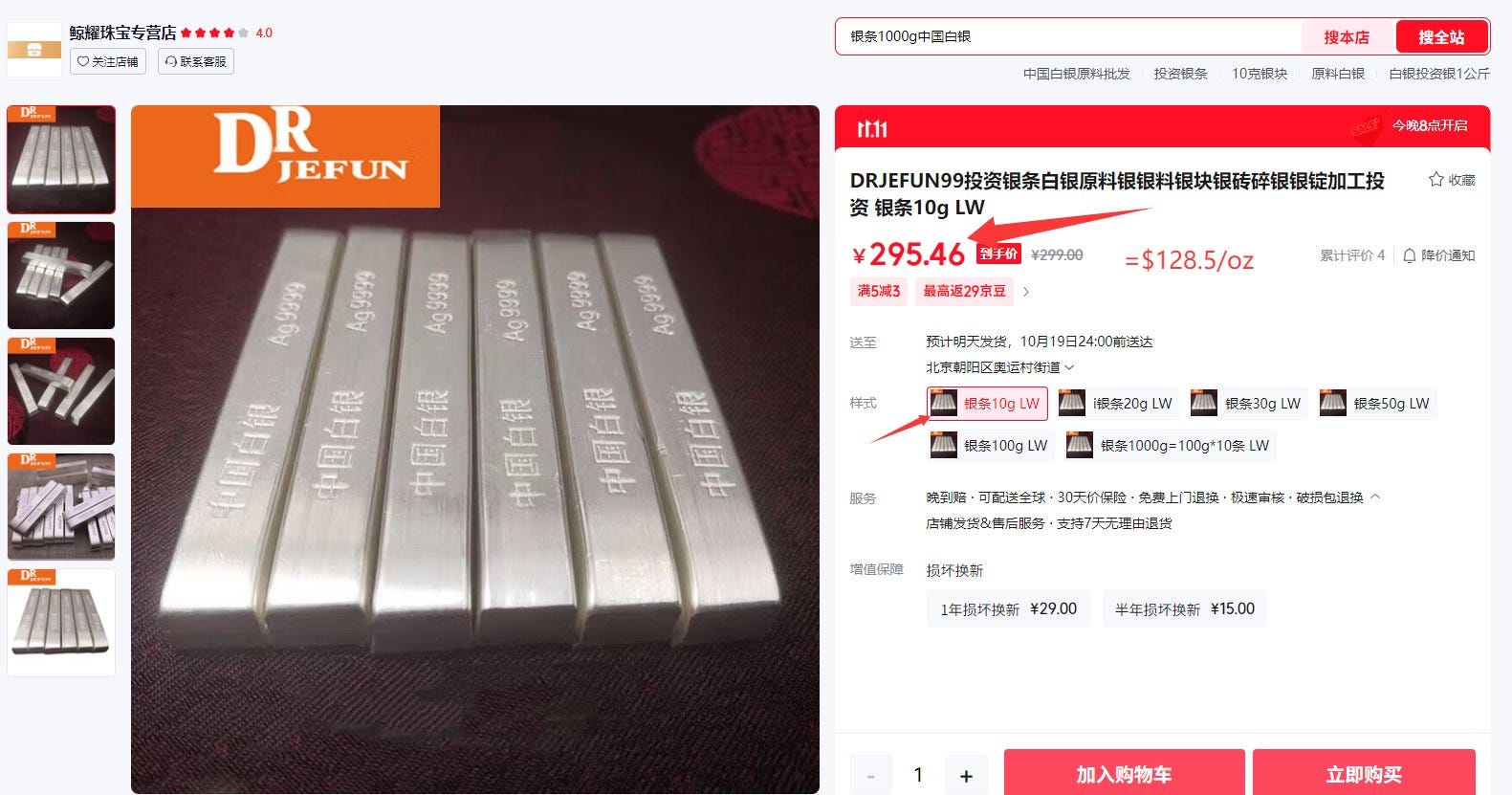
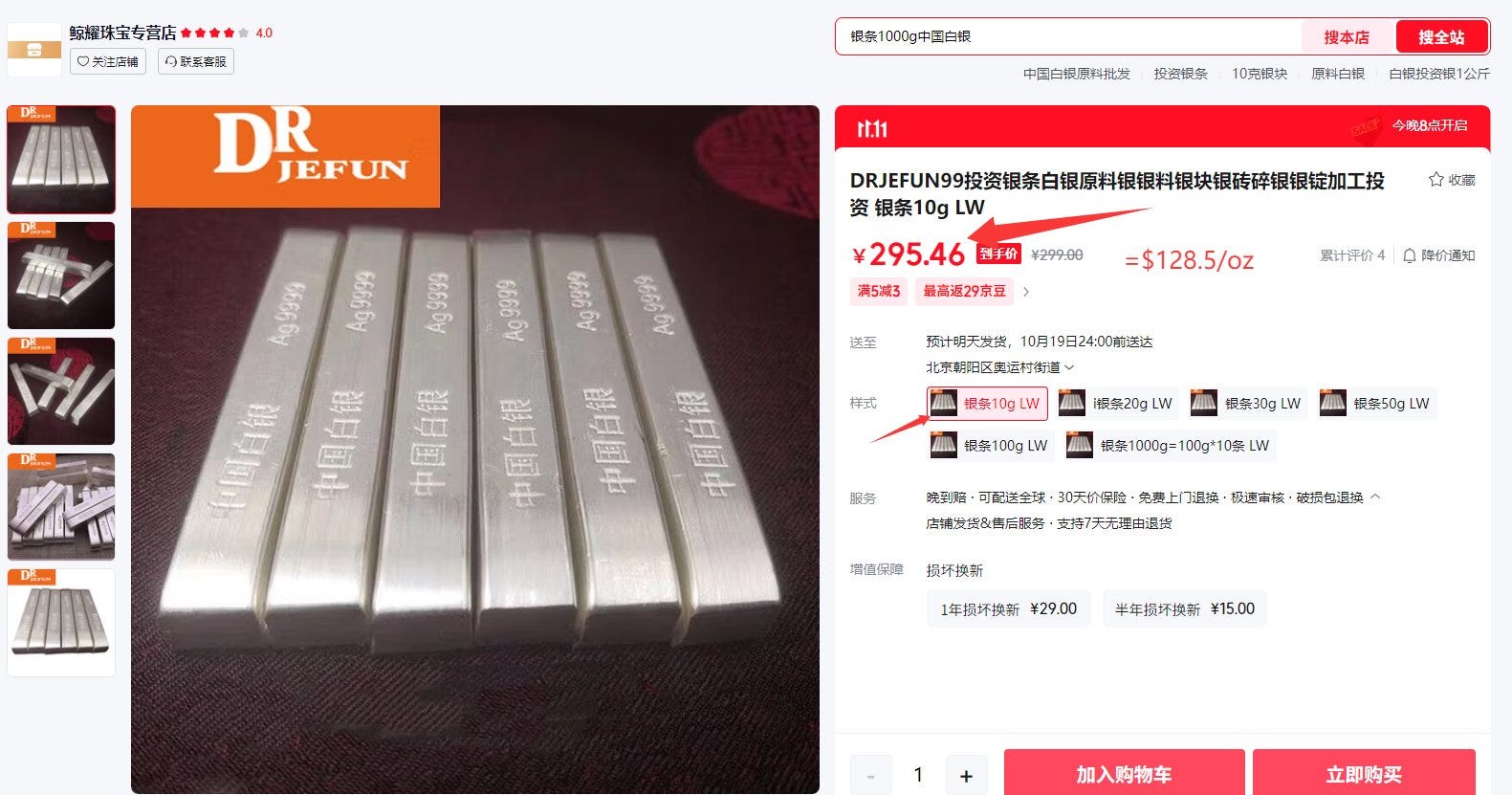
Raw silver is commanding $128 per ounce in China, the world’s largest physical silver marketplace—a price more than double prevailing global spot rates. In an interconnected world, silver always flows to the market that pays the most and treats it best. When benchmark prices surge so dramatically in one dominant region, those levels ripple outward, redefining what buyers everywhere must pay for the real metal.
As word spreads of China’s sky-high premiums, sellers and traders naturally align their offers to match, making $128 not just a local anomaly, but a practical new baseline. The days of regional price gaps are vanishing, replaced by a global standard set by those willing to pay. Ultimately, silver goes where it is valued highest—and when one market leads, the rest follow. As news of China’s $128 per ounce silver price circulates, it quickly becomes the effective price for physical silver worldwide.
The silver shortage gripping global markets in late 2025 is not an abstract concept; it’s a rapidly unfolding crisis affecting wholesale, retail, and industrial supply chains in every major region. Silver is suddenly unavailable from trusted mints and dealers, cascading real-world consequences for manufacturers, investors, and everyday buyers. This systemic scarcity, driven by a confluence of supply chain breakdowns and surging demand—especially in Asia—has triggered new pricing benchmarks, stunned old-economy players, and left the world scrambling for solutions.
Perth Mint and India: Supply Vanishes
In Australia, the globally respected Perth Mint has halted all silver product sales, effectively erasing one of the planet’s most reliable sources of new supply. Not a single coin or bar now leaves their facility; the only response to inquiries is silence or “unavailable.” This sudden stop eradicates a crucial export pipeline, radiating downstream effects throughout Asia Pacific and beyond.
The situation in India is equally dramatic—retailers and dealers report not even “a sliver of silver available”. Amazon-based sellers are now defaulting on deliveries, advertising silver bars, accepting payment, and then failing to produce the metal. This breach of trust highlights the severity of the crunch: some dealers have run out of physical stock and cannot honor sales, leaving frustrated consumers without recourse. These abrupt defaults mark a transition from mere inconvenience to financial risk with reputational damage.
Physical Shortage Splits the Market
In London, physical silver shortage signals have become acute, sending lease rates spiraling to 39%—a panic level not seen in recent history. Banks unable to locate sufficient metal are forced to buy back futures contracts or deliver actual silver, moves that can spark explosive price surges overnight. The crisis has bifurcated the market: futures and paper contracts trade at one price, while the real metal commands far greater premiums, sometimes double the spot rate due to scarcity.
China Sets the New Global Price
Nowhere are these pressures more visible than China, the world’s largest physical silver marketplace. Silver sheets on top trading platforms like Rongtong Gold have disappeared, cutting off both bulk buyers and industrial demand. JD.com, the nation’s top e-commerce retailer, shows almost all merchants have delisted raw silver bars; only one remains, offering $108.25 per ounce for raw silver and $128.50 for small bars. These prices are more than 100% above official global spot, signaling not just local demand but a reset in global pricing logic.
Why does China’s price matter so much? Sellers always migrate to markets offering the highest returns and best conditions. With China consuming a vastly disproportionate share of global silver supplies, its domestic premiums exert gravitational pull—aligning international prices with Chinese benchmarks. If sellers can receive $108-$128 per ounce in China, the rest of the world quickly follows, making China’s retail prices the new “de facto” global standard for physical silver.
North America: Mints and Banks Run Dry
The supply pinch is intensifying in North America. The Royal Canadian Mint, revered for stability, reports zero inventory on its iconic 10-ounce and 100-ounce silver bars; buyers are met with “out of stock” notices or indefinite waitlists. TD Bank, a giant in Canadian retail bullion, shows every single silver product marked “unavailable.” Even collectors seeking small, themed bars are left wanting. The tightness extends deep into the institutional segment—banks, mints, and retailers cannot replenish stock or assure customers of future deliveries.
Asia and Japan: A Premium Lockout
Japan, famed for elite refining and premium bullion standards, has joined the casualty list. Asahi Fine, a renowned precious metals retailer known for global distribution, is now sold out of silver ingots. This loss hits especially hard for institutional buyers and investors who depend on Japanese reliability in tight conditions. Outages from reputable brands confirm this crisis crosses borders and business models.
Premiums and Secondary Market Chaos
Physical premiums on silver are volatile and extreme. Dealers and mints rely on older inventory, or vintage and secondary market pieces, to serve anxious buyers; what little is available commands outsized pricing. The doubling of premiums—a $108 raw ounce versus a $50 spot—is not just anecdotal, but visible across listings and dealer websites. These price surges lock out legacy buyers and small investors, making entry costs prohibitively high.
What’s Next for Silver?
With China, North America, Australia, and Japan’s most prominent bullion outlets effectively dry, silver’s physical supply crisis is truly systemic. Industrial users, manufacturers, and investors now face unprecedented sourcing challenges—paying record premiums or seeking unorthodox routes just to secure real metal. Legacy supply routes have collapsed, certainty has evaporated, and rumors of further shortages only reinforce the flight to physical assets.
Silver Academy: Strategy Amid Crisis
For Silver Academy subscribers, this chaos is opportunity. The global shortage puts a premium on agility, deep research, and strategic allocation. Content creators, market analysts, and investors must rethink supply relationships, pricing models, and risk narratives. The present crisis rewards those able to adapt—whether by developing alternative sources, capitalizing on premium volatility, or producing original reporting on supply disruptions. The world’s attention is focused on silver like rarely before; those who can bring clarity and reliable guidance stand to benefit as the old order fractures.
What this means for you: Diligent, forward-thinking strategies around sourcing, premium tracking, and reporting will separate those able to profit from historic supply constraints from those left watching. Silver’s $108-$128 benchmark in China will likely ripple through Western markets in the weeks to come; keeping subscribers informed and responsive will be invaluable, whether for investment, coverage, or supply chain management. Consider new partnership models or content series that leverage this global drama to reinforce Silver Academy’s reputation as a trusted source in turbulent times.