
Silver’s Critical Shortage Meets Historic Monetary Demand
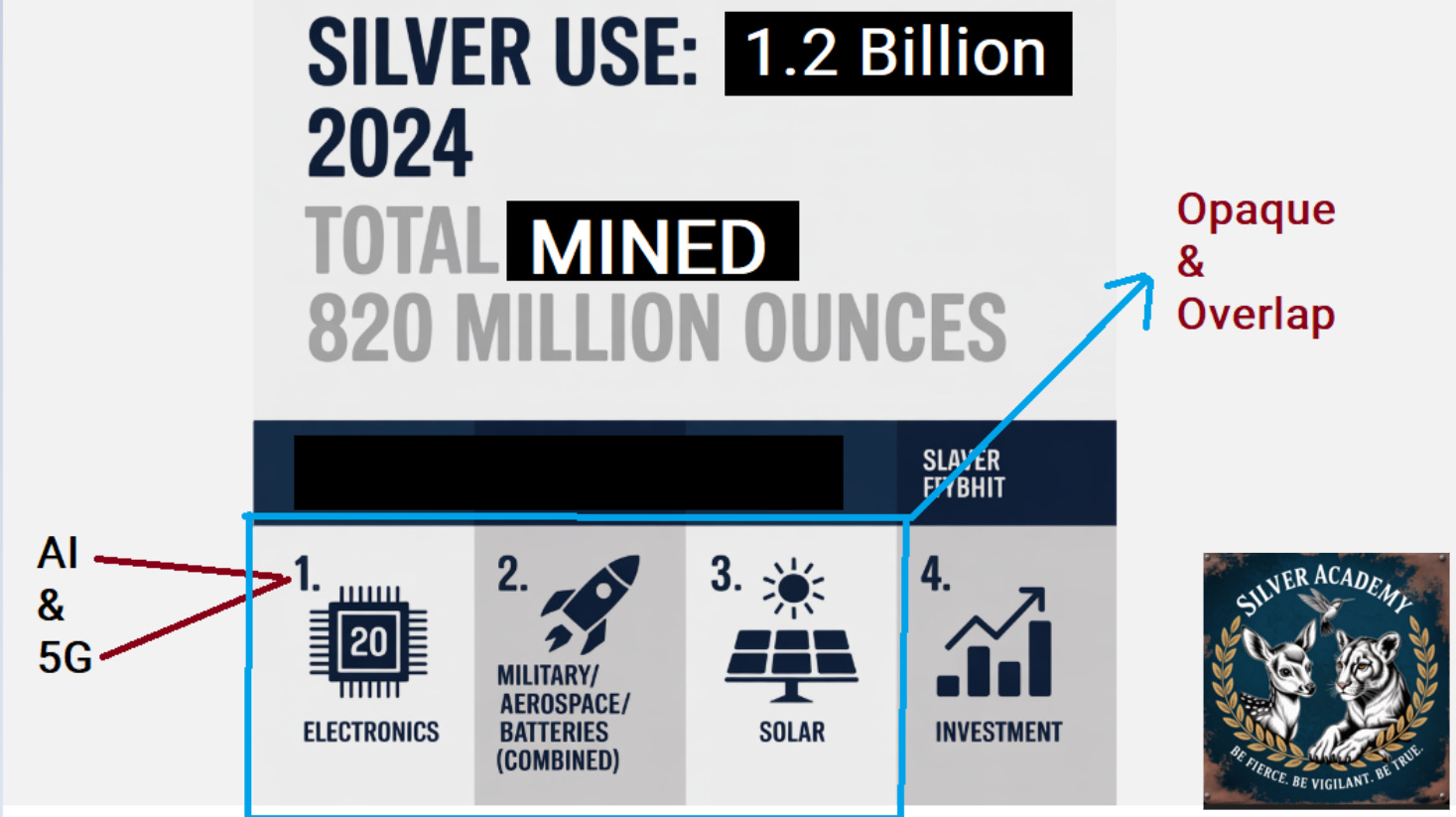
Silver’s moment is here, and the world is sleepwalking into a crisis of its own making. While investors and industrial users scramble over dwindling above-ground inventories, a historic deficit has opened beneath their feet. In 2025, just over 800 million ounces of silver will be mined globally—against annual consumption that rockets past 1.2 billion ounces, and possibly as high as 1.4 billion. Silver’s five-year cumulative deficit now stands over 900 million ounces—a structural shortfall so severe the market can barely comprehend its implications.
Four Pillars of Demand: Old Drivers Get New Fuel
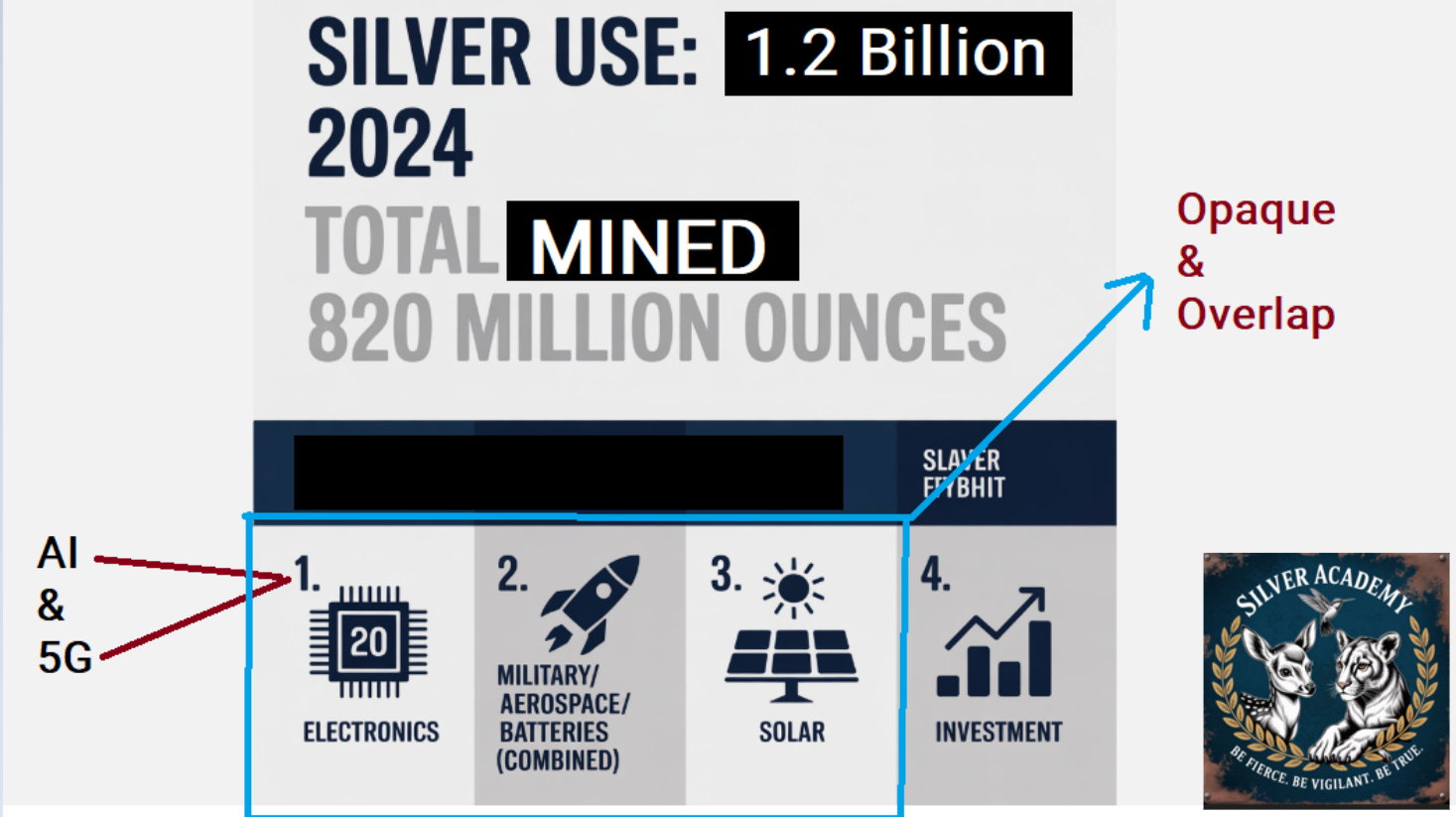
The world’s appetite for silver spans four main categories, all simultaneously surging with fresh capital and innovation:
-
Electronics: Smartphones, tablets, data centers, and autonomous vehicles run on silver’s unmatched conductivity, driving persistent demand from the high-tech economy.
-
Military, Aerospace, Batteries: Silver is mission-critical for missile guidance systems, tactical drones, and especially the aerospace sector’s silver-zinc batteries, relied on for their unrivaled energy density and reliability in extreme environments.
-
Solar Energy: In 2025, solar panel manufacturers are hoarding physical silver to meet skyrocketing demand—over 150 million ounces this year alone, with no substitute match for silver’s performance in photovoltaic cells.
-
Investment: From Indian rural savers to Western ETF buyers, silver’s status as a safe-haven asset is surging as paper markets decouple from reality and physical premiums soar.
The Silver Battery Bombshell
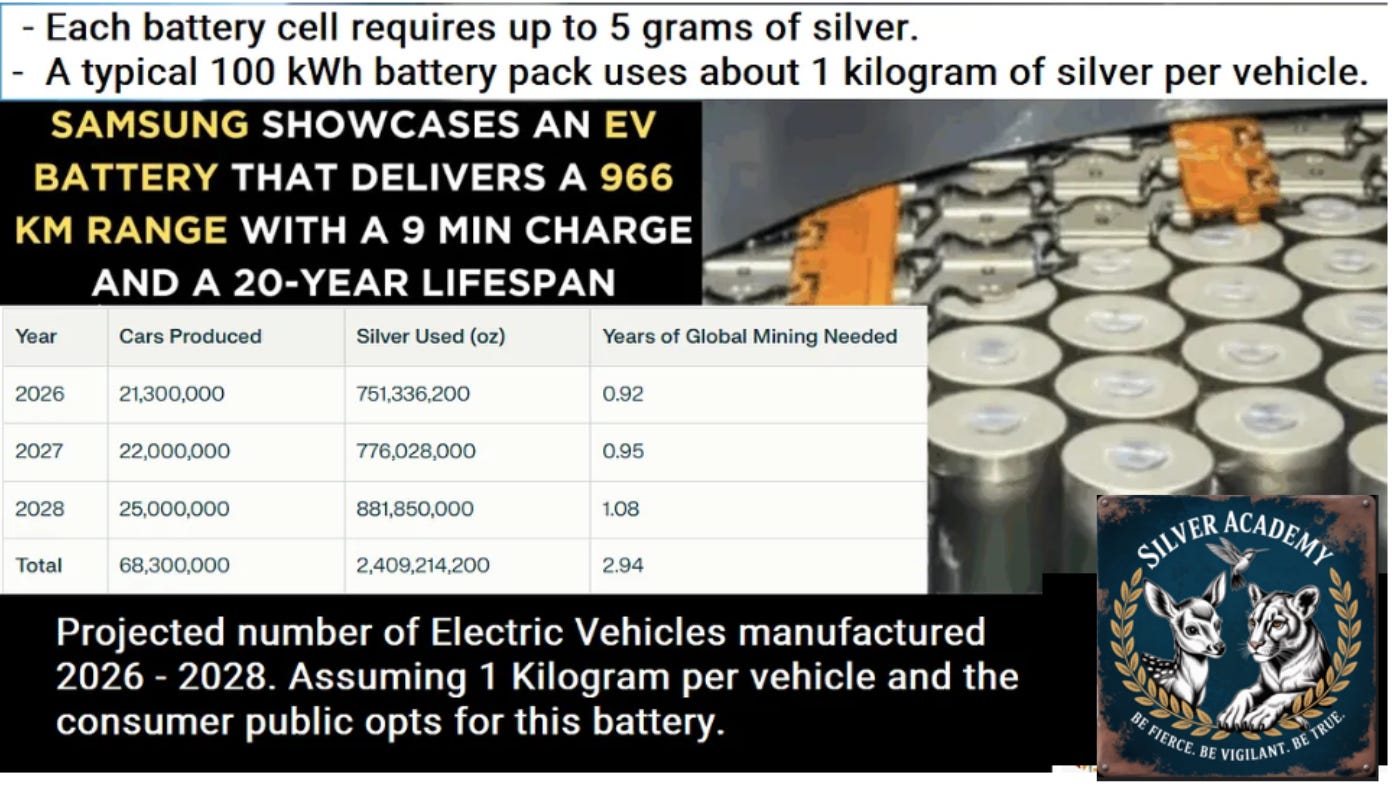
But the real shock is only beginning. Samsung’s solid-state silver battery technology is now approaching mass production. Each electric vehicle utilizing Samsung-style batteries could require about 1 kilogram of silver—an astonishing figure, when more than 21 million EVs are built every year.
At broad adoption—80% market share—EV batteries alone would require between 750,000,000 ounces and 1 million ounces. Silver’s scarcity will not just be a headline—it will be a hard cap on industrial innovation.
India’s Game-Changer: Silver Remonetized
The most explosive demand source isn’t even technological but monetary.
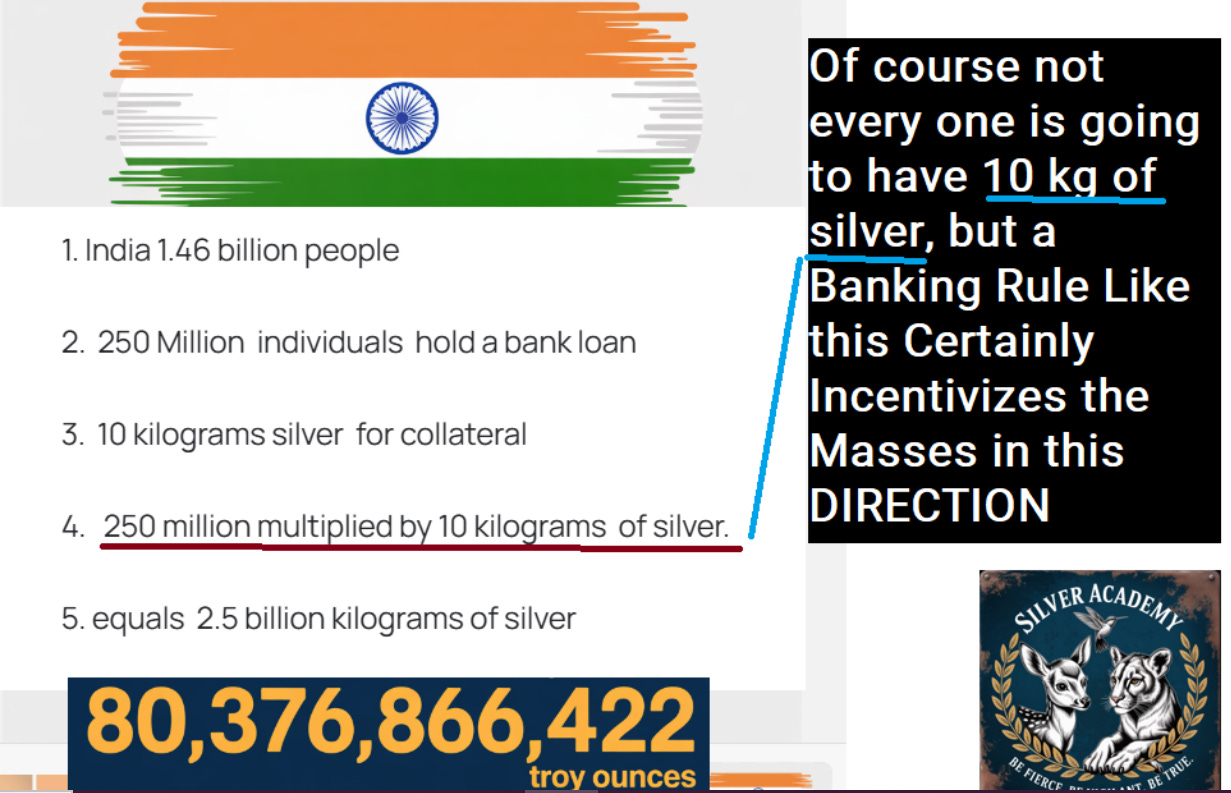
Beginning in April 2026, India’s Reserve Bank will allow all regulated banks and NBFCs to accept up to 10 kilograms of silver as collateral for personal and business loans—the first time since the 1800’s that silver is officially recognized as a monetary asset in a major world economy.
That means 1.4 billion Indians (with 250 million routine bank borrowers) can mobilize household and jewelry silver for formal credit, ushering in a massive new source of demand and monetization. It’s estimated loan caps will reach ₹10 lakh (about $12,000) against silver, with loan-to-value ratios as high as 85%. Rural borrowers, small businesses, and entrepreneurs gain lifelines, with the Indian financial system now incentivizing the accumulation—not sale—of physical silver.
Deficit Turns Into Mania
For the first time in a century, physical silver is required at scale by the banking system—just as industrial and technological uses break through the supply ceiling. The market’s “paper price” games are running into steel-clad reality. Leasing rates are surging, physical bars are vanishing in Asia, and premiums at Shanghai have soared past $59 per ounce for bulk delivery. Websites such as JD.com are selling industrial silver between $65 and $125 per ounce.
India’s policy is a genuine reset—introducing silver as bank money into a country where it has both cultural and financial value, and kickstarting a fresh phase of global silver scarcity. Savvy investors and analysts know: when an industrial metal becomes both an essential technology input and a monetary reserve, price discovery can become explosive.
The silver deficit is no longer a forecast. It is the new monetary fact—as India remonetizes the world’s most underappreciated asset, and the next wave of demand annihilates the illusion of abundance.
Meanwhile Let’s Turn the page and look at GOLD
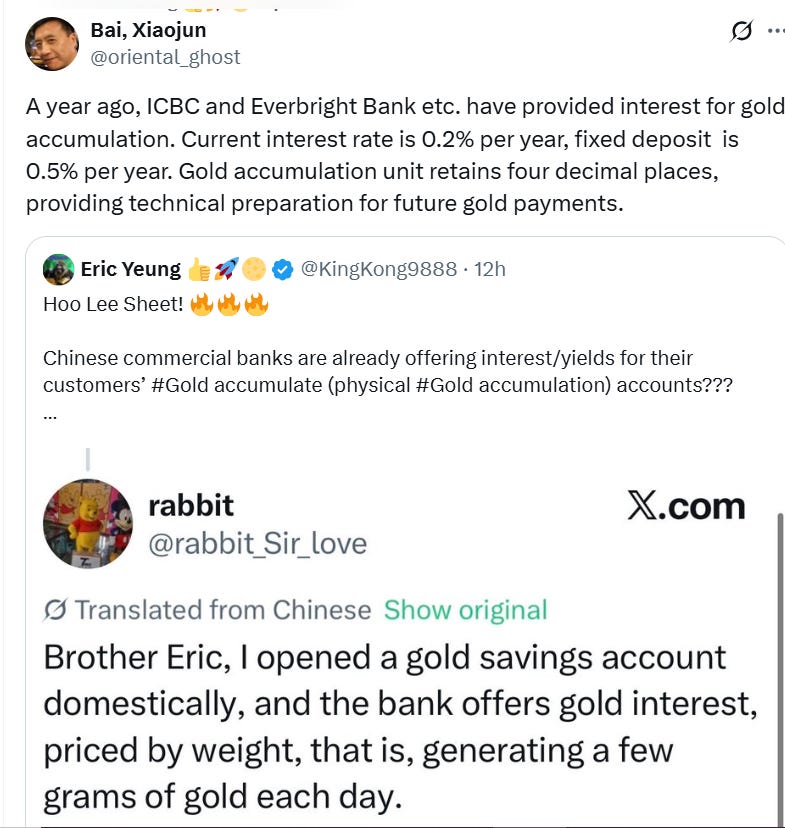
Chinese commercial banks have quietly revolutionized gold savings by offering interest on physical gold accumulation accounts. ICBC, Everbright Bank, and others now provide annual rates of 0.2% for flexible deposits and up to 0.5% for fixed terms, effectively merging monetary yield with gold’s safe-haven status. Accounts retain up to four decimal places on gold holdings, laying technical groundwork for future gold-linked payments and digital transactions. This subtle financial innovation in China not only encourages retail accumulation but also signals deep institutional support for gold’s role amid aggressive central bank buying and record-breaking price rallies
end of segment