
Trump’s latest foreign policy rhetoric targeting Venezuela has sent shockwaves through Latin America, with threats ranging from military strikes to the explicit aim of capturing or killing President Nicolás Maduro for regime change. Leaders from Bolivia, Colombia, Mexico, and Brazil have issued stern warnings, declaring that any attack on Venezuela would be considered an attack on their collective sovereignty and national dignity.
Three U.S. Military Options for Venezuela
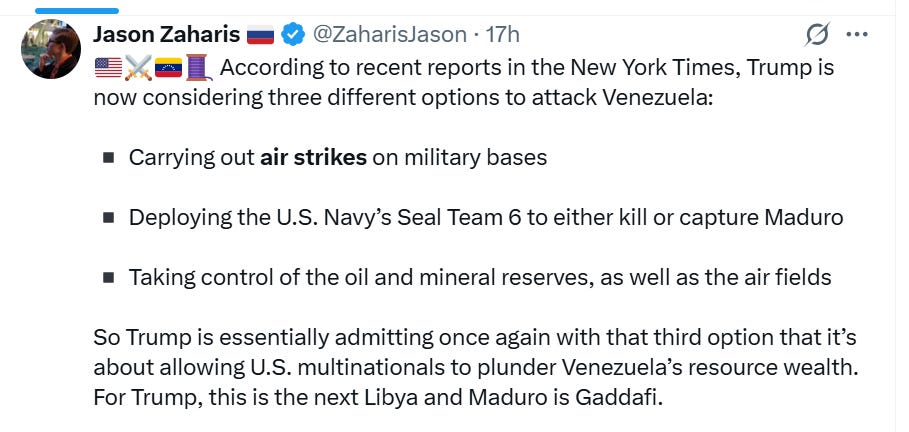
According to reporting from The New York Times and other outlets, Trump is presently considering three aggressive options for military intervention in Venezuela:
-
Conducting air strikes on Venezuelan military bases and installations, aiming to weaken Maduro’s defensive capabilities and provoke his flight from the capital.
-
Deploying elite U.S. Navy Seal Team 6 and specialized forces to capture or kill Maduro, with legal justifications being prepared to label his inner circle as part of the “Cartel de los Soles”—a designated narcoterrorist group.
-
Seizing control of Venezuela’s critical oil and mineral reserves along with strategic airfields, a move that overtly admits U.S. intent to take possession of resource wealth, echoing previous interventions in Libya.
Trump’s third option especially reinforces the narrative that regime change efforts are driven by corporate interests, openly admitting the motive to “allow U.S. multinationals to plunder Venezuela’s resource wealth”—a parallel to the fate of Libya and Gaddafi nearly a decade prior.
Regional Pushback and “Sovereignty Doctrine”
Latin America’s response has been unified and vocal. Statements from the governments of Bolivia, Colombia, Mexico, and Brazil have made it clear that military action against Venezuela would violate their own sense of regional independence and would be fiercely opposed. Colombia’s ELN rebel commanders have even hinted at the prospect of transnational armed resistance if the U.S. proceeds with military aggression.
U.S. Support for Opposition and Machado’s Stance
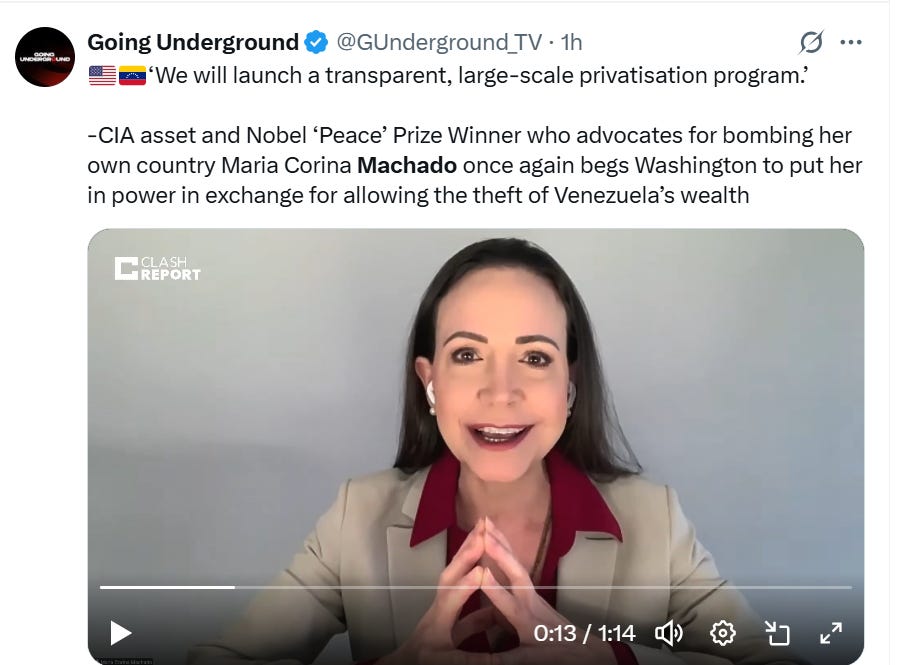
The U.S. government has long bankrolled Venezuelan opposition movements, with approximately $213 million directed toward groups such as those led by María Corina Machado—recently honored with the Nobel Peace Prize despite criticism over her support for Israel’s campaign in Gaza and pro-corporate alliances. Machado has controversially called for ever-greater American intervention in Venezuela, going so far as to claim, without substantiation, that Hamas operates inside the country. In public statements, she advocated for a direct U.S. military role, framing it as “saving Venezuela,” and called for regime change by enforcement of law and military power.
Another $400 million has been rerouted to regime change operations spanning Venezuela, Cuba, and Nicaragua, while a recent congressional measure approved an additional $50 million for “democracy promotion” projects. These appropriations reinforce the deep entanglement between U.S. policy and opposition-aligned actors in Latin America.
Nobel Laureate’s War Advocacy: Contradiction and Critique
Machado’s vocal advocacy for military intervention, in contrast to her Nobel Peace Prize recognition, has drawn widespread critique. Critics point out the disturbing precedent of a peace laureate calling for war crimes—especially as she suggests that foreign military power is a legitimate pathway to personal ascendancy and regime change in her homeland.
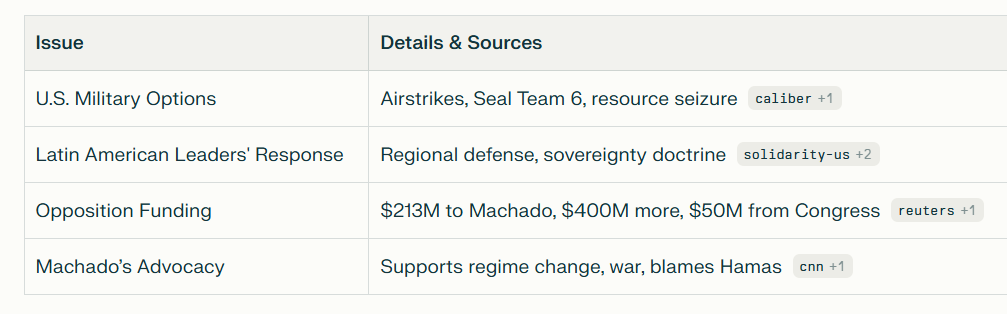
Summary Table: Key Developments
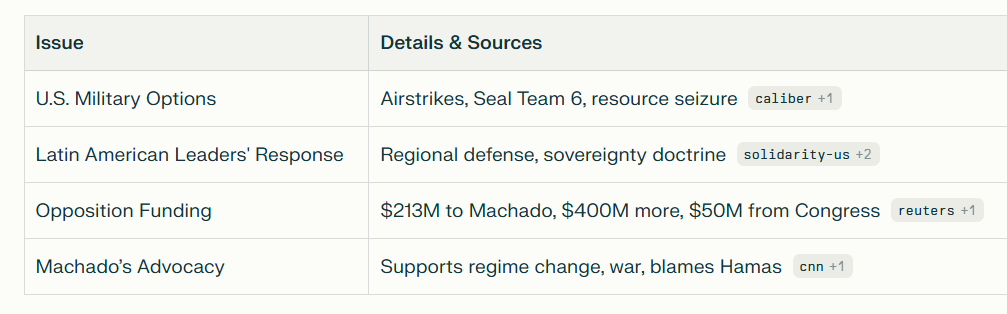
The region faces a new era of geopolitical risk as Trump openly prepares aggressive, resource-driven regime change tactics, risking broad destabilization and igniting pan-Latin American solidarity against U.S. interventionism.
Eyes on Mexico’s Silver Prize
Mexico now has cause to nationalize silver
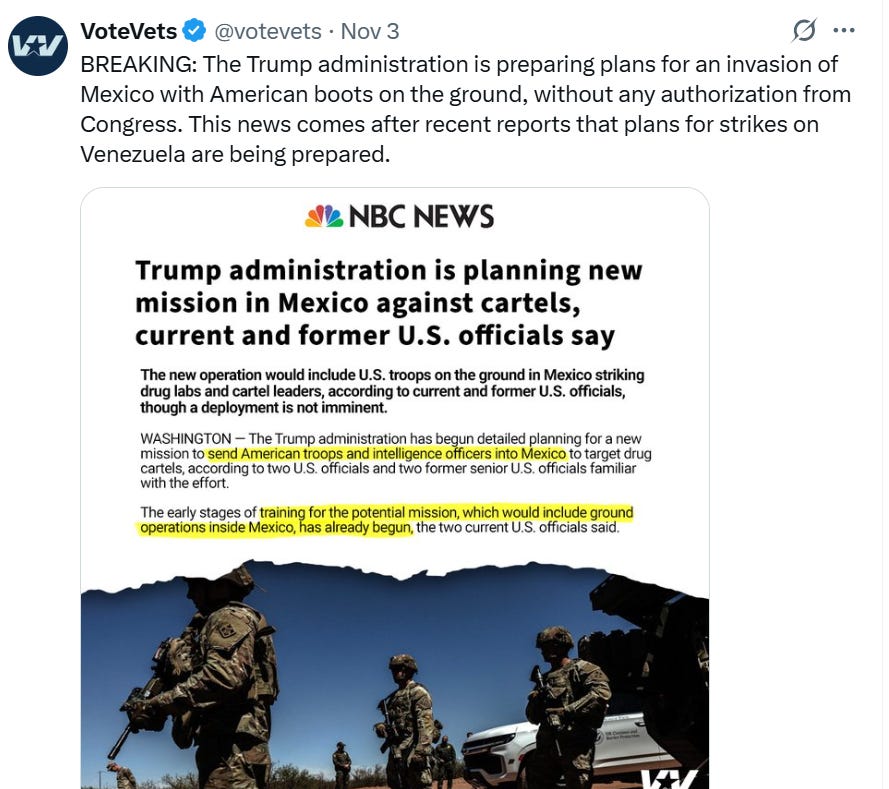
If you were an investor in Ukraine’s energy sector before February 2022, the outbreak of war would have signaled a major inflection point—heightening uncertainty, risk of asset seizure, nationalization, and operational shutdowns. Most prudent investors would have looked to sell before their funds became trapped or devalued, rather than gamble with long-term returns in a conflict zone.
Mexico now faces the same inflection point as Ukraine in 2022: Trump’s threats to send in troops under the guise of fighting cartels creates high risk for investors, with silver now the top prize. The Morena party is likely to respond with moves to nationalize silver, framing this as a defense of sovereignty—echoing Ukraine’s wartime nationalization and Mexico’s earlier lithium policy. Investors should brace for regulatory upheaval in Mexico’s resource sector.
Yes, Ukraine did nationalize several key companies in 2022 as part of its wartime mobilization effort. In November, the Ukrainian government took control of strategic assets including major energy, aerospace, and industrial firms to guarantee military supplies and national security, transferring their management to the Defense Ministry under martial law. These moves aimed to prevent disruption and ensure vital infrastructure remained under state control during the conflict.
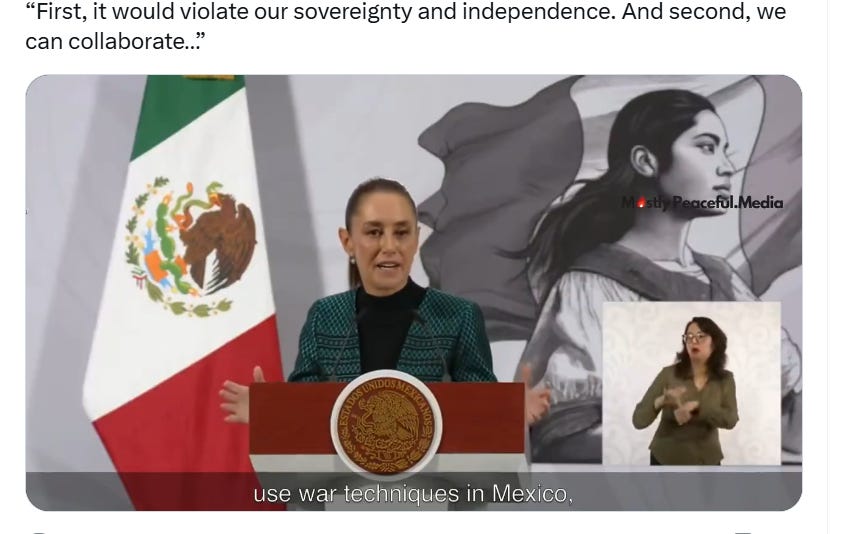
Mexico now faces a similar crossroads.
NBC reports that Trump is weighing air strikes “under the guise of fighting cartels,” but seasoned analysts like Mexico’s President Claudia Pardo recognize deeper strategic ambitions. Trump’s war rhetoric is not only directed at Venezuela but mirrors tactics aimed at Mexico—leveraging the “drug war” as a pretext for direct intervention and resource access.
Pardo’s concerns are well-founded. The U.S. Department of Interior’s recent draft designating silver as a “critical mineral,” with America 93% reliant on imports and Mexico as the top global producer, amplifies the stakes. Mexico’s vast oil reserves and emerging partnerships with Russia—providing Pemex with technology and funding—highlight the country’s growing self-sufficiency and international alliances.
For Mexico, resource sovereignty is paramount. Official pronouncements that “Mexico’s resources belong to the people of Mexico” and “Mexico must secure its energy future” explicitly refer to its oil and silver, echoing moves like the nationalization of lithium in 2022. The threat of foreign intervention raises alarm: any conflict risks not only economic losses for foreign investors, but also a wider loss of national control and the social upheavals seen in other resource-rich nations under external pressure.
In summary, with war drums beating and strategic minerals in the spotlight, Mexico stands where Ukraine once did—a place where investors must weigh geopolitical risks against returns, and citizens and leaders remain vigilant on safeguarding their nation’s resource wealth
end of segment
-
our opinions are not our sponsors opinions
-
editorial department is separate from promotions department
-
not financial advice