
As the world wakes up to silver’s renewed importance as both a monetary and industrial metal, the signal is often drowned out by noise. Failing Western paper markets, shifting price discovery toward China and India, a weakening US dollar, and a Federal Reserve trapped between unsustainable debt and entrenched inflation create constant macro‑distraction. Layer on top rising geopolitical tension, visible corruption in Washington at both congressional and executive levels, systemic banking risk, and reckless fiscal policy, and many silver stackers find themselves ricocheting from crisis headline to crisis headline. The purpose of this article is simply to offer a calm, Wikipedia‑style primer to keep us anchored in silver’s fundamentals.
So then,
What is Silver?
Silver (/ˈsɪlvər/) is a chemical element with the symbol Ag (from Latin argentum) and atomic number 47. A soft, white, lustrous transition metal, it has the highest electrical conductivity of any element and the highest thermal conductivity of any metal. Silver occurs in native form and in minerals such as argentite and chlorargyrite, and most modern production is obtained as a by-product of copper, gold, lead, and zinc mining.
Occurrence and extraction
Silver is found in the Earth’s crust as native metal, in sulfide and halide minerals such as argentite (Ag₂S), horn silver or chlorargyrite (AgCl), and pyrargyrite (Ag₃SbS₃). It commonly occurs associated with ores of gold, copper, copper–nickel, lead, and lead–zinc.
Major silver ores and deposits are actively mined today in Mexico, China, Peru, Chile, Australia, Poland, and the United States, all of which rank among the world’s top silver‑producing countries. Mexico and Peru have been central to global silver supply since the 16th century, when Spanish colonial mining turned their Andean and Mexican districts into dominant producers—a role they still hold. Before the rise of New World mining, key silver centers included Anatolia (ancient Lydia), the Laurium district in Greece, and later the Iberian Peninsula under Rome, alongside other important but more localized workings across parts of Africa, the Near East, Persia, and China.
Silver is also recovered during electrolytic refining of copper and by the Parkes process applied to lead bullion that contains small amounts of silver.
Commercial fine silver is typically at least 99.9% pure, and purities exceeding 99.999% are industrially available. In the early 21st century, Peru and Mexico each accounted for a significant share of world mine output, with individual countries producing on the order of a sixth of global supply in some years.
China controls around 60–70% of the world’s refined silver supply through its sprawling refining infrastructure. Nearly all major industrial uses of silver depend on high‑purity metal, typically .999 fine. Bullion coins and rounds such as the Britannia, Maple Leaf, American Eagle, Philharmonic, and many Sunshine Mint products are refined to this extremely pure state, with some like the Maple Leaf reaching .9999 fineness. While laboratories can push purity even higher, there is no practical improvement in everyday industrial or monetary use beyond these levels. This is the key distinction: unlike oil, which must be broken down into products like gasoline or diesel, that one‑ounce silver round in your pocket is already in its final, functional form
This point cannot be overstated. Unlike oil, which must be refined into various products such as gasoline, the one-ounce silver round in your pocket is already in its perfect, finished form.
Industrial uses
Over 50,000
(Just a partial description)
(Relates to the physical characteristics)
(Therefore, some conceptual overlap exists)
Silver batteries used in military systems, including torpedo power packs, employ silver–zinc and related chemistries to achieve very high energy density, reliability, and discharge rates in fully submerged environments where lithium systems are less suitable. Some of the largest undersea batteries can incorporate on the order of many thousands of troy ounces of silver per unit, making them among the most silver‑intensive discrete devices.
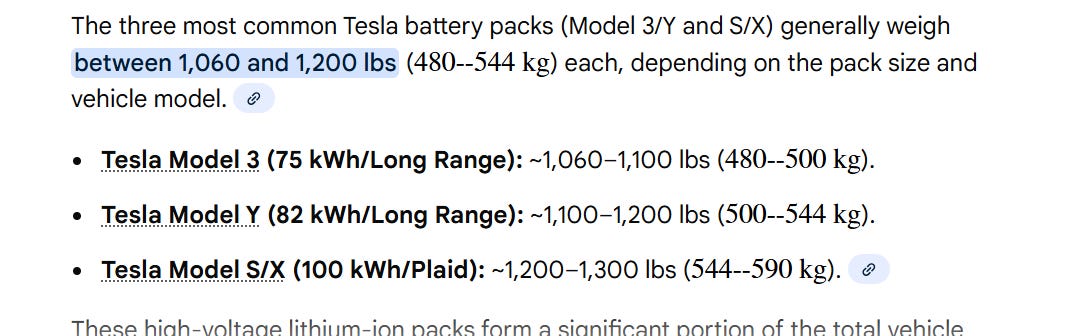
in this video below you will see some silver zinc batteries (manufacturers include SAFT & Eagle Picher), the larger ones contain over 11,000 ounces per battery. This number shocks some people but its very conservative number. Just google the weight of a typical tesla battery
Recall that lithium doesn’t work submerged in water nor in extreme weather through outerspace.
These larger military/aerospace batteries consume enormous amounts of silver. Don’t believe me? Look at the video with a critical eye.
Weapons, bombs, missiles, and secure communication equipment incorporate silver in contacts, solders, and thick‑film circuitry that demand low resistance, fast signal transfer, and long‑term reliability under extreme conditions. In such applications, silver’s low contact resistance and excellent conductivity support robust performance under shock, vibration, and wide temperature swings.
Robotics systems use silver in precision actuators, sensors, high‑flex interconnects, and power distribution buses, where low resistance and efficient heat removal are critical. Silver‑filled greases, solders, and metallisation layers also help maintain stable performance over millions of motion cycles in industrial and collaborative robots.
AI hardware, from edge devices to large data‑centre accelerators, relies on dense circuit boards and high‑current power delivery networks in which silver‑containing pastes, terminations, and connectors reduce resistive losses and improve heat spreading. This helps support the high current densities, switching speeds, and thermal loads typical of AI workloads and advanced packaging technologies.
In 5G infrastructure, silver is used in RF connectors, high‑frequency antenna feed structures, and low‑loss conductors where minimising insertion loss and preserving signal integrity at gigahertz and millimetre‑wave frequencies are essential. Silver‑plated components and silver pastes contribute to efficient operation of active antenna arrays, small cells, and related radio equipment.
Solid‑state batteries and other next‑generation energy‑storage concepts explore silver‑containing materials as current collectors, conductive interlayers, and specialised electrode components. By improving interfacial contact and electronic conductivity, silver can help address resistance at interfaces, an important factor in the performance and cycle life of thin‑film and high‑power cells.
High‑end electronics, including audio, RF, and precision instrumentation, make use of silver or silver‑plated conductors, connectors, and relay contacts to exploit silver’s superior conductivity and low contact resistance. In combination with its high thermal conductivity, these properties support low‑noise operation, tight tolerances, and effective thermal management in demanding circuits.
In solar energy, silver is a key material in crystalline silicon photovoltaic cells, where screen‑printed silver pastes form the fine front‑side gridlines that collect and conduct current. Its excellent conductivity and good reflectivity help reduce resistive losses and, in some cell designs, improve optical management, making silver one of the most valuable materials per watt of PV capacity.
Nuclear energy applications use silver in control and safety systems, notably in silver–indium–cadmium alloy control rods deployed in some reactor designs to absorb neutrons and regulate the fission process. In these roles silver contributes mechanical strength and suitable behaviour under intense radiation and elevated temperatures over long operating lifetimes
Physical Characteristics (partial list)
-ductility
-malleability
-reflectivity
-thermal properties
-conductivity
-anti-microbrial
-energy density
Silver’s ductility is its ability to be drawn into very fine wire without breaking, enabling ultra‑thin conductors in high‑frequency cables, precision coils, and micro‑interconnects in advanced electronics and sensors.
Its malleability is its capacity to be hammered or rolled into thin sheets without cracking, which supports applications such as contact foils, bonding ribbons, and thin metallisation layers in semiconductor packages and power electronics.
Silver’s high reflectivity means it efficiently reflects visible and infrared light, making it valuable for precision mirrors, solar thermal concentrators, reflective coatings in architectural glass, and optical components in instruments and lasers.
Its exceptional thermal properties—notably the highest thermal conductivity among metals—enable rapid heat spreading in power electronics, LED modules, RF amplifiers, and high‑performance computing hardware, where silver layers, pastes, and interfaces dissipate heat away from hot spots.
Its superior electrical conductivity (the highest of all metals) allows current to flow with minimal resistance, so it is used in high‑reliability contacts, busbars, RF connectors, printed conductors in solar cells, and premium signal paths in high‑end electronics.
The antimicrobial character of silver comes from silver ions that disrupt microbial cell membranes and metabolic processes, leading to its use in medical dressings, catheter coatings, water purification systems, food‑contact surfaces, and antimicrobial textiles.
In batteries, silver contributes to high energy density through electrochemical couples such as silver–zinc, allowing compact cells with high specific energy for military torpedoes, aerospace power systems, and specialised high‑drain portable equipment.
As a precious metal
Silver is one of the best‑known precious metals and has long been used to make high‑value objects that reflect the wealth and status of their owners, including jewellery, religious artefacts, and ceremonial plate. Jewellery and traditional silverware are commonly made from sterling silver, an alloy of 92.5% silver and 7.5% copper that is harder than pure silver and has a lower melting point (about 893 °C), making it better suited to durable, worked items.
Britannia silver, containing 95.8% silver, is an alternative hallmark standard often used for high‑quality tableware and wrought plate in jurisdictions where this fineness is recognised. Modern patented alloys such as Argentium sterling silver, which incorporate germanium into a 92.5% silver base, offer improved resistance to firescale and tarnish and have become increasingly popular in contemporary silverware and jewellery manufacturing
Silver as money
Silver, often in the natural gold–silver alloy electrum, was among the earliest metals coined into money by the Lydians around the 7th century BC. As refining practices improved, many states issued coins in high‑purity silver, making the metal a standard medium of exchange for everyday and high‑value transactions alike. Over time, numerous civilizations adopted a silver‑based monetary system, commonly referred to as a silver standard, in which the unit of account and legal tender obligations were ultimately defined in specific weights and fineness of silver.
The deep linkage between silver and money is reflected linguistically: in more than a dozen languages, the same word is used for “silver” and for “money”, underscoring its dual role as commodity and currency. In modern financial nomenclature, silver bullion is treated as a monetary asset with its own ISO 4217 currency code, XAG, placing it alongside other monetary metals and fiat currencies in trading, settlement, and accounting systems.
Historical monetary standards
The first widely recognized minted coins emerged in Lydia in the 7th century BC, struck from electrum and quickly adopted for paying soldiers. Once troops were regularly paid in standardized units, markets naturally formed around garrisons as merchants followed the soldiers’ reliable income. States then moved in to tax these flows, institutionalizing both money and markets. Classical Greek issues like the Athenian “owl” tetradrachm became dominant trade and military pay units, a pattern Rome later echoed by defining the silver denarius largely around the practical question of how much coinage was needed to pay and provision soldiers.
The English “pound” originally denoted the value of one troy pound of sterling silver, tying the unit of account directly to a defined mass of a silver–copper alloy of known fineness. Similar weight‑based silver standards underpinned many European and Asian monetary systems for centuries, often with specific coin types (such as crowns, thalers, or rupees) acting as practical embodiments of that standard.
During the 19th century, major economies such as the United Kingdom and the United States progressively shifted from bimetallic or silver‑based regimes to a gold standard, formally privileging gold as the ultimate measure of value and reserve asset. In the 20th century, these metallic standards were gradually abandoned in favour of fiat currencies, in which units of account are no longer legally redeemable for fixed quantities of gold or silver but instead rest on government decree and central bank policy.
In early American history, the “dollar” was fundamentally a silver unit, modeled on the Spanish milled dollar, defined by a specific weight and fineness of silver. Through the late 18th century and into the 1792 Coinage Act, the United States adopted a bimetallic standard, but silver remained the practical money of account and everyday commerce. Gold’s value was legally fixed relative to that silver dollar, with statutory ratios (like 15:1 or 15.5:1) anchoring gold prices to the silver‑defined dollar unit.
You base a monetary system on the smaller unit because it matches everyday transactions, allows finer pricing, and minimizes the need to “make change” from a very high‑value unit. A silver dollar functions naturally in daily trade; gold, being far more valuable per unit, works better as a higher‑order reserve or settlement asset.
Contemporary remonetization trends
In the contemporary era, silver’s formal role as legal‑tender money is far more limited, but its monetary character persists and has, in some respects, been revitalized. Investment‑grade silver bullion—bars, rounds, and coins—functions as a store of value, hedge against currency risk, and collateral for private transactions, with global trading infrastructure (including the XAG code) treating silver as a monetary‑adjacent asset class. This infrastructure supports not only physical holdings but also financial products such as exchange‑traded instruments and allocated accounts.
There is growing discussion and evidence of silver’s “remonetization” at the margins of the current system, including central‑bank and sovereign‑level interest in diversifying reserves beyond fiat holdings, and legal or regulatory changes that treat silver as acceptable collateral or security in domestic financial markets. India, for example, has moved to allow silver to serve as collateral for certain types of bank credit, explicitly recognising its role as a liquid, value‑dense asset suitable for secured lending and institutional balance sheets.
PS: Where to buy Silver today?
SprottMoney.com
Trusted for Quality & Service
Smash the “Shop Now” button for one of the last chances to buy Silver under $120
to be continued
-editorial department is separate from promotions department
– our opinions are not our sponsors opinions
– not financial advice