
by Niko Moretti
America just showed the Gulf what we’ve been warning about for years: the U.S. security guarantee is a story, not a shield—and that is existential for the petrodollar Ponzi the empire runs on.
Silver Academy is a reader-supported publication. To receive new posts and support my work, consider becoming a free or paid subscriber.
“Protected”? The Gulf Just Watched the Truth on Live TV
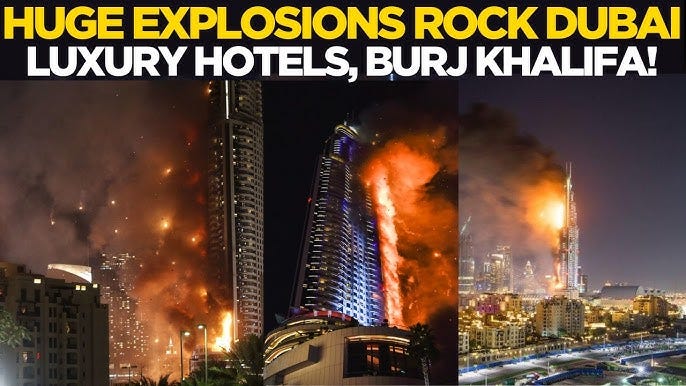
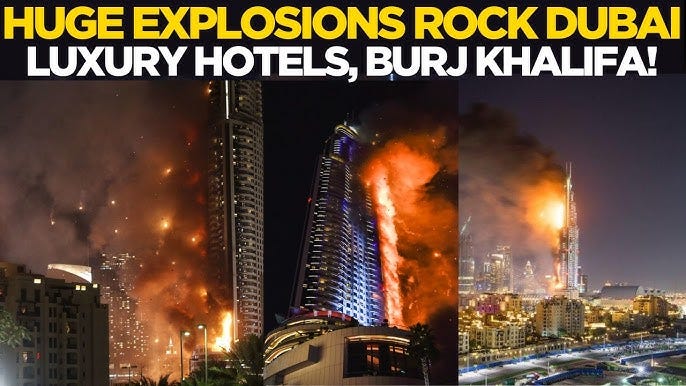
Iran didn’t just rattle sabers; it lashed out at the core of the Gulf system—Saudi, UAE, Qatar, Kuwait—hitting luxury properties, hotels, shopping centers, airports, oil & gas refineries, AI data centers and critical infrastructure that were supposed to be untouchable under the American umbrella.
The refineries, LNG plants, ports, and power hubs that feed the world and feed the dollar were suddenly in the crosshairs. And what did the Gulf see? They saw Washington prioritize Israel, domestic optics, and narrative control over the physical security of the very monarchies that have been bankrolling the dollar order for five decades. In one brutal news cycle, the message was unmistakable: America chose Israel over the Gulf. The umbrella isn’t a guarantee; it’s a conditional favor.
Now ask yourself: if you’re sitting in Dubai, Riyadh or Abu Dhabi, do you ever trust that umbrella again? Not in theory, in practice. Not in speeches, in missiles and drones and response times. Trust, once shattered at this level, does not get rebuilt with a press conference.
The Petrodollar Ponzi: How the Flywheel Really Spins
Let’s be blunt. The system is a beautifully disguised Ponzi. Oil and gas are priced in dollars. That forces global demand for dollars. Gulf producers earn oceans of dollar surpluses. Those surpluses are recycled—this is the key word—into U.S. Treasuries, U.S. equities, U.S. real estate, and now, into the glittering AI and data‑center complex that powers the current S&P 500 narrative.
Capital flows in, props up asset prices, suppresses yields, and lets Washington roll and refinance a monstrous debt load without immediate collapse. New money from energy and global trade keeps validating old promises made in previous cycles. As long as the flywheel spins—oil in dollars, surpluses into U.S. assets, U.S. assets rising, confidence sustained—the illusion of infinite solvency holds.
But what happens when the Gulf, after being left exposed under fire, quietly decides to slow that recycling? Not a dramatic “end the dollar” declaration—just a steady, deliberate shift toward yuan settlement, gold, regional infrastructure, and non‑U.S. tech stacks. The Ponzi doesn’t explode on day one. It starves over time.
The AI Bubble: A One‑Legged Empire
Right now, the U.S. market is grotesquely top‑heavy. A handful of AI‑linked megacaps are holding up the entire S&P 500. The empire is literally balancing on one narrow tech leg. That leg is funded, in no small part, by global capital—and Gulf sovereign wealth in particular—being funneled into chips, cloud, and data centers.
If the Gulf views the U.S. as an unreliable protector and a dangerous partner, that flow becomes less automatic, less enthusiastic, less blind. The “AI trade” doesn’t just lose marginal buyers; it loses strategic anchor buyers. When the marginal bid fades in a concentrated bubble, it doesn’t gently deflate—it cracks.
And when that crack shows up in markets, it’s read globally as what it truly is: a symptom of empire‑level exhaustion.
An Empire Lashing Out, Not Leading
“Look at the pattern with honest eyes. Kidnap Venezuela’s leader. Threaten Greenland. Escalating threats toward Mexico. Economic strangulation of Cuba. Now a catastrophic miscalculation with Iran has exposed the Gulf Coast oil allies and is killing the very clients whose loyalty underpins the dollar. This isn’t a confident hegemon managing a system; this is late‑stage Nero or Caligula acting out, a cornered empire lashing out—everywhere, all at once—trying to intimidate the world into pretending the old rules still apply.” – Jon Forrest Little
But you and I both know: once clients stop believing in the guarantee, once creditors stop believing in the safety of their assets, once markets start suspecting the flywheel is seizing up, the cycle has turned. The Iran war wasn’t “just another crisis.” It was the final nail in the psychological coffin.
The Question You Can’t Dodge
So here’s the real psychological test: are you still investing, saving, and planning as if the petrodollar, the AI‑propped S&P, and the U.S. imperial guarantee are permanent features of reality? Or are you willing to admit that the game has changed—and position yourself accordingly?
We recommend Silver here on this channel
Because if the Gulf no longer trusts the U.S. shield, the petrodollar Ponzi is living on borrowed time. And if the Ponzi is living on borrowed time, so is any portfolio, plan, or worldview that still treats American empire as an unshakable constant.
end of segment
-
our opinions are not our sponsors opinions
-
the editorial dept. is separate from the promotions dept.
-
not financial advice