
The war economy is blowing up in Washington’s face. The real economy is wrecked, job numbers are rolling over, and the Fed’s “money printer” is roaring back to life to paper over a financial crater it helped create. That cocktail doesn’t produce stability; it produces hyperinflationary panic. As faith in bonds, fiat, and captured institutions evaporates, capital does what it always does in late‑stage empires: it runs for the exits and hides in real money. Silver and gold aren’t “alternative assets” anymore—they’re the only fire escape left from a burning, weaponized dollar.
War is not merely bad for the economy; it is the economy. Each bombing campaign depletes munitions, creating the perfect pretext to order more weapons and quietly funnel billions from U.S. taxpayers to defense contractors. The shells and missiles that vanish over the Strait of Hormuz reappear as line items in appropriations bills, corporate earnings, and “emergency” spending packages. The costs are socialized; the profits are privatized.
The Money Printer’s Favorite War
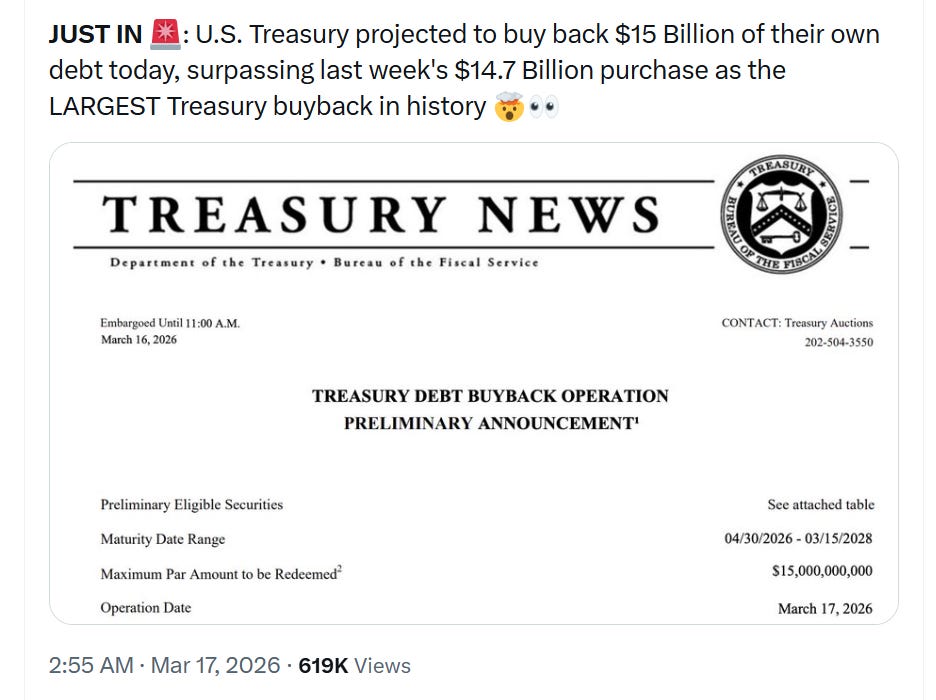
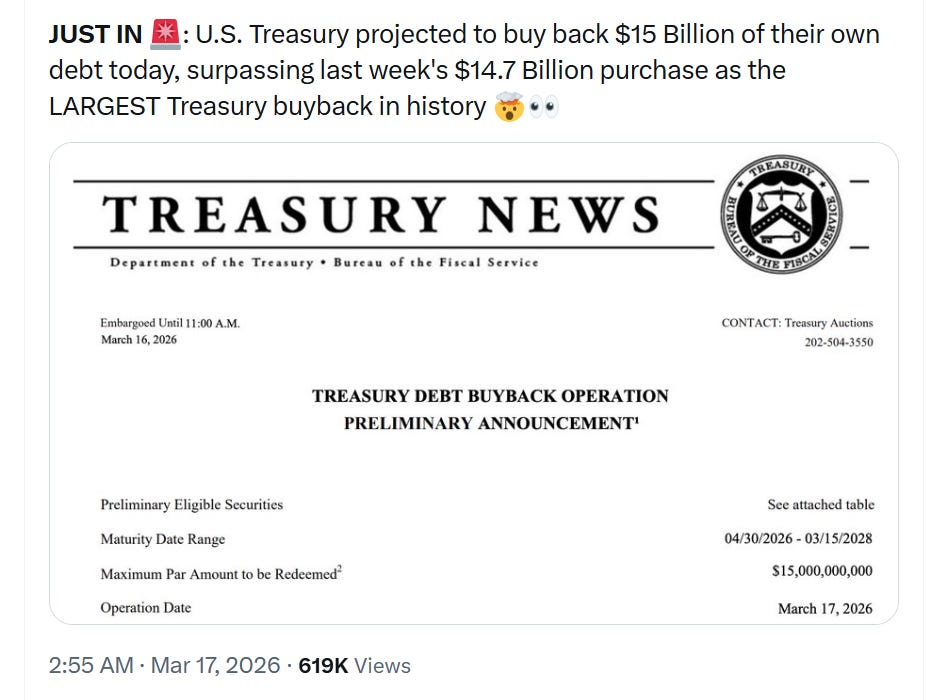
This is classic “print money to fund unending wars”: new debt, new dollars, all justified as “security,” while the real security of ordinary citizens erodes. War spending is treated as exempt from ordinary fiscal discipline, as if the normal rules of scarcity and trade‑offs do not apply when the state is blowing things up abroad. The central bank backstops the spree, deficits become an afterthought, and the financial sector clips its coupons on interest‑bearing war debt. What looks like policy failure is, from the vantage point of those who design it, an elegant racket.
Cantillon’s Commanders
The Cantillon effect explains the rest. Those closest to the money spigot—the Pentagon, contractors, Wall Street, and lobby networks—get the new money first and on the best terms. They buy real assets, secure political influence, and buffer themselves from the inflation that follows. Everyone else encounters that same money later, in the form of higher prices, precarious jobs, and shredded public services. War thus functions as a wealth‑transfer mechanism disguised as national defense: a pipeline moving value from workers and consumers to the permanent national‑security class.
Strait of Hormuz, Strait to Hell
The Iran war’s impact on the real economy makes this dynamic brutally concrete:
-
The Strait of Hormuz, carrying roughly 20% of the world’s energy supply, is effectively bottlenecked.
-
Around 40% of China’s imported oil flows through this single vulnerable chokepoint.
-
Crude oil has surged above 100 dollars per barrel, roughly a 45% jump since the war began.
-
Gasoline prices in the United States are up by more than 65 cents per gallon.
-
Jet fuel and diesel have risen by roughly 25%, feeding into higher transport and logistics costs.
-
In parts of Asia—Thailand, Pakistan, Bangladesh—shortages and long lines at gas stations are already emerging.
-
Government offices in the Philippines have been pushed to a four‑day work week to conserve fuel.
-
Myanmar has imposed alternating driving days, a crude form of rationing by decree.
-
Japan, dependent on the Middle East for about 90% of its oil, is releasing a record 80 million barrels from reserves—roughly 45 days of supply.
-
India, nominally cushioned by access to discounted Russian crude, is nonetheless being hammered by a severe shortage of liquefied natural gas.
-
India’s new banking rules kick in next month. Wait until you see 250 million hoarding silver like the WORLD HAS NEVER SEEN
-
Roughly 84% of the crude oil and 83% of the LNG that passes through the Strait goes to Asia, concentrating the shock in the most populous region on earth.
-
Nitrogen fertilizer has jumped from the 460–480 dollar range per short ton to roughly 520–620 dollars, a direct pipeline to higher global food prices.
-
Once strategic reserves are drained, oil could lurch into the 200–300 dollar range, triggering crippling inflation and a synchronized global depression.
-
As economies buckle, the likely downstream effects include mass unemployment, food insecurity, and widespread civil unrest.
The Parasitic War Machine
This is the architecture of a parasitic war economy: strategic reserves drained today to prop up a rigged system that will demand even higher prices tomorrow. Energy shocks feed fertilizer shocks, which feed food shocks, which feed political shocks. What is sold to the public as “defense” is, in structure and incentive, a permanent extraction machine. The people who gain from money printing and arms orders are not the ones waiting in fuel lines, cutting work weeks, or wondering how to pay for food when oil hits 200. All wars are bankers’ wars in this sense: the decision to fight is taken at the apex of the credit system, and the bill is always presented to those who never got a vote.
The war economy is blowing up in Washington’s face. The real economy is wrecked, job numbers are rolling over, and the Fed’s “money printer” is roaring back to life to paper over a financial crater it helped create. That cocktail doesn’t produce stability; it produces hyperinflationary panic. As faith in bonds, fiat, and captured institutions evaporates, capital does what it always does in late‑stage empires: it runs for the exits and hides in real money. Silver and gold aren’t “alternative assets” anymore—they’re the only fire escape left from a burning, weaponized dollar.
one way to play this now:
In an energy‑constrained world, silver is the new oil—indispensable, finite, and suddenly recognized as strategic rather than optional. Its role at the heart of solar, EVs, grids, and electronics is now formally acknowledged in Washington’s own “critical minerals” designations, even as the monetary case for silver roars back in an era of debased fiat and creeping capital controls.
Layer on top a structural silver shortage—years of underinvestment, shrinking primary supply, and relentless industrial demand—and you have a metal that is simultaneously an energy transition input and a hard‑money escape valve.
In that context, silver‑primary, growth‑torque producers like Aya Gold & Silver and Andean Precious Metals are not speculative side bets; they are must‑own core positions for anyone who understands how fragile the energy system is and how violently capital rotates into real assets when paper promises start to fail.
Aya Gold & Silver (TSX: AYA, OTC: AYASF) is a high‑grade, pure silver producer anchored by its Zgounder mine in Morocco, one of the sector’s standout primary silver assets, with meaningful growth torque as production scales.
Andean Precious Metals (TSX-V: APM, OTC: ANPMF).operates Bolivia’s largest silver oxide processing facility and partners with over 20,000 artisanal miners, using a sliding‑scale payment model that cushions margins when silver prices dip.
end of segment
our opinions are not our sponsors opinions, the editorial department is separate from the promotions department, not financial advice