
Before the war, the math was brutally clear: the world ran on about 100 million barrels of oil per day, roughly 36.5 billion barrels of oil per year. That steady flow defined budgets, trade balances, and the basic physics of globalization. Now, a single region – the Gulf Cooperation Council – is seeing projected reductions measured in billions of barrels per year, turning what used to be a global baseline into a high‑water mark that may not return for years.
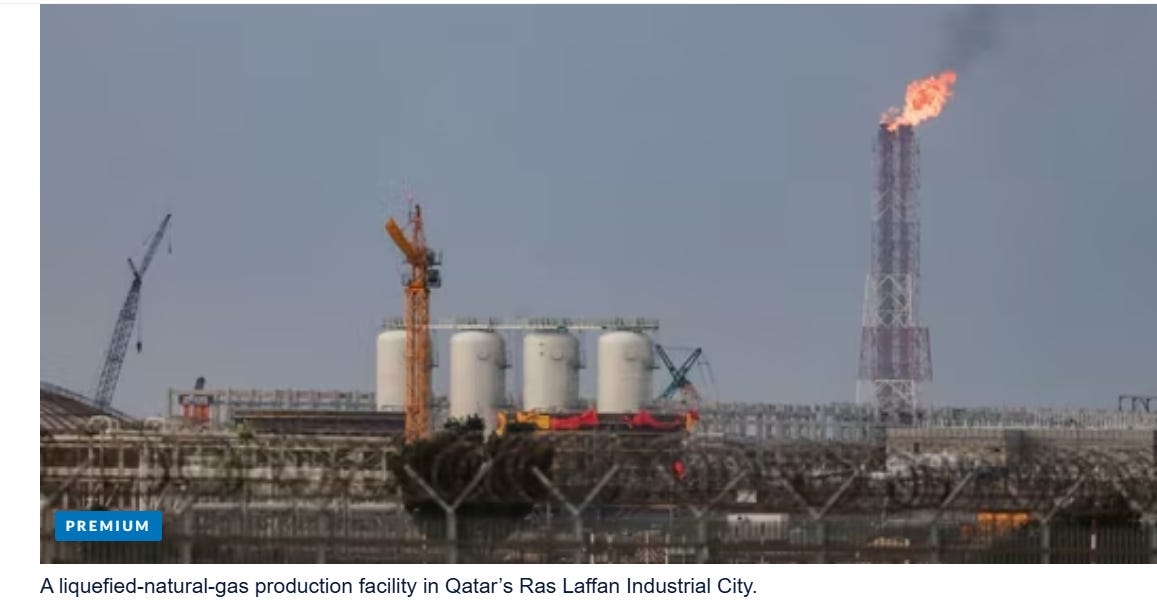
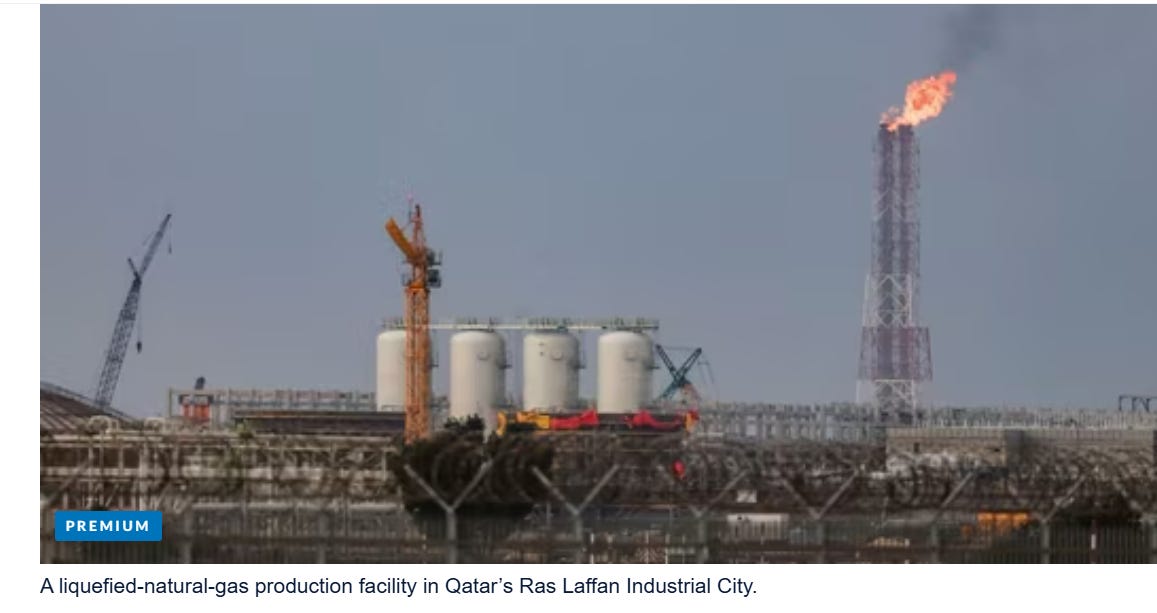
Start with Qatar. Ras Laffan, the world’s flagship LNG and gas‑to‑liquids hub, has taken repeated blows that, in purely volumetric terms, look like roughly 600 million barrels of oil‑equivalent per year offline. Layer in the broader North Field system feeding those trains and pipelines and you are plausibly north of one billion barrels per year of gas‑equivalent capacity impaired just from Qatar’s piece of the map.
Move across to the United Arab Emirates. The Habshan and Shah gas complexes, combined with constrained output funneled through Ruwais and reduced flows via Das Island, add another 650–700 million barrels of oil‑equivalent per year of projected outages. These are molecules that should have been backing out coal in Asia and Europe, instead simply not arriving.
Saudi Arabia’s refineries and upstream choke points add still more. Ras Tanura’s disruptions, repeated hits on Samref at Yanbu, and precautionary throttling around Shaybah together carve out on the order of 325 million barrels per year from what used to be one of the world’s most reliable export machines. Kuwait’s Mina al‑Ahmadi and Mina Abdullah refineries, plus damaged petrochemical and export systems, contribute something like another 450 million barrels per year of lost or degraded throughput.
Bahrain’s Bapco complex and associated petrochemical flows, paired with Oman’s recurring port and terminal shutdowns at Sohar, Mina al‑Fahal, and Salalah, strip away an additional 150 million barrels or so per year during the crisis phase. Piece by piece, what was once background infrastructure becomes a series of counted absences.
Add those projected reductions together and you arrive in the ballpark of 2.2 to 2.4 billion barrels of oil and gas equivalent per year offline across the GCC alone. Against a pre‑war world that burned 36.5 billion barrels of oil per year, that is roughly six to seven percent of total annual oil demand’s worth of energy suddenly missing from the system – not as a one‑day shock, but as a grinding, multi‑year subtraction from the balance sheet of the global economy.
Qatar
-
Ras Laffan (LNG + GTL)
Missile strikes crippled Trains 4 and 6 and associated units. Projected damage cuts the equivalent of 600 million barrels per year for up to five years, with 20 billion dollars per year in lost sales and a 100–130 billion dollar reconstruction bill over the decade.
United Arab Emirates
-
Habshan gas plant
Operations suspended after attack and fire at the country’s largest gas hub. Projected loss of 200 million barrels‑equivalent per year, roughly 12–18 billion dollars annually, plus 15–20 billion dollars in repairs and hardening. -
Shah gas field / Shah gas plant
Operations ceased after a drone strike and fire. Projected 150 million barrels‑equivalent annual loss, 10–15 billion dollars per year, and 8–12 billion dollars in plant and pipeline rebuilding. -
Ruwais refinery
Multiple fires and partial shutdowns at one of the world’s largest refineries. Projected effective throughput loss equal to 250 million barrels per year for several years, burning 20–25 billion dollars in margin plus 10–15 billion dollars in repair and replacement. -
Das Island LNG
Running at low levels due to Hormuz disruption and infrastructure risk. Projected 100 million barrels‑equivalent per year stripped out, 6–10 billion dollars lost each year.
Saudi Arabia
-
Ras Tanura refinery
Temporarily halted, then restarted after a drone attack. Projected cumulative loss of 50 million barrels per year for the crisis phase, or 3–5 billion dollars in missed margin and repairs. -
Samref (Yanbu) refinery
Drone hit and short‑term shutdown of loadings. Projected 75 million barrels per year of disrupted runs and exports, 5–7 billion dollars destroyed. -
Shaybah field (area under repeated attack)
No confirmed loss yet, but assume precautionary throttling. Projected 200 million barrels per year cut, 15–20 billion dollars of annual forgone output.
Kuwait
-
Mina al‑Ahmadi refinery
Multiple drone strikes and repeated unit shutdowns. Projected 150 million barrels per year in lost throughput and 8–12 billion dollars in economic damage. -
Mina Abdullah refinery
Fire and disruption, then restart. Projected 100 million barrels per year of lost/refused runs, 5–8 billion dollars in lost margin and repairs. -
KPC / KNPC / petrochemical facilities
“Significant damage” across several sites. Projected combined 200 million barrels‑equivalent per year removed, totaling 12–18 billion dollars annually.
Bahrain
-
Bapco refinery & Gulf Petrochemical Industries
Damage, fires, and force majeure on some operations. Projected 80 million barrels‑equivalent per year lost, 4–6 billion dollars destroyed annually.
Oman
-
Sohar, Mina al‑Fahal, Salalah ports and terminals
Temporarily shut, exports suspended and then resumed. Projected continuing effective loss of 70 million barrels per year during the crisis, 4–5 billion dollars a year in missed flows and repair costs.
Silver now steps into the vacuum as the metal of future energy.
The world’s best electrical conductor, it routes electrons through solar cells and high‑density batteries with unmatched efficiency. Hyper‑reflective and ductile, it turns sunlight into power and thin wires into energy highways. As fossil fuel infrastructure burns, silver quietly becomes the irreplaceable backbone of solar panels, grid‑scale storage, EVs, and advanced electronics—monetary metal and primary energy metal at the same time.
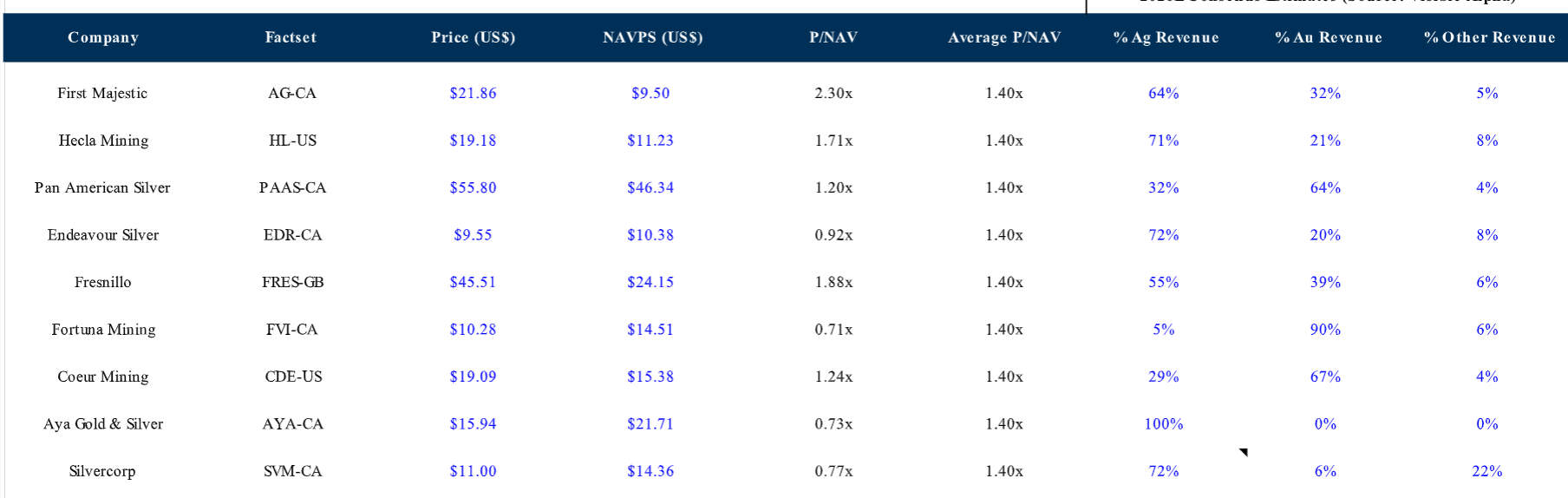
This chart breaks down how much revenue each of the nine leading silver producers derives from silver versus gold.
Across the major silver producers, silver still fights for dominance in the revenue mix. First Majestic, Fresnillo, Pan American, Hecla, Silvercorp, Endeavour, Fortuna, and Coeur all lean heavily on gold, base metals, and by‑product credits. Aya Gold & Silver stands out: with Zgounder and its pipeline, the overwhelming majority of its revenues are projected to come directly from silver, giving investors the purest primary‑silver leverage in the sector.
The unending wars in the Middle East have left the world running on empty, and it may be many years—if ever—before this damage is fully repaired. Our lives run on energy: calories for our bodies, electricity for our homes, fuel for our cars, data for our machines. Silver is energy in metal form: the number one conductor on the periodic table, hyper‑reflective, ductile, and essential to solar, batteries, EVs, and advanced electronics. In a world where oil infrastructure burns and gas networks crumble, silver quietly becomes the backbone of future energy systems. If you want exposure to that future, you invest in the metal that routes the electrons—and Aya, as the purest silver play in the world, is a direct investment in tomorrow’s energy infrastructure.
-
our opinions are not our sponsors opinions
-
the editorial department is separate from the promotions department
-
not financial advice