
The Liquidity Trap
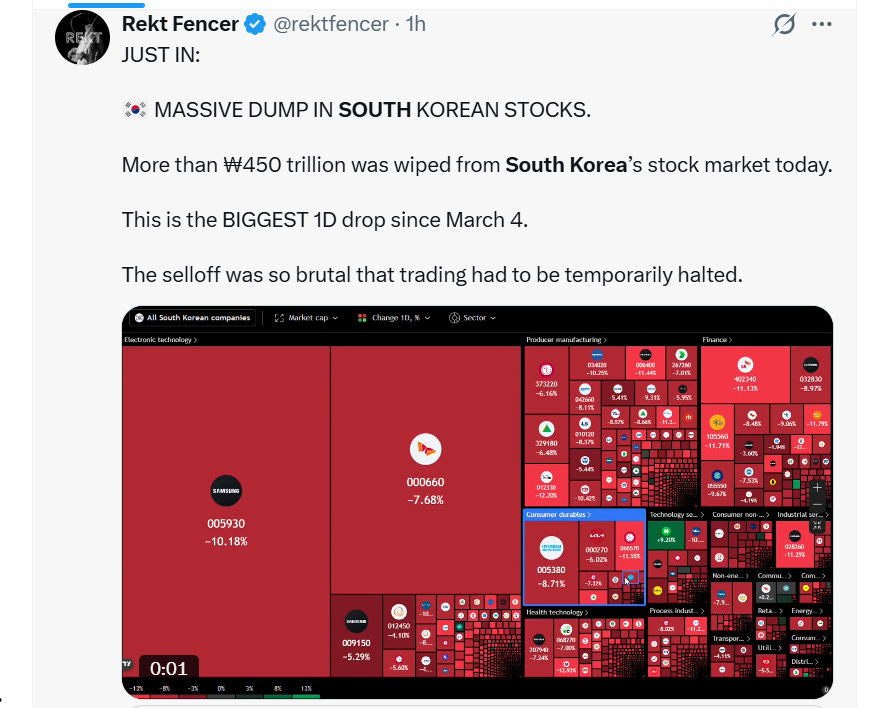
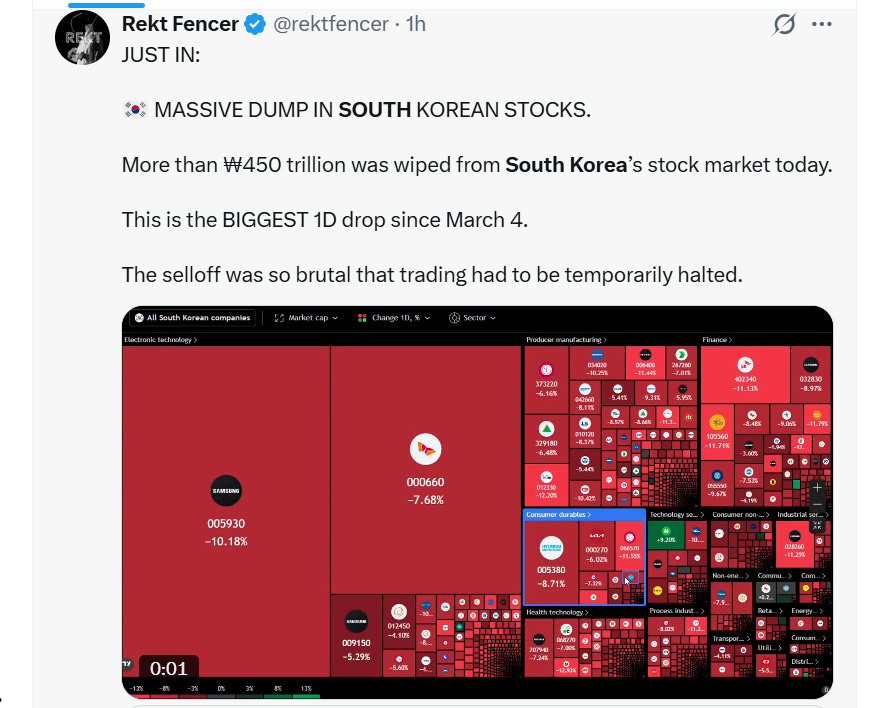
The regular session in South Korea just closed in a brutal, volatile rout, with the KOSPI plunging 8.29% to finish at 7,484 after a massive tech selloff triggered circuit breakers.
But the contagion isn’t isolated overseas; a quiet panic is unfolding in the U.S. as liquidity rapidly tightens. This stress is fracturing the private markets, where major private equity and real estate vehicles like Blackstone’s BREIT and Starwood’s SREIT are actively banning withdrawals and freezing redemptions to stop capital flight.
Investors are right to worry about paper money losing purchasing power, but the immediate threat is this structural tightening as asset prices weaken. Contractions in commercial property, crypto, and residential real estate are drying up systemic liquidity, severely pressuring global markets in the short term.
When private equity locks your funds and paper wealth evaporates, tangible safety becomes paramount. Physical precious metals remain one of the only reliable assets to hold against this backdrop. As markets fracture, governments will inevitably resort to their default playbook: spending money like water. Sovereign deficits will skyrocket, and massive currency printing is merely a question of time. Until then, the liquidity trap is snapping shut.
With U.S. national debt rapidly approaching $40 trillion, currency debasement is a permanent risk. Against this fiat expansion, physical silver offers a powerful structural hedge.
Unlike paper assets, silver is an irreplaceable industrial necessity. Every modern growth sector—including AI hardware, solar panels, robotics, energy storage batteries, EVs, military systems, and aerospace—is highly silver-intensive.
Crucially, supply cannot keep pace. The market faces a multi-year structural deficit, with only 820 million ounces projected to be mined globally in 2026 against a massive 1.2 billion ounces in total demand. Because 70% of silver is mined merely as a byproduct of copper, zinc, lead, and gold, producers cannot easily ramp up operations to meet this surging demand, creating an unyielding floor for long-term value.
Silver has been dragged down recently (along with Gold) and this happens every time we see overall market sell-offs. Historically this lasts less than 90 days and we recommend buying all the dips using DCA best practices. At the time of this report Silver recuperated and is up 1.5% of Friday’s massive hit.
Aya Gold & Silver Inc. (TSE: AYA, Nasdaq: AYA)
Executive Summary
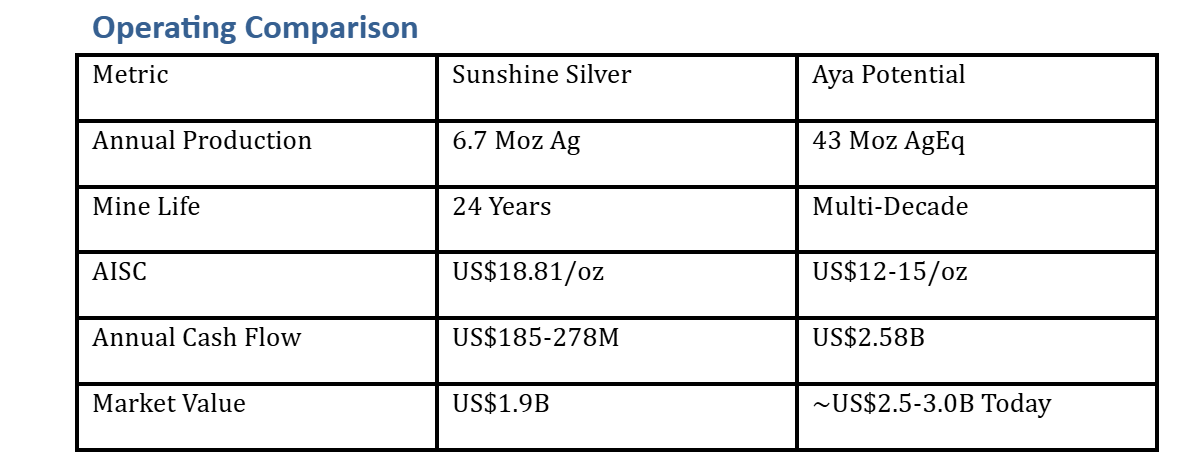
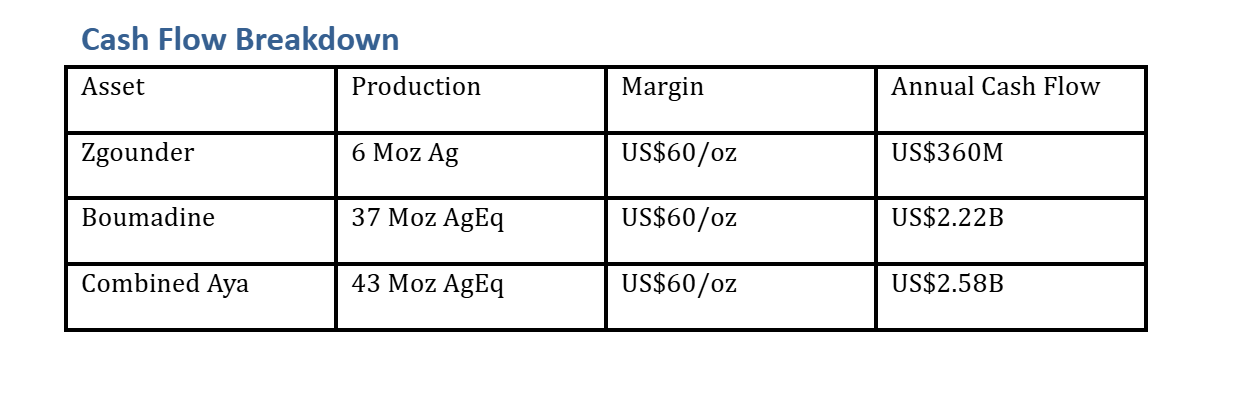
Sunshine Silver achieved a US$1.9 billion IPO valuation based on a future 6.7 Moz silver producer. Aya already owns and operates Zgounder and has a pathway to approximately 43 Moz AgEq annually through the development of Boumadine. Using a US$75 silver price and a US$60/oz operating margin, Aya’s long‑term cash flow profile could exceed US$2.5 billion annually.
Analysis & Investment Implications
The Sunshine IPO provides one of the most relevant benchmarks for evaluating Aya Gold & Silver’s long‑term valuation potential. Sunshine achieved a US$1.9 billion valuation based on a development-stage asset expected to produce 6.7 million ounces of silver annually, with production targeted for 2028.
Aya already operates a producing silver mine of comparable scale through Zgounder and benefits from a materially lower cost structure. At a US$75 silver price and approximately US$60/oz margin, Zgounder alone could generate roughly US$360 million of annual operating cash flow. The larger opportunity remains Boumadine. Based on management’s long-term vision, Boumadine could support approximately 37 million silver-equivalent ounces annually, resulting in combined production of roughly 43 million silver-equivalent ounces per year. At a US$60/oz margin, Boumadine could generate approximately US$2.22 billion of annual operating cash flow, bringing Aya’s total annual operating cash flow potential to approximately US$2.58 billion.
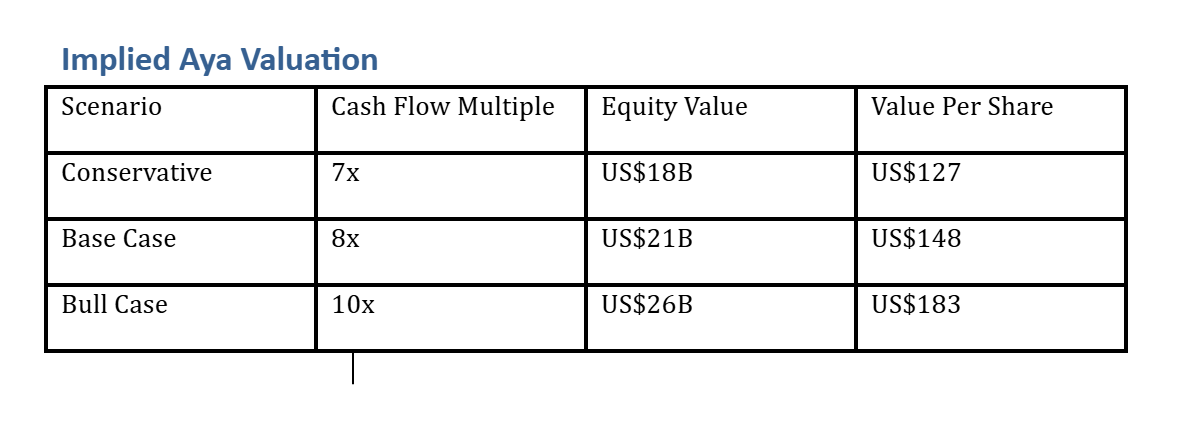
Applying valuation frameworks similar to those awarded to Sunshine suggests a long-term valuation range of US$18-26 billion, equivalent to roughly US$127-183 per share. These figures exclude further exploration success, resource growth, throughput expansions, metallurgical improvements, higher metal prices and strategic scarcity value. The comparison highlights a significant valuation disconnect: investors awarded Sunshine a US$1.9 billion valuation for a future 6.7 Moz silver producer, while Aya already owns a producing asset of similar scale and appears to have a credible pathway toward becoming a 40+ Moz AgEq producer with industry-leading margins and substantial free cash flow generation.
Editors Note:
Investing in a proven producer like Aya Gold & Silver is vastly superior to chasing untested operations dependent on spreadsheet models. Aya delivers known ounces and real-time compounding, removing the guesswork for investors.
Conversely, speculative companies remain years away from production, burdened by theoretical projections, severe shortages of skilled labor, or unforeseen bureaucratic obstacles.
When navigating volatile metal markets, backing demonstrated execution and active infrastructure will always be smarter than betting on an unproven prospectus built entirely on future promises.
This article was written in response to events on June 4, 2026
Historic Market Debut: The US$311 million Sunshine Silver NYSE IPO marks one of the largest precious metals public offerings in decades, signaling a massive resurgence in institutional confidence.
Solid First-Day Performance: Launching on June 4, the stock defied broader market skepticism, surging from an IPO price of $13.50 to close its first trading day near $15.00 per share.
Elite Institutional Backing: Wall Street’s heavyweights—including Morgan Stanley, Scotiabank, and BMO—anchored the offering, proving that sophisticated capital is aggressively positioning for a structural bull run in silver infrastructure.
end of segment
-
our opinions are not our sponsors opinions
-
the editorial department is separate from the promotions department
-
not financial advice