
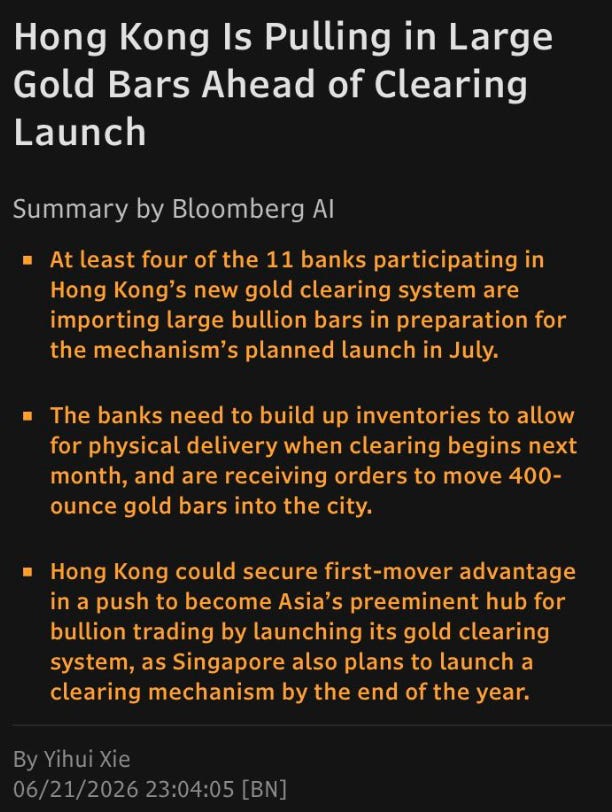
from Bloomberg News:
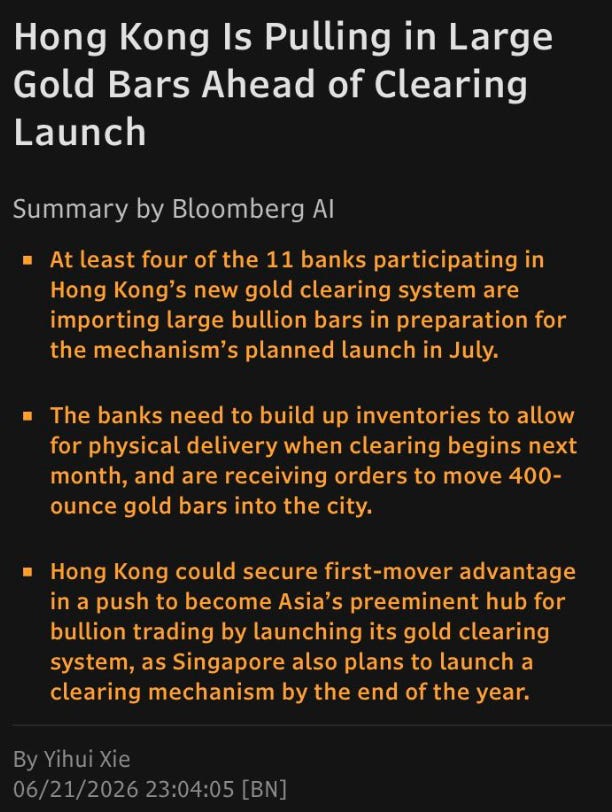
Hong Kong’s new gold-clearing system is more than a local market tweak; it is a structural upgrade to the plumbing of the global bullion trade, and that is inherently bullish for both gold and silver over the coming cycle.
Hong Kong’s gold power play
Hong Kong is rolling out a state-backed gold clearing system by July, designed to mirror London-style infrastructure and centralize settlement for bullion trades. At least four of the eleven participating banks are already importing large gold bars ahead of the launch, tying up real balance sheet and logistics capacity in anticipation of robust physical flows. The city has also struck a deal with the Shanghai Gold Exchange and is expanding warehousing, aiming to hold more than 2,000 tons and deepen cross-border connectivity with mainland China, the world’s largest gold consumer.
This is not paper theater; it is the hard infrastructure that determines where price discovery migrates over time.
Shift toward physical and away from paper
By concentrating clearing, storage, and futures around a physical hub linked directly into China’s demand, Hong Kong is helping shift the center of gravity from Western paper markets to Asian physical trade. Central clearing reduces counterparty risk and raises liquidity, which encourages more institutional players to transact in physical-linked contracts rather than purely synthetic exposure. When physical demand becomes more tightly integrated with price-setting venues, persistent paper-driven discounts are harder to maintain, which tends to support higher and more resilient gold prices over time.
For a collapse-aware investor, this is the quiet re-monetization of gold at the plumbing level: less reliance on dollar-centric structures, more emphasis on metal-in-vault settlement, and deeper integration with a bloc explicitly seeking alternatives to U.S.-centric finance.
Macro backdrop: perfect storm for metals
This infrastructure build-out is happening as gold trades near record highs above 5,100 dollars an ounce, driven by macro uncertainty, geopolitical risk, and central bank accumulation. Major asset managers note that gold’s appeal as a store of value without sovereign default risk strengthens when real rates are unstable and fiscal trajectories look unsustainable. Asia’s steady appetite for physical bullion—visible in premiums, exchange volumes, and cross-border flows—adds a demand backbone that can absorb corrections and turn them into buying opportunities.
In that environment, any mechanism that makes it easier for large pools of capital to own and move allocated or unallocated gold in size is an accelerant, not a sideshow.
Why silver rides shotgun
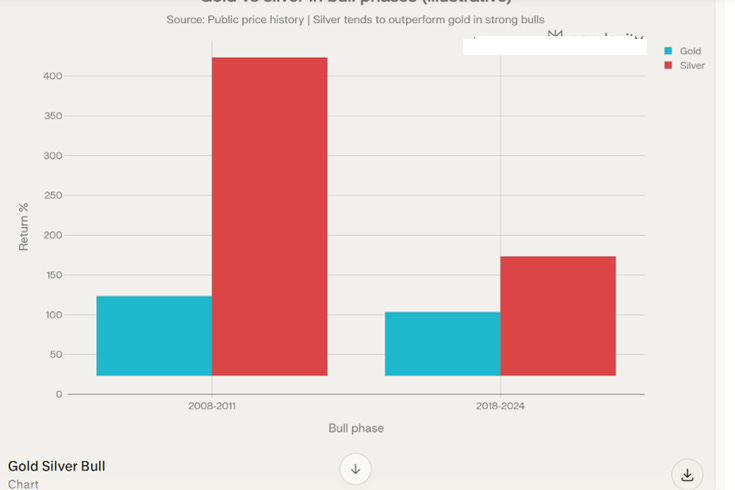
Historically, silver has behaved as a higher-beta extension of the same macro themes that drive gold, with most of its return statistically explained by gold’s moves. When gold enters a structurally bullish phase, the gold–silver ratio tends to fall, reflecting silver’s tendency to outperform once momentum and monetary narratives are firmly established. Analysts and historical data alike show that in strong bull phases, silver’s percentage gains often exceed gold’s, even if it lags early in the move.
Put simply: as global infrastructure and policy shifts increasingly validate gold’s role as a monetary asset in a fracturing system, capital eventually cascades down the metal stack, and silver—smaller, more volatile, and still deeply under-owned—is positioned to amplify that upside
Gold vs Silver in Bull Phases
Silver in the rust color
Gold in the blue color
end of segment
the editorial department is separate from the promotions department
the opinions in this newsletter are not the opinions of our sponsors
not financial advice